What the Ø63.5 Conveyor Idler Is
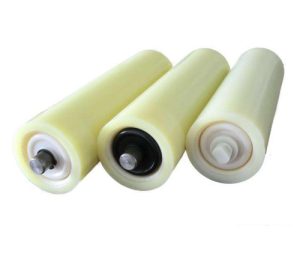
A Ø63.5 conveyor idler is a small-diameter idler roller with a nominal outside diameter of 63.5 mm. It is one of the smaller standard sizes in the idler range, sitting below the more common Ø76 and Ø89 rollers. Because of its compact shell, it is usually chosen for narrow conveyor belts, light-duty sections, or places where the belt line has limited vertical clearance. In everyday workshop language, people may simply call it a 63.5 idler or a small-diameter carrying roller, but it is still the same troughing or return idler product.
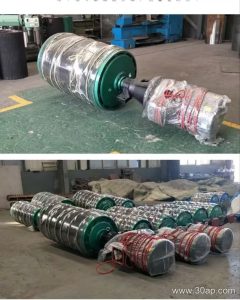
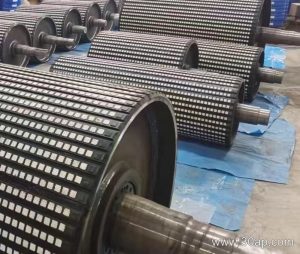
It is important not to confuse this item with a drive pulley, tail pulley, or bend pulley. Those are pulleys that transmit power or change belt direction at the ends of a conveyor. An idler roller, by contrast, supports the belt along the carrying and return runs. The two families work together, but they are not interchangeable.
How a Ø63.5 Idler Is Built
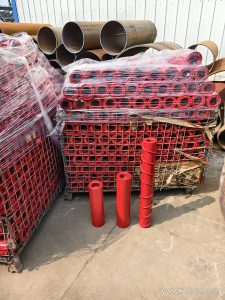
The typical construction starts with a steel tube shell, cut to the required roller length and machined at both ends. Inside, a bearing housing is pressed in, usually holding a deep-groove ball bearing such as a 6204 or 6205 size, though the exact bearing depends on the load and the manufacturer’s design. A shaft passes through the bearings, and seals sit outboard of the bearing to keep dust and fine grit away from the rolling elements.
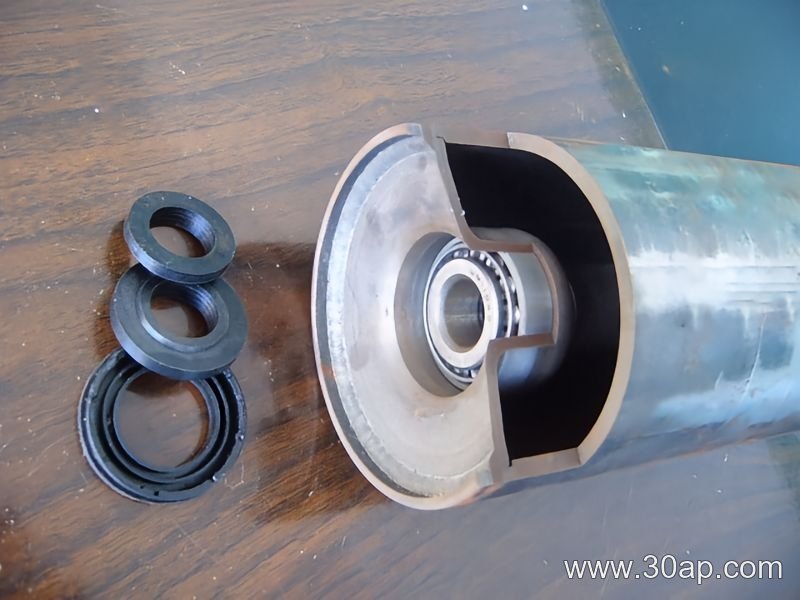
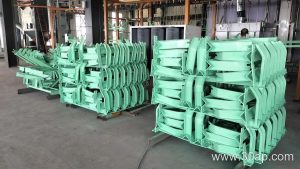
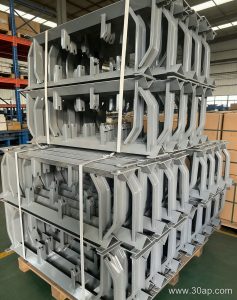
Common roller surfaces include plain steel, nylon, rubber rings, and ceramic coatings. For a 63.5 mm roller, steel and nylon are the most frequent choices, while rubber rings are sometimes used where impact or noise needs to be reduced. The shaft ends are normally flattened or fitted with a machined seat so the idler can drop into a conveyor bracket without tools.
Where It Fits in a Belt Conveyor
This small roller appears most often in three positions:
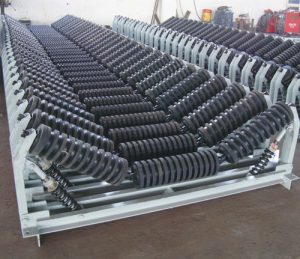
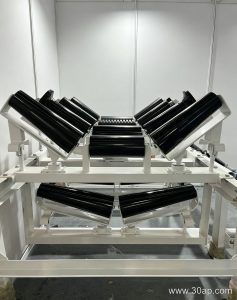
- As a carrying idler in a two-roll or three-roll troughing set on a narrow belt.
- As a return idler under the belt on the empty strand.
- As a transition idler near a pulley, where the belt changes from flat to troughed.
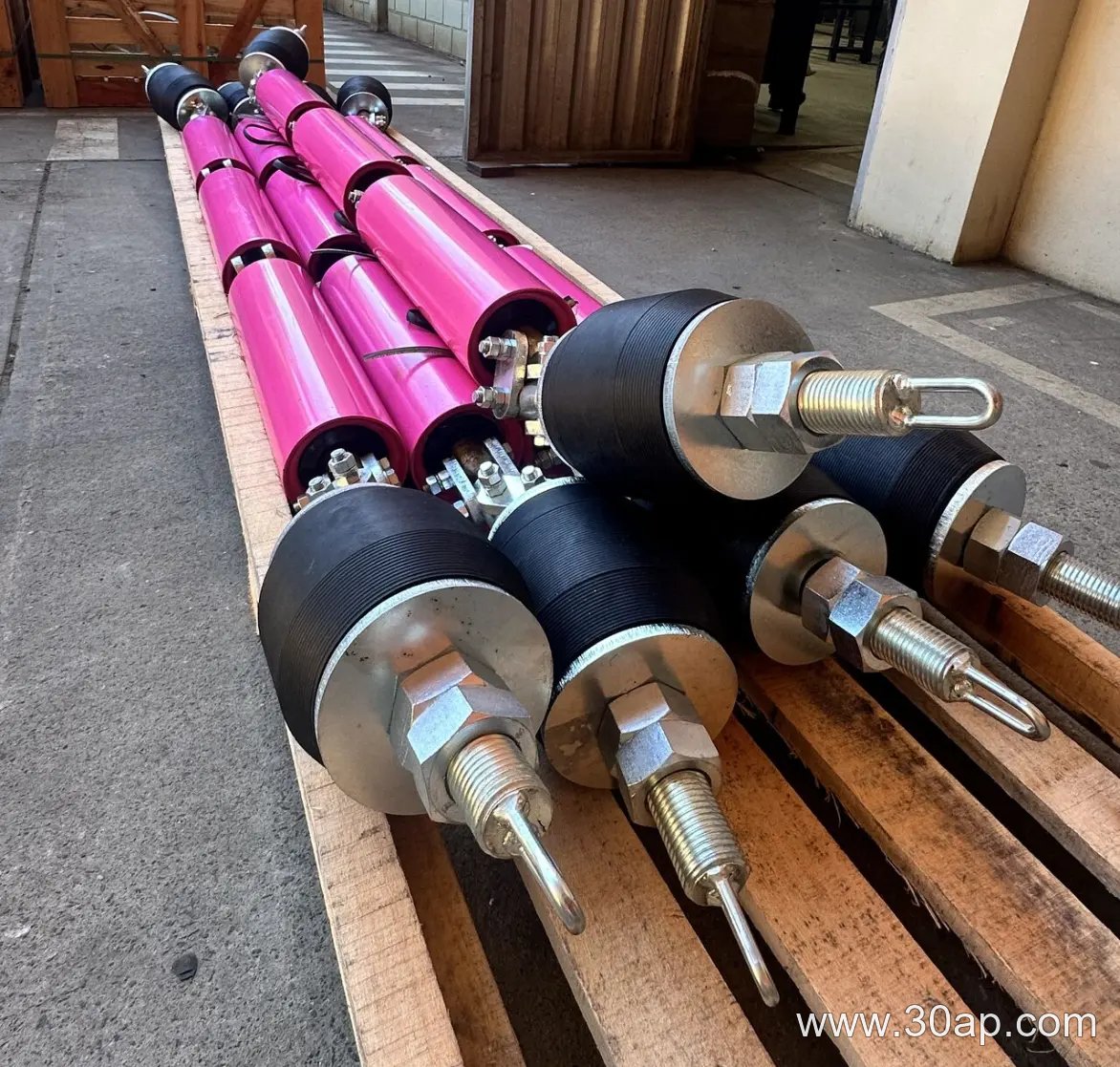
The trough angle for such sets is often 20 degrees or 30 degrees, and a slight forward tilt of about 1.5 to 2 degrees can help with belt training on some installations. A three-roll troughing set with 63.5 mm rollers is commonly matched with belt widths around B400, B500, or B650, though the roller length is set by the belt width, trough angle, and the roll arrangement, not by the diameter alone. Side rollers and the centre roller may have different lengths in the same set.
Applications and Site Conditions
Because of its low profile, the Ø63.5 conveyor idler suits smaller material-handling lines rather than heavy-duty ore transport. You will see it in sand and gravel plants on short transfer conveyors, in concrete batching plants feeding aggregate bins, and in light industrial lines moving packaged goods. It can also serve in a tunnel muck conveyor where space is tight, or on a small fertilizer or grain conveyor where the belt is narrow and the load is moderate.
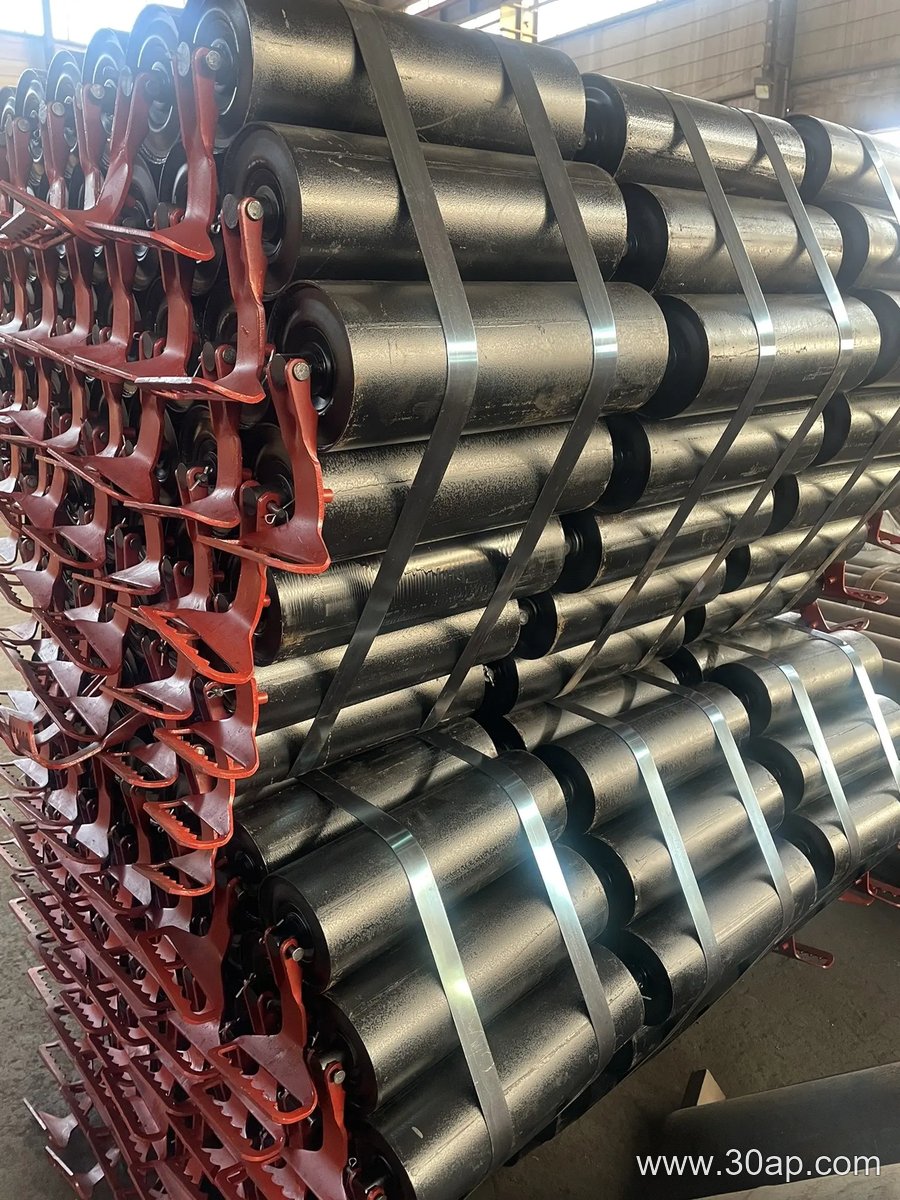
In these settings, the roller must cope with dust, moisture, and occasional fines. Good sealing matters more than raw strength. A worn seal lets grit into the bearing, and the roller stops turning, which then wears the belt cover. Checking that each roller spins freely by hand is a simple field test.
What a Buyer Should Consider
When ordering, the diameter is only one line of the specification. The buyer should also confirm:
- Roller length and the number of rollers in the set.
- Trough angle, if the idler is a carrying roller.
- Shaft diameter and the shape of the shaft end.
- Bearing size and seal type.
- Shell material and surface form.
There is no fixed rule that a given belt width must use one particular shaft diameter, so the shaft should be selected from the actual load and the bracket design. Likewise, a 63.5 mm roller is not mandatory for every narrow belt; larger diameters may be a better choice when the belt is thick, the load is heavy, or the speed is high. The right approach is to treat Ø63.5 as one option in the size range and to match it to the conveyor’s real duty.