What a Conveyor Parts Idler Does on the Line
A conveyor parts idler is the rotating support that carries the belt and its load between the head and tail of a conveyor. In practice, the idler roller is the everyday wear part that keeps the conveyor belt tracking, keeps material from spilling, and protects the belt carcass from sagging between frames. Whether the line moves coal at a power plant, clinker at a cement works, or aggregate at a quarry, the idler set is usually the first component inspected and the first replaced.
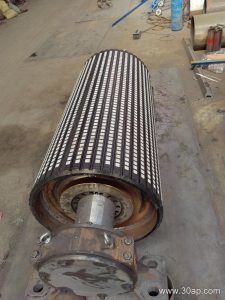
The main subject here is the idler, not the pulleys. Drive, tail and bend pulleys are separate assemblies with their own shafts and lagging, and they are not interchangeable with idlers. A conveyor pulley turns the belt; a conveyor parts idler only supports it.
How an Idler Is Built
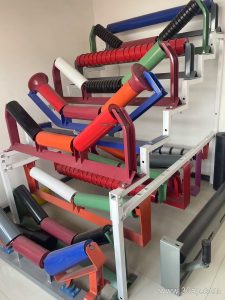
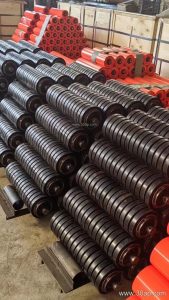
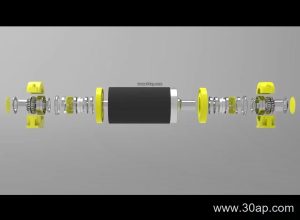
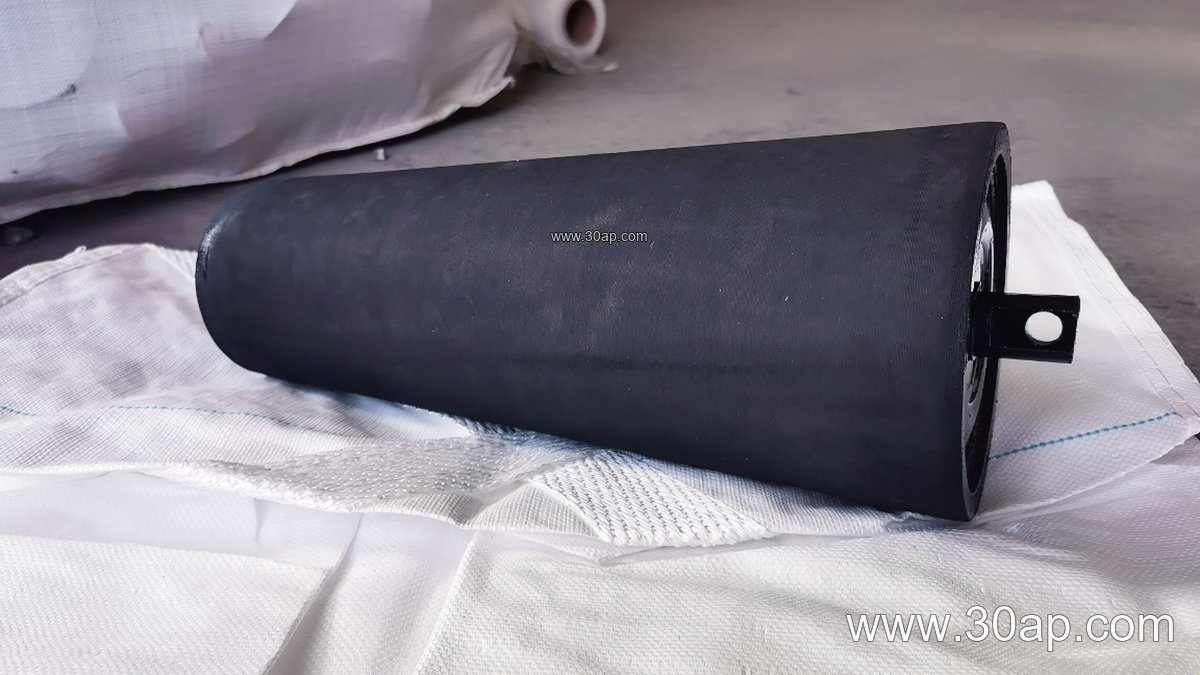
A typical idler roller consists of a steel tube shell, a through shaft, two bearing housings, labyrinth or contact seals, and end caps. The shell may be plain steel, nylon-coated, ceramic-lined, or fitted with rubber rings where impact is heavy. Bearing size is chosen from load and speed rather than from belt width alone; common bearings include 6204, 6205, 6305, 6306, 6308 and 6310, and several of these can suit the same shell diameter.
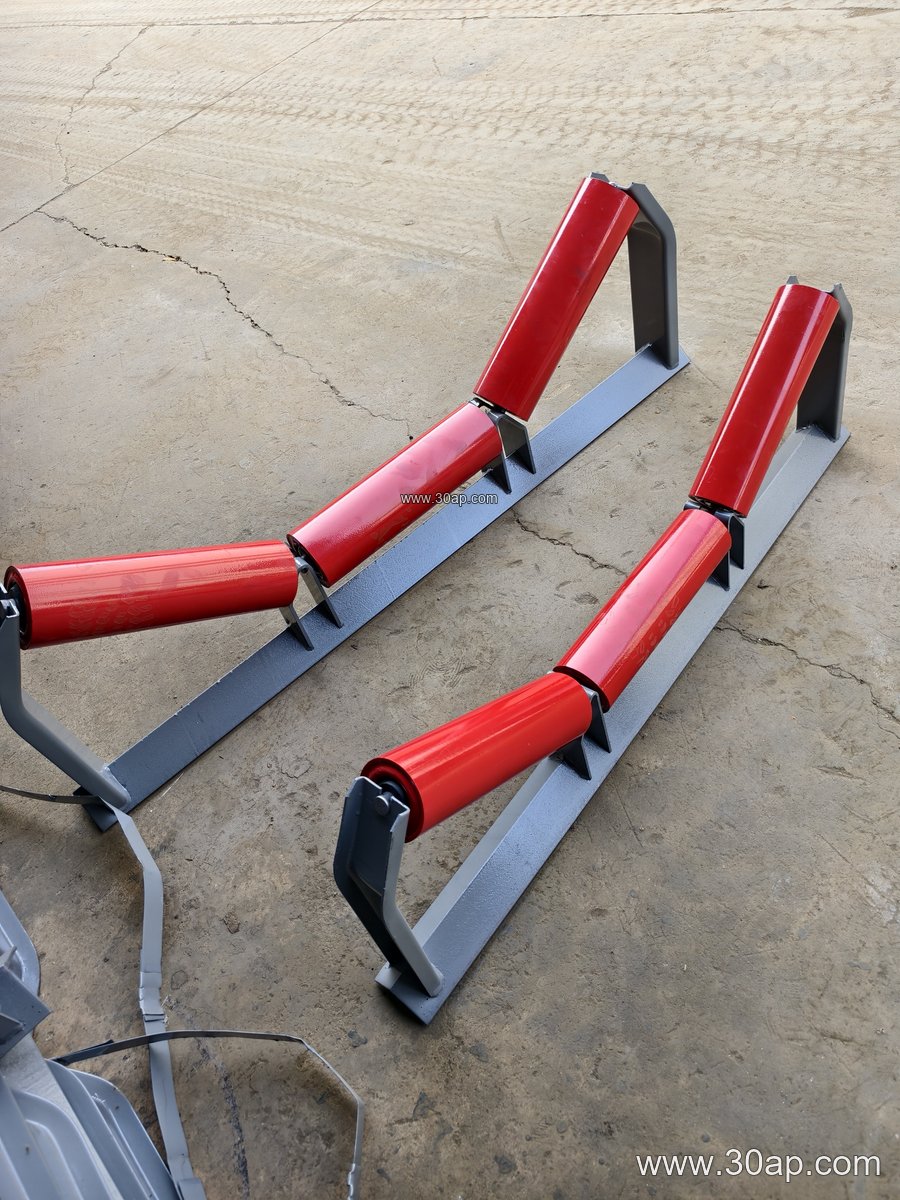
Roller diameter and roller length follow the conveyor design. Common diameters run from Ø63 and Ø76 on small units up to Ø159, Ø178, Ø194 and Ø219 on heavy-duty mining conveyors. A three-roll troughing set on a B800 belt often uses a roll length near 315 mm, while B1200 commonly sits near 465 mm and B1800 near 670 mm. These are typical examples, not fixed pairings, because side rolls and centre rolls can differ and trough angle changes the geometry.
Common Idler Types and Where They Sit
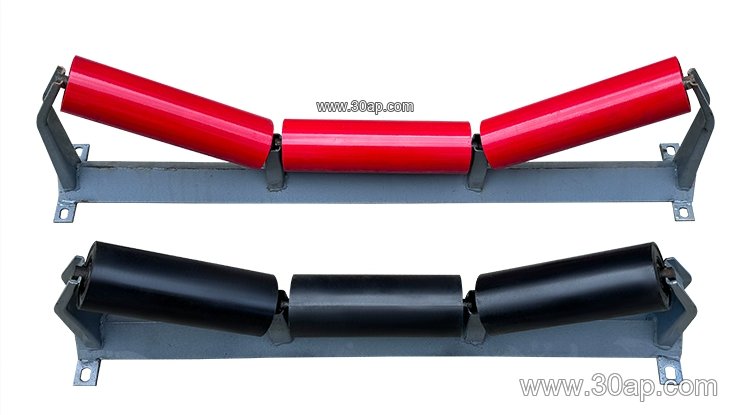
- Troughing idlers in two-roll or three-roll sets form the carrying side, usually at 20, 30, 35 or 45 degrees.
- Impact idlers with rubber rings sit under the loading point to absorb the drop from a crusher or chute.
- Return idlers, flat or V-shaped, support the empty strand and help shed fines.
- Training idlers, including friction and tapered self-aligning designs, correct belt drift on long runs.
- Spiral and comb idlers are used where sticky material builds up on the shell.
The trough angle matters as much as the roll itself. A 35-degree set holds a wider material cross-section than a 20-degree set, but it also presses harder into the belt edges. Transition idlers are placed near pulleys to ease the belt from flat to troughed without stressing the splice.
Industries and Belt Pairings
Idlers appear wherever bulk material moves. In a coal mining conveyor or an underground coal mining conveyor, flame retardant conveyor belt and anti-static conveyor belt are common, and the idler frame is built to resist coal dust and moisture. At a cement plant, heat resistant conveyor belt may run close to the kiln area, while abrasion resistant conveyor belt handles clinker and limestone on the same site. A quarry conveyor belt or crusher conveyor belt usually works with heavy-duty idlers under sharp rock.
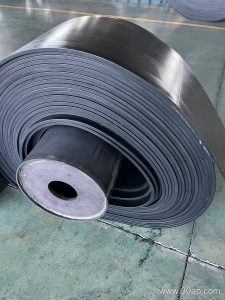
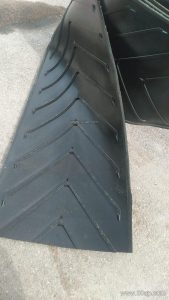
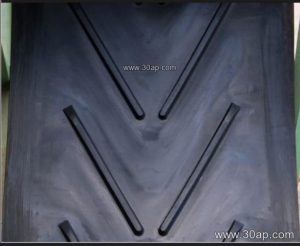
The belt and the idler must be matched in a practical sense. A steel cord conveyor belt is stiff and needs well-aligned rolls; a multi-ply fabric core conveyor belt or EP conveyor belt is more forgiving but still suffers if idlers are seized. Products such as EP1000 1200mm conveyor belt or a 1500mm wide conveyor belt place higher loads on each roll, so bearing selection deserves attention. For steep inclines, a chevron conveyor belt or corrugated sidewall conveyor belt may be used, and the idler spacing should follow the belt manufacturer’s guidance.
Specification Reference
The table below lists reference values only. Final dimensions are confirmed by the conveyor design, not by a single catalogue row.
| Item | Typical reference values |
|---|---|
| Roller diameter | Ø63, Ø76, Ø89, Ø102, Ø108, Ø127, Ø133, Ø159, Ø178, Ø194, Ø219 |
| Belt width | B400, B500, B650, B800, B1000, B1200, B1400, B1600, B1800, B2000, B2200, B2400 |
| Trough angle | 20°, 30°, 35°, 45° |
| Roll surface | Steel tube, nylon, ceramic, rubber ring |
| Bearing | 6204, 6205, 6305, 6306, 6308, 6310 |
What a Buyer Should Check
Buyers should confirm the shaft diameter, the bearing type, the seal design and the frame fixing before ordering. The conveyor bracket and frame holes must match the existing stringers, and the roll length must suit the actual trough set rather than a nominal belt width. Ask about shell wall thickness and seal quality, because dust ingress is the most common cause of seizure in a coal mining conveyor or a dusty aggregate line.
Spare parts planning matters too. Keeping a small stock of the most-used troughing and return idlers reduces downtime when a roll locks and starts wearing through the belt cover. For harsh service, consider ceramic or rubber-covered rolls, and check that the selected idler suits the belt speed and load. For more conveyor components, visit xxxx.com and review conveyor parts idler options alongside conveyor belt and conveyor pulley ranges.