What a Fabric Core Conveyor Belt Is
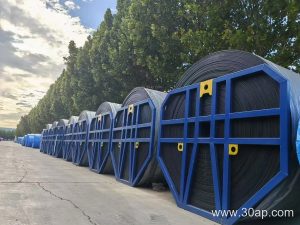
A fabric core conveyor belt is a belt whose load-bearing skeleton is made from woven textile plies rather than steel cables. The textile layers, usually called plies, are bonded between rubber covers. The result is a flexible belt that can run on relatively small pulleys, tolerate repeated starting and stopping, and handle a wide range of bulk materials. In industrial plants, buyers often specify a Fabric Core Conveyor Belt as the standard workhorse for medium-duty and general conveying duty.
The same product also appears under names such as textile-reinforced belt or ply conveyor belt. These are accurate equivalents, but they describe the same construction family: rubber covers over a fabric carcass.
Construction and How the Plies Work
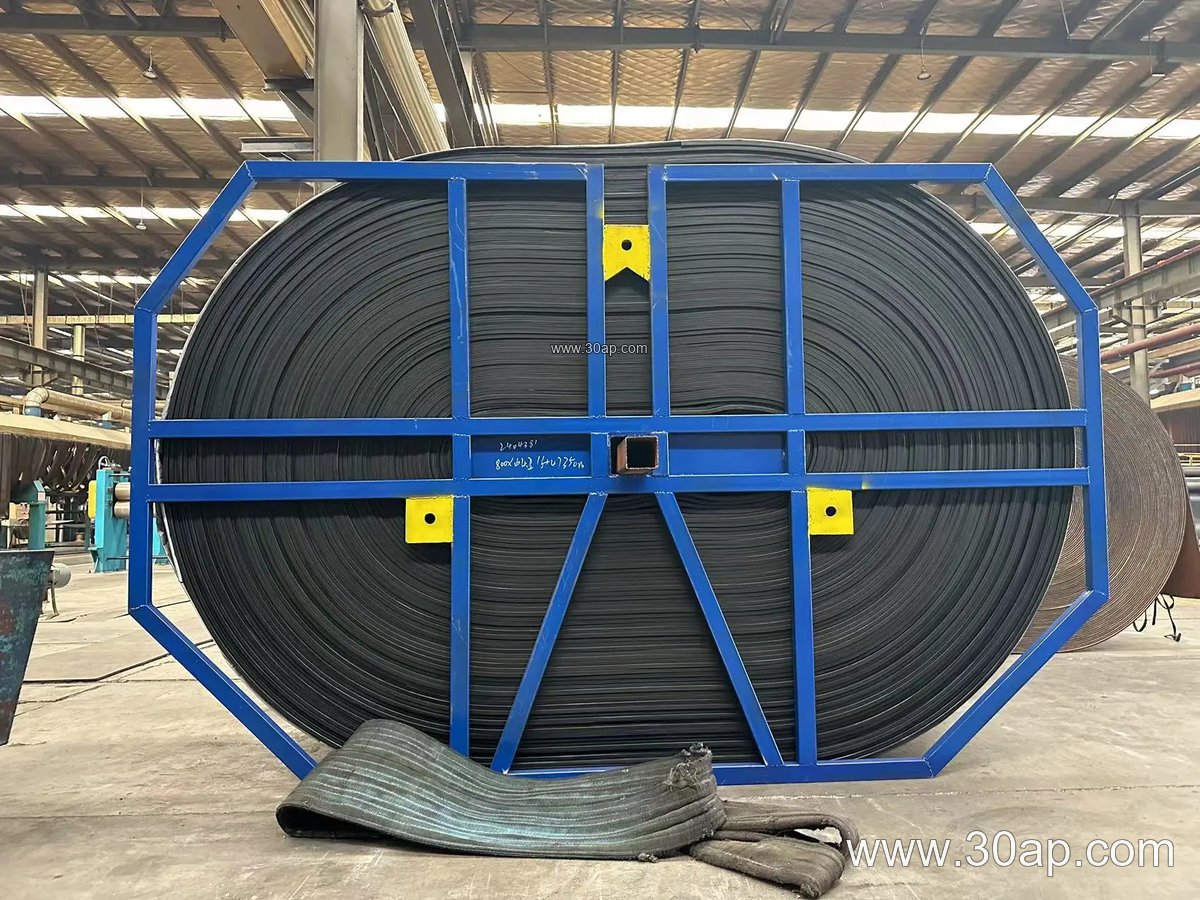
The carcass is the heart of the design. Common fabrics are EP (polyester warp and polyamide weft) and NN (nylon warp and nylon weft). EP gives low elongation and good stability under load, while NN offers high elasticity and impact tolerance. A Multi-Ply Fabric Core Conveyor Belt usually has two to six plies, depending on the required strength and the duty cycle.
Cover compounds are selected for the cargo and the environment. Standard top and bottom cover thicknesses are often written as 3+1.5, 4+2, 5+2, 6+2 or 8+3 mm. The first figure is the carrying cover and the second is the pulley cover. A typical build-up looks like this:
- Carcass: EP or NN fabric, 2 to 6 plies
- Top cover: abrasion, heat, oil or flame-resistant rubber
- Bottom cover: thinner friction cover for pulley contact
- Edges: cut or moulded, depending on the application
Where It Fits in the Plant
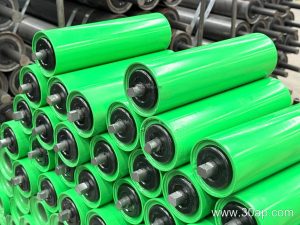
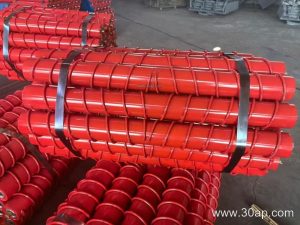
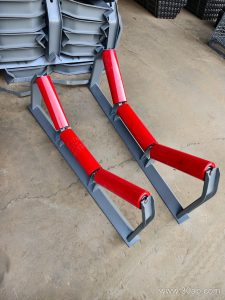
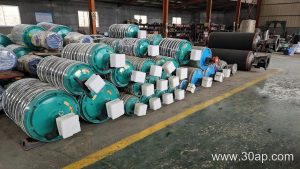
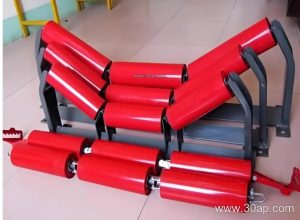
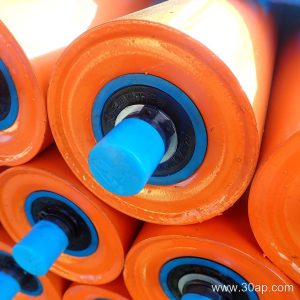
Fabric core belts are common in mines, coal preparation plants, cement works, power stations, quarries, sand and aggregate yards, ports, recycling lines and general bulk material handling. They are frequently used on Mining Conveyor Belt routes that do not demand the very high tension capacity of a steel cord belt. In a typical circuit, the belt runs over conveyor pulleys, is supported by idler rollers and is held by conveyor brackets along the structure.
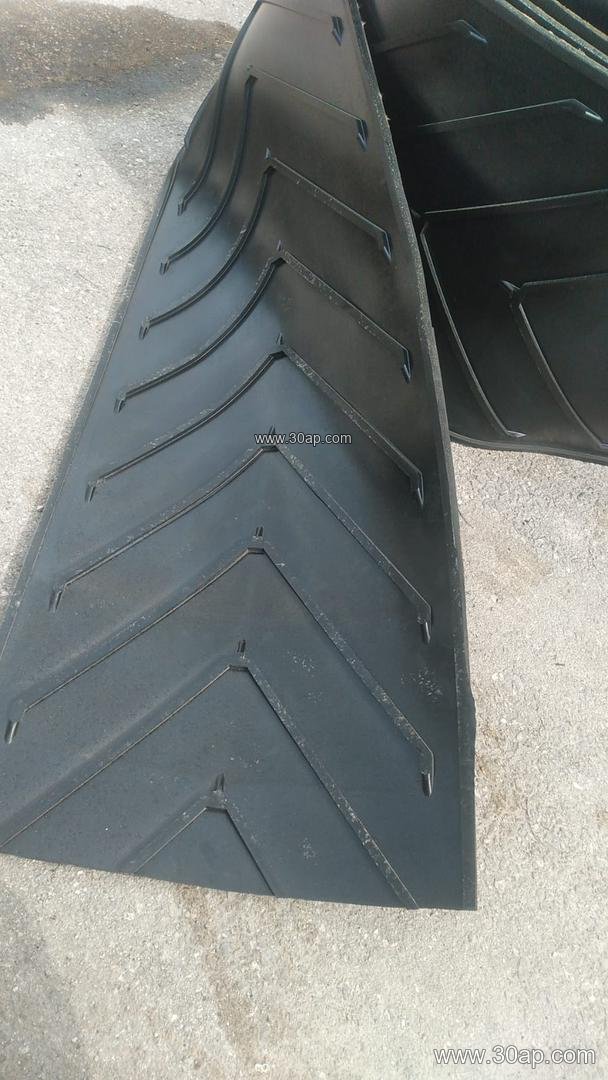
For special routes, different belt subtypes may be considered. A Chevron Conveyor Belt or Corrugated Sidewall Conveyor Belt solves steep incline or material spillage problems, while a Pipe Conveyor Belt encloses the cargo for dusty or curved paths. These are separate designs, so they should be evaluated against the duty rather than treated as drop-in replacements.
Strength Grades and Common Sizes
EP belts are usually classified by tensile strength per metre of width. Typical grades include EP200, EP315, EP400, EP500, EP630, EP800, EP1000 and higher. The table below shows representative combinations; the values are reference data, and final selection depends on the conveyor design.
| Grade | Typical belt width | Common ply count |
|---|---|---|
| EP200 | B500 to B1000 | 2 to 3 |
| EP400 | B650 to B1200 | 3 to 4 |
| EP630 | B800 to B1400 | 4 to 5 |
| EP800 | B1000 to B1600 | 4 to 5 |
| EP1000 | B1200 to B1800 | 5 to 6 |
Belt width is commonly quoted as B500, B650, B800, B1000, B1200, B1400, B1600, B1800 and B2000. Width must suit the loading point and the material lump size, not a single fixed rule. There is no universal one-to-one link between belt width and pulley diameter, so the conveyor pulley, drive pulley and bend pulley should be sized by the conveyor designer.
Cover Selection for Harsh Conditions
The carcass carries the load, but the cover decides service life. Abrasion Resistant Conveyor Belt compounds suit crushed rock, ore and sand. Heat Resistant Conveyor Belt covers serve clinker and cement lines, while Flame Retardant Conveyor Belt and Fire Resistant Conveyor Belt grades are used in coal handling and underground work. Oil Resistant Conveyor Belt and Chemical Resistant Conveyor Belt grades protect against contaminated cargo, and Cold Resistant Conveyor Belt compounds remain flexible in low temperatures.
What Buyers Should Confirm Before Ordering
Start with the material being carried, its lump size, temperature and moisture. Then confirm the required tensile grade, belt width, ply count and cover thickness. Ask about edge condition, splice method and whether an Endless Conveyor Belt is preferred to reduce joint risk. Check that the selected belt matches the pulley sizes and the troughing idler roller layout. Finally, confirm the manufacturer’s handling and storage instructions, because fabric belts are sensitive to moisture and sunlight during long storage.
With clear duty data, a fabric core belt can deliver predictable performance in mines, cement plants, power stations and aggregate yards without over-specifying the conveyor.