What a Port Conveyor Belt Does
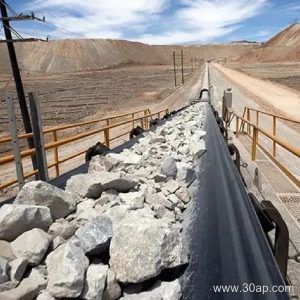
A port conveyor belt is the heavy-duty carrying element inside the bulk handling system that moves coal, iron ore, cement clinker, fertilizer, grain, and similar loose materials between ship unloaders, stackers, reclaimers, transfer towers, and ship loaders. In a terminal, the belt runs continuously for long shifts, often across long distances and multiple transfer points, so the compound and carcass must resist abrasion, impact, and moisture at the same time. The same product is also called a ship loading conveyor belt or bulk material conveyor belt when the duty is described from the system side.
Port duty differs from a quarry or cement plant line in one key way: the belt usually has to handle variable cargo, salt-laden air, and frequent start-stop cycles. That is why buyers often look at a high abrasion resistant conveyor belt or a heavy-duty conveyor belt construction rather than a standard general-purpose carcass.
Construction and Carcass Options
The belt is built from a rubber cover on both faces, a tension-bearing carcass, and an adhesion layer. The carcass choice drives strength and splice behavior:
- EP conveyor belt (EP rubber conveyor belt) with polyester-polyamide fabric, commonly EP200 to EP1250 for terminal yard and jetty conveyors.
- NN conveyor belt with nylon-nylon fabric, used where high elongation and impact absorption matter.
- Steel cord conveyor belt, such as ST1000 to ST2500, for very long runs and high tension.
- Multi-ply fabric core conveyor belt, typically 2 to 6 plies, for moderate tension and easy repair.
Cover grades are chosen by cargo. A coal terminal often specifies a flame retardant conveyor belt or fire resistant conveyor belt, plus anti-static conveyor belt properties. An ore terminal favors abrasion resistant rubber. A fertilizer or chemical berth may need an oil resistant conveyor belt or acid resistant conveyor belt. Cold climates call for a cold resistant conveyor belt, and hot clinker or sinter transfer benefits from a heat resistant conveyor belt.
Common Widths, Strengths, and Cover Thickness
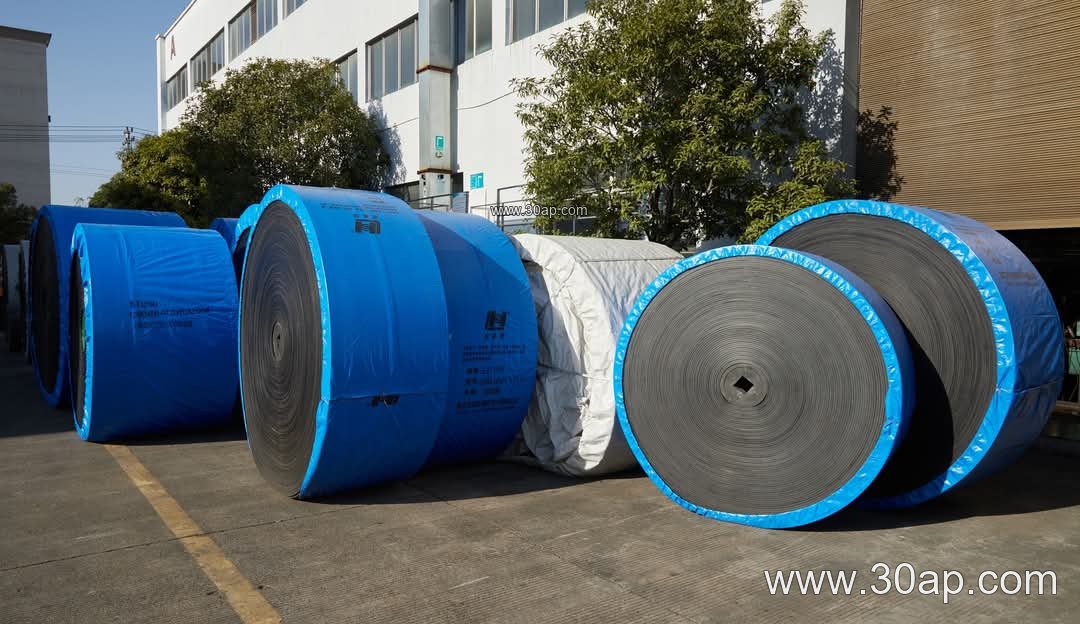
Port belts are usually wide to match high tonnage. Typical belt widths include B800, B1000, B1200, B1400, B1600, B1800, and B2000, with wider extra-wide conveyor belt designs available by project. Cover thickness is often given as top plus bottom, for example 4+2 mm, 5+2 mm, 6+2 mm, or 8+3 mm.
| Parameter | Common Reference Range | Typical Terminal Use |
|---|---|---|
| Carcass type | EP, NN, steel cord | Yard, jetty, transfer |
| Strength grade | EP200 to EP1250; ST1000 to ST2500 | Short to long conveying runs |
| Belt width | B800 to B2000 | Ship loader and unloader lines |
| Cover thickness | 4+2, 5+2, 6+2, 8+3 mm | Abrasive ore, coal, clinker |
| Ply count | 2 to 6 plies | Fabric core belts |
These values are reference data, not a fixed match. A wider belt does not automatically dictate one pulley diameter, and shaft size must come from the conveyor design, not from belt width alone.
Special Profiles for Terminal Layouts
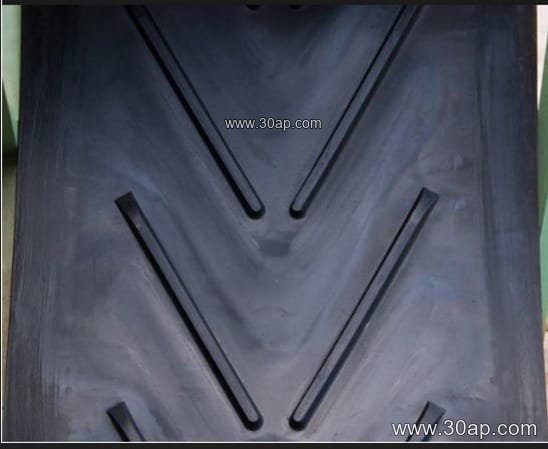
Where the route climbs steeply or the transfer point is tight, a chevron conveyor belt or corrugated sidewall conveyor belt helps retain material. A skirted conveyor belt reduces spillage at loading chutes. An enclosed pipe conveyor belt can carry dusty cargo through sensitive areas. For clean cargo such as grain or food-grade fertilizer, a food grade conveyor belt may be specified, while an endless conveyor belt is preferred where splice reliability is critical.
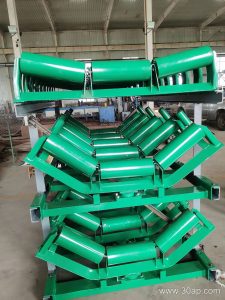
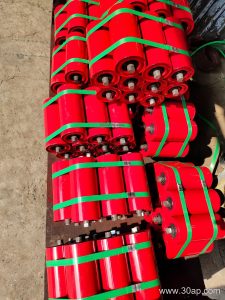
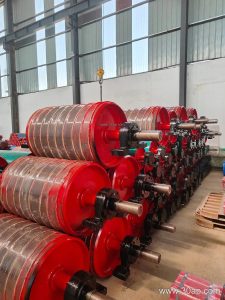
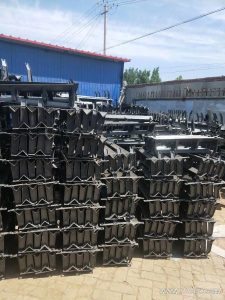
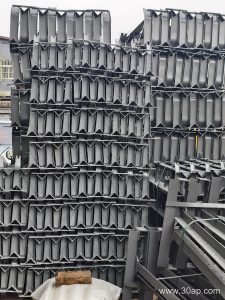
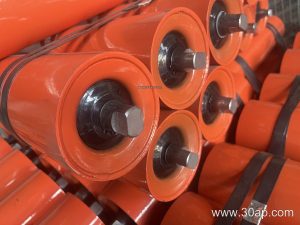
Supporting components matter as much as the belt. The conveyor pulley at the drive and tail ends, the idler roller sets along the carrying side, and the conveyor bracket that holds them all affect belt tracking and edge wear. A mismatch between belt stiffness and pulley or idler alignment often shows up as edge damage long before the cover wears out.
Buyer Checklist
- Confirm cargo type, lump size, moisture, and temperature before choosing the cover grade.
- State the required strength grade and ply count rather than only belt width.
- Ask for the splice method and whether an endless belt is needed.
- Review pulley and idler specifications together with the belt datasheet.
- Check flame retardant and anti-static requirements for coal and dust service.
- Plan spare belt sections and edge repair for continuous terminal operation.
A well-matched port conveyor belt balances carcass strength, cover compound, and conveyor hardware. Buyers who define the duty clearly, and who treat published sizes as a starting point for engineering review, usually get longer service life at the jetty and fewer unplanned stoppages.