What a Heavy-Duty Conveyor Pulley Does in a Bulk Handling Line
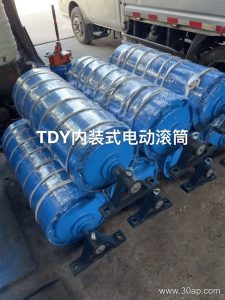
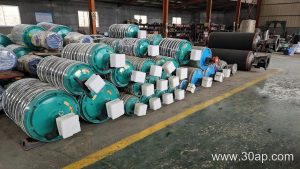
A heavy-duty conveyor pulley is the rotating drum that transfers motion to the belt and carries the main tension loads in a conveyor system. In a limestone quarry or a coal washing plant, the pulley is often the component that decides whether the belt tracks cleanly under full load. This heavy-duty conveyor drum is built for continuous duty, high tension and abrasive dust, so its shell, shaft, bearings and lagging are selected as one matched assembly rather than as separate parts.
Pulleys appear at several positions in the same conveyor. The head or drive pulley transmits torque, the tail pulley returns the belt, and bend or take-up pulleys guide it around curves and maintain tension. These functions are not interchangeable, so a heavy-duty conveyor pulley is normally specified by position, duty and belt tension rather than by name alone.
Construction Details That Separate Heavy-Duty From Standard
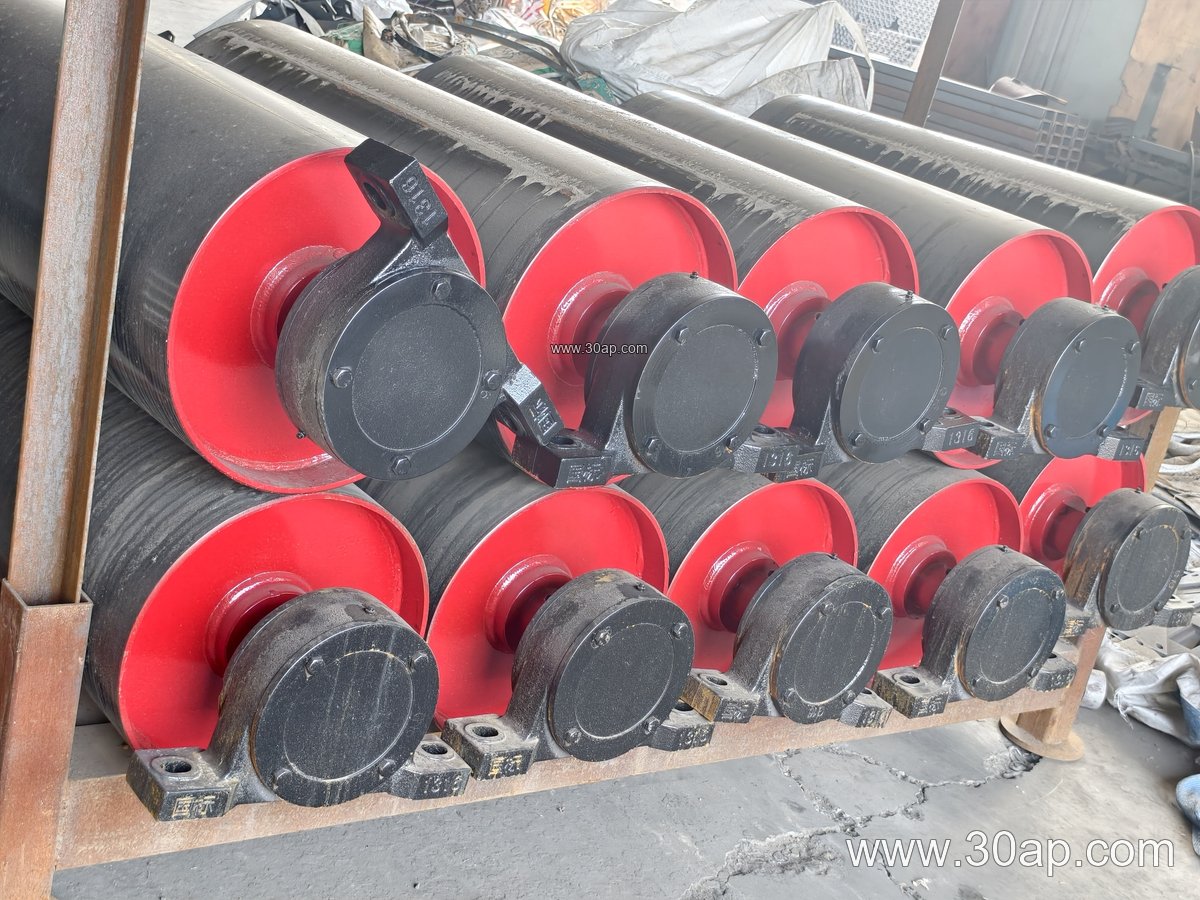
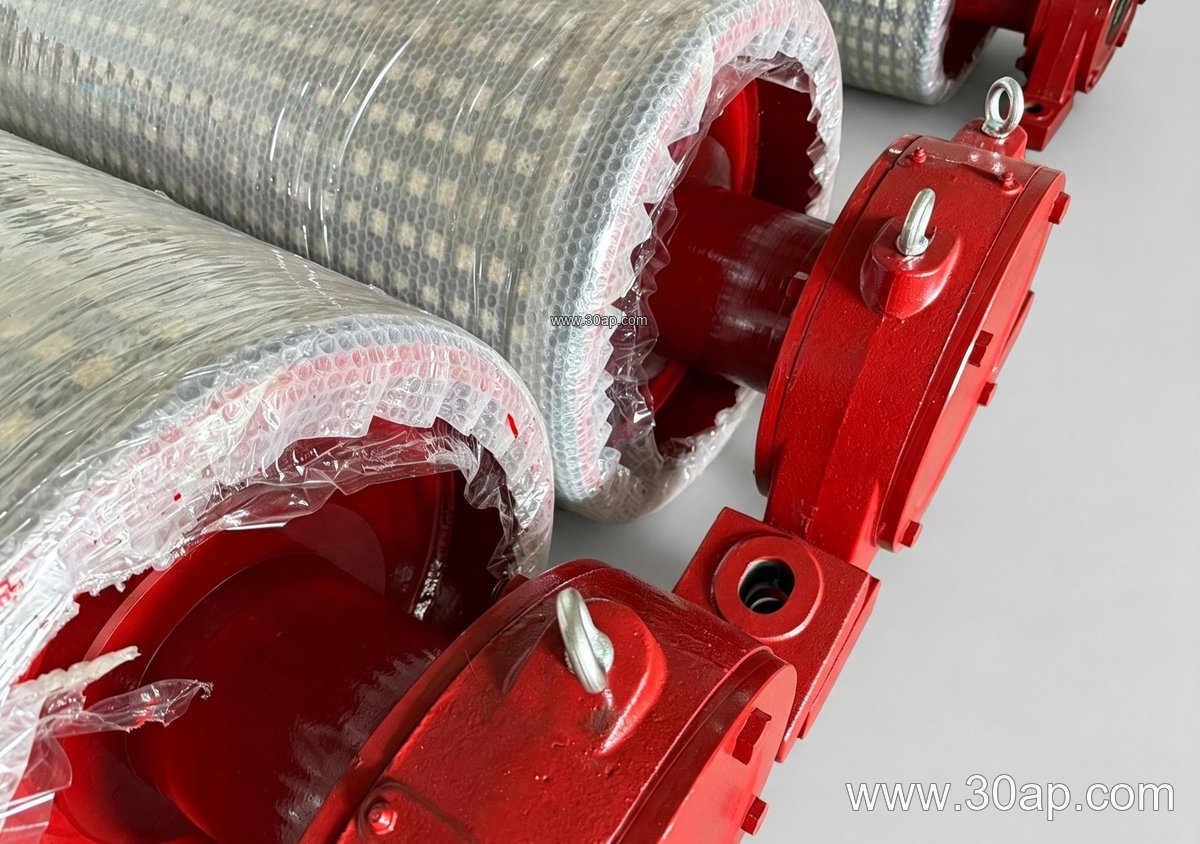
The typical construction includes a rolled steel shell, welded end discs, a forged or turned shaft, and self-aligning bearing housings mounted on a sturdy frame. Heavier shells resist deflection under high belt tension, while thicker shafts and larger bearings handle the torque and radial loads of a fully loaded belt. The connection between shaft and end disc is a key stress point, so hub design and weld quality matter as much as raw material thickness.
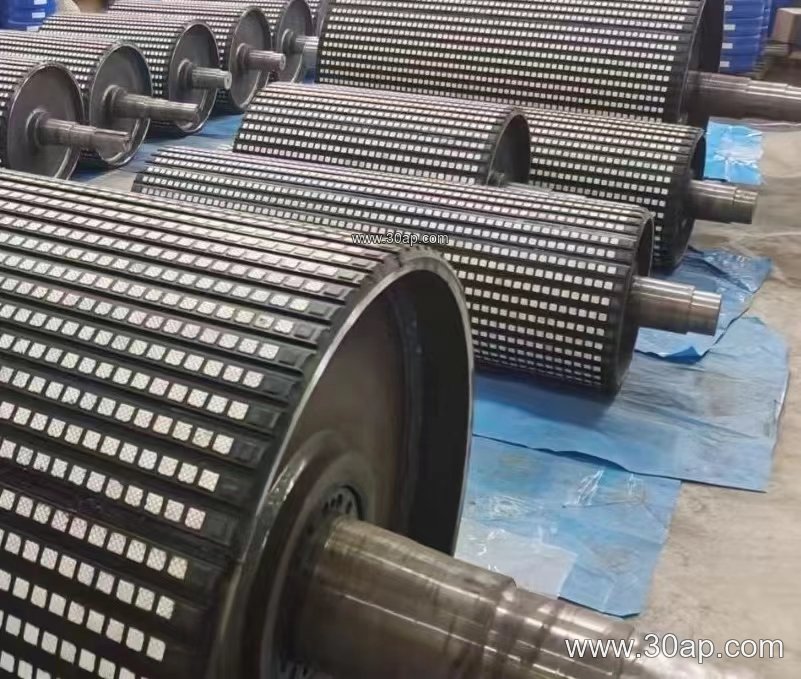
Surface treatment is chosen for grip and wear. Plain finish suits some non-drive positions, while rubber lagging improves friction at the drive. Common lagging options include diamond grooved rubber, herringbone rubber and ceramic lagging, often in thicknesses of 8, 10, 12, 15 or 20 mm. A heavy-duty conveyor pulley used in a cement plant clinker line may use ceramic lagging for abrasion resistance, while a coal handling pulley may need flame retardant rubber to match the belt.
Common Reference Dimensions
The table below lists typical reference values, not fixed rules. Final dimensions are confirmed by the conveyor designer based on torque, belt tension and shaft load.
| Parameter | Common Reference Range |
|---|---|
| Belt width B | B400, B500, B650, B800, B1000, B1200, B1400, B1600, B1800 |
| Pulley diameter | Ø200, Ø250, Ø315, Ø400, Ø500, Ø630, Ø800, Ø1000, Ø1250 |
| Face width | Usually wider than belt, e.g. B800 about 950 mm, B1200 about 1400 mm |
| Shaft diameter | Ø50 to Ø200 depending on torque and load |
| Lagging thickness | 8, 10, 12, 15, 20 mm |
A combination such as B1200 × Ø1000 or B800 × Ø500 is common, but belt width does not dictate a single diameter. Shaft size follows calculated torque, not belt width alone.
Where Heavy-Duty Pulleys Are Used
These pulleys suit abrasive and high-tonnage duties. In an iron ore or copper ore terminal, a heavy-duty conveyor pulley drives long overland belts carrying dense material. In a power plant coal yard, pulleys work with flame retardant and abrasion resistant belting to move fuel from stockpile to bunker. Aggregate plants, crusher discharge lines and tunnel spoil systems also rely on robust drum assemblies where shock loading is routine.
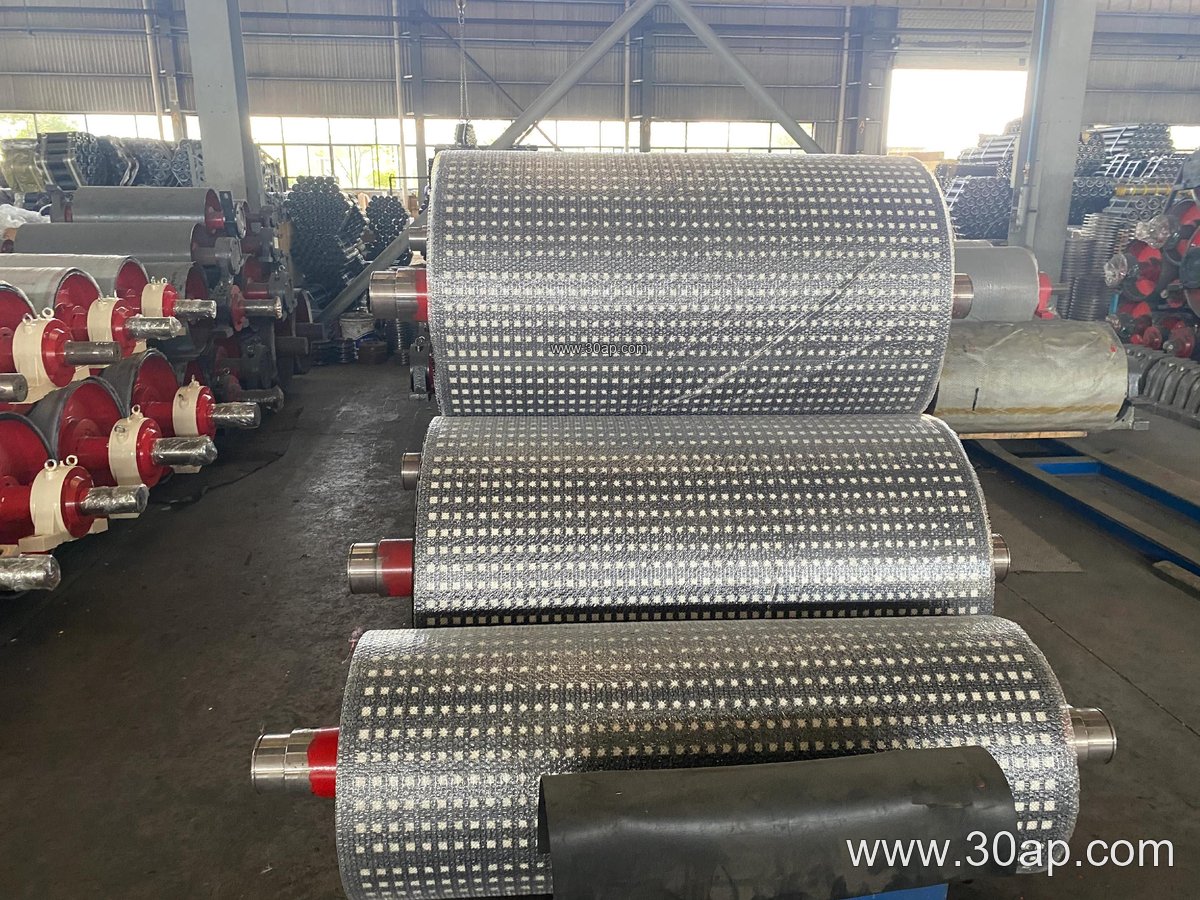
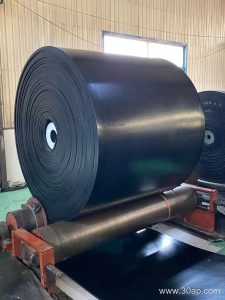
The pulley must match the belt it carries. A steel cord conveyor belt demands a larger diameter and stronger shaft than a light fabric belt, while a chevron or corrugated sidewall belt may need a larger pulley to avoid cleat damage. Matching pulley face width to the belt, checking belt thickness and confirming the belt’s tension rating all belong in the same selection review.
Buyer Checklist Before Ordering
- Confirm the pulley position: drive, tail, bend, take-up or snub, since each carries different loads.
- Provide belt width, belt type and maximum operating tension so the shell and shaft can be sized correctly.
- State the material and environment: coal dust, cement powder, salt spray or high temperature all affect lagging and bearing choices.
- Choose lagging by duty: plain, rubber, diamond, herringbone or ceramic, with thickness suited to wear.
- Check bearing type, housing and mounting bracket compatibility with the conveyor frame.
- Confirm balancing, runout and inspection records, and plan a spare pulley for critical lines.
For related equipment, buyers often review conveyor idler roller sets, conveyor bracket dimensions and belt specifications together with the drum order, since misalignment between these parts causes tracking problems. A well-matched heavy-duty conveyor pulley, belt and support structure keeps a bulk handling line running with fewer stoppages.