What a Conveyor Equipment Pulley Does on the Line
A conveyor equipment pulley is the rotating drum that gives a conveyor belt its direction and its drive. One drum pulls the belt, another returns it, and intermediate drums guide it around curves or add wrap angle where the belt needs more grip. Because each position does a different job, drive, tail and bend pulleys are separate roles with separate design priorities, and they are not interchangeable names for the same part.
In a quarry, a coal preparation plant or a cement clinker line, the pulley is often the quiet component until it fails. A seized bearing or a worn lagging surface stops the whole transfer point, so buyers tend to look closely at shell thickness, shaft size and surface condition before ordering.
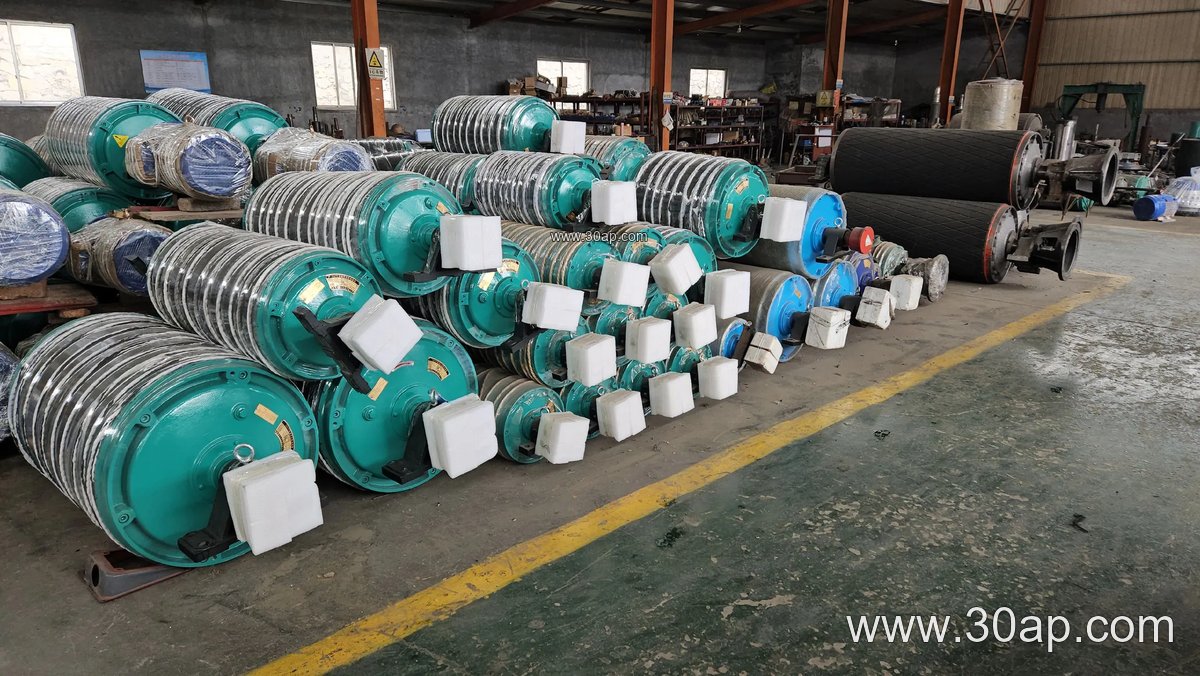
How the Drum Is Built
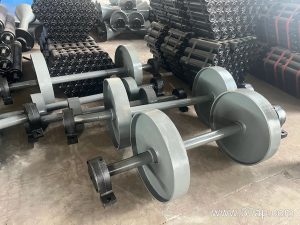
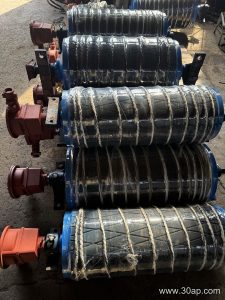
The basic assembly is a cylindrical shell welded to end discs, mounted on a through shaft, and supported by bearing housings that bolt to the conveyor bracket. Common constructions include:
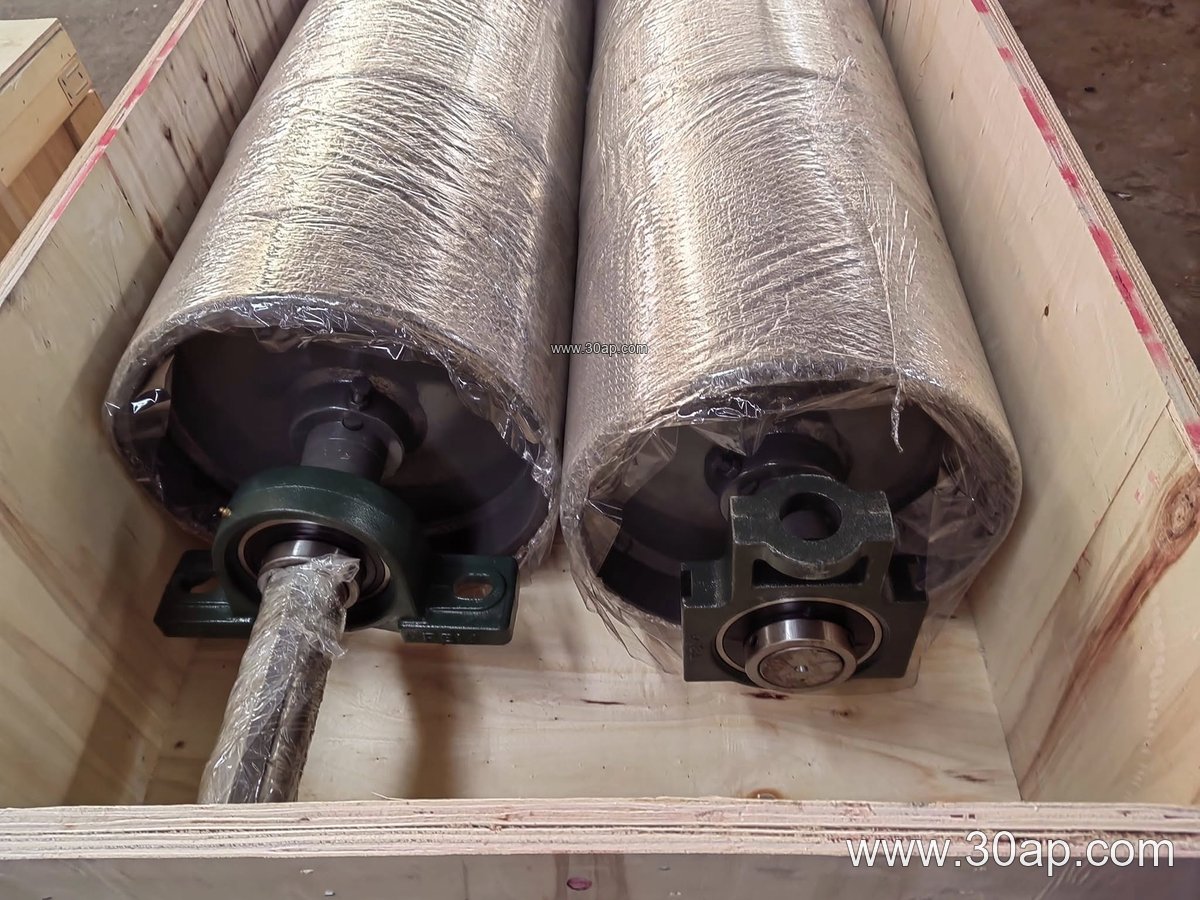
- Drive or head pulley — transmits torque to the belt and usually carries lagging for grip.
- Tail pulley — returns the belt at the loading end, often with a self-cleaning or wing design to shed material.
- Bend pulley — changes belt direction and increases wrap angle without driving.
- Take-up pulley — works with the tensioning system to hold belt sag within limits.
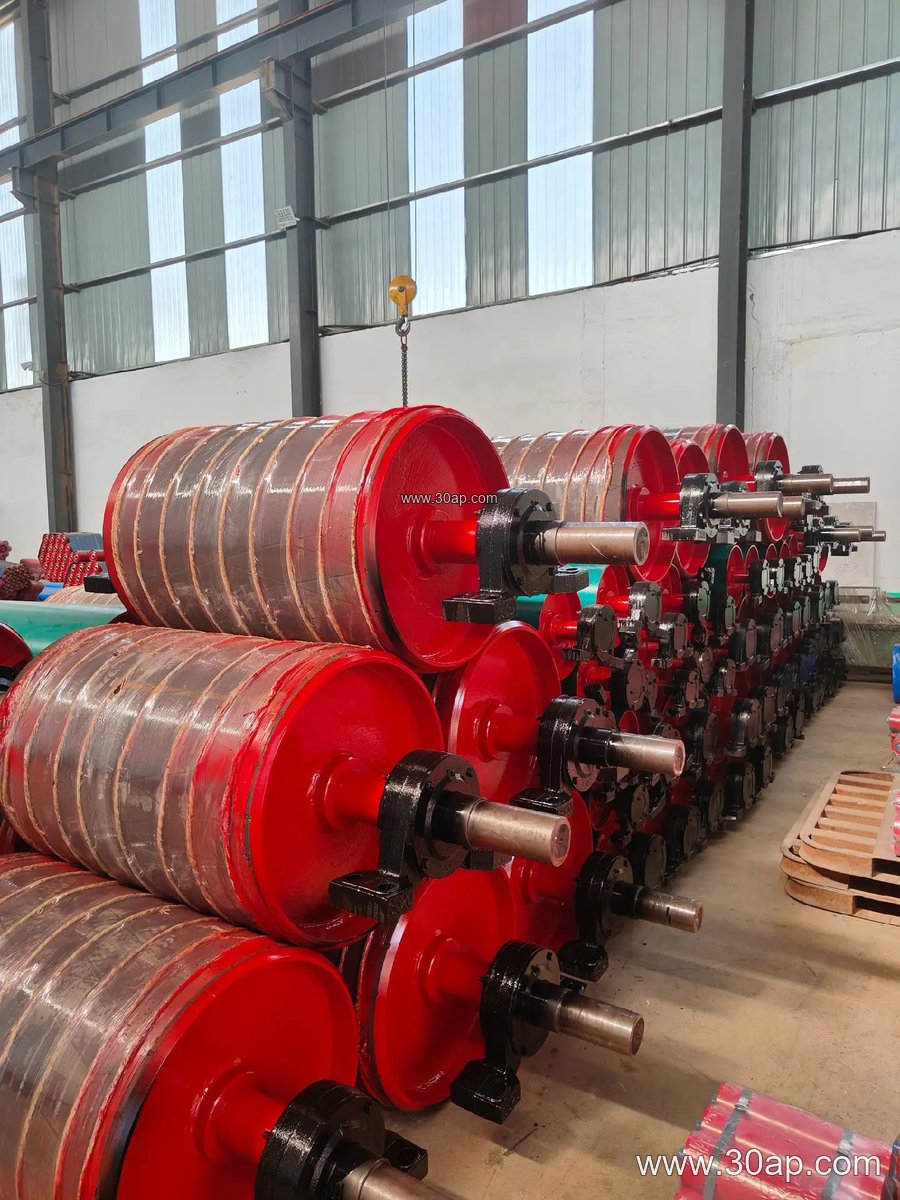
Surface options range from plain finish to cast rubber, cold-bonded rubber, hot-vulcanized rubber, diamond grooving, herringbone grooving and ceramic lagging. Lagging thickness commonly runs 8, 10, 12, 15 or 20 mm depending on duty. A drum that drives a heavy [Abrasion Resistant Conveyor Belt](/) in a primary crusher discharge will usually need more grip and a thicker shell than a bend drum on a short transfer.
Matching Drum Size to Belt Width
Face width is normally a little wider than the belt so the belt is fully supported. Reference combinations often look like this:
Common width and diameter pairings
| Belt width | Typical face width | Example diameter |
|---|---|---|
| B500 | about 600 mm | Ø320 or Ø400 |
| B800 | about 950 mm | Ø500 |
| B1000 | about 1150 mm | Ø630 or Ø800 |
| B1200 | about 1400 mm | Ø1000 |
| B1400 | about 1600 mm | Ø800 or Ø1000 |
| B1600 | about 1800 mm | Ø1250 |
| B1800 | about 2000 mm | Ø1400 |
These are reference values, not fixed rules. A given belt width can work with more than one drum diameter, and the choice depends on belt tension, wrap angle, belt stiffness and the space available. Shaft diameter is set by torque and bearing load, not by belt width alone; common shaft sizes run from Ø50 up to Ø200, but the correct figure comes from the drive calculation.
Where It Fits in the Plant
In an underground coal mine, flame retardant belting and a robust drive drum keep the main haulage running through dusty, damp conditions. At a power plant coal yard, a large head drum with diamond lagging handles constant tonnage and occasional wet coal. Aggregate lines use bend and take-up drums to route the belt around screens and stackers, while a port ship loader relies on a compact drum set to keep the boom conveyor tracking correctly.
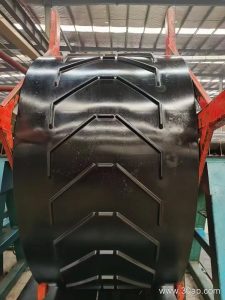
The drum also has to suit the belt itself. A [Steel Cord Conveyor Belt](/) needs a larger diameter relative to its thickness than a light fabric carcass, because a tight bend stresses the cords. A chevron or corrugated sidewall belt may need a larger tail drum and extra clearance so the profiles pass without rubbing. Matching drum diameter to belt construction is one of the most common selection mistakes.
Buyer Checklist Before Ordering
- Confirm the duty: drive, tail, bend, take-up or snub position.
- State belt width and belt type, for example an [EP Conveyor Belt](/) or a heavy-duty mining belt.
- Provide the calculated belt tension and required wrap angle.
- Choose lagging by condition: plain for light duty, rubber for general grip, ceramic for wet or oily slip.
- Check shaft size, bearing type and the bolt pattern of the existing conveyor bracket.
- Ask about balancing, shell runout and bearing sealing for dusty sites.
Good communication with the supplier avoids the usual problems: a drum that is too small for the belt, lagging that wears too fast, or a shaft that does not fit the bearing housing. Get the duty, belt data and mounting dimensions right, and the drum will quietly do its job for years.