What a Carbon Steel Idler Does on a Conveyor
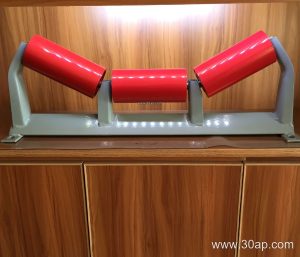
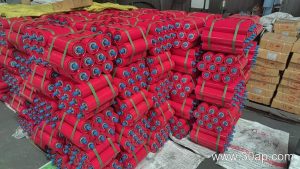
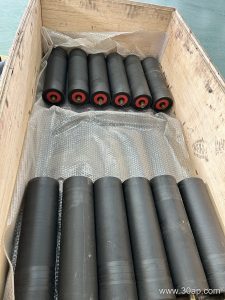
A carbon steel idler is the rotating support that carries the conveyor belt along its route. In a typical troughed carrying run, three of these idler rollers form a cradle that shapes the belt into a trough so bulk material stays centered. On the return run, flat or V-shaped carbon steel idlers hold the belt up and keep it tracking. Because the roller body is made from carbon steel tube, the idler offers a good balance of stiffness, wear life, and cost for demanding duty such as quarry conveyor belts, crusher conveyor belts, and cement plant conveyor belts.
The same product is also described as a carbon steel idler roller or steel idler. These are accurate equivalents for the same item; they are not a different product category.
How the Idler Is Built
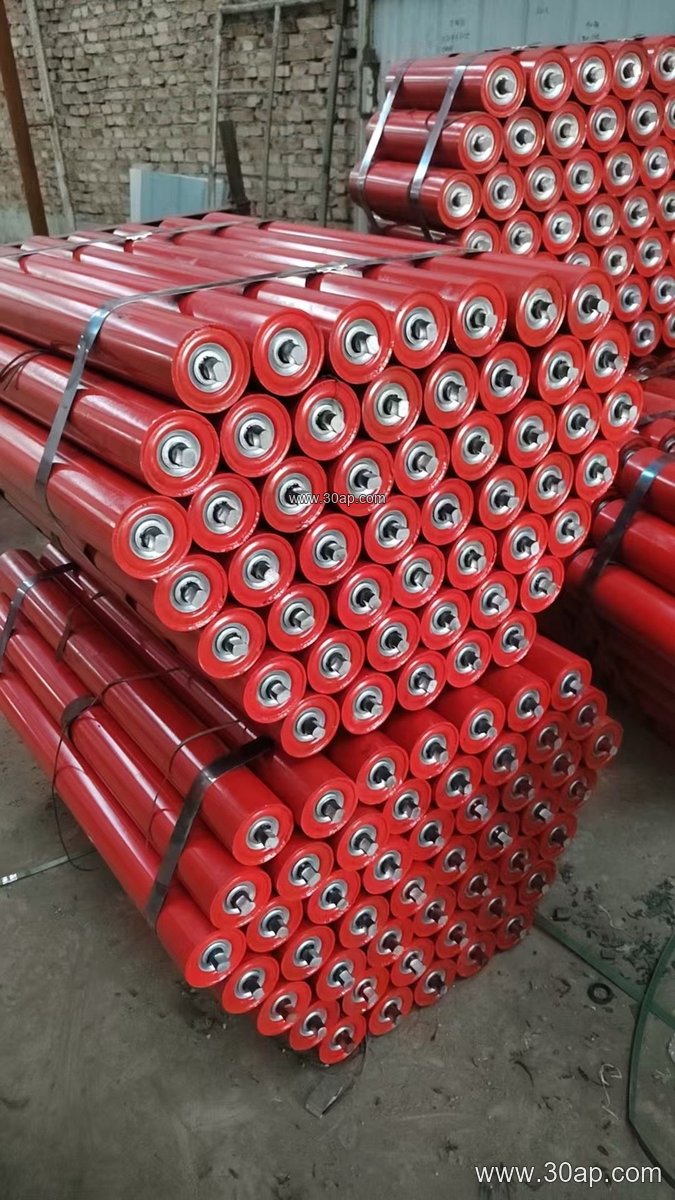
A carbon steel idler usually consists of a steel tube shell, a shaft, bearing housings, bearings, and a sealing system. The tube is cut to the required roller length, machined at the ends, and fitted with bearing housings. Common bearing sizes include 6204, 6205, 6305, 6306, 6308, and 6310, matched to the load and shaft design rather than to one fixed roller diameter. Seals are critical in dusty plants: a labyrinth seal or a combination seal keeps fines away from the bearing cavity, which is where most premature idler failures begin.
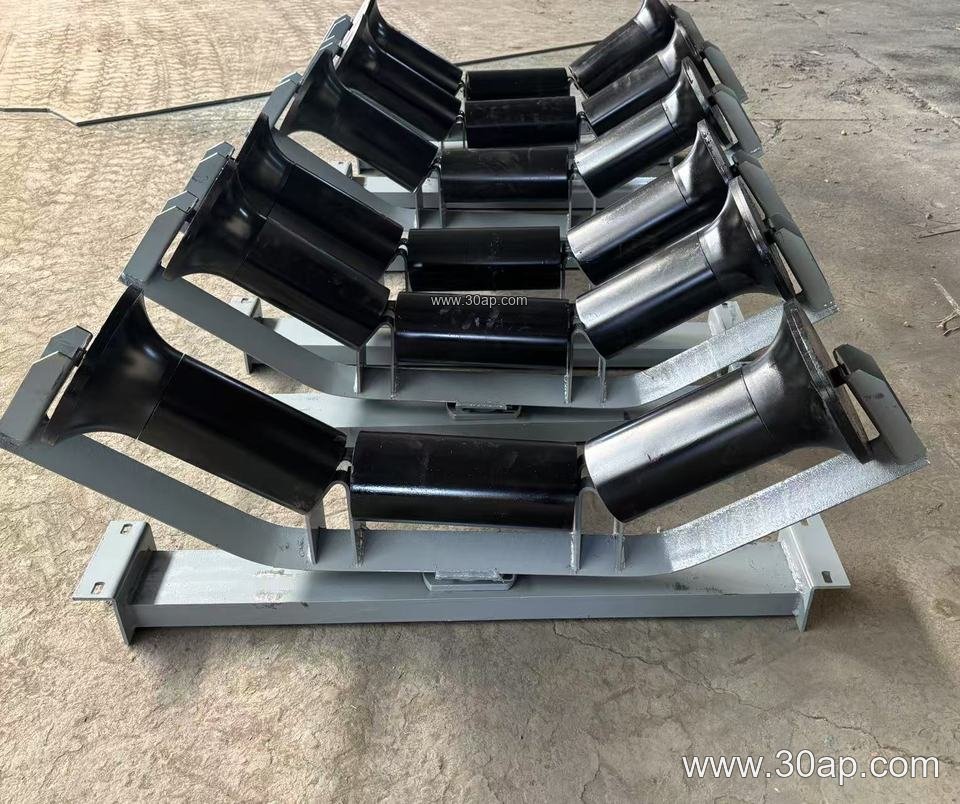
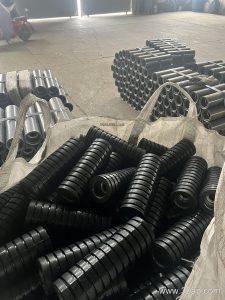
Surface form matters too. Plain steel tube suits general carrying and return positions. Rubber rings are added for impact zones under a crusher discharge, and ceramic or nylon covers are sometimes used where belt slip or build-up is a concern. The shell is normally painted or coated to resist corrosion in humid or wash-down areas.
Common Sizes and Arrangements
Idler diameter and belt width are selected together with the conveyor design. The table below shows typical reference values; actual roller length depends on belt width, trough angle, and the idler set configuration, so side rollers and center rollers can differ.
| Item | Typical reference values |
|---|---|
| Roller diameter | Ø63, Ø76, Ø89, Ø102, Ø108, Ø127, Ø133, Ø159, Ø178, Ø194, Ø219 mm |
| Belt width | B400, B500, B650, B800, B1000, B1200, B1400, B1600, B1800, B2000 mm |
| Trough angle | 20°, 30°, 35°, 45° |
| Idler set | single roll, two-roll, three-roll troughing |
| Example roller length, three-roll troughing | about 200 mm at B500, 250 mm at B650, 315 mm at B800, 380 mm at B1000, 465 mm at B1200, 530 mm at B1400, 600 mm at B1600 |
These figures are common examples, not fixed pairings. A 500mm or 650mm conveyor belt may use different roller lengths depending on the frame and trough angle chosen by the designer.
Where Carbon Steel Idlers Are Used
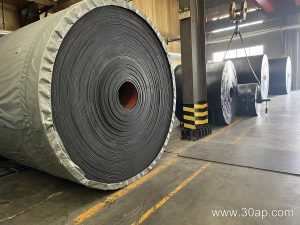
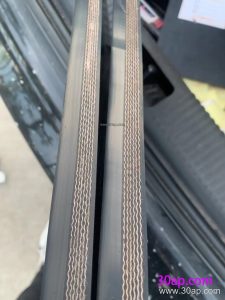
You will find carbon steel idlers in limestone quarries, iron ore and copper ore handling lines, coal washing plants, and power plant coal conveying systems. They also serve aggregate conveyor lines, sand making plants, and port ship loading conveyors. In these environments the idler works alongside a rubber conveyor belt, an EP conveyor belt, or a steel cord conveyor belt, and must tolerate abrasive dust, moisture, and continuous operation.
In a coal mining conveyor or underground mining conveyor, flame retardant and anti-static properties are usually required from the belt, while the idler itself is selected for seal quality and bearing protection. In a cement plant or steel plant, heat and fine powder are the main concerns, so idler placement and seal design deserve attention.
Selection and Maintenance Notes
- Match roller diameter to belt speed and load; larger diameters run cooler and last longer in heavy-duty mining conveyor service.
- Use impact idlers with rubber rings below crusher discharge points to protect the belt and the roller.
- Check that the idler shaft fits the conveyor bracket and that the frame spacing matches the trough angle.
- Inspect seals and bearings during scheduled shutdowns; a seized idler can damage the belt surface quickly.
- Keep spare idlers on hand for critical lines such as a primary ore conveyor belt or a coal mining conveyor belt.
For advice on matching carbon steel idlers with your belt specification, including EP1000 or NN300 belt constructions and the appropriate roller diameter, contact the supplier with your belt width, trough angle, and duty conditions. A well-chosen idler keeps the belt running straight and extends the service life of the whole conveyor system.