What Conveyor Bracket Procurement Covers
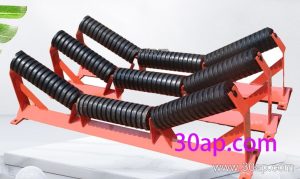
Conveyor bracket procurement is the process of sourcing the steel frames that hold idler rollers in position along a conveyor line. These brackets, often called idler support brackets or conveyor idler frames, are not a single item. The category includes troughing brackets on the carrying side, return brackets underneath, transition brackets near pulleys, self-aligning brackets, impact brackets at loading points, and adjustable designs. A buyer who treats them all as one commodity usually ends up with mismatched hole spacing and rework on site.
The bracket itself is a fabricated steel part. Common materials are angle steel, channel steel, and folded steel plate. The bracket carries the roller load, sets the trough angle, and keeps spacing consistent so the conveyor belt runs without pinching or wandering. For a quarry conveyor belt or a cement plant line, the bracket is a small cost item with a large effect on belt life.
How the Bracket Is Built and Where It Sits
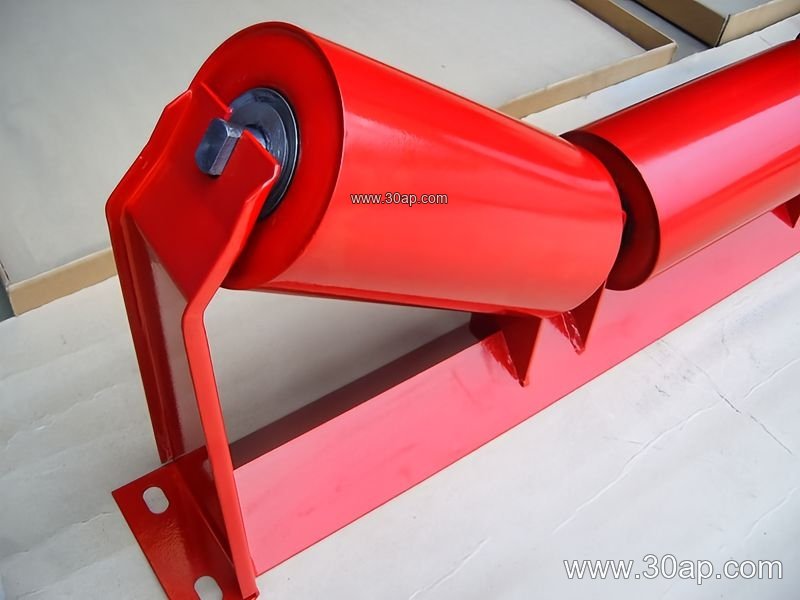
A troughing bracket usually consists of a cross beam and two or three roller seats angled to form the trough. Return brackets are flatter, and V-return brackets hold two rollers in a V to help center the belt. Transition brackets are placed where the belt changes from flat at the pulley to troughed in the run, and they are often specified with a shallower angle to reduce edge stress.
Mounting hole spacing and beam length follow the belt width and trough angle, so they should be confirmed against the conveyor drawing rather than assumed. Typical belt widths in procurement enquiries include B500, B650, B800, B1000, B1200, B1400, B1600, and B1800, with wider frames available for large port and power plant systems. Roller diameters commonly quoted are Ø89, Ø108, Ø133, Ø159, and Ø194. A bracket for a B800 line at 35 degrees with Ø108 rollers is a normal combination, but it is not the only valid one; the same width may use a different roller diameter depending on load and belt speed.
Matching Brackets to the Rest of the Line
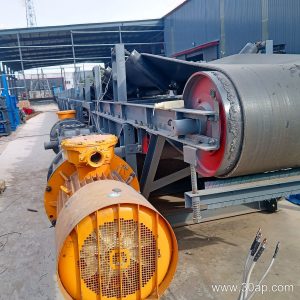
Brackets do not work alone. They interact with the conveyor pulley at the head and tail, the idler roller set in the run, and the belt itself. A heavy-duty mining conveyor belt or a steel cord conveyor belt carrying ore demands sturdier frames and closer roller spacing than a light aggregate conveyor belt. At a transfer point, impact brackets with rubber rings absorb falling material and protect both the roller and the belt.
Self-aligning brackets are worth considering on long runs where mistracking is a risk. Forward-leaning brackets, usually set at about 1.5 to 2 degrees, can help training without extra hardware. Adjustable brackets let maintenance teams change the trough angle between common values such as 20, 30, 35, and 45 degrees, which is useful when a line handles more than one material.
Practical Points for Buyers
- Confirm belt width, trough angle, and roller diameter together, not separately.
- Ask for the mounting hole pattern and beam length on the drawing.
- State the environment: washdown, dust, heat, or corrosive atmosphere affects coating and material choice.
- Check that bracket seats match the roller shaft ends actually being supplied.
- For underground coal mining conveyor belt systems, confirm flame retardant and anti-static requirements with the belt supplier as well as the frame supplier.
Good conveyor bracket procurement is mostly about drawing discipline. When the frame, roller, and belt data are checked together before the order is placed, installation at the crushing plant, the coal handling system, or the port terminal goes smoothly. Buyers who need matching belts and rollers can review options at www.beltconveyorsystem.com alongside their bracket enquiries.