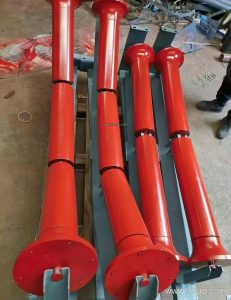
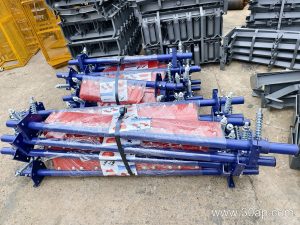
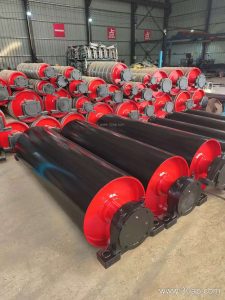
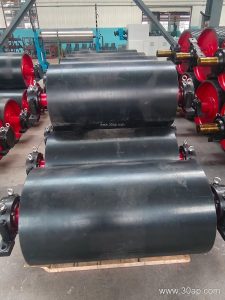
What a Terminal Conveyor Pulley Does
A terminal conveyor pulley is the drum positioned at either end of a conveyor system—typically the head (drive) or tail (take-up) station—where the belt changes direction and either receives power or maintains tension. In many layouts, the head pulley is the driving pulley that transmits motion to the belt, while the tail pulley serves as a tensioning or redirecting drum. Although drive, tail, and bend pulleys are distinct subtypes and not interchangeable, they share the same basic construction and are often grouped under the general term conveyor pulley. This article focuses on the terminal conveyor pulley and the practical points a buyer should consider when specifying one for a quarry, cement plant, coal handling facility, or port bulk terminal.
Construction and Key Components
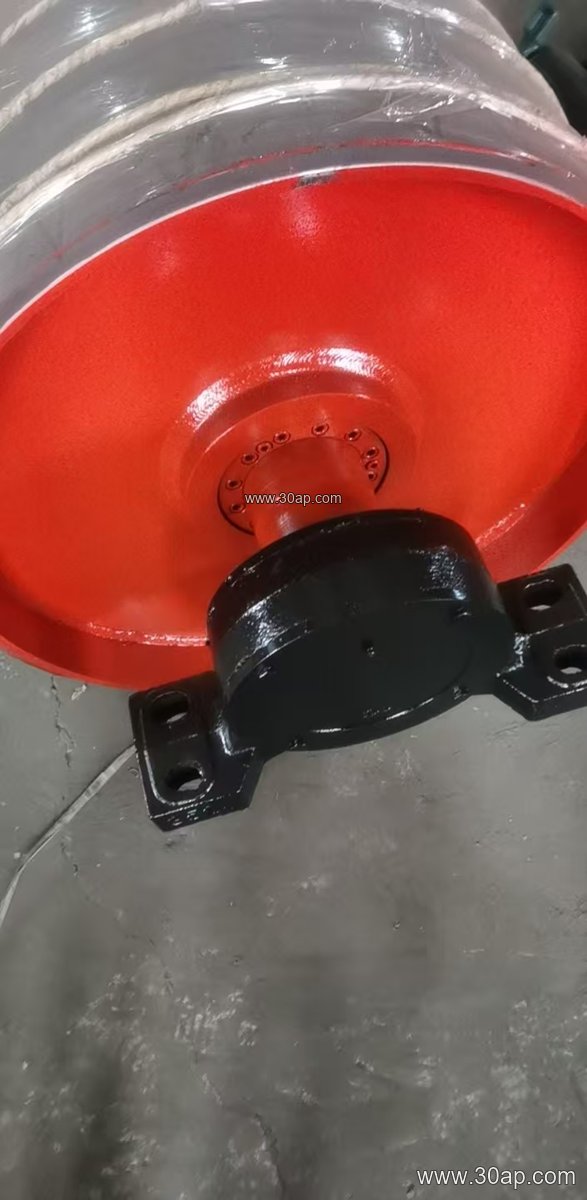
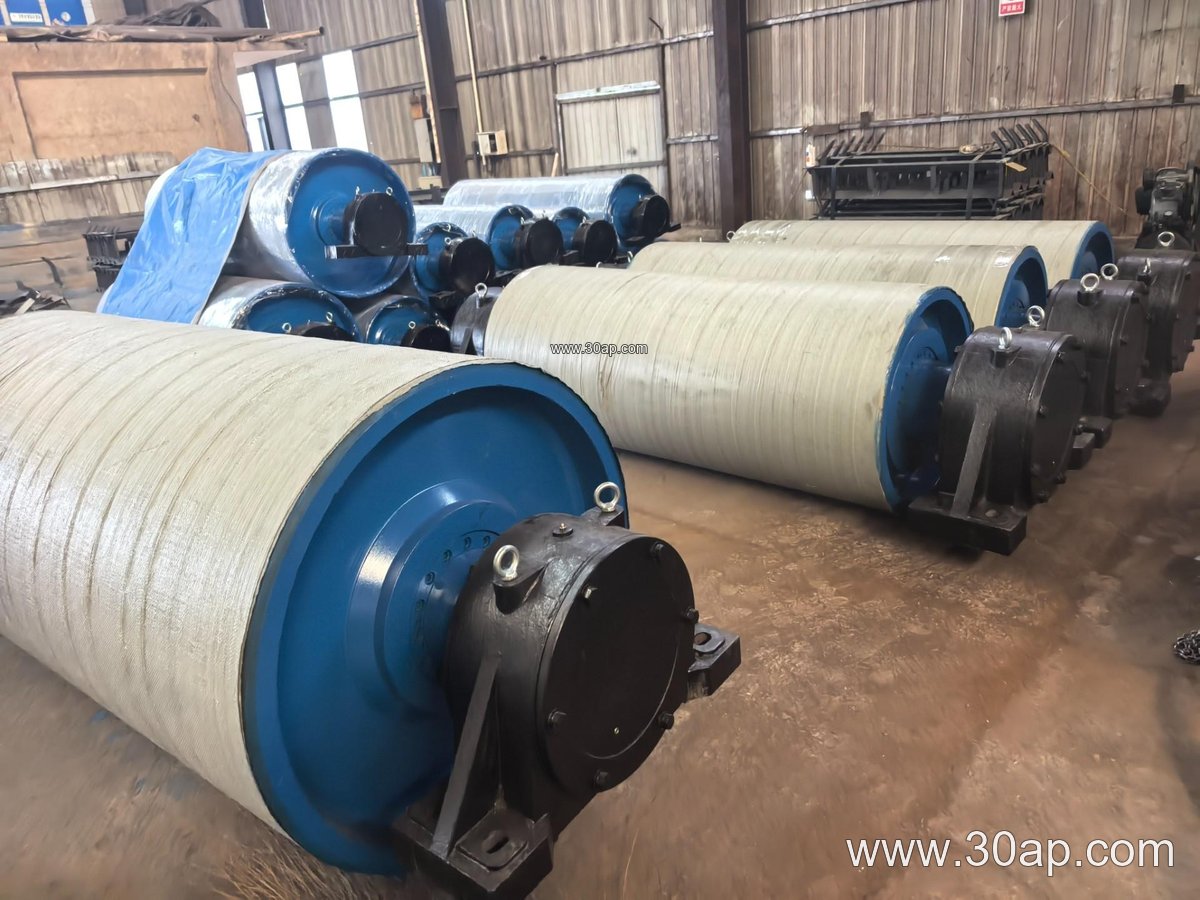
A terminal conveyor pulley usually consists of a cylindrical shell, two end discs, a shaft, and bearing housings. The shell may be seamless or rolled and welded, and its surface can be plain, rubber lagged, or ceramic lagged depending on grip and wear requirements. Common lagging thicknesses are 8, 10, 12, 15, and 20 mm. The shaft diameter is determined by torque and load—typical ranges include Ø50 to Ø200 mm—and should never be selected from belt width alone. Bearing type and sealing arrangement are chosen to suit the operating environment, whether dusty, wet, or corrosive.
Surface Options at a Glance
- Plain shell – suitable for lower-tension, clean applications.
- Rubber lagging (cold-bonded or hot-vulcanized) – improves friction and reduces belt slip.
- Diamond or herringbone grooving – helps with water drainage and tracking.
- Ceramic lagging – provides high wear resistance in abrasive conditions.
Where Terminal Pulleys Are Used
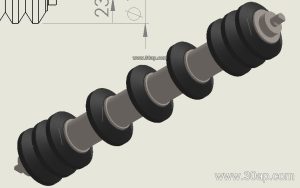
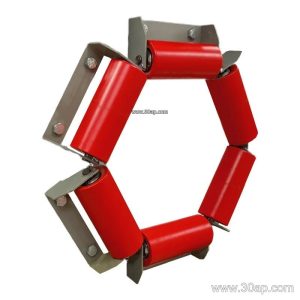
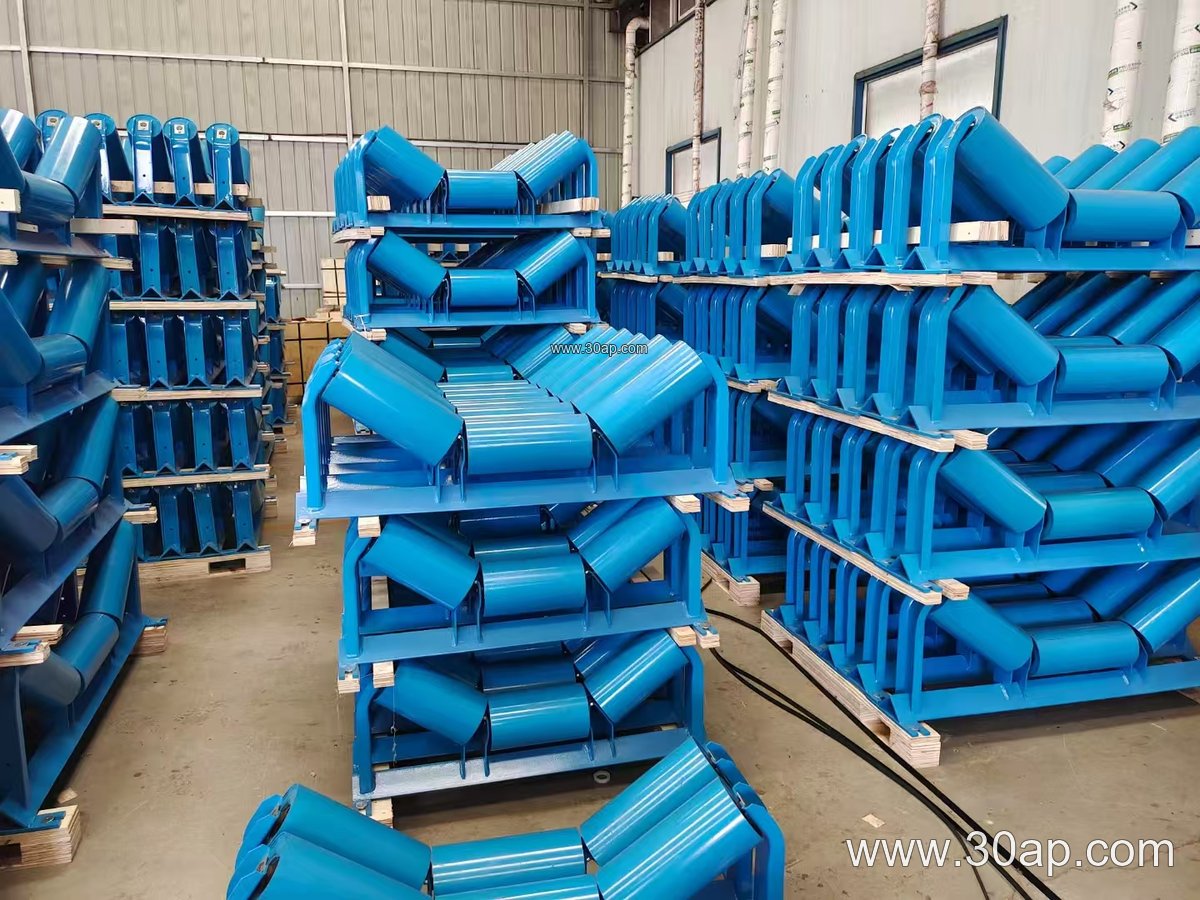
These pulleys appear in aggregate crushing circuits, limestone mines, iron ore concentrators, and coal preparation plants. In a typical quarry conveyor line, the head pulley drives the belt while the tail pulley maintains tension. In a cement plant, terminal pulleys handle clinker and raw meal on belts that may be fitted with heat-resistant covers. Port bulk terminals rely on large-diameter terminal pulleys to move heavy loads over long distances. The surrounding equipment—conveyor belt, idler roller, conveyor bracket—must be matched to the pulley’s dimensions and load capacity for smooth operation.
Sizing and Matching to the Belt
Pulley diameter and face width should be selected together with belt width, belt type, and tension requirements. A common rule is that the pulley face width is slightly larger than the belt width; for example, a B800 belt often pairs with a pulley face around 950 mm, and a B1200 belt with roughly 1400 mm. However, these are reference examples, not fixed pairings. The table below lists representative combinations for planning purposes only.
| Belt Width (mm) | Typical Pulley Face (mm) | Example Diameter (mm) |
|---|---|---|
| B500 | 600 | Ø400 |
| B650 | 750 | Ø500 |
| B800 | 950 | Ø500 |
| B1000 | 1150 | Ø630 |
| B1200 | 1400 | Ø1000 |
| B1400 | 1600 | Ø800 |
| B1600 | 1800 | Ø1000 |
| B1800 | 2000 | Ø1250 |
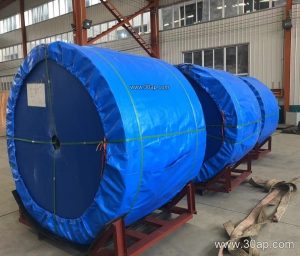
These values are indicative and should be confirmed with a full engineering calculation. The belt itself—whether an EP conveyor belt, NN conveyor belt, or steel cord conveyor belt—influences the minimum pulley diameter. For heavy-duty mining conveyor belt applications, larger diameters are often needed to reduce bending stress. In coal mining conveyor belt systems, flame retardant conveyor belt and anti-static conveyor belt properties may also affect selection.
Buyer Checklist
Before ordering a terminal conveyor pulley, gather the following information:
- Belt width and type (e.g., EP1000, EP1250, ST1600, or PVG800S).
- Maximum belt tension and expected torque.
- Operating environment (dust, moisture, temperature, corrosion).
- Required lagging type and thickness.
- Shaft diameter and bearing housing interface.
- Mounting position—head, tail, or tension station—and available space.
Also consider the conveyor bracket and idler roller layout, as these affect belt tracking and pulley loading. For abrasive materials such as iron ore or copper ore, a high abrasion resistant conveyor belt paired with ceramic-lagged pulleys can extend service life. In cold climates, a cold resistant conveyor belt may be used alongside pulleys designed for low-temperature operation.
Maintenance and Longevity
Regular inspection of lagging wear, bearing condition, and shaft alignment helps prevent unplanned downtime. Keep the pulley surface clean and check that the belt runs centered. In dusty plants such as cement or coal handling facilities, seal protection is especially important. Re-lagging or replacing a terminal conveyor pulley should follow the original diameter and face width specifications to maintain belt tension and tracking.
For more information on conveyor components, visit conveyor pulley and conveyor belt resources.