What a Conveyor Leg Does
A conveyor leg is the vertical support that carries the conveyor frame above the ground or floor. It is the part that transfers the weight of the belt, the material load, and the idler roller assemblies down to the foundation. In a quarry or a crushing and screening line, the legs are often the first thing a maintenance team checks after a belt tracking problem, because a leaning or loose leg changes the whole frame geometry. The same support is sometimes called a conveyor support leg or a conveyor stand leg, and those names describe the same structural component.
The leg is not a pulley and it is not an idler. A drive pulley, a tail pulley, and a bend pulley each have a distinct role in power transmission and belt routing, and none of them can be replaced by a leg. The leg simply holds the frame at the correct height and keeps the stringer straight.
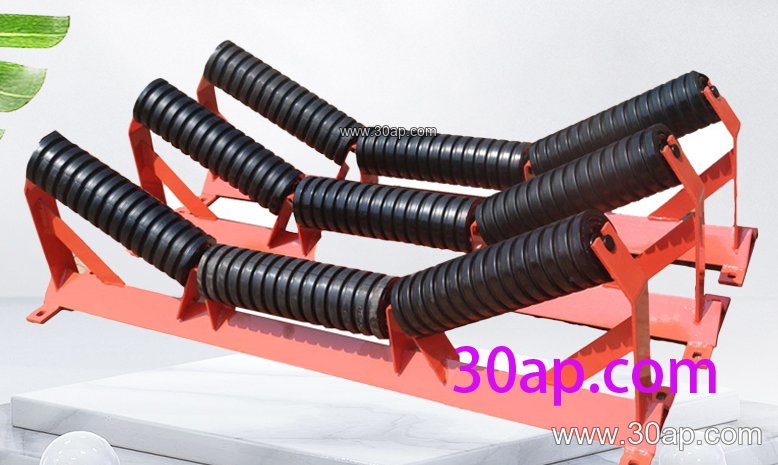
How the Leg Is Built
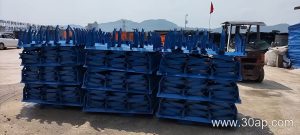
Most legs are fabricated from angle steel, channel steel, or folded steel plate. A fixed leg is cut and drilled to one height. An adjustable leg uses a telescopic section or slotted holes so the frame height can be corrected after installation, which is useful when a foundation is not perfectly level. The foot may be a flat base plate with anchor holes, or a small pad that sits on a concrete plinth.
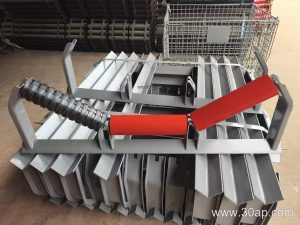
Legs work together with the rest of the frame. The conveyor bracket at the top of the leg connects to the stringer, and the stringer carries the idler roller sets. On the carrying side, a troughing bracket holds three rolls at a set trough angle. On the return side, a flat bracket or a V-return bracket supports the belt. The leg must be tall enough and stiff enough that the frame does not sag between supports.
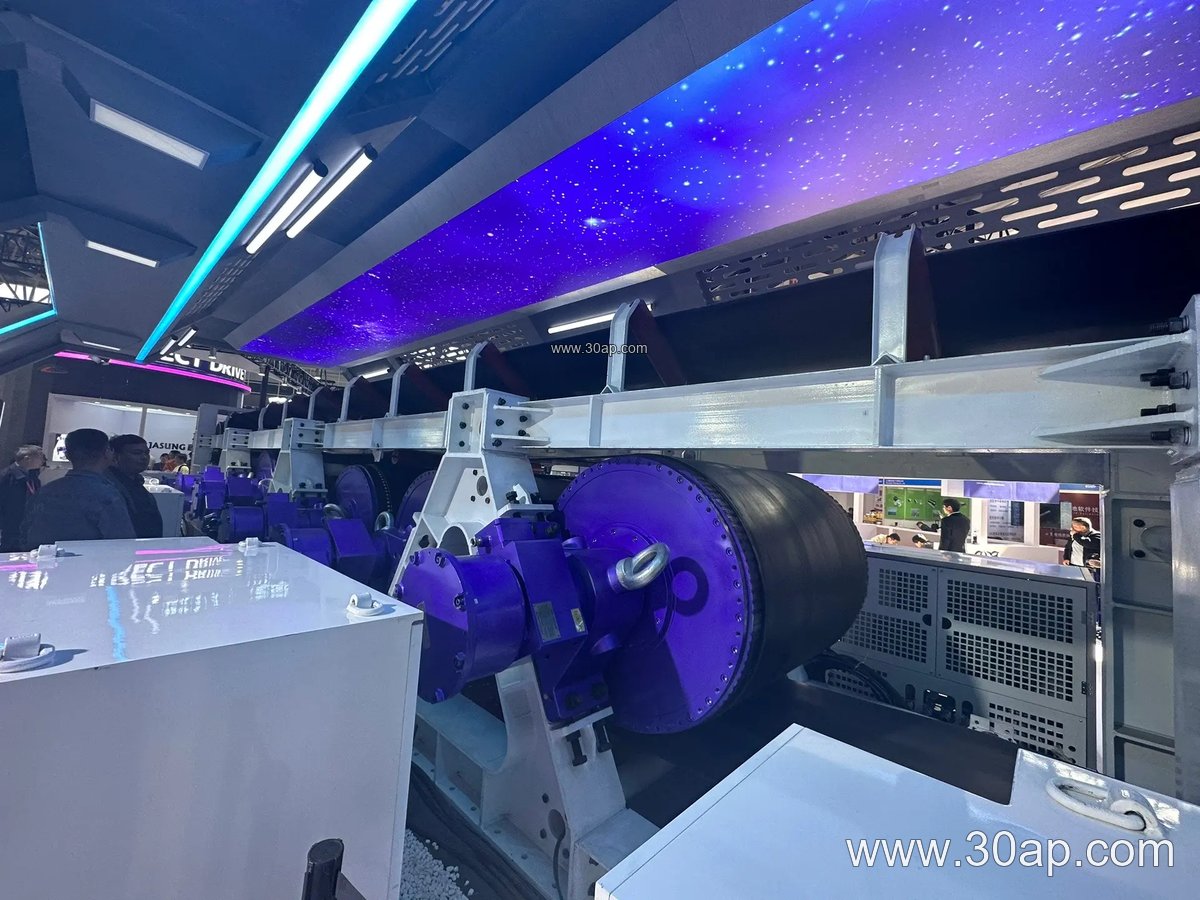
Where Conveyor Legs Are Used
These supports appear wherever a belt conveyor runs above grade. In a limestone mine or an iron ore plant, legs carry the long overland sections and the transfer points. In a coal washing plant, they hold the frames that support a flame retardant conveyor belt or a PVG conveyor belt in the underground and surface sections. In a cement plant, they support clinker and raw material lines. In a power plant coal yard, they carry the belts that feed the boiler. In a sand and gravel yard, they hold the frames under a crusher conveyor belt and the discharge belts.
The leg also matters in a port or ship loading system, where long spans and wind loads demand a heavier section. In a batching plant or a grain silo, shorter legs are common, and the frame may sit on a steel structure rather than on concrete.
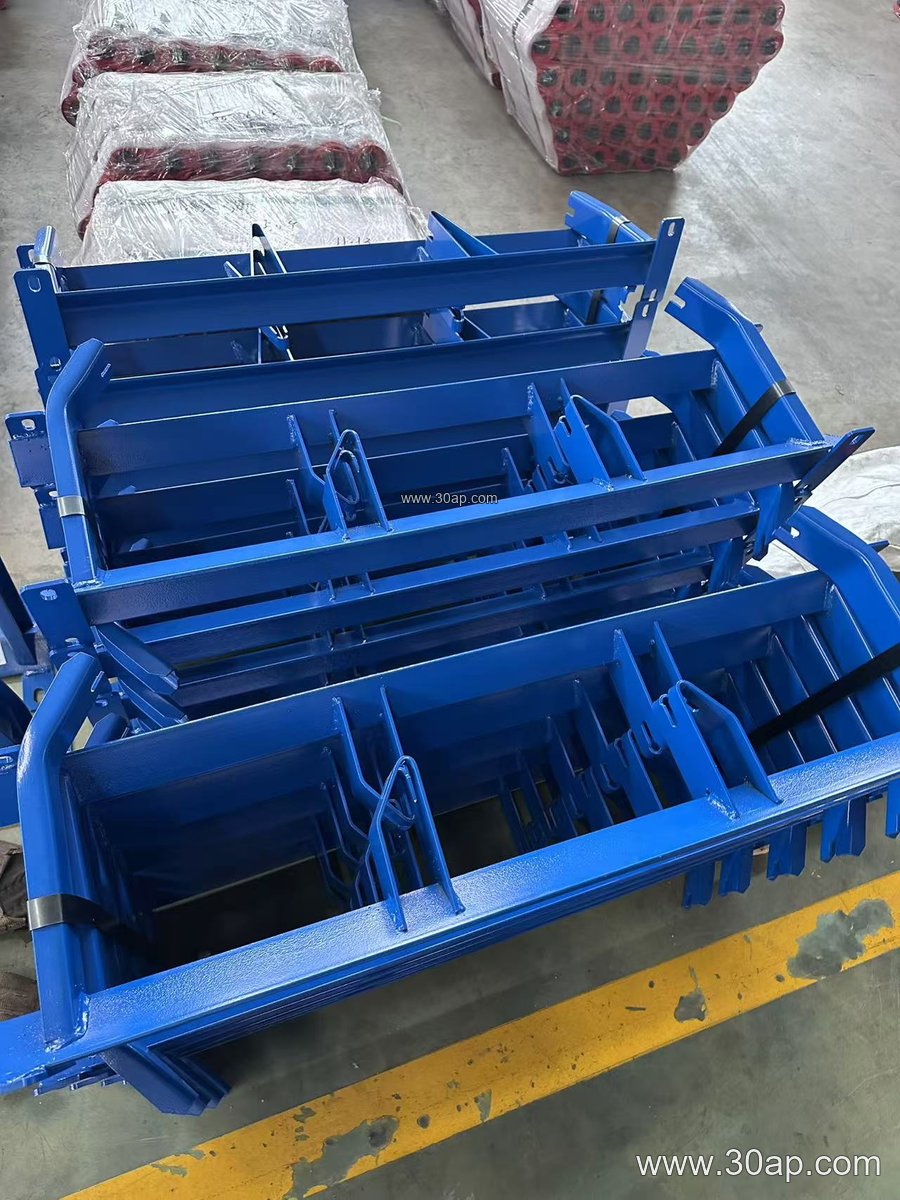
Matching the Leg to Belt Width and Trough Angle
The leg height and the top bracket are chosen together with the belt width and the trough angle. Common belt widths include B500, B650, B800, B1000, B1200, B1400, B1600, B1800, B2000, B2200. Trough angles are usually 20, 30, 35, or 45 degrees, and an adjustable bracket can move between these angles. A typical combination might be written as B800, 35 degrees, with a Ø108 idler roller, or B1200, 45 degrees, with a Ø133 roll. These are examples, not fixed rules. A wider belt does not force one single roll diameter, and a given belt width can be paired with more than one trough angle depending on the material and the load.
Roll diameters commonly seen are Ø89, Ø108, Ø133, Ø159, and Ø194. The leg and bracket must leave enough clearance for the selected roll and for the belt edge. Installation hole spacing and crossbeam length change with belt width and trough angle, so they should be confirmed from the drawing rather than assumed.
Buyer Checklist
- Confirm the required frame height and whether a fixed or adjustable leg is needed.
- State the belt width, trough angle, and idler roll diameter so the top bracket matches.
- Check the material and section size against the load and the local wind or seismic condition.
- Ask for the anchor hole pattern and the base plate dimensions.
- Confirm that the leg finish suits the site, for example a dusty quarry or a wet coal plant.
A well-chosen leg keeps the frame straight, which helps the belt run centered and reduces edge wear. For a full frame package, the leg should be ordered together with the stringers, brackets, and idler roller sets so the heights and hole patterns line up on site.