What a Mining Belt Conveyor Pulley Does on the Line
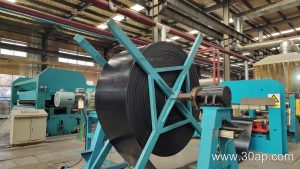
A mining belt conveyor pulley is the rotating drum that turns the conveyor belt, carries its tension, and sets the path of the belt at the head, tail, and bends of a conveyor. In a quarry or a coal preparation plant, the pulley is often the part that decides how smoothly the belt tracks, how much slip appears at start-up, and how long the belt and the conveyor pulley last together. It is not a single item on a parts list; drive, tail, and bend positions ask for different builds, and treating them as one interchangeable part is a common and costly mistake.
The same drum is also called a conveyor pulley in general plant language. Both names describe the same component, so a buyer ordering a mining belt conveyor pulley and a supplier quoting a conveyor pulley are talking about one product family.
How the Drum Is Built
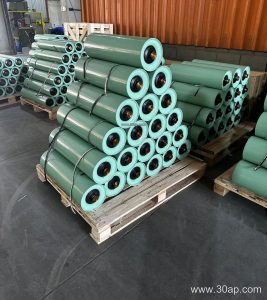
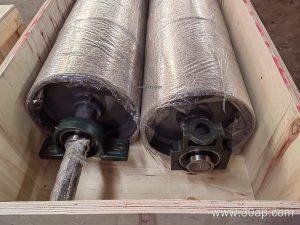
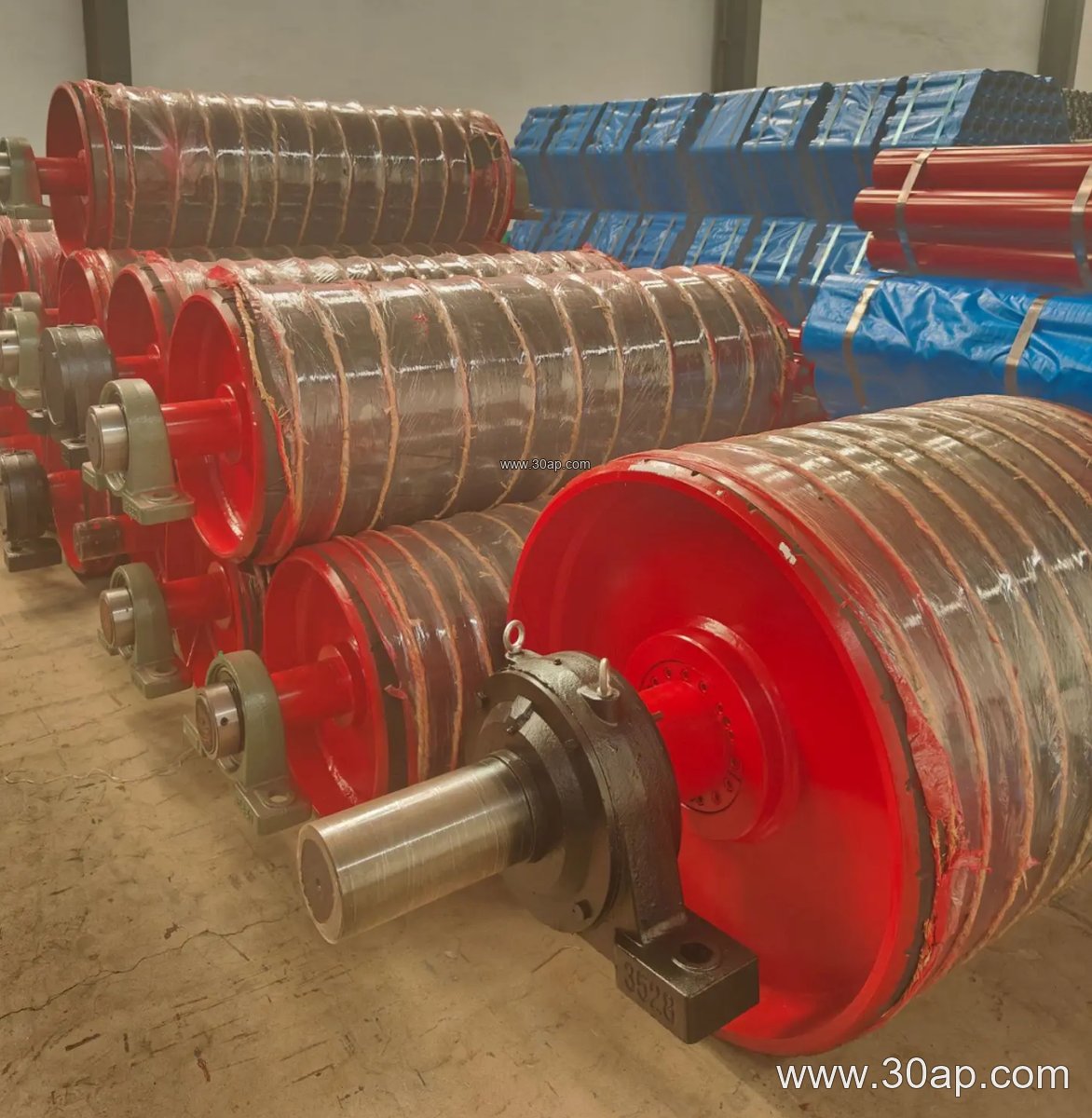
Most units start with a rolled steel shell, welded to end discs, with a shaft running through the centre and hubs joining shaft to shell. The shaft is supported by bearing housings mounted on the conveyor bracket at each side. Shell thickness, weld quality, and shaft diameter follow the calculated torque and belt tension, not the belt width alone, so two conveyors with the same belt can still need different shaft sizes.
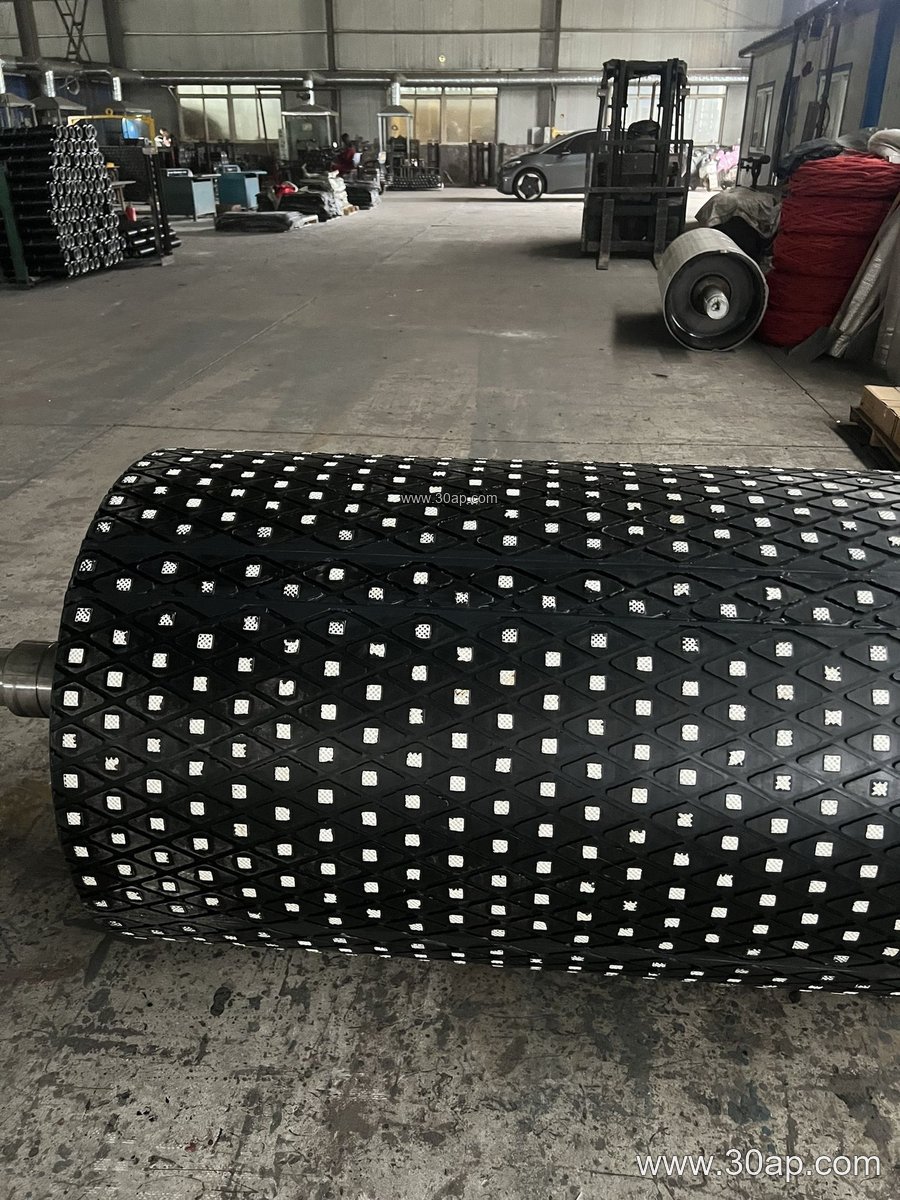
Surface form matters as much as the steel underneath. Plain shells suit many tail and bend positions, while lagged shells improve grip at the drive. Common lagging choices include cold-bonded rubber, hot-vulcanised rubber, diamond groove, herringbone groove, and ceramic tile, usually at 8, 10, 12, 15, or 20 mm thickness. Diamond and herringbone patterns help shed water and fines; ceramic is chosen where abrasive rock dust wears plain rubber quickly.
Position Changes the Part
The drive pulley, also called the head pulley, transmits power and usually carries the heaviest lagging and the largest shaft. The tail pulley at the loading end guides the return belt and often needs cleaning and protection from impact. A bend pulley changes belt direction only, so it is built lighter and is not a substitute for either of the other two. Take-up pulleys and snub pulleys do their own jobs in tensioning and wrap angle, and each position should be specified separately.
Because these roles differ, a spare drive drum cannot simply be dropped into a tail frame. Bearing size, lagging, and shell thickness all change with duty.
Where These Drums Work
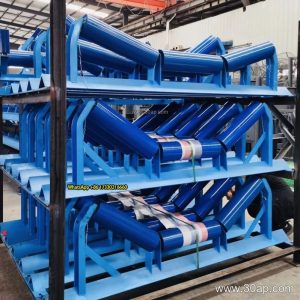
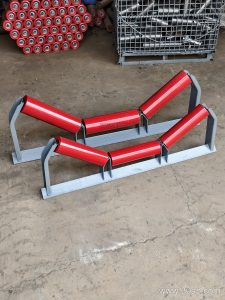
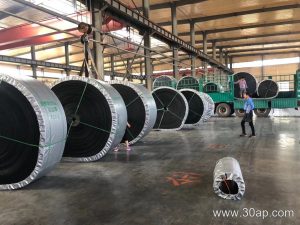
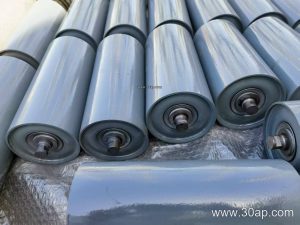
You will find them in limestone and iron ore operations, in coal preparation and washing plants, in cement clinker lines, and in power station coal handling. Crushing and screening circuits use them under short, heavily loaded belts, while long overland runs in sand and aggregate plants use larger diameters to reduce belt bending stress. In all these places the drum works alongside the conveyor belt, idler roller sets, and steel frames, and its condition shows up quickly in belt tracking and edge wear.
Sizing Notes Buyers Should Check
Shell face width is normally a little wider than the belt. The table below gives common reference combinations; these are examples, not fixed pairings, and the final diameter should follow belt tension, wrap angle, and the belt’s own minimum pulley diameter recommendation.
| Belt width | Typical shell face | Example diameter |
|---|---|---|
| B500 | about 600 mm | Ø320, Ø400 |
| B650 | about 750 mm | Ø400, Ø500 |
| B800 | about 950 mm | Ø500, Ø630 |
| B1000 | about 1150 mm | Ø630, Ø800 |
| B1200 | about 1400 mm | Ø800, Ø1000 |
| B1400 | about 1600 mm | Ø1000, Ø1250 |
| B1600 | about 1800 mm | Ø1250, Ø1400 |
| B1800 | about 2000 mm | Ø1400, Ø1600 |
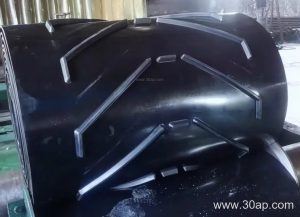
Shaft diameters commonly range from Ø50 to Ø200 mm, chosen by torque and bearing load. A B800 drum might run a Ø80 shaft on a short conveyor and a larger shaft on a long, high-tension one. When matching a drum to the belt, remember that a heavy-duty mining conveyor belt such as an abrasion resistant or flame retardant grade may call for a larger minimum diameter than a lighter fabric belt of the same width.
Maintenance and Spare Planning
- Check lagging wear at the drive first; smooth, polished lagging means slip and belt damage are close.
- Inspect bearing temperature and grease condition on every scheduled stop.
- Confirm that the conveyor bracket and bearing housing seat are clean and square before fitting a replacement.
- Keep the shell and shaft drawings with the spare, since position and duty define the part.
For buyers sourcing through china-conveyor-belt.com, a clear drawing with belt width, position, diameter, lagging type, and shaft size removes most ordering errors. A drum that suits a bend in a sand plant rarely suits a drive in a coal washing circuit, so specify the job before the price.