What a Heavy-Duty Impact Idler Does
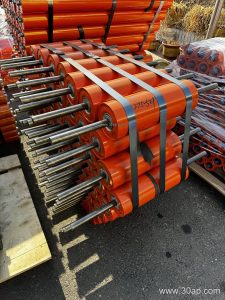
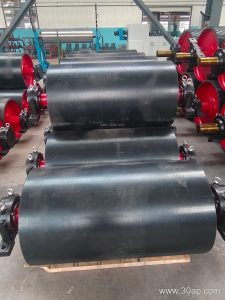
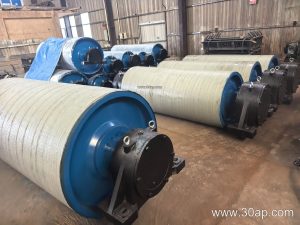
A heavy-duty impact idler is the support roller installed where material first lands on a conveyor belt. Instead of a rigid steel shell, it carries a set of resilient rubber rings that absorb the energy of falling rock, ore, clinker, or aggregate. In a crusher discharge line, a quarry transfer point, or a power plant coal yard, this shock-absorbing roller protects both the belt cover and the frame from repeated hammering.
It belongs to the same family as the standard carrying idler, but the two are not interchangeable at a loading zone. A troughing idler supports a moving load; an impact roller cushions a falling one. Some operators also fit a rubber-disc return roller underneath, yet that is a different position in the conveyor and does not replace the impact station at the chute.
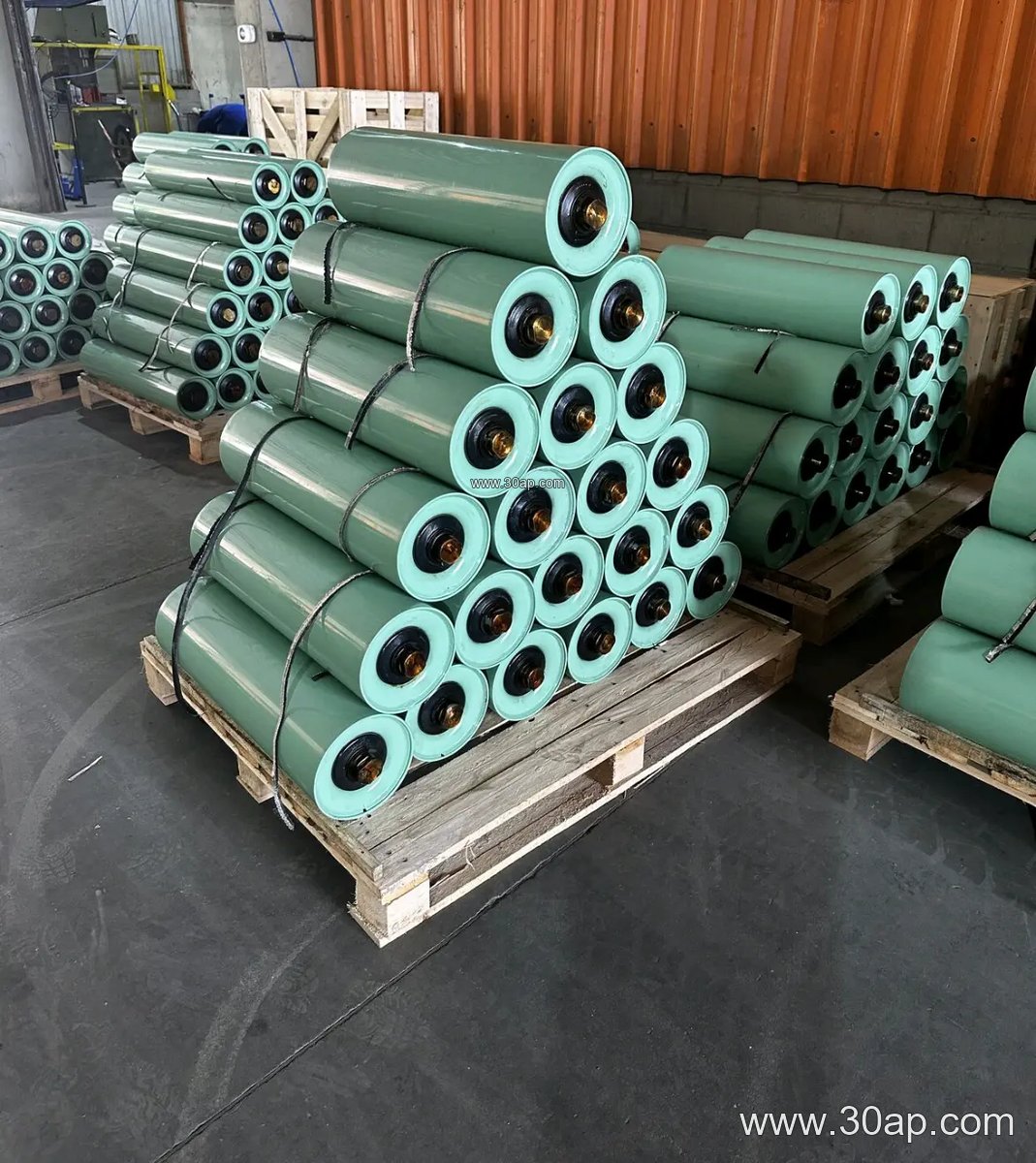
How the Roller Is Built
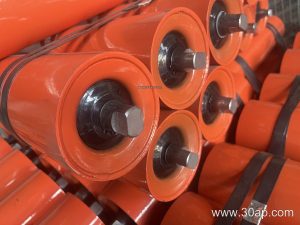
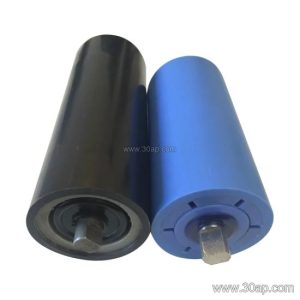
The core is usually a heavy steel tube with welded end discs, mounted on a shaft through sealed ball bearings. Around the shell, thick rubber rings are pressed or bonded in place, spaced so that fines do not pack between them. The rubber grade is normally chosen for abrasion resistance and rebound, since a hard ring transmits shock straight into the bearing.
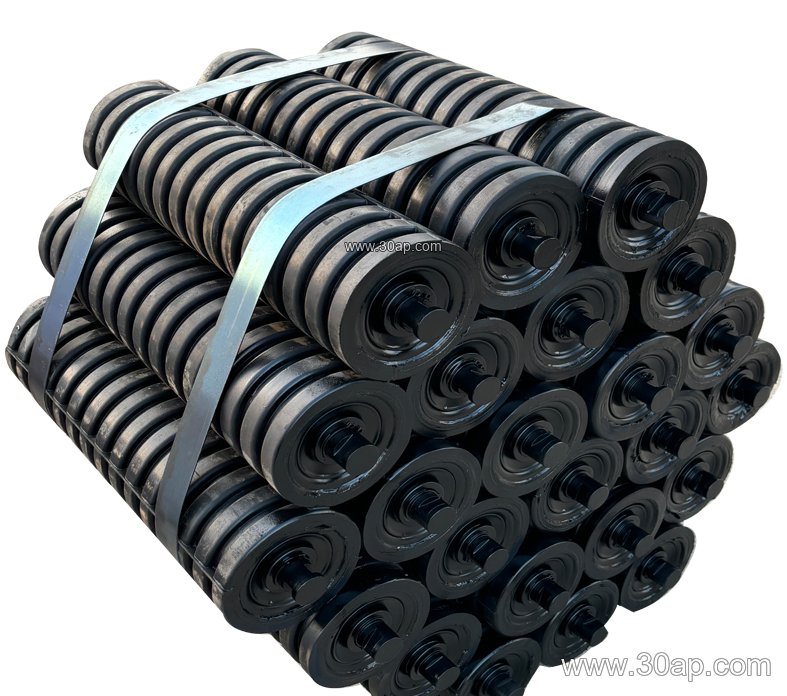
- Shell: thick-walled steel tube, often with reinforced welds
- Rings: natural or SBR rubber, sometimes grooved for better grip
- Bearing housing: sealed and greased for dusty service
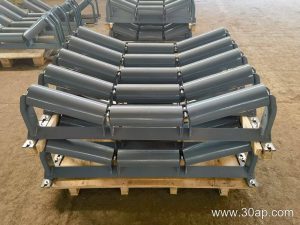
- Frame: three-roll troughing set, or a single heavy roll on short conveyors
Because the rings flex, the roller is often mounted slightly higher than the adjacent troughing idlers, so the belt sits level as it passes. This detail matters on a high-abrasion conveyor belt carrying sharp limestone or iron ore.
Where It Fits on the Conveyor
The usual location is directly below the loading chute, in a group of three to five rollers. In a limestone mine feeding a primary crusher, or a sand and gravel plant transferring screened stone, the drop height can be over a metre. A single row of impact rollers rarely absorbs that alone; a short impact bed with several rollers in sequence spreads the load.
Typical industries include coal washing plants, cement kilns and clinker lines, steel sintering, tunnel spoil handling, and port ship loaders. On a steep yard conveyor with a chevron conveyor belt or a corrugated sidewall belt, the impact zone still needs cushioning because the cleats do not protect the carcass underneath.
Sizes and Matching to Belt Width
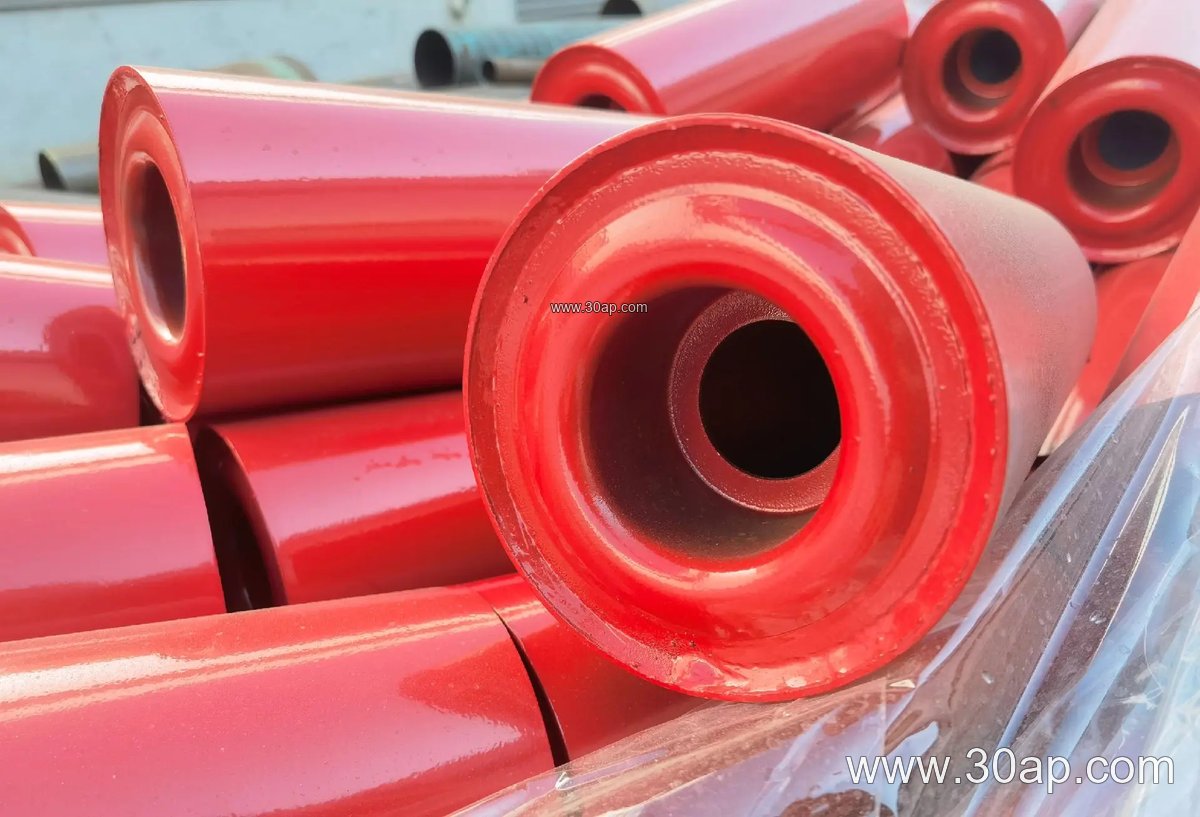
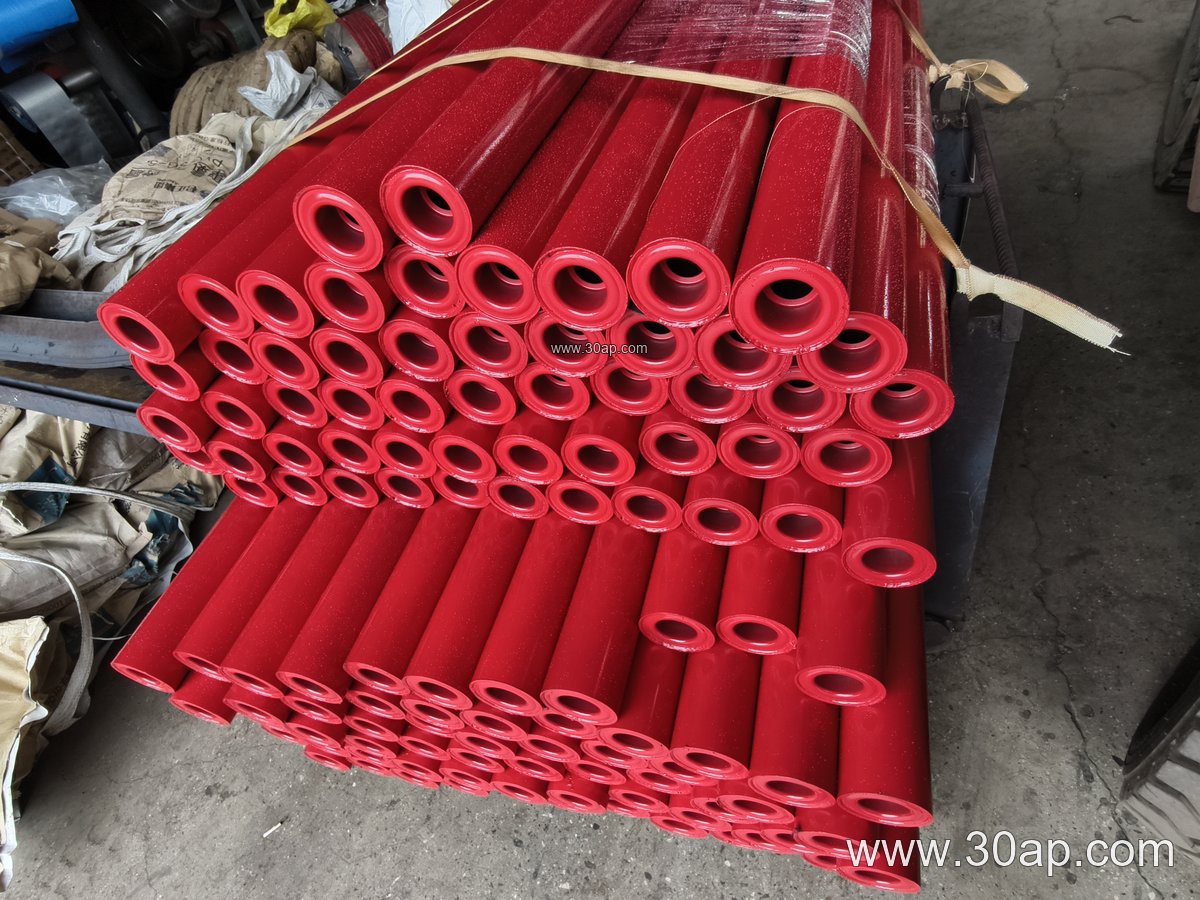
Roller diameter and roll length are selected from the belt width, trough angle, and the mass of the falling lump. The table below gives common reference values; final dimensions are set by the conveyor designer.
| Belt width | Typical roll length (3-roll trough) | Common impact roll diameter |
|---|---|---|
| B500 | about 200 mm | Ø89 to Ø108 |
| B650 | about 250 mm | Ø89 to Ø133 |
| B800 | about 315 mm | Ø108 to Ø159 |
| B1000 | about 380 mm | Ø127 to Ø159 |
| B1200 | about 465 mm | Ø133 to Ø178 |
| B1400 | about 530 mm | Ø159 to Ø194 |
| B1600 | about 600 mm | Ø159 to Ø219 |
| B1800 | about 670 mm | Ø178 to Ø219 |
Trough angles of 20, 30, 35, and 45 degrees are common, and the side rolls may differ in length from the centre roll. Bearings such as 6205, 6305, 6308, or 6310 appear across this range, but no single bearing is tied to one diameter. A 1200mm wide conveyor belt does not automatically dictate one shaft size; load and speed decide that.
Buying Advice
Ask for the lump size, drop height, throughput, and belt speed before choosing a model. A quarry conveyor belt moving 300 mm rock at 3 m/s needs more cushioning than a cement plant line handling fine powder. Check that the rubber rings are thick enough to wear through slowly, and confirm the bearing seal suits wet or dusty conditions. On a steel cord conveyor belt, impact damage is expensive, so the idler specification deserves the same attention as the belt itself.
Spare rings and complete rollers should be available from the same supplier, since mixing ring hardness between positions can create uneven belt support. Inspect the impact station monthly for loose rings, flat spots, and seized bearings, and replace a roller before the rubber wears down to the steel shell. More conveyor idler details are available at www.tuogun.com for reference.