What a High-Angle Conveyor Trough Idler Does
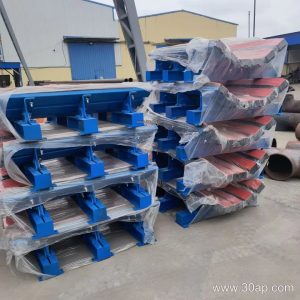
A high-angle conveyor trough idler is a carrying idler used on the loaded strand of a steeply inclined conveyor. Its job is to support the conveyor belt and hold bulk material in a deep trough so that the load stays centered as the belt climbs. In a quarry, cement plant, or coal preparation facility, this idler helps prevent spillage on inclines where ordinary flat or shallow troughing would let material roll back. The same product is often called a steep incline trough idler or high-angle troughing roller, and those names refer to the same component.
The idler works with the conveyor belt, not in place of it. A chevron conveyor belt or corrugated sidewall conveyor belt can add grip or containment on steep runs, but the trough idler still provides the supporting frame and roll profile that shapes the belt into a stable trough. Drive pulleys, tail pulleys, and bend pulleys remain separate parts of the conveyor and are not interchangeable with carrying idlers.
Construction and Common Design Details
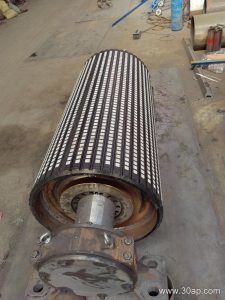
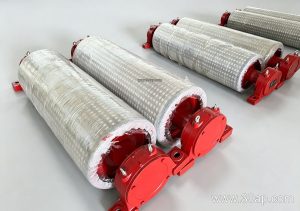
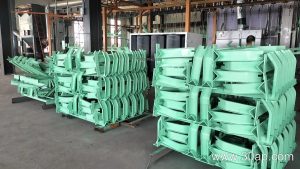
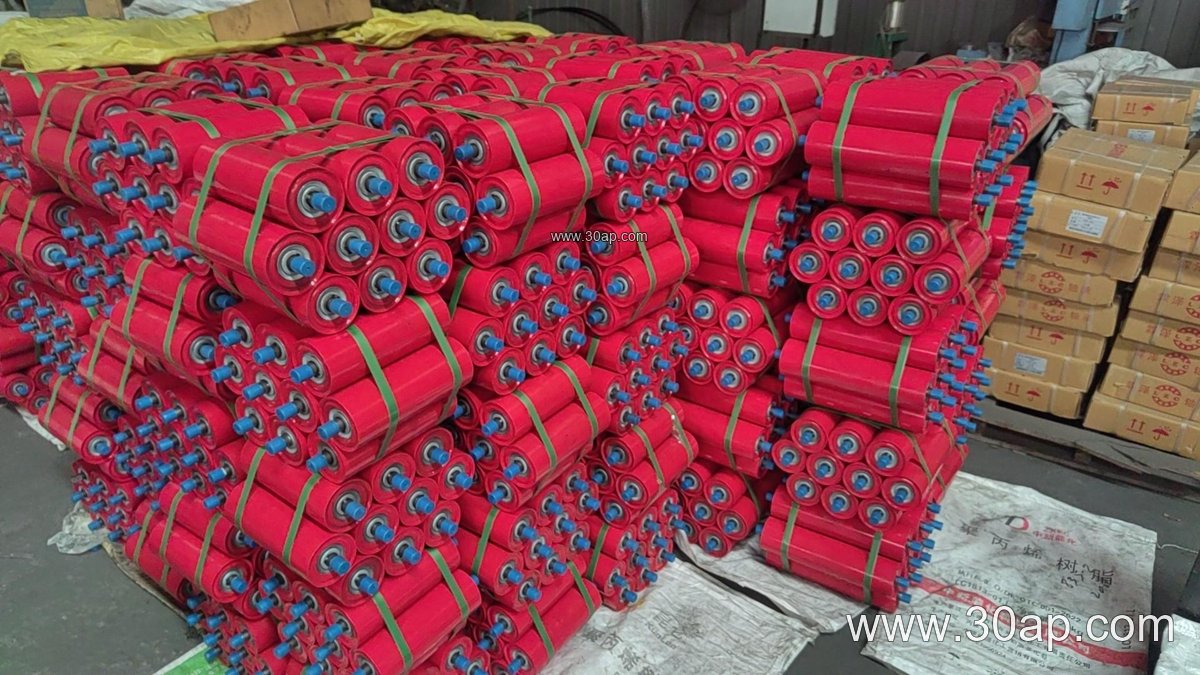
Most high-angle trough idlers are assembled as three-roll troughing sets, though two-roll and single-roll designs exist for special layouts. The rolls usually have a steel tube shell, with bearing housings sealed against dust and fines. Common roll diameters include Ø89, Ø108, Ø127, Ø133, Ø159, and Ø178 mm; larger diameters are chosen when belt speed, load, or lump size calls for more robust support. Bearing sizes such as 6204, 6205, 6305, 6306, 6308, and 6310 appear across different idler series, but a given bearing is not tied to one roll diameter by rule.
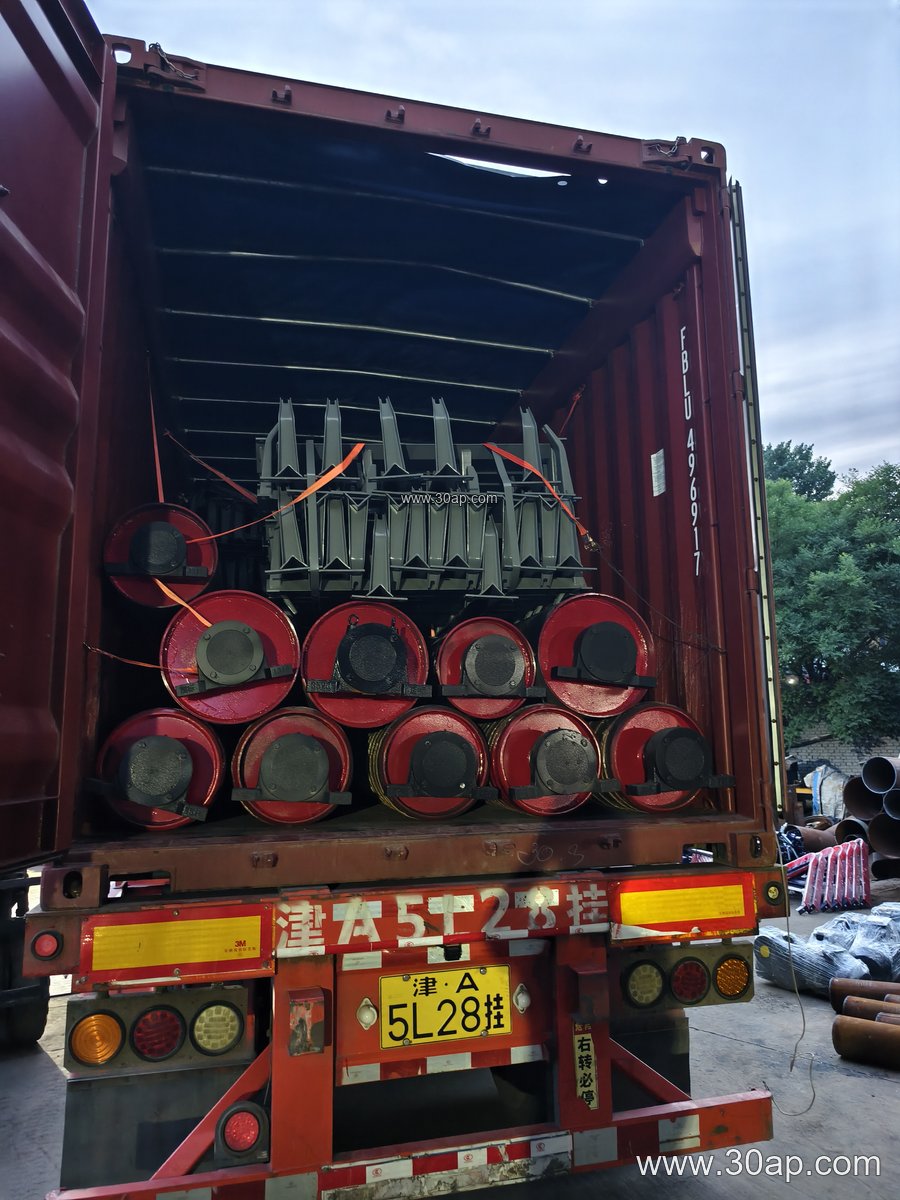
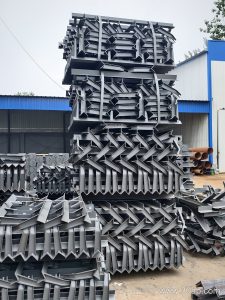
Trough angles for high-angle service are typically 30, 35, or 45 degrees, with 45 degrees giving the deepest trough and the best containment on steep sections. Some designs use a forward tilt of about 1.5 to 2 degrees on the side rolls to help center the belt. Roll surfaces may be plain steel, nylon, ceramic, or rubber rings; rubber rings are useful where impact and abrasion are present. The idler frame connects to the conveyor bracket, and the roll length is matched to belt width, trough angle, and roll arrangement.
Where It Fits in the Conveyor Line
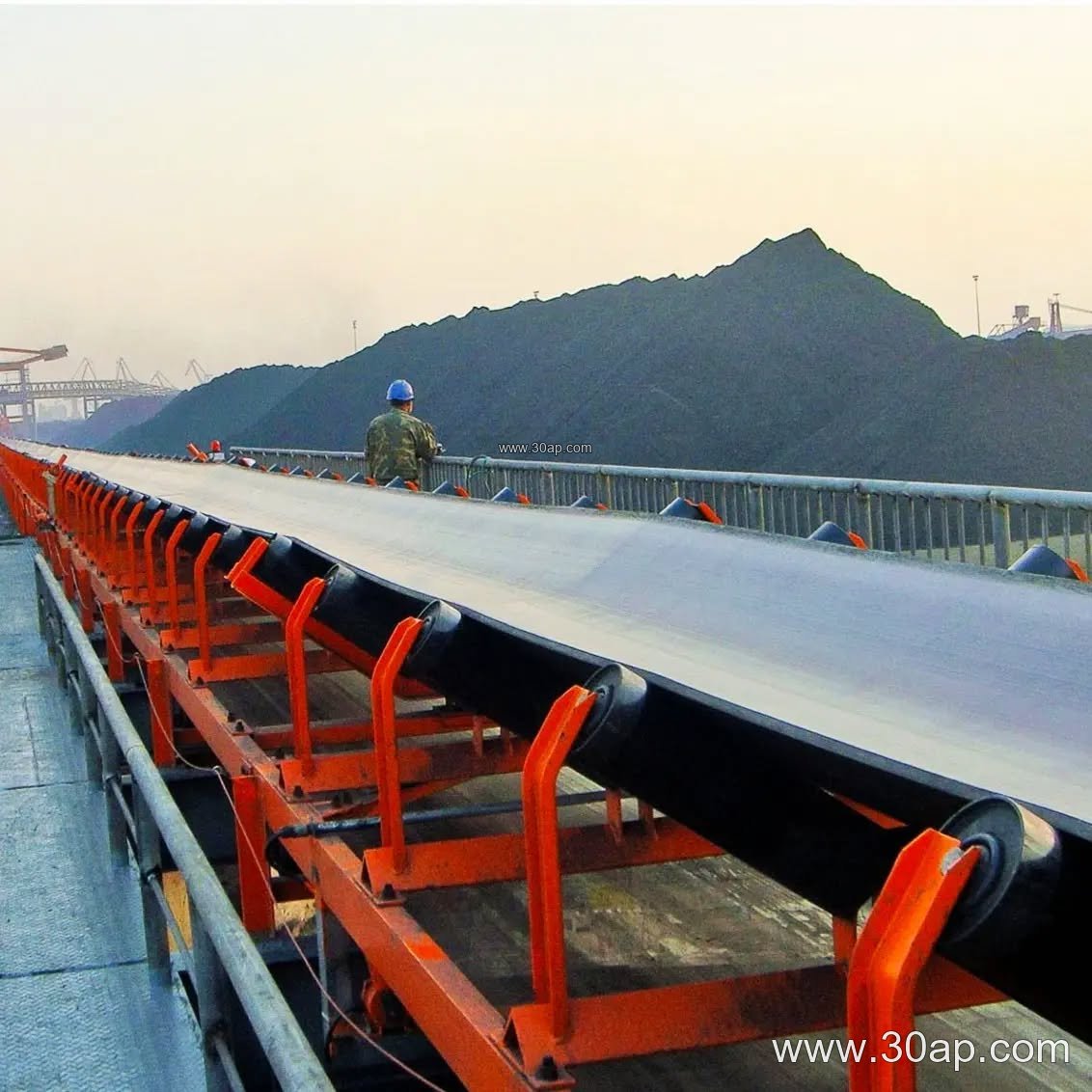
These idlers are found on inclines in limestone quarries, iron ore and copper ore operations, sand and aggregate lines, cement plants, power plant coal handling, and tunnel spoil removal. In a coal mining conveyor or underground mining conveyor, a flame retardant conveyor belt may run over high-angle trough idlers where the gradient is steep and clearance is tight. In a crushing and screening circuit, the same idler type can support a crusher conveyor belt carrying coarse rock after primary crushing.
On a steep incline, the transition from flat to deep trough should be gradual. Transition idlers placed before and after the high-angle section help avoid edge stress and belt misalignment. Impact idlers or rubber-ring buffer idlers may be used at the loading point, while the high-angle trough idler carries the steady load up the slope. Return idlers, V-return idlers, and training idlers complete the line but serve different functions.
Sizing Notes for Buyers
Belt width and trough angle guide the selection, but they do not fix every dimension. The table below gives common reference values for three-roll troughing sets; side rolls and center rolls can differ, and final roll length should be confirmed with the conveyor design.
| Belt width | Common roll length for three-roll trough set | Typical trough angle range |
|---|---|---|
| B500 | about 200 mm | 20 to 45 degrees |
| B650 | about 250 mm | 20 to 45 degrees |
| B800 | about 315 mm | 30 to 45 degrees |
| B1000 | about 380 mm | 30 to 45 degrees |
| B1200 | about 465 mm | 30 to 45 degrees |
| B1400 | about 530 mm | 35 to 45 degrees |
| B1600 | about 600 mm | 35 to 45 degrees |
| B1800 | about 670 mm | 35 to 45 degrees |
| B2000 | about 750 mm | 35 to 45 degrees |
These are common examples, not fixed matches. A high-angle trough idler for a 1200 mm wide conveyor belt may use a different roll length than a standard trough set if the frame is reinforced or the trough angle is 45 degrees. Shaft diameter should be determined from the idler load rating and frame design, not from belt width alone.
Buyers should also confirm the belt type. An EP conveyor belt, NN conveyor belt, or steel cord conveyor belt each has its own flexibility and load behavior. A multi-ply fabric core conveyor belt may need a different transition than a thick steel cord belt. Abrasion resistant conveyor belt and heat resistant conveyor belt grades affect idler surface choice, while an oil resistant conveyor belt or fire resistant conveyor belt may call for specific rubber compounds in the roll covering.
Selection and Maintenance Checks
Check the idler’s sealing system, bearing fit, and roll concentricity before installation. On steep sections, confirm that the trough angle and roll spacing match the belt’s natural troughing ability. Keep the conveyor bracket aligned so the idler sits square to the belt path. Inspect for seized rolls, worn shells, and material buildup, because a stuck roll can damage the conveyor belt and increase power draw.
For a high-angle conveyor trough idler, the practical goal is steady belt support with good load containment. Match the idler to the belt width, trough angle, material lump size, and site conditions, and treat catalog values as starting points for engineering review rather than universal specifications.