What a Three-Roll Idler Bracket Does
A three-roll idler bracket is the stationary support frame that holds the three carrying idlers of a troughing conveyor in the correct V-shaped arrangement. It sits on the conveyor stringer or frame and positions the center roll horizontally while the two wing rolls incline upward, forming the trough that keeps bulk material centered on the belt. In a cement plant or a limestone quarry, this bracket is often the difference between a belt that tracks cleanly and one that spills material at every transfer point.
The same component is also called a troughing idler frame or a three-roll carrying bracket. It should not be confused with a return bracket or a V-return frame, which support the belt on its empty side, nor with a transition bracket used near a conveyor pulley. Each plays a distinct role in the conveyor line.
Construction and Materials
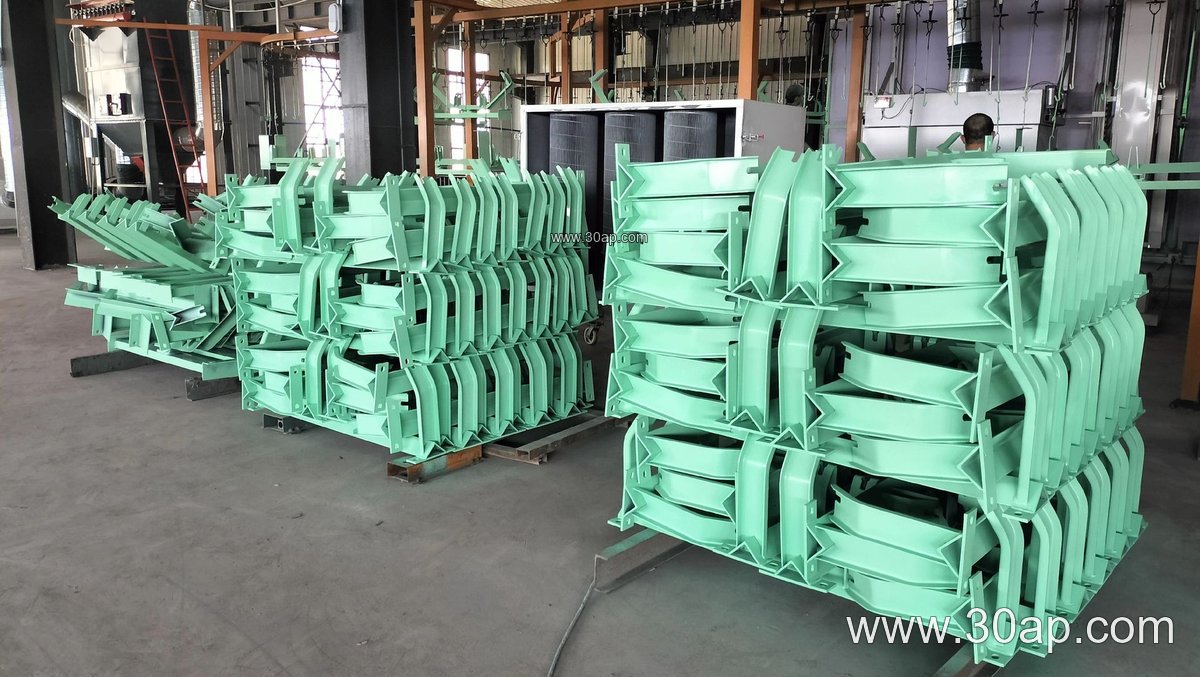
Most three-roll idler brackets are fabricated from angle steel, channel steel, or folded steel plate. The two wing arms are bent or welded at a fixed trough angle, and the center section carries the middle idler. Slots or drilled holes in the base allow the frame to be bolted to the stringer, with the hole spacing and crossbeam length set by the belt width and trough angle rather than by a single universal dimension.
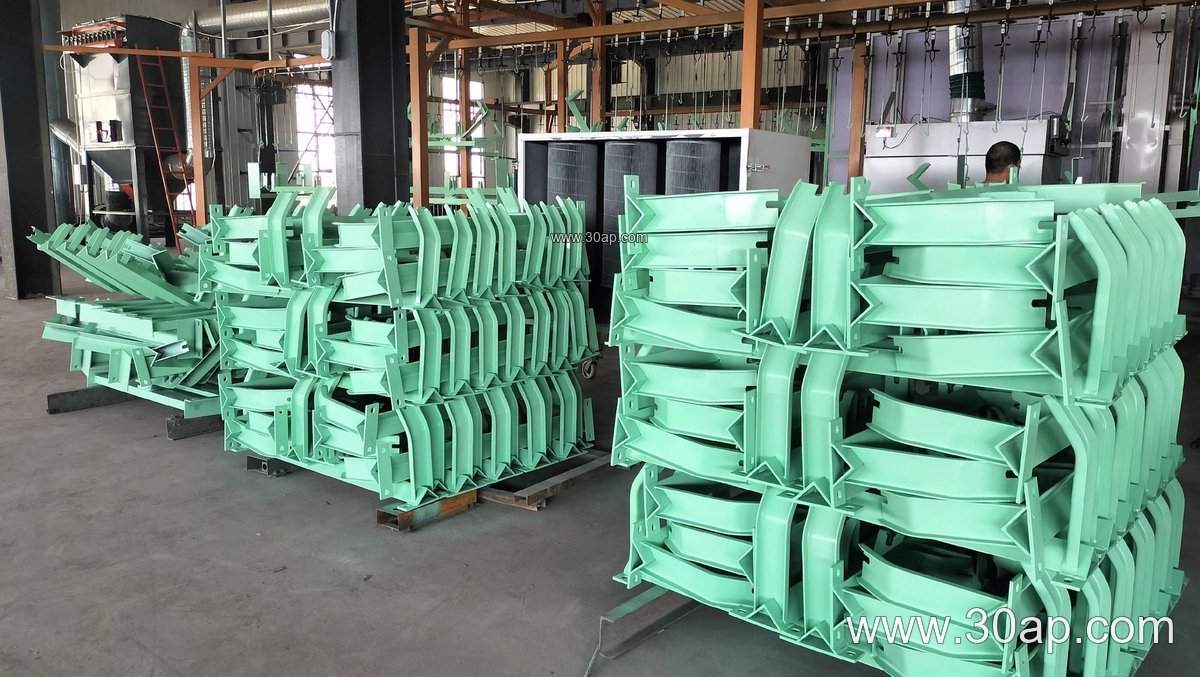
- Fixed brackets hold one trough angle permanently, commonly 20, 30, 35, or 45 degrees.
- Adjustable brackets let maintenance crews change the trough angle within a range to suit different materials.
- Forward-tilted brackets set the wing rolls at roughly 1.5 to 2 degrees to help center the belt.
- Impact brackets under a loading point use cushioning idlers to absorb falling rock.
Welds should be continuous at load-bearing joints, and the paint or galvanized finish matters in wet washing plants or coastal ports. A bracket that flexes under load will shorten idler bearing life and disturb belt tracking.
Matching Belt Width, Trough Angle, and Roll Diameter
Buyers usually start from the conveyor belt width and the required trough angle, then choose an idler roller diameter that suits the belt speed and load. The table below shows typical combinations seen in industry practice; these are reference examples, not fixed rules, and final values should follow the conveyor design.
| Belt Width | Trough Angle | Idler Diameter | Typical Use |
|---|---|---|---|
| B650 | 30 degrees | Ø89 | Light sand and aggregate lines |
| B800 | 35 degrees | Ø108 | Small crushing and screening plants |
| B1000 | 35 degrees | Ø133 | Cement and power plant coal handling |
| B1200 | 45 degrees | Ø133 | Iron ore and heavy bulk material |
| B1400 | 35 degrees | Ø159 | Port loading and large stockyards |
| B1600 | 45 degrees | Ø159 or Ø194 | High-capacity mining conveyors |
| B1800 to B2200 | 35 to 45 degrees | Ø194 | Extra-wide heavy-duty systems |
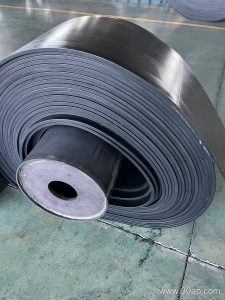
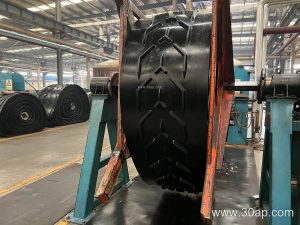
A wider belt does not automatically require a larger roll, and a given belt width can work with more than one trough angle or roll diameter. The material’s angle of repose, the belt speed, and the load per meter all influence the final choice. When the conveyor carries an EP conveyor belt or a steel cord conveyor belt at high tension, the bracket must be rigid enough to keep all three rolls in line.
Where Three-Roll Idler Brackets Are Used
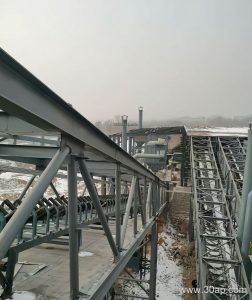
These brackets appear wherever a belt must be troughed to carry loose material. In a coal washing plant, flame retardant conveyor belts run over three-roll frames that resist dust and moisture. In a stone crushing line, impact brackets under the crusher discharge protect the belt from sharp rock. In a fertilizer or grain silo, lighter frames with smooth idlers keep product clean. Even a pipe conveyor belt, which folds into a tube, relies on closely spaced support frames whose geometry differs from a standard troughing bracket, so the two should not be substituted for one another.
Alignment with the conveyor pulley matters as well. A bracket installed too close to the head or tail pulley can cause the belt to lift or mistrack, so transition brackets are used in that zone instead of standard three-roll frames.
What Buyers Should Check Before Ordering
- Confirm the belt width, trough angle, and idler diameter as a set, not as separate items.
- Ask for the mounting hole spacing and crossbeam length, since these vary with design.
- State the environment: wet, dusty, corrosive, or high temperature, so the finish and idler seals suit the site.
- Check that the bracket matches the existing stringer bolt pattern if it is a replacement.
- For adjustable versions, confirm the range of trough angles the frame can hold.
Whether the line runs a heavy-duty mining conveyor belt or a fabric core conveyor belt in a small aggregate yard, the three-roll idler bracket is a low-cost part with a large effect on belt life and material containment. Buying it with the correct geometry and a sturdy frame is usually cheaper than correcting spillage and edge damage later.