What a Custom Conveyor Bracket Does
A custom conveyor bracket is the fabricated support that holds idler rollers in the correct position under and along a conveyor belt. Unlike a catalog bracket ordered for a standard frame, a custom conveyor bracket is made to match the actual belt width, trough angle, roller diameter and mounting hole spacing of a specific conveyor line. In a quarry, a cement plant or a coal handling system, the bracket is often the part that decides whether the belt trains smoothly or wanders.
How It Is Built
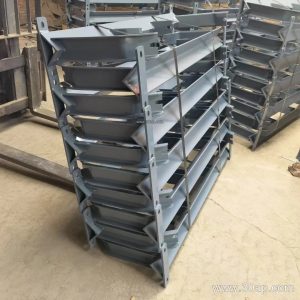
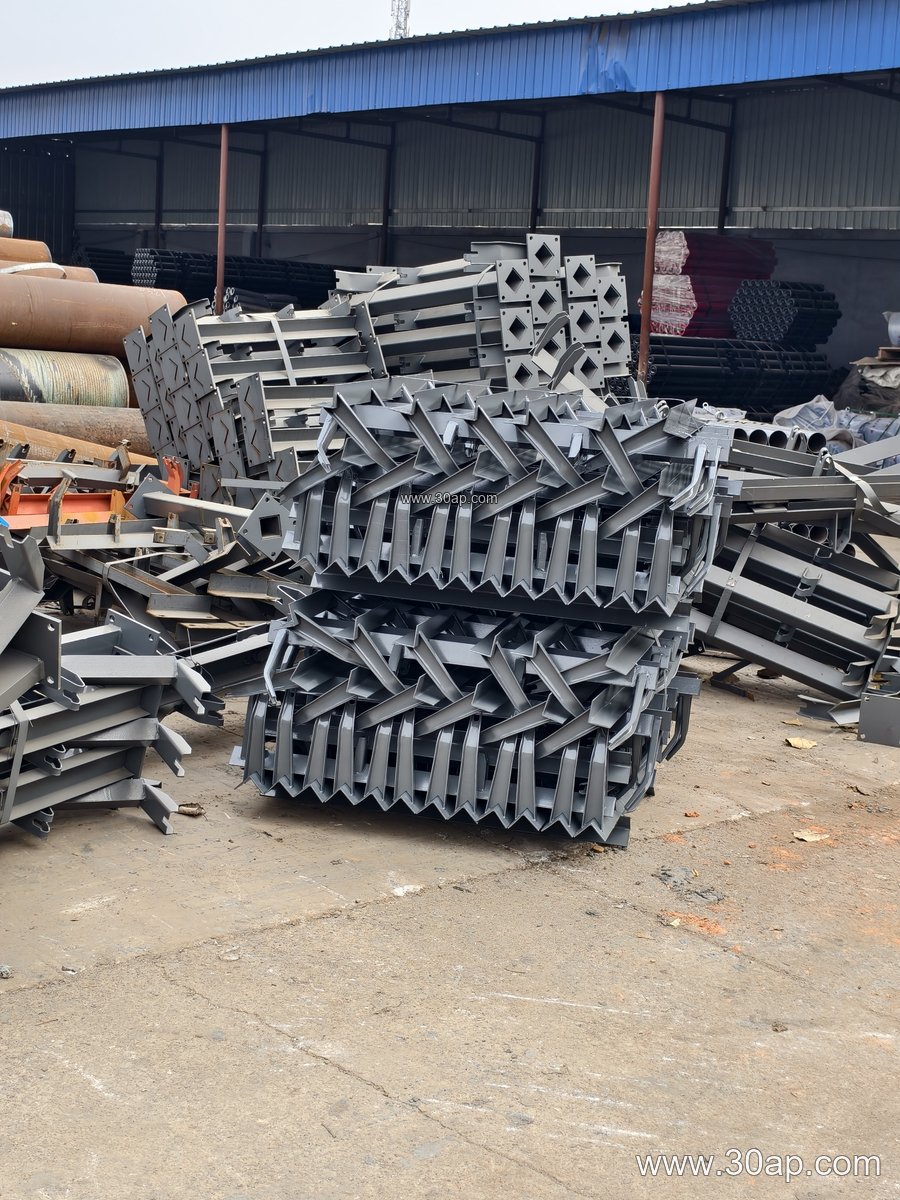
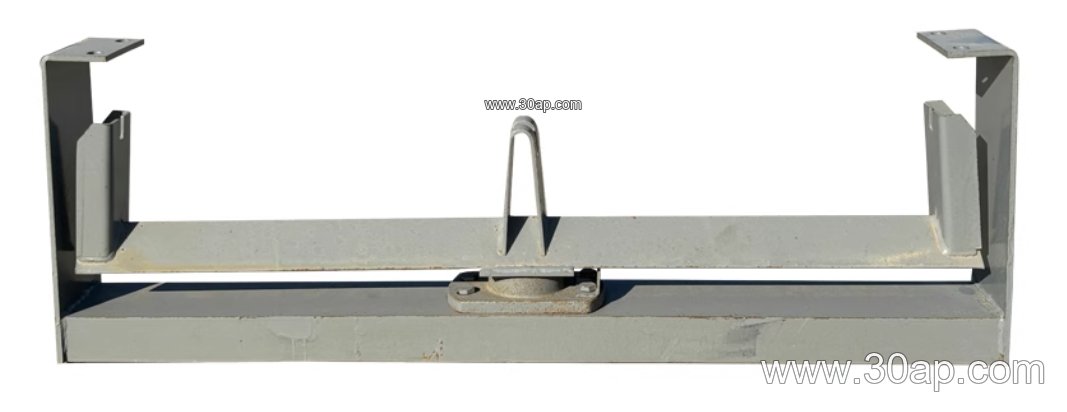
Most brackets start as angle steel, channel steel or folded steel plate. The fabricator cuts, punches and welds the frame so the mounting slots line up with the idler roller shafts. Trough angle is set during fabrication or made adjustable, and the crossbeam length follows the belt width rather than a fixed number. A well-made custom conveyor bracket keeps the roller axis square to the belt centerline, which reduces edge wear on the conveyor belt.
Where It Fits on the Conveyor
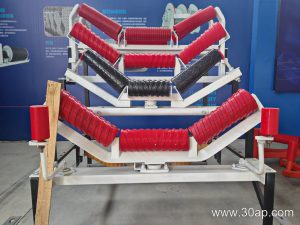
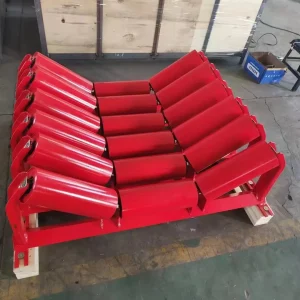
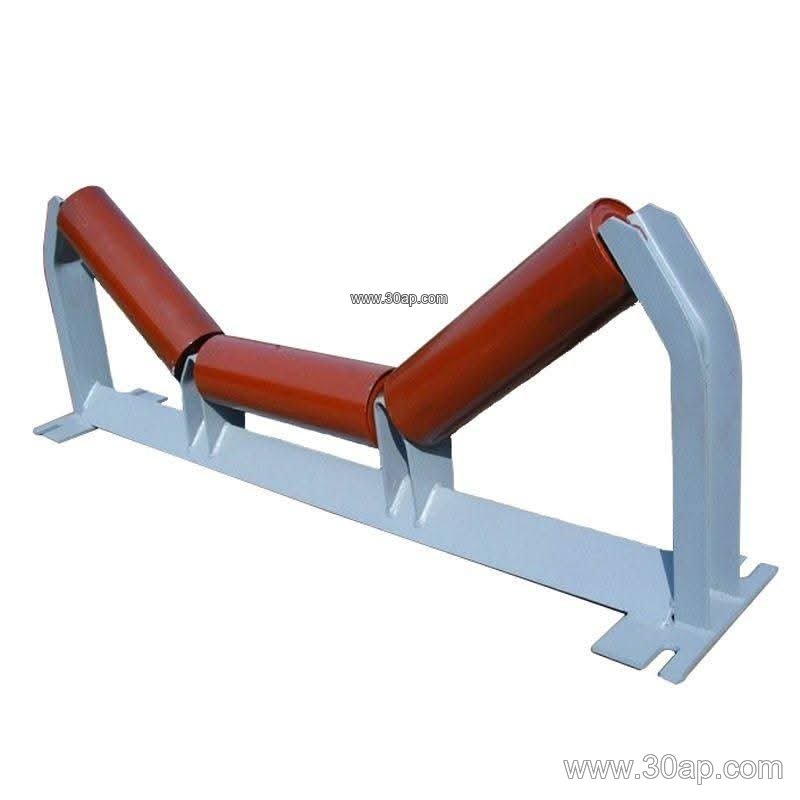
Brackets appear in several positions along a conveyor structure. Carry-side brackets support troughing idlers, while return brackets hold the lower rollers. Transition brackets guide the belt from flat to troughed profile near the head or tail. V-return and impact brackets serve different duties. A self-aligning bracket is sometimes used where belt tracking is difficult, but it does not replace a standard troughing bracket. The table below shows common reference combinations; final values follow the conveyor design.
| Belt Width | Trough Angle | Roller Diameter |
|---|---|---|
| B500 | 20° | Ø89 |
| B650 | 30° | Ø89 |
| B800 | 35° | Ø108 |
| B1000 | 35° | Ø108 |
| B1200 | 45° | Ø133 |
| B1400 | 45° | Ø159 |
| B1600 | 35° | Ø159 |
| B1800 | 45° | Ø194 |
These are reference examples, not fixed rules. A B1200 conveyor may use a different trough angle or roller size depending on load and belt stiffness, and hole spacing changes with both width and angle.
Choosing the Right Bracket for the Job
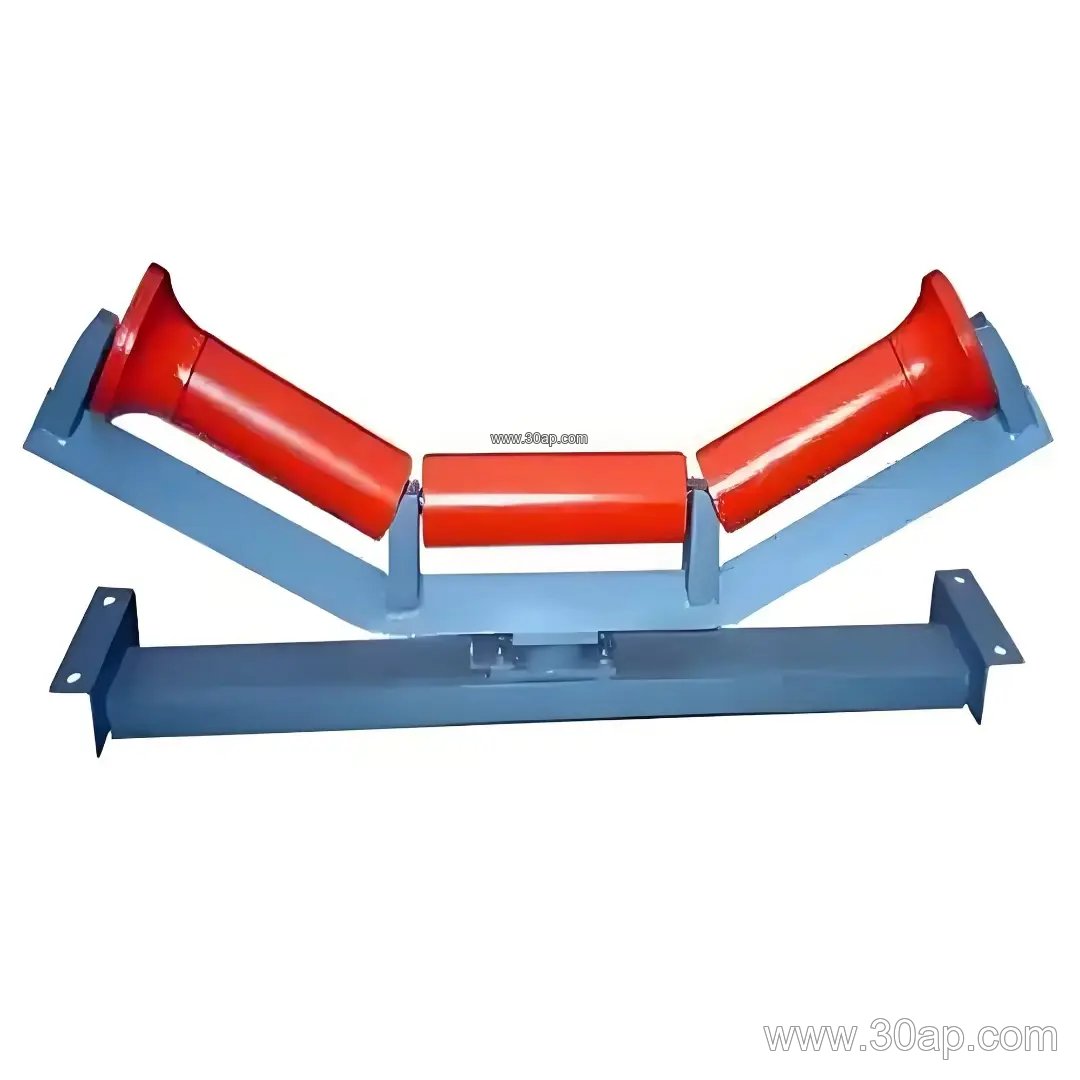
Start with the belt width and the required trough angle, then confirm the roller diameter and shaft end size. Check the mounting hole spacing against the conveyor frame. On a heavy-duty mining conveyor bracket, the steel section should be sized for the load and for the impact of lumps at the transfer point. In a power plant coal yard or a limestone crushing line, dust and moisture may call for galvanized or painted finish. Adjustable brackets allow the trough angle to be changed between 20°, 30°, 35° and 45°, which can help when a conveyor is modified later.
Working With the Belt and Rollers
A bracket is only one part of the support system. The idler roller must spin freely, and the belt must be compatible with the trough profile. For high-abrasion service, a rubber conveyor belt or an abrasion resistant conveyor belt may be paired with sturdy brackets. In coal mining, a flame retardant conveyor belt or PVG conveyor belt is common, and the bracket must suit the frame used underground. In long overland lines, a steel cord conveyor belt may need larger roller diameters and heavier brackets. Matching the custom conveyor bracket to the belt and roller avoids premature wear on all three.
Buyer Checklist
- Confirm belt width B500 to B2200 as required.
- State the trough angle and whether it must be adjustable.
- Give roller diameter and shaft end details.
- Provide frame hole spacing or a drawing.
- Specify material and surface finish for the site.
Ordering a bracket by belt width alone is risky. A short drawing or sample measurement prevents most installation problems.