What Drives Conveyor Bracket Price
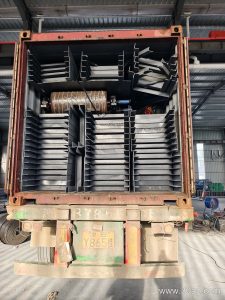
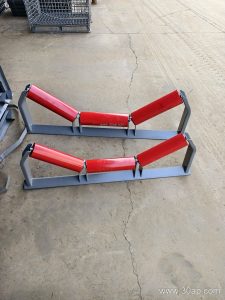
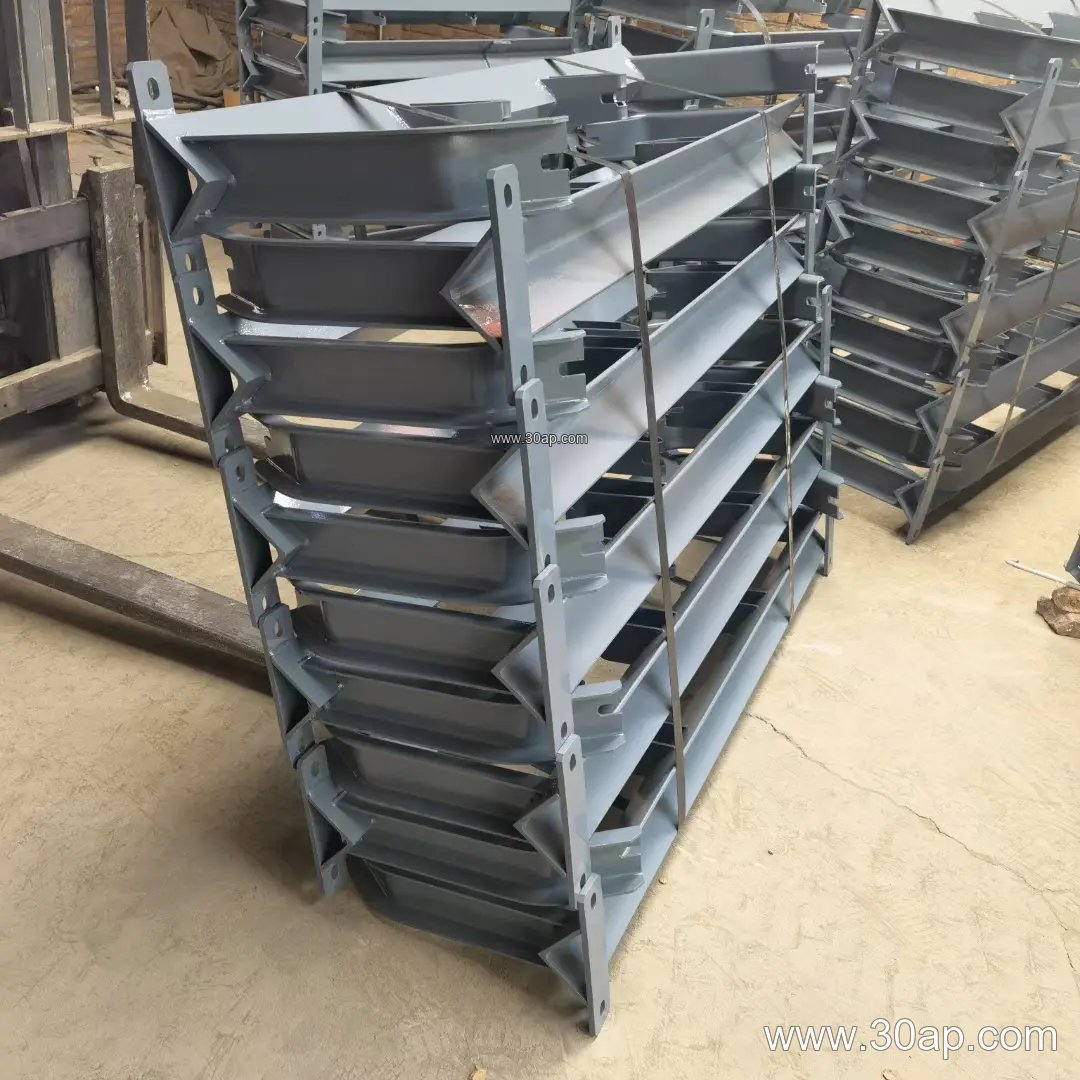
A conveyor bracket is the steel support that positions idlers under the belt and keeps the trough shape stable along the carrying run. When buyers ask about conveyor bracket price, they are usually comparing a fabricated steel assembly, not a single casting or a wear part. The price responds to material weight, bending and welding time, hole pattern accuracy, and the number of brackets in a project. Because brackets are made to match a specific belt width and idler diameter, two quotes that look similar on paper may cover quite different steel content.
For a quarry conveyor or a cement plant transfer line, the bracket set is often priced per frame or per meter of conveyor. A short aggregate conveyor may need only a few troughing brackets, while a long overland run in an iron ore or coal mining operation can require hundreds of units, so the unit price and the total order value move in different ways.
How the Bracket Is Built and Why It Matters to Price
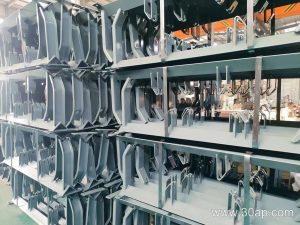
Most brackets are formed from angle steel, channel steel, or folded steel plate. The frame carries the idler roller seats, and the mounting holes must line up with the conveyor stringer. A well-built bracket keeps the idler axis square to the belt, which protects the conveyor belt edge and reduces tracking problems. Extra operations such as jig drilling, reinforced gussets, hot-dip galvanizing, or a painted finish add cost but can extend service life in wet or dusty conditions.
Common bracket forms include troughing brackets, transition brackets, return brackets, V-return brackets, impact brackets, self-aligning brackets, and adjustable brackets. Each has a different steel layout, so price comparison should always be made on the same type, the same belt width, and the same idler diameter.
Typical reference combinations
The values below are common reference points, not fixed rules. Actual hole spacing and beam length are determined by the conveyor design.
- B650 with 30 degree trough and Ø89 idler
- B800 with 35 degree trough and Ø108 idler
- B1000 with 35 degree trough and Ø133 idler
- B1200 with 45 degree trough and Ø133 idler
- B1400 with 35 degree trough and Ø159 idler
- B1600 or B1800 with 45 degree trough and Ø194 idler
Adjustable brackets usually cost more than fixed-welded frames because they include sliding or pivoting parts and additional fasteners. They allow the trough angle to be set between common values such as 20, 30, 35, and 45 degrees, which helps when one conveyor handles several material types.
Where Bracket Choice Affects Cost and Performance
In a coal preparation plant or a power plant coal yard, flame retardant conveyor belt and anti-static properties are handled by the belt, but the bracket still controls idler alignment. A weak bracket can let the frame twist, and the belt then runs off-center. In a limestone mine or a sand and gravel line, abrasive dust works into the joints, so a heavier channel frame may last longer than a light folded plate design.
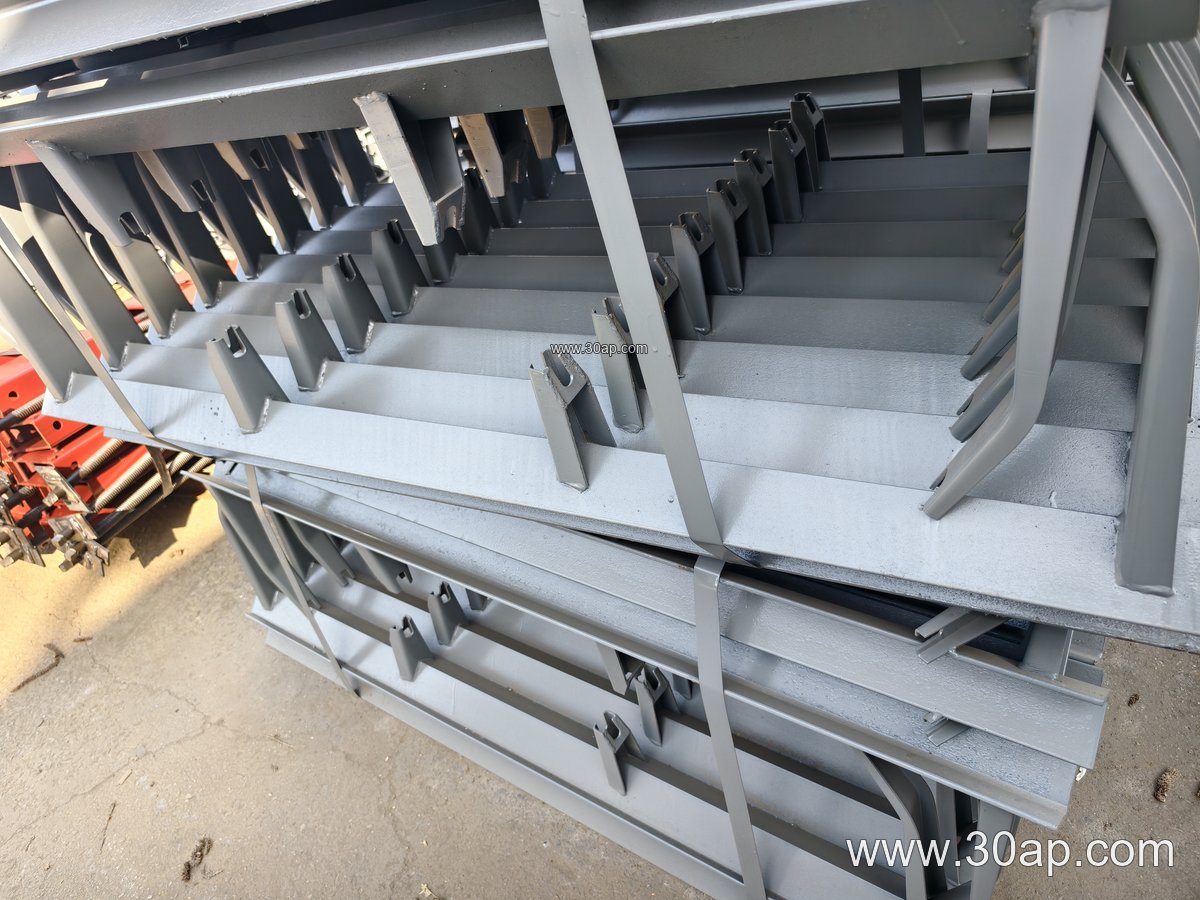
At a port ship loader or a bulk material terminal, wide belts such as 1800 mm or 2000 mm need long cross beams, and the bracket price rises with span and steel thickness. In a steel plant sinter line, heat resistant conveyor belt protects the belt surface, while the bracket must keep its shape under vibration. The bracket itself is not a heat barrier, so it should not be selected as a substitute for the right belt compound.
Specification Details That Change the Quote
When requesting a conveyor bracket price, give the belt width, trough angle, idler diameter, bracket type, mounting hole pattern, surface finish, and order quantity. For example, B1000, 35 degree, Ø133, troughing bracket, painted, 200 pieces is a clear basis for quotation. A specification such as B1200, 45 degree, Ø133 with a self-aligning bracket is a different item and should be priced separately.
Also state whether the brackets are for a new conveyor or a replacement. Replacement frames must fit existing stringer holes, and small dimensional differences can turn a low-price bracket into an expensive installation problem. For underground mining conveyor systems, compact frames and easy pin connections may be worth a higher unit price because they shorten maintenance time.
Buying Advice
Compare brackets on steel grade, plate thickness, weld quality, hole accuracy, and coating, not only on the headline number. Ask for a drawing that shows the idler seat position and the mounting dimensions. Confirm that the selected bracket works with the planned conveyor pulley and idler roller sizes, and keep a few spare frames on site for wear replacement. A clear, complete specification is the most reliable way to get a conveyor bracket price that reflects the real job.