What an Anti-Sticking Idler Is
An anti-sticking idler is a carrying or return idler roller built to keep sticky bulk material from clinging to its shell and wrapping around the rotating body. In a coal washing plant, a cement plant, or a wet sand and gravel line, fines and moisture combine into a paste that ordinary steel rolls pick up quickly. Once that paste builds into a sleeve, the roller goes out of balance, the conveyor belt starts to track badly, and the whole line has to be stopped for cleaning. The anti-sticking idler roller attacks that problem at the surface: the shell is covered or shaped so material sheds instead of accumulating.
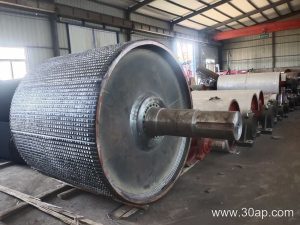
It is still an idler, not a pulley. A conveyor pulley drives or redirects the belt at the head, tail, or bend, while idlers support the belt along its run. Drive, tail, and bend pulleys are separate components with their own design rules, and none of them is a substitute for an anti-sticking roller.
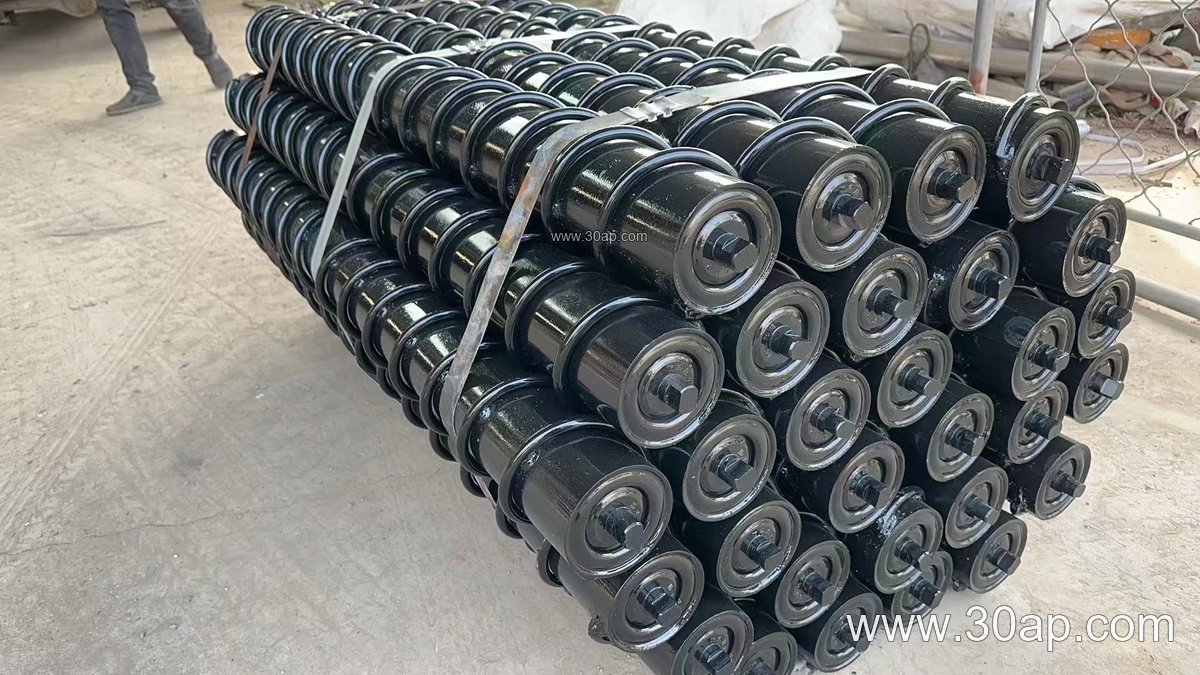
How the Roller Is Built
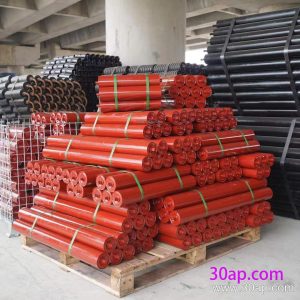
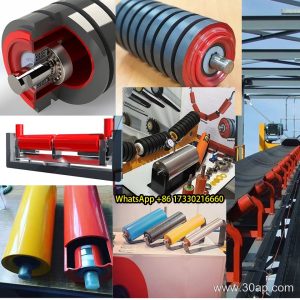
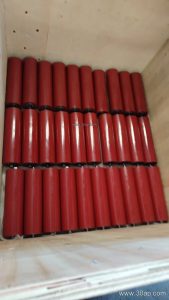
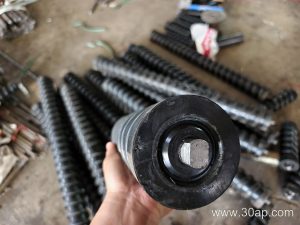
The core is a steel tube with welded bearing housings at both ends. What changes is the running surface and, sometimes, the seal arrangement. Common surface forms include:
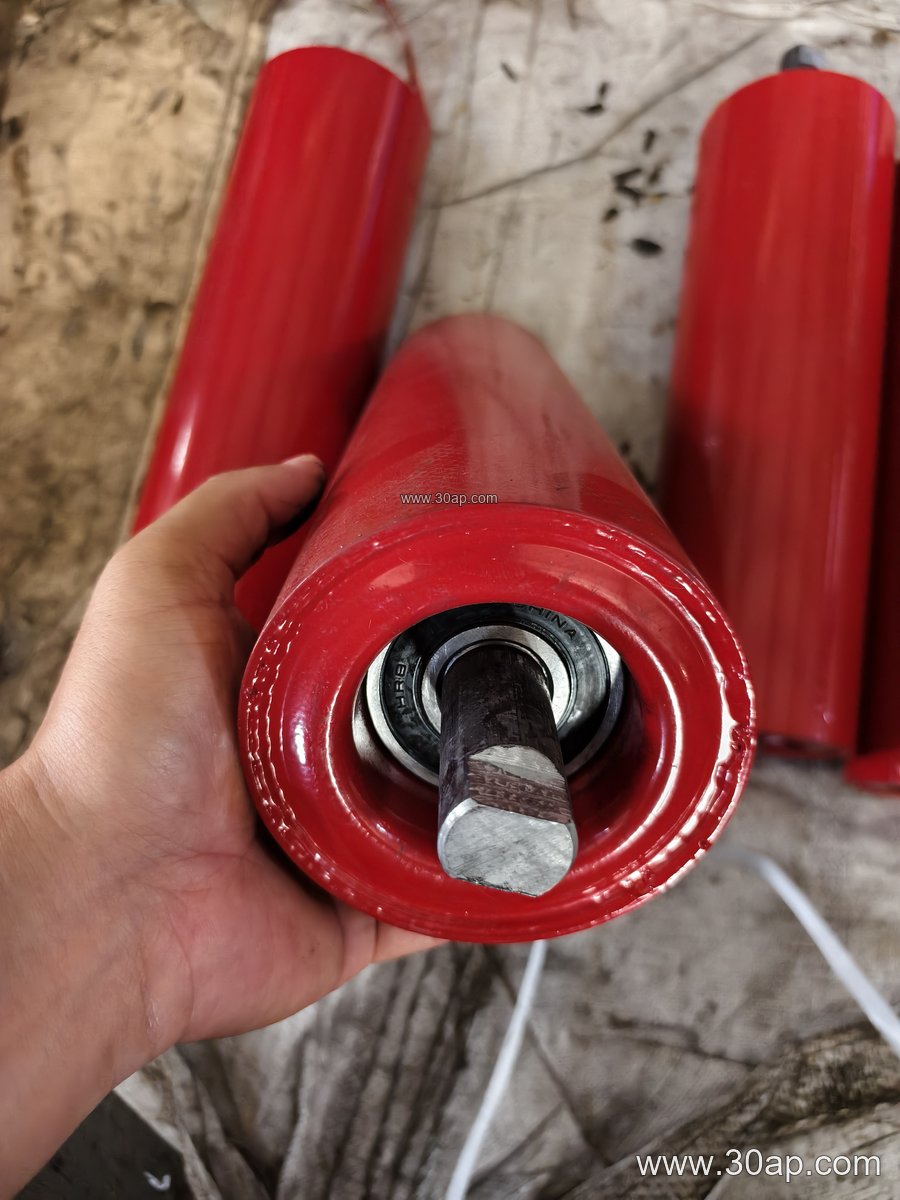
- Rubber rings or a rubber sleeve, which flex slightly and release moist fines as the roller turns
- Ceramic tiles bonded to the shell, giving a hard, low-friction face that resists build-up and abrasion
- Nylon or polymer covering for lighter duty and lower weight
Bearing protection matters as much as the surface. Dust and moisture reach the bearing through the gap between shell and end cap, so multi-stage labyrinth seals and good grease retention are typical on these rollers. Common bearing sizes on conveyor idlers include 6204, 6205, 6305, 6306, 6308, and 6310; the correct bearing for a given roll depends on load and shaft design, not on one fixed pairing with a diameter.
| Parameter | Typical range (reference only) |
|---|---|
| Roller diameter | Ø63, Ø76, Ø89, Ø102, Ø108, Ø127, Ø133, Ø159, Ø178, Ø194, Ø219 mm |
| Belt width | B400 to B2400 |
| Idler set form | single roll, two-roll, three-roll troughing |
| Trough angle | 20, 30, 35, 45 degrees |
| Bearing | 6204, 6205, 6305, 6306, 6308, 6310 |
Roll length follows belt width, trough angle, and set configuration. For a three-roll troughing set, common roll lengths are roughly 200 mm at B500, 250 mm at B650, 315 mm at B800, 380 mm at B1000, 465 mm at B1200, 530 mm at B1400, 600 mm at B1600, 670 mm at B1800, and 750 mm at B2000. These are examples, not fixed pairings, and side rolls can differ from the centre roll.
Where It Fits on the Conveyor
Anti-sticking rollers are usually placed where the belt is loaded and where carryback is worst. On a coal handling conveyor, that may be the first few troughing sets after the load point, plus the return run where a V-return or flat return idler picks up fines dropped from the belt. In a limestone or copper ore crushing circuit, the same roller type helps on wet feed and on lines that see seasonal rain. A food or fertilizer plant may use a polymer-faced version to avoid metal contact and to make washdown easier.
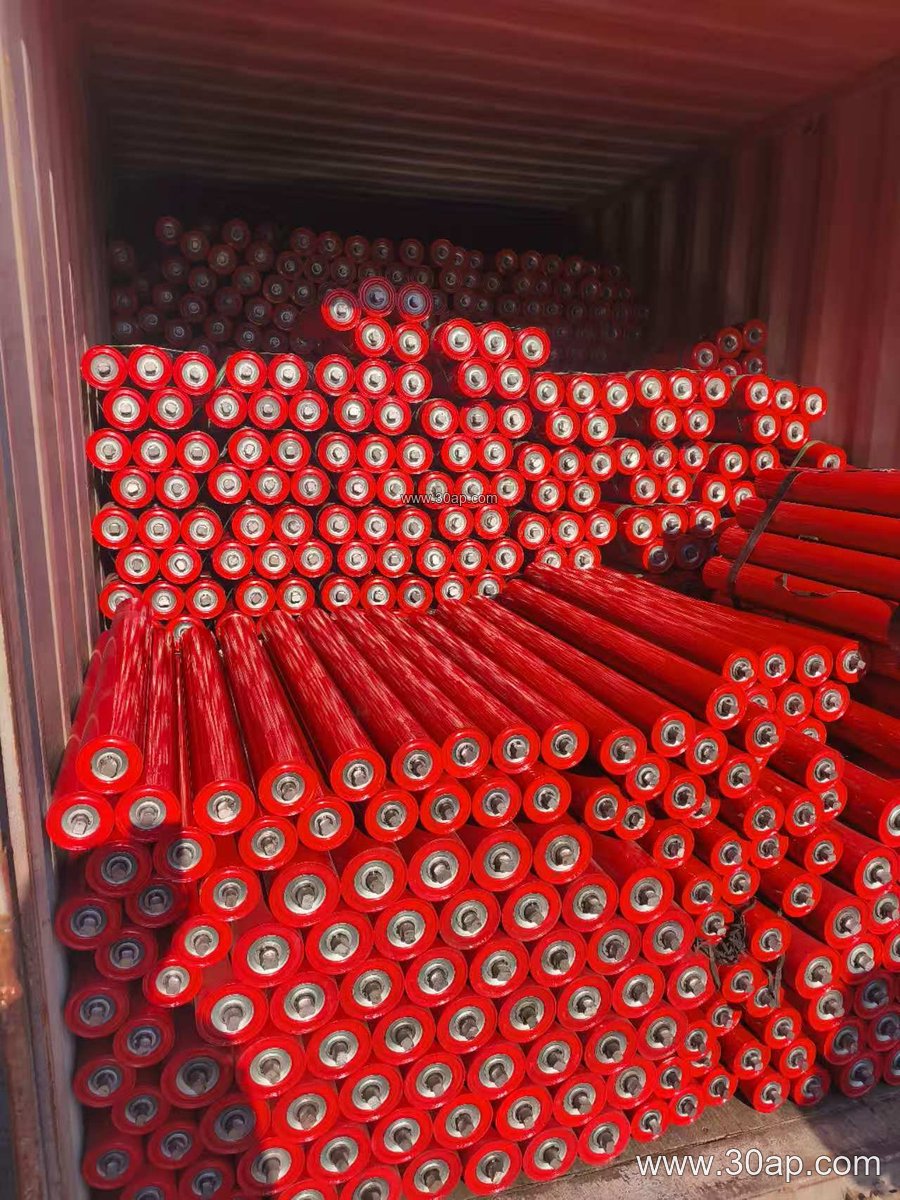
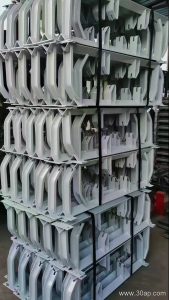
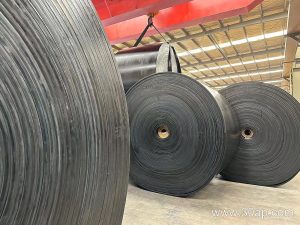
Position matters as much as the roller itself. A conveyor bracket that sits square to the belt and at the correct height keeps the roller running true, and a skewed bracket will cause edge loading that no surface treatment can fix. When belt wander is the real problem, a self-aligning idler is the right comparison: an anti-sticking roller solves build-up, while a training idler corrects tracking. They do different jobs and are often used together.
What a Buyer Should Check
- Confirm the actual cause of the problem. If material wraps because of moisture, an anti-sticking surface helps; if the belt misaligns for other reasons, look at brackets and alignment first.
- Match roller diameter, roll length, and set form to the existing frames rather than forcing a size that does not fit.
- Ask how the seal is built and whether the bearing can be re-greased, since sticky service usually means wet service too.
- Check the shell material against the material being carried, especially where abrasive ore or hot material is involved.
- Keep a few spare rollers on site; build-up tends to appear in the same spots, and quick replacement avoids long stoppages.
Used with the right trough angle and a well-supported conveyor belt, an anti-sticking idler roller reduces cleaning downtime and keeps the belt running centred, which is the outcome most plants are actually buying.