What a Port Conveyor Pulley Does in a Bulk Terminal
A port conveyor pulley is the cylindrical driving or guiding component that turns a conveyor belt at a bulk terminal. In ship loading, stockyard reclaim, and rail or truck receiving lines, these pulleys transmit torque, set belt tension, and keep the belt tracking through long horizontal runs and steep incline sections. Compared with a general-purpose conveyor pulley, the port version usually faces salt air, heavy dust, continuous duty cycles, and large tonnage of iron ore, coal, fertilizer, grain, or limestone. That environment shapes everything from shell thickness to bearing seals and surface lagging.
Buyers often describe the same item in several ways. A port conveyor pulley may be called a terminal belt pulley, a bulk terminal drum pulley, or simply a conveyor drum. These are equivalent names for the same assembly. Drive pulleys, tail pulleys, and bend pulleys are not interchangeable, however, and each position has its own design logic.
Construction Details That Matter at the Quay
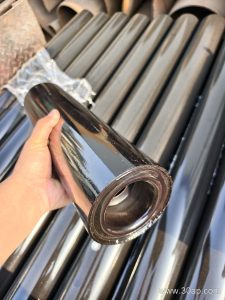
A typical unit is built around a welded steel shell, a shaft, end discs, and a lagging layer. The shell diameter and face width are matched to the belt and the required wrap angle. Common face widths run slightly wider than the belt, for example B800 with about 950 mm face, B1200 with about 1400 mm, and B1400 with about 1600 mm. Diameter is a separate decision: B800 x Ø500 and B1200 x Ø1000 are both realistic combinations, and no single belt width locks the pulley to one diameter.
Lagging protects the shell and improves grip. Plain surface suits some light-duty return positions, while cast rubber, cold-bonded rubber, hot-vulcanized rubber, diamond grooved, herringbone, and ceramic lagging serve heavier demand. Lagging thickness of 8, 10, 12, 15, or 20 mm is common depending on abrasion and slip risk. Shaft diameter is calculated from torque and load, not copied from belt width; Ø80 to Ø200 appears in many bulk terminal drives, but the final value belongs to the engineering calculation.
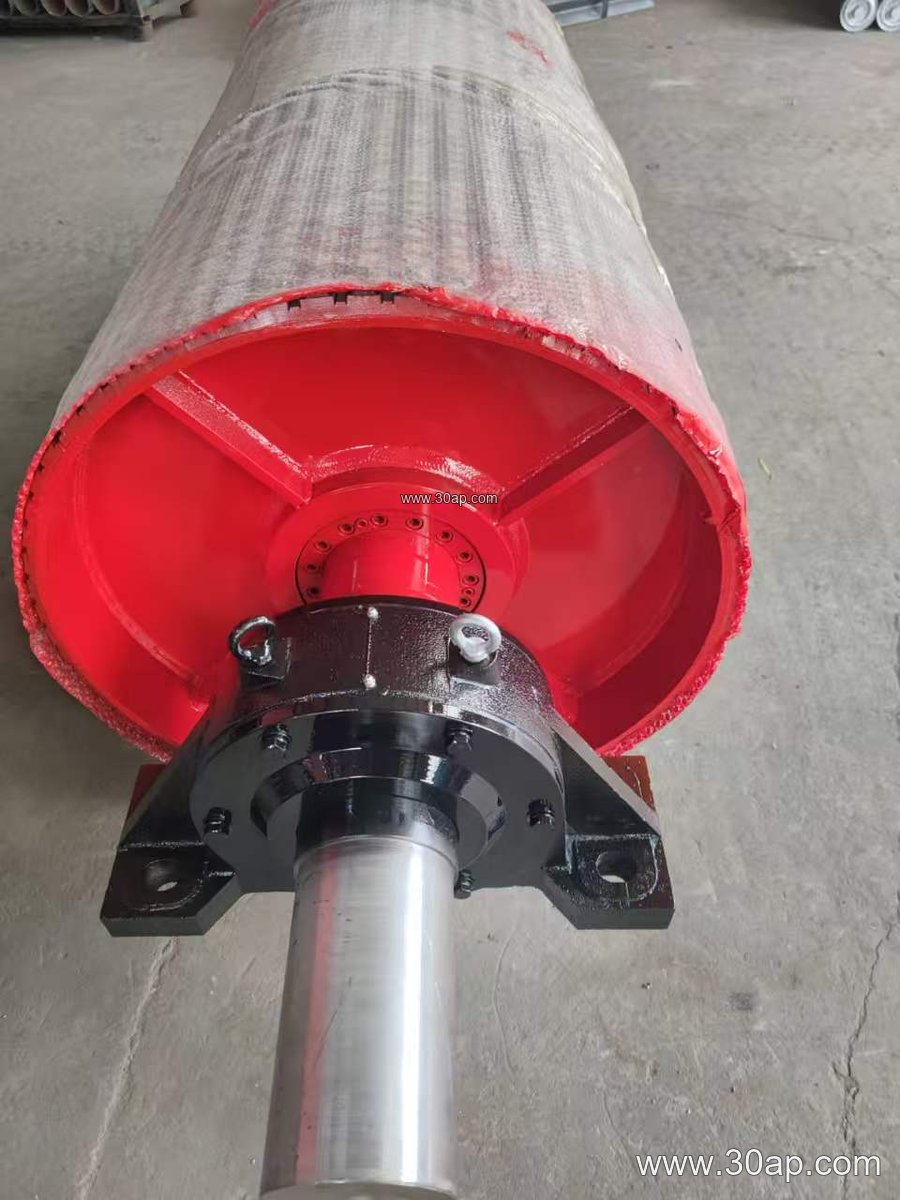
Sealing deserves attention in port service. Dust and salt spray attack bearings, so effective labyrinth seals, grease retention, and accessible lubrication points reduce downtime. A well-built conveyor bracket and sturdy bearing housing also keep alignment stable under reversing loads.
Position Matters Drive Tail and Bend
The drive pulley, sometimes called the head or discharge pulley, delivers power and often carries the highest tension. Its lagging and shell thickness are usually the most robust in the system. The tail pulley at the loading end guides the belt and may include a self-cleaning or wing design to shed sticky cargo. A bend pulley changes belt direction and is selected mainly for wrap angle and bearing capacity, not for torque transmission. Tension pulleys in a take-up system are a further subtype with their own travel and frame requirements.
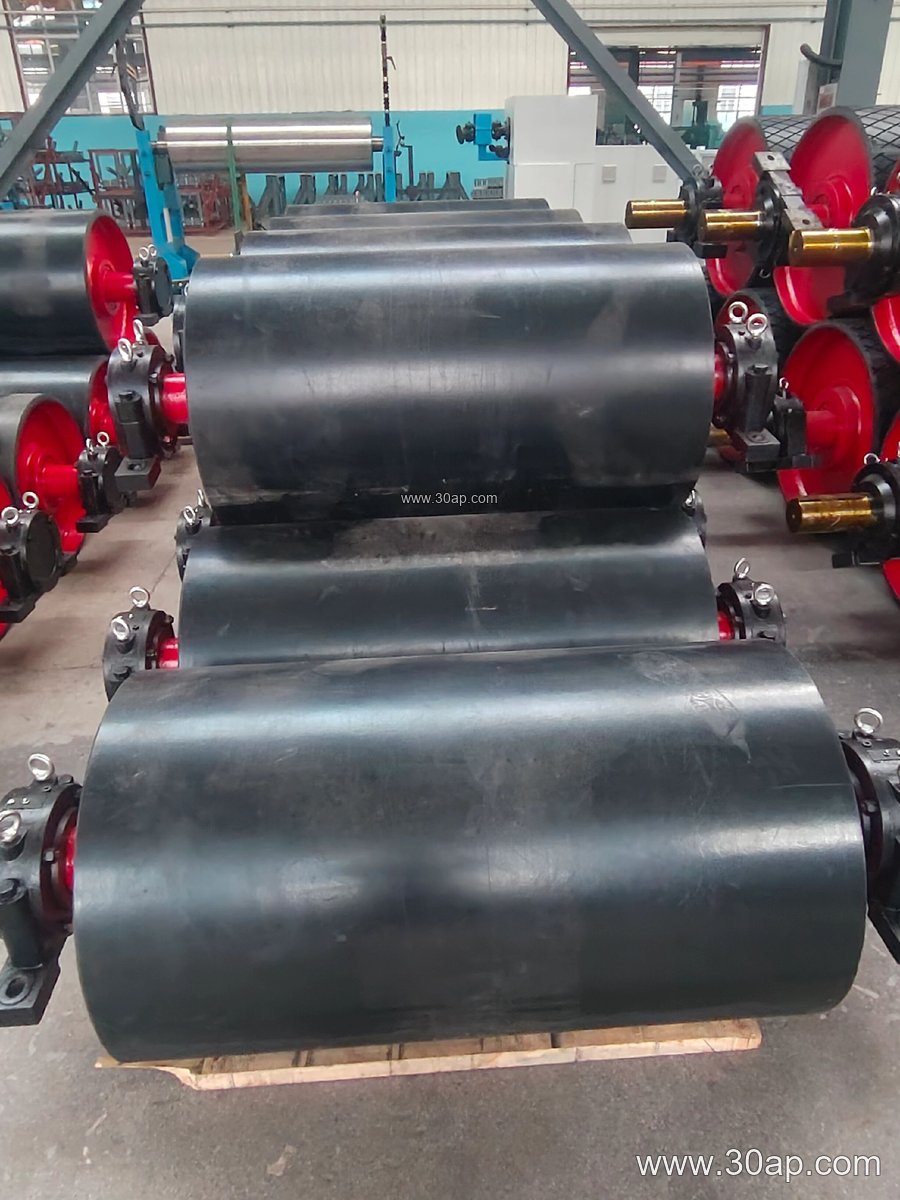
On a ship loader or stockyard conveyor, these positions may sit hundreds of meters apart, so spare parts should be identified by position as well as size. Replacing a bend pulley with a drive pulley, or the reverse, is not a valid substitution even when the diameter looks similar.
Working With the Belt and Idler Roller Set
The pulley and the belt form a system. A heavy-duty mining conveyor belt or a steel cord conveyor belt used for iron ore and copper ore needs a pulley surface that grips without over-stressing the carcass. A flame retardant conveyor belt in a coal terminal calls for compatible lagging and careful heat management. An abrasion resistant conveyor belt handling sinter or limestone benefits from ceramic or thick rubber lagging, while an oil resistant conveyor belt in fertilizer or recycling duty needs a surface that tolerates contact with oily residue.
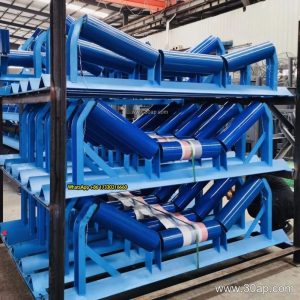
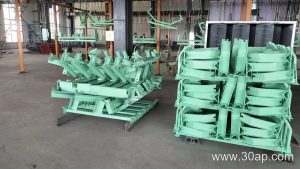
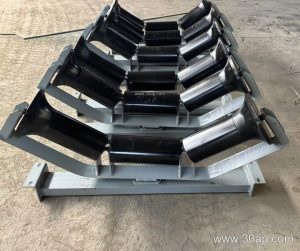
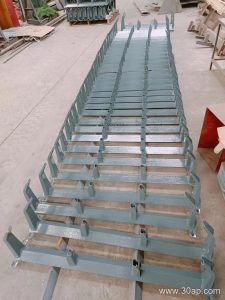
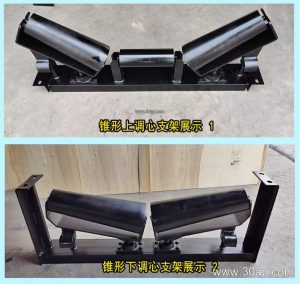
Alignment with the idler roller frame is equally important. Misalignment between pulley face and troughing idlers causes edge wear and spillage. Checking the conveyor bracket, shims, and take-up travel before commissioning saves later belt tracking work. For terminal projects, buyers can review pulley drawings together with conveyor belt specifications such as EP conveyor belt or NN conveyor belt grade, cover thickness, and splice type so that wrap angle and lagging friction are considered as one package.
Buyer Checklist Before Ordering
- Confirm the position: drive, tail, bend, tension, or snub, since these are different duties.
- State belt width and required face width separately from pulley diameter.
- Provide design torque, belt tension, and shaft load so the shaft diameter is calculated properly.
- Choose lagging type and thickness for the cargo, climate, and slip risk.
- Specify bearing type, seal arrangement, and lubrication access for port conditions.
- Ask for dynamic balance and runout checks on large diameter pulleys.
- Plan lifting points and maintenance access before the pulley arrives on site.
Common reference combinations such as B650 x Ø400, B1000 x Ø630, or B1600 x Ø800 help in early layout discussions, but they remain examples rather than fixed rules. A port conveyor pulley is ultimately a calculated component, and matching it to the belt, idlers, and terminal duty cycle is what keeps a bulk handling line running through long shifts.