What a Belt Conveyor Bracket Does
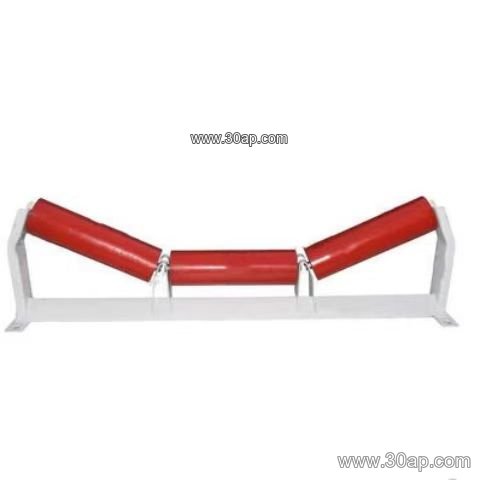
A belt conveyor bracket is the structural support that holds the idler roller in place and keeps the conveyor belt in the right profile along the line. In a quarry or a cement plant, the bracket is often a simple steel part, but it decides how the belt sits, how the load is spread, and how easily the rollers can be replaced. The same product is also called a conveyor bracket or an idler bracket, and those names point to the same job: carry the roller, hold the trough angle, and stay rigid under load.
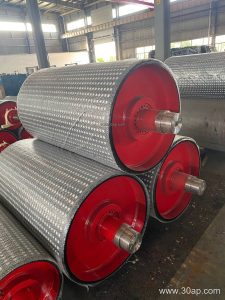
A belt conveyor bracket is not a pulley. Drive pulleys, tail pulleys and bend pulleys transmit power or change belt direction, while the bracket simply supports the carrying and return runs. Confusing the two leads to the wrong spare part on site.
How the Bracket Is Built
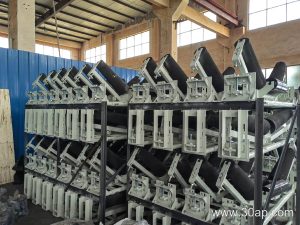
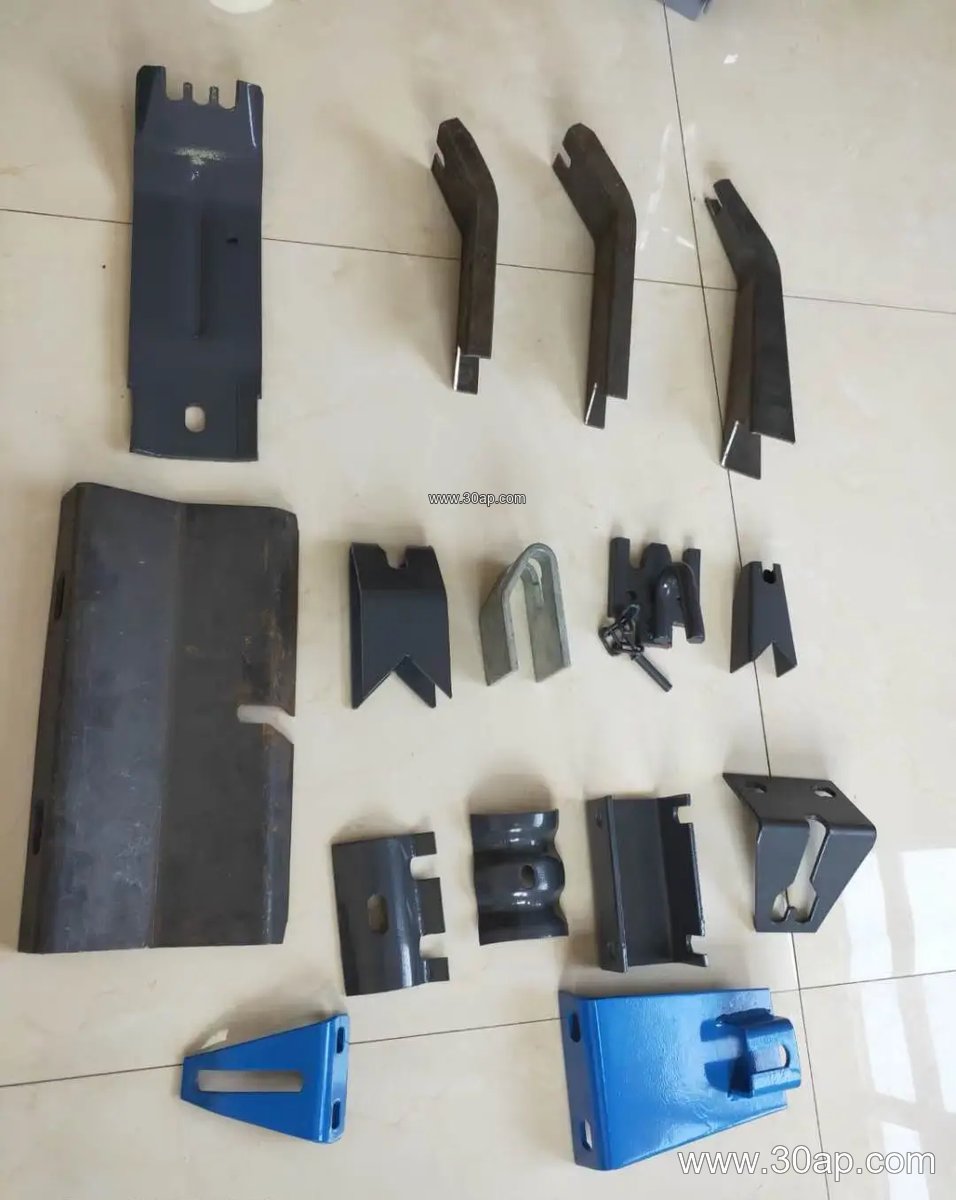
Most brackets are made from angle steel, channel steel or folded steel plate. The frame is cut, drilled and welded, then finished with paint or galvanized coating depending on the environment. A trough bracket usually has two or three roller seats set at a fixed or adjustable angle. A return bracket carries a single flat roller or a V-shaped roller set.
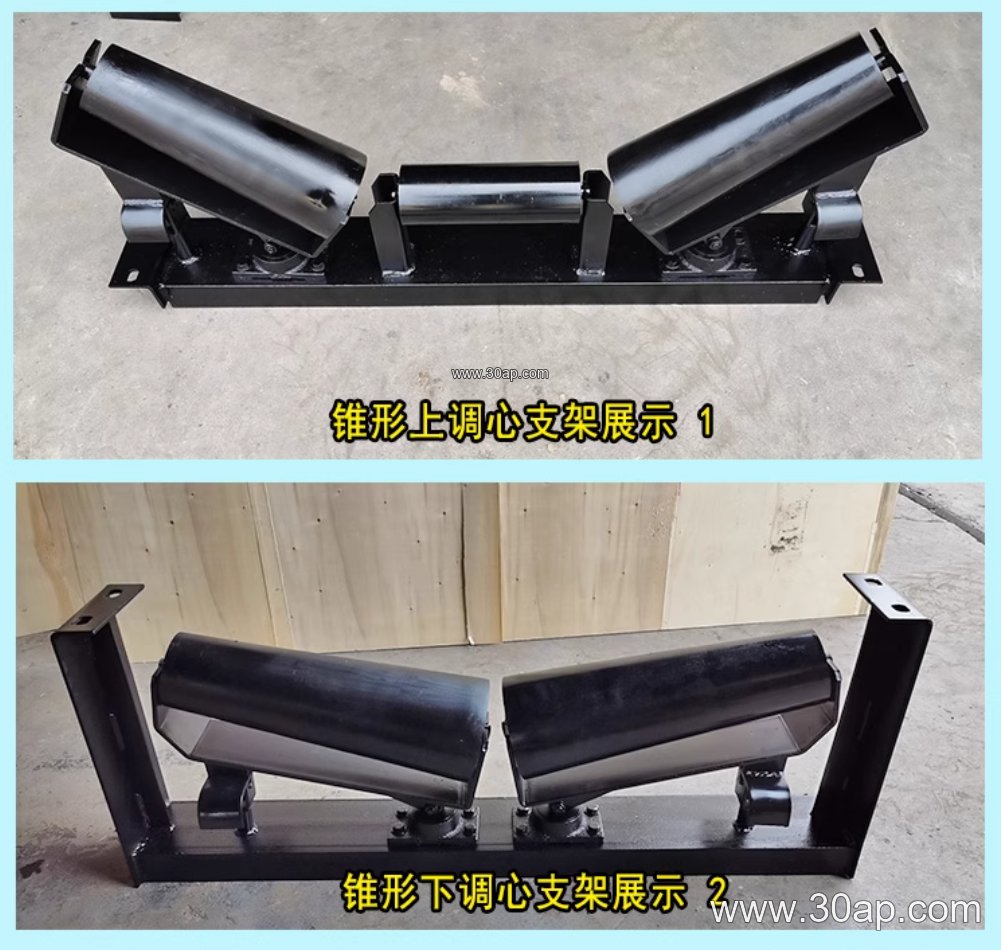
Common types include the trough bracket, upper trough bracket, transition bracket, return bracket, flat return bracket, V-return bracket, impact bracket, self-aligning bracket, forward-leaning bracket, spiral roller bracket, suspended bracket and adjustable bracket. Each one fits a different point on the conveyor line, from the loading zone to the tail end.
Where It Fits on the Line
In a limestone quarry, trough brackets are placed along the carrying side to keep a bulk material conveyor belt in a rounded shape, and return brackets support the empty belt on the way back. At a cement plant, transition brackets are common near the head and tail because the belt must change from a flat profile to a troughed profile without stressing the edges. In a coal handling system, a flame retardant conveyor belt is often paired with impact brackets under the loading chute, where falling lumps hit the belt.
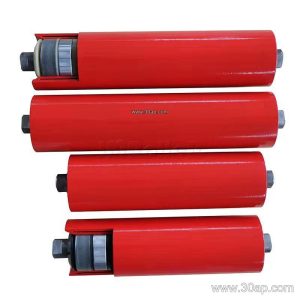
The bracket also has to match the roller. A conveyor pulley at the drive end and the idler roller along the run are different parts, and the bracket is designed around the roller, not the pulley.
Common Reference Sizes
The table below lists typical reference values. Actual installation hole spacing and beam length change with belt width and trough angle, so these are design references, not fixed rules.
| Item | Common reference values |
|---|---|
| Belt width | B500, B650, B800, B1000, B1200, B1400, B1600, B1800, B2000 |
| Trough angle | 20°, 30°, 35°, 45° |
| Roller diameter | Ø89, Ø108, Ø133, Ø159, Ø194 |
| Forward lean | usually about 1.5° to 2° |
| Material | angle steel, channel steel, folded plate |
A combination such as B800, 35°, Ø108 is common in a sand and gravel line, while B1200, 45°, Ø133 may suit a wider, heavier duty run. One belt width does not lock the bracket to a single angle or roller size; the duty, belt stiffness and load decide the final match.
Fixed or Adjustable
A fixed bracket keeps its trough angle for life and is simple and rigid. An adjustable bracket lets the maintenance team change the angle between the listed values to reduce spillage or to train the belt. In a power plant coal yard, adjustable brackets help when the belt runs slightly off-centre after a splice. A forward-leaning bracket is a separate design used for self-training, not a replacement for a trough bracket.
What Buyers Should Check
- Belt width and the roller diameter that will sit in the bracket.
- Trough angle needed at that point of the line, and whether adjustment is useful.
- Material and coating for dust, moisture or corrosive conditions.
- Hole spacing and beam length, confirmed against the drawing, not assumed.
- Compatibility with the idler roller and with the belt type, such as an abrasion resistant conveyor belt in a crusher discharge.
For an EP conveyor belt or a steel cord conveyor belt, the bracket still does the same job, but the load and the belt stiffness change the demand on the frame. A bracket that is too light will flex, and the roller will not sit true. Checking the bracket together with the roller and the belt, rather than on its own, keeps the whole conveyor steady in the quarry, the cement plant or the port terminal.