What a Carrying Trough Idler Does on the Line
A carrying trough idler is the upper support roller assembly that holds the loaded side of a conveyor belt in a trough shape. On a quarry conveyor belt or a cement plant feed line, the belt arrives flat from the tail pulley and must be formed into a channel before material is loaded. The carrying trough idler performs that job, and it keeps the belt supported across the full length of the carrying run. Because the belt is shaped like a trough, bulk material stays centered instead of spilling over the edges.
This component is also called a troughing idler, troughing roller, or simply a carrying idler. Those names describe the same upper-run roller set. A carrying trough idler is not the same as a return idler, an impact idler, or a self-aligning idler, and it should not be confused with a conveyor pulley at the drive, tail, or bend position. Each of those parts has a separate role in the conveyor structure.
How the Assembly Is Built
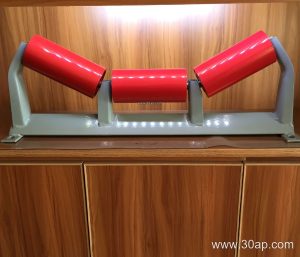
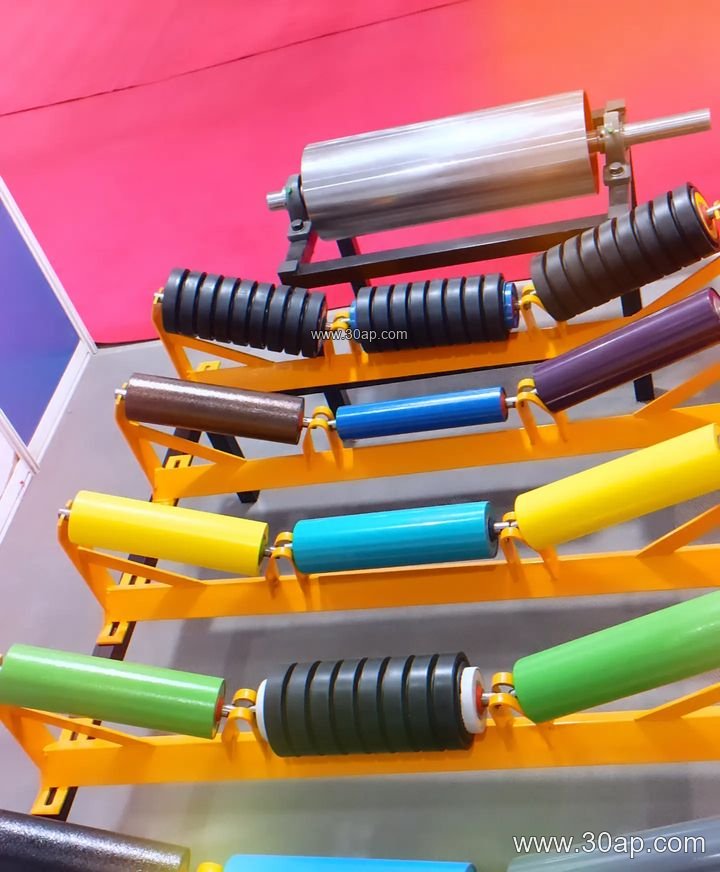
A typical carrying trough idler group uses two or three rollers mounted in a frame. Three-roller groups are the most common arrangement for wide belts, with a center roller and two side rollers angled upward. Two-roller and single-roller designs appear on narrower belts or where space is limited. The frame holds the rollers at a fixed trough angle, usually 20, 30, 35, or 45 degrees. A steeper angle gives a deeper material bed, while a shallow angle suits flatter, wider loads.
Each roller has a steel tube shell, a shaft, bearings, and a sealing arrangement. The shell may be plain steel, nylon-coated, ceramic-covered, or fitted with rubber rings for cushioning. Common bearing sizes include 6204, 6205, 6305, 6306, 6308, and 6310, and the correct bearing depends on load, speed, and roller diameter rather than on belt width alone. Seals matter in dusty service such as a coal mining conveyor belt line, where fine particles can enter the bearing housing and shorten roller life.
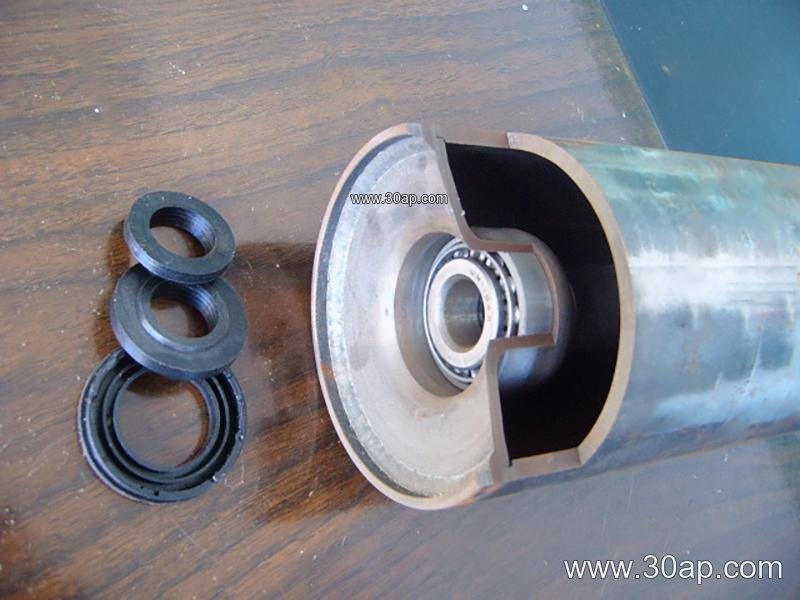
- Roller diameter options commonly range from Ø63 to Ø219 mm.
- Trough angles are usually 20, 30, 35, or 45 degrees.
- Roller length varies with belt width, trough angle, and group type.
- Frames are bolted to the conveyor bracket or stringer structure.
Common Sizes and Reference Data
The table below shows typical roller lengths for three-roller carrying trough idler groups. These are reference examples only; side rollers and center rollers can differ, and final dimensions are set by the conveyor design.
| Belt width | Typical center roller length | Common trough angle |
|---|---|---|
| B500 | 200 mm | 20–35 degrees |
| B650 | 250 mm | 20–35 degrees |
| B800 | 315 mm | 30–35 degrees |
| B1000 | 380 mm | 30–35 degrees |
| B1200 | 465 mm | 30–35 degrees |
| B1400 | 530 mm | 35–45 degrees |
| B1600 | 600 mm | 35–45 degrees |
| B1800 | 670 mm | 35–45 degrees |
| B2000 | 750 mm | 35–45 degrees |
Belt widths from B400 up to B2400 are used across different industries. A wide 1800mm conveyor belt in a port or steel plant may need larger rollers and heavier frames than a 650mm belt on a small aggregate line. Matching the idler to the belt and load is more important than following a single fixed rule.
Where Carrying Trough Idlers Are Used
These idlers appear wherever bulk material rides on the top run of a belt. In a limestone quarry or sand and gravel plant, carrying trough idlers support an abrasion resistant conveyor belt moving crushed stone. In a power plant coal yard, they carry a flame retardant conveyor belt or an EP conveyor belt through long transfer routes. A copper ore concentrator and an iron ore terminal also rely on troughing idlers under heavy, sharp loads.
Material type influences the choice. A heat resistant conveyor belt in a sinter plant needs idlers that tolerate warm surfaces. An oil resistant conveyor belt in a recycling facility benefits from rollers with suitable covers. A corrugated sidewall conveyor belt or a pipe conveyor belt has its own support requirements, so the carrying idler layout should follow the belt maker’s guidance rather than a generic pattern.
Buyer Checklist Before Ordering
Start with belt width, trough angle, and the number of rollers in the group. Confirm roller diameter and shaft size with the conveyor designer, since belt width alone does not determine shaft diameter. Check the bearing size and sealing level for the site conditions, especially in dusty or wet service. Ask about roller surface options and frame finish. For a mine or coal handling project, verify that the selected idler suits the conveyor belt’s flame retardant grade and the local safety requirements.
Also review the mounting details. The frame must fit the existing conveyor bracket spacing, and the roller ends should sit correctly in the frame slots. Spare parts planning is easier when the plant standardizes a small number of roller diameters and bearing sizes across its conveyor lines. Finally, keep installation alignment in mind: a carrying trough idler that is not square to the belt can cause edge wear and mistracking.
Maintenance Notes
Inspect carrying trough idlers for seized rollers, worn shells, and damaged seals. A roller that stops turning creates sliding friction under the belt and can wear through a rubber conveyor belt quickly. Listen for unusual noise and check for material buildup around the frame. Replace worn rollers in matched groups where possible so the belt keeps an even trough profile. On long overland lines and underground mining conveyor belt routes, scheduled inspection is more effective than waiting for a failure.
Keep the belt, idler roller, conveyor pulley, and conveyor bracket systems in one maintenance plan. A small roller problem can affect the whole conveyor, so early attention pays off in uptime and belt life.