What an Automatic Self-Aligning Idler Does
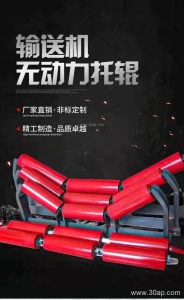
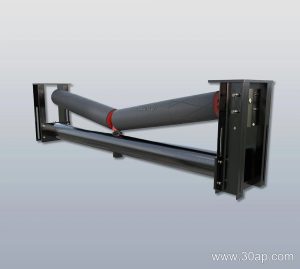
An automatic self-aligning idler is a carrying or return roller assembly that corrects belt drift without operator input. When a conveyor belt begins to run off-center, the roller frame pivots slightly, and the resulting change in contact angle nudges the belt back toward the center line. In a quarry or a coal handling plant, that small correction prevents edge damage, spillage, and the gradual destruction of the conveyor belt itself.
The same product appears under an accurate equivalent name: self-aligning roller, self-training idler, or automatic training idler. All refer to the same function, and the subtype qualifiers matter. A friction self-aligning idler and a tapered self-aligning idler are variations of this training function, not replacements for a troughing idler or an impact idler.
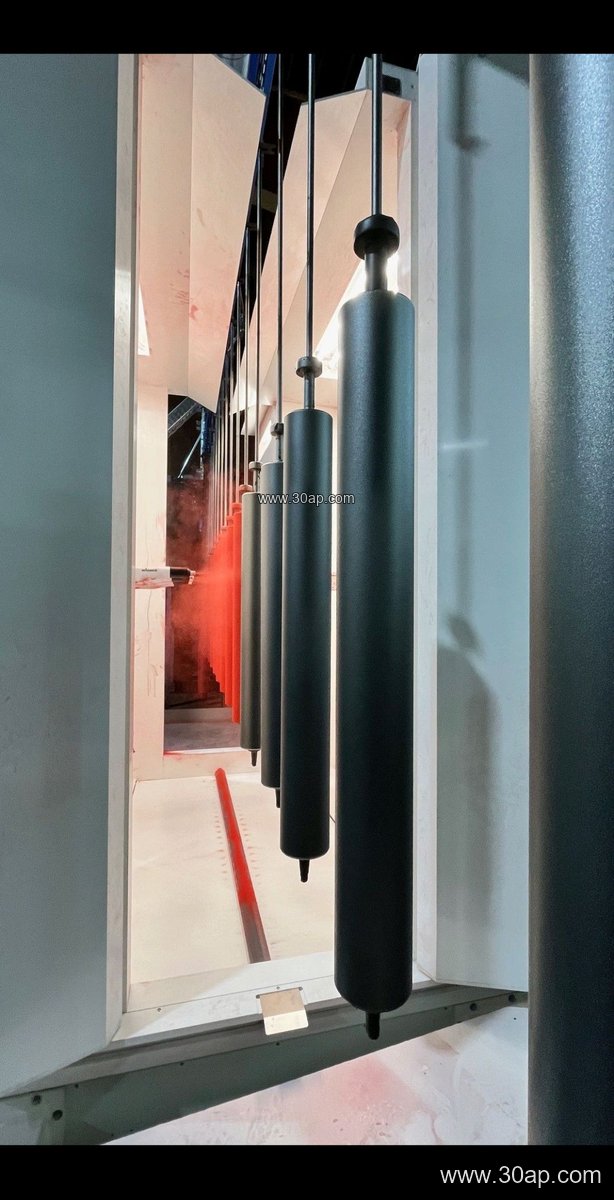
How the Assembly Is Built
A typical unit combines a pivoting bracket, two or more rollers, and a vertical or horizontal pivot axis. Friction types use a small rubber or polyurethane contact wheel that rides against the belt return run and senses misalignment. Tapered types rely on differential surface speed between the roller ends to generate the correcting moment.
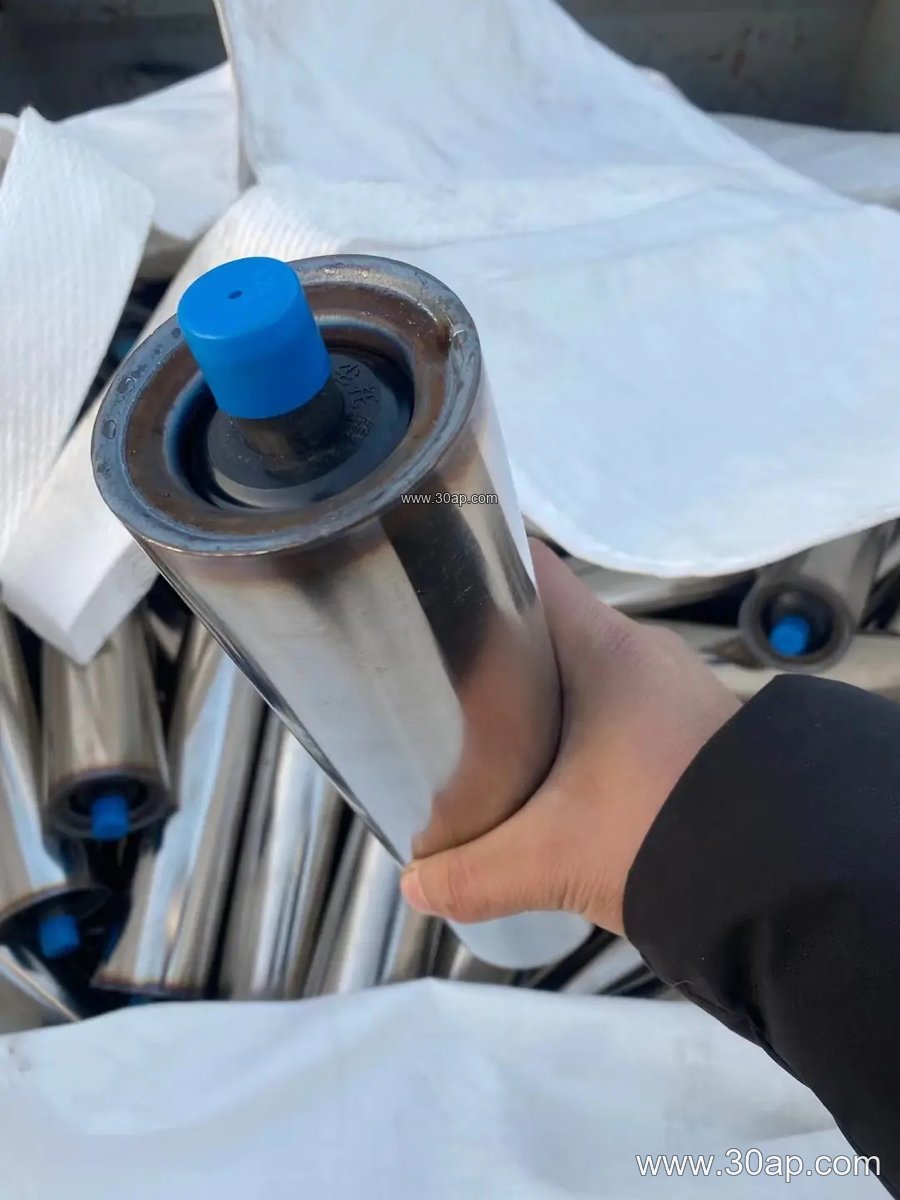
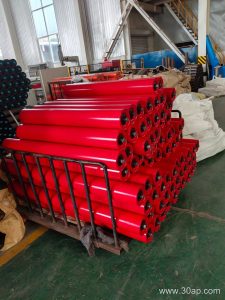
- Roller shell in steel tube, nylon, or rubber-covered form
- Bearing housings with common sizes such as 6205, 6305, 6308, or 6310
- Sealed bearing arrangements for dusty service
- Pivot frame with adjustable stops
- Mounting base matched to the conveyor bracket
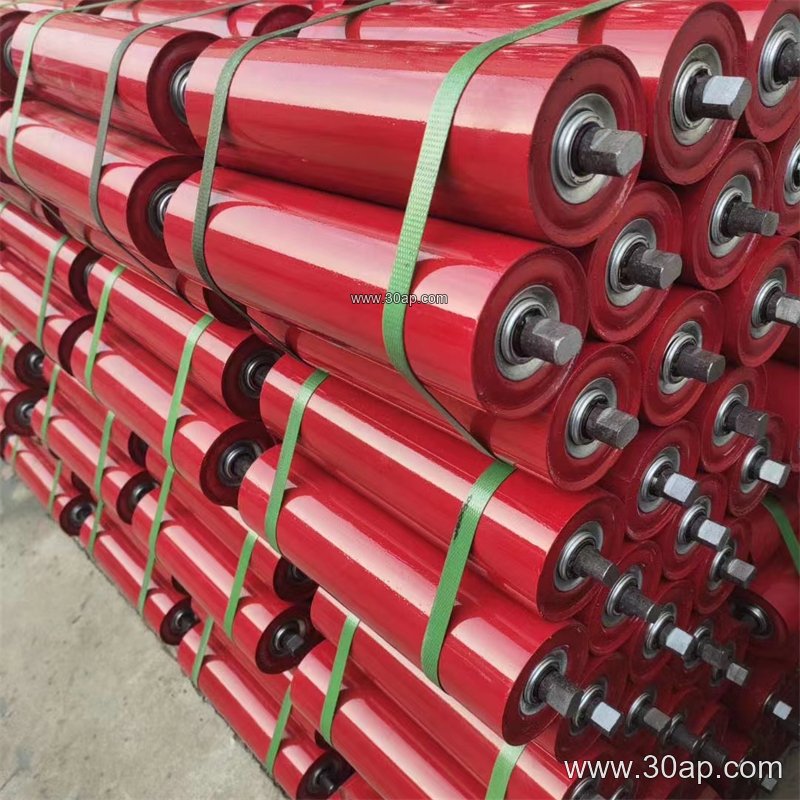
Roller diameter usually follows the parent conveyor: Ø89, Ø108, Ø127, Ø133, Ø159, and Ø178 are common in bulk handling. Bearing selection is a design decision, not a fixed match to any one roller diameter.
Where It Fits on the Conveyor
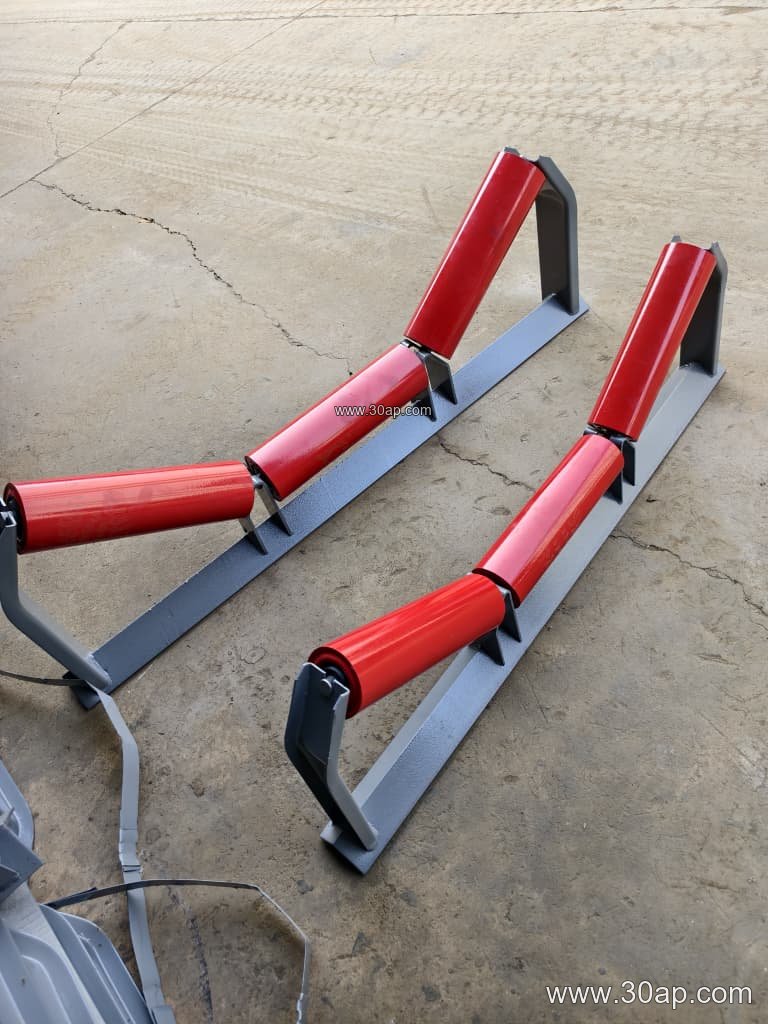
Training idlers are normally installed in pairs or groups along the carrying run, often just after the loading point and before the head pulley, and on the return strand where tracking is most sensitive. They complement, rather than replace, the standard troughing set, the transition idler near the tail, and the return roller.
Applications include limestone mines, iron ore and copper ore lines, aggregate crushing and screening plants, cement kilns and clinker conveyors, power plant coal handling, port ship loaders, and steel plant sinter lines. On a long overland route carrying abrasive ore, a correctly placed self-aligning roller reduces the side load that shortens the life of an abrasion resistant conveyor belt.
Matching the Idler to Belt and Structure
Selection starts with belt width and trough angle. The table below shows common reference values; final roller length and frame geometry are confirmed by design.
| Belt width | Common three-roll troughing roller length | Typical trough angle |
|---|---|---|
| B500 | about 200 mm | 20 to 35 degrees |
| B650 | about 250 mm | 20 to 35 degrees |
| B800 | about 315 mm | 30 to 35 degrees |
| B1000 | about 380 mm | 30 to 35 degrees |
| B1200 | about 465 mm | 30 to 35 degrees |
| B1400 | about 530 mm | 35 to 45 degrees |
| B1600 | about 600 mm | 35 to 45 degrees |
| B1800 | about 670 mm | 35 to 45 degrees |
Side rollers and center rollers often differ in length. A forward tilt of roughly 1.5 to 2 degrees is sometimes used to assist training, but tilt alone does not replace a proper self-aligning frame.
Buyer Checklist
- Confirm belt width, trough angle, and whether the position is carrying or return.
- State the material: coal, clinker, wet aggregate, or fine powder all behave differently.
- Check the existing conveyor bracket and pivot clearance before ordering.
- Ask about bearing sealing and roller wall thickness for dusty or wet service.
- For flame or fire sensitive areas such as underground coal mining, confirm the surrounding belt specification, for example PVG800S or a flame retardant conveyor belt, so the training idler is compatible with the installation.
Inspect pivot freedom, roller rotation, and frame alignment at each shutdown. A stiff pivot turns a helpful correcting device into a fixed roller that no longer trains the belt.
Installation Notes
Mount training idlers square to the belt center line, keep the pivot free of packed material, and avoid placing them where the belt is still settling after the loading point. On a coal mining conveyor belt or a heavy-duty mining conveyor belt running at high tension, the training frame should be sized for the expected side force. Small details, such as a clean pivot and a correctly set stop, decide whether the automatic self-aligning idler works as intended.