What a 1000mm Diameter Conveyor Pulley Is
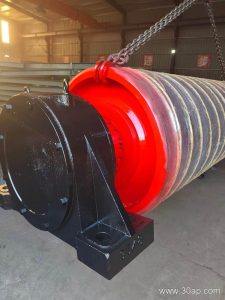
A 1000mm diameter conveyor pulley is a large-diameter drum around which the belt turns at a main transfer point on a bulk handling conveyor. In many layouts this size is used as the head or drive pulley on high-capacity systems, because a larger drum reduces bending stress in the belt carcass and spreads the drive force over a longer arc of contact. The same nominal size can also appear as a bend or snub pulley where the route needs a generous turning radius, but the duty and the internal construction differ from a drive position, so the two should never be treated as interchangeable.
Buyers often compare this drum with a smaller tail pulley or with a Ø800 unit on a secondary line. That comparison is useful for understanding wrap angle and belt fatigue, yet the 1000mm diameter conveyor pulley remains the subject here, and its role depends on where the engineer places it.
How the Drum Is Built
A pulley of this diameter is normally a welded assembly: a rolled shell, two end discs, a hub on each side, and a through shaft or stub shafts. The shell may be machined to a slight crown so the belt self-centres, or left flat where a flat face is preferred. Surface finish matters as much as the shell, and common options include plain finish, hot-vulcanised rubber, cold-bonded rubber, diamond grooving, chevron grooving and ceramic lagging, usually at 8, 10, 12, 15 or 20 mm thickness.
Lagging choice should follow the material and the climate. A quarry line moving damp aggregate may favour grooved rubber for water shedding, while a cement plant kiln feed conveyor handling hot clinker needs a compound that tolerates heat. In a coal preparation plant, a flame retardant conveyor belt runs alongside drums that must be built to the same safety philosophy. Shaft diameter is set by torque and bearing load, not by belt width alone, so a B1200 system might use Ø160 or Ø180 shafts depending on the drive calculation.
Where This Size Fits in a Circuit
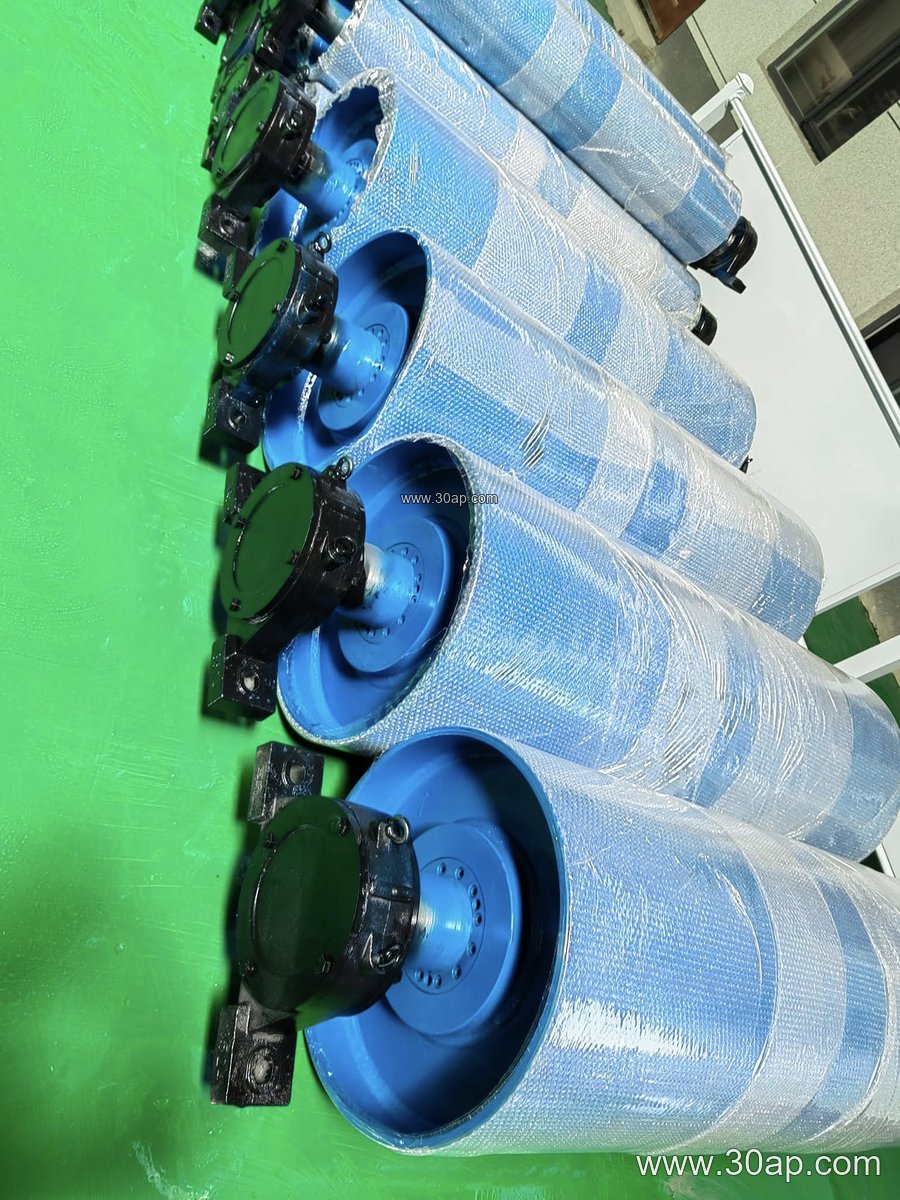
Large drums are common at the discharge end of long overland lines, at the head of a primary crushing station, and on the tension take-up of a heavy-duty mining conveyor belt. They also appear in port ship-loading booms and in power plant coal yards where the belt carries a deep trough of material. A 1000mm diameter conveyor pulley is not limited to one industry; the deciding factor is the belt tension, the wrap angle and the space available for the take-up travel.
- Head or drive position on a high-tonnage line
- Bend position where a gentle direction change is required
- Take-up position on a long route with significant stretch
- Snub position to increase arc of contact on the drive
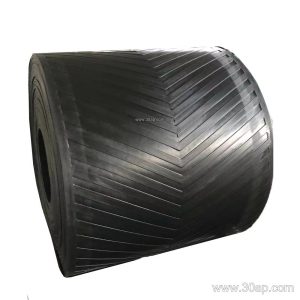
On a limestone quarry conveyor, for example, a Ø1000 head drum may work with an EP400 or EP500 fabric core belt, while an iron ore line could pair the same drum diameter with an ST1600 steel cord belt. Neither pairing is a rule; each is a design outcome.
Matching the Pulley to the Belt and the Frame
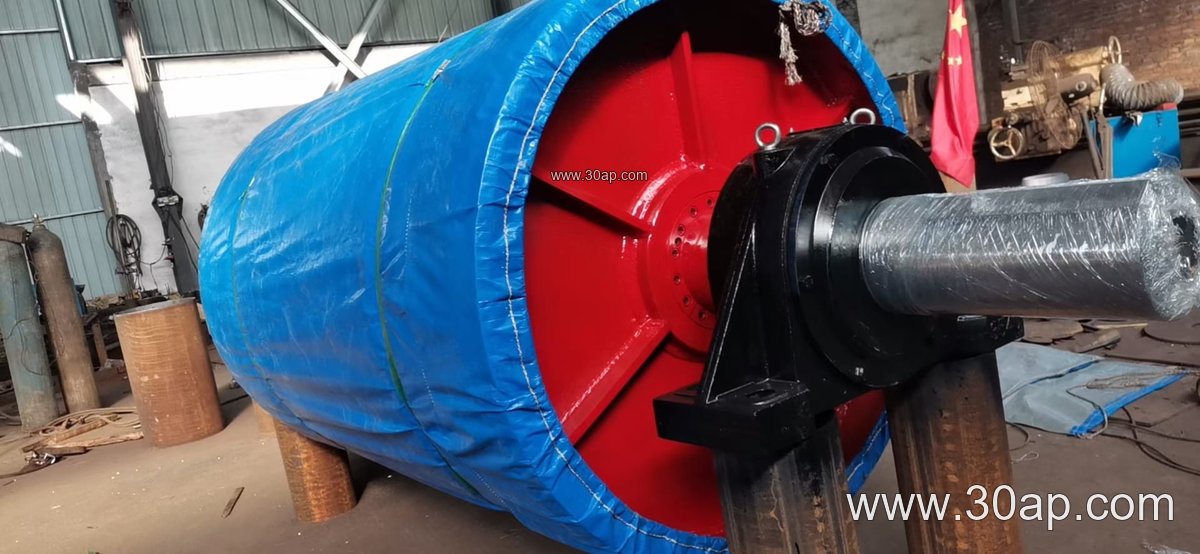
The shell face width is normally wider than the belt, so a B1000 belt usually runs on a face of roughly 1150 mm, and a B1200 belt on about 1400 mm. These are reference relationships, not fixed pairings, and a B1400 belt can be carried on a face of about 1600 mm. The pulley must also sit correctly in its conveyor bracket, with bearing centres and shaft extension matched to the frame drawing.
| Reference item | Common range | Note |
|---|---|---|
| Pulley diameter | Ø1000 mm | Subject of this article |
| Belt widths served | B800 to B1800 | Selected by tension and face width |
| Face width examples | 950, 1150, 1400, 1600, 1800, 2000 mm | Usually wider than the belt |
| Shaft diameter | Ø120 to Ø200 mm | Set by torque and load |
| Lagging thickness | 8, 10, 12, 15, 20 mm | Plain or grooved forms |
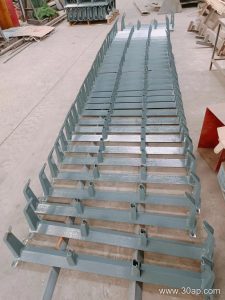
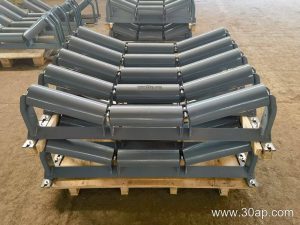
An idler roller train on the carrying side and a return roller set on the underside should be checked at the same time, because uneven support near the drum can shorten belt life. The conveyor bracket and bearing housing also need to accept the shaft size that the torque calculation produces.
Buyer Checklist Before Ordering
Confirm the position in the conveyor, the belt type and width, the calculated tension, the shaft diameter, the lagging form and thickness, and the bearing style. Ask for a drawing that shows face width, crown, shaft extension and keyway. For abrasive duties such as a copper ore or gold mining conveyor belt, specify an abrasion resistant conveyor belt and a matching lagging compound. For cold climates, a cold resistant conveyor belt and a drum built for low temperature should be considered together. For food or grain silos, a food grade conveyor belt may be needed, and the drum surface should be easy to clean.
Finally, plan maintenance access. A drum of this size is heavy, so lifting points, split bearing housings and spare lagging sheets should be part of the purchase discussion. A well-chosen 1000mm diameter conveyor pulley, matched to its belt and frame, gives long service between rebuilds on the toughest bulk lines.