What a Conveyor Belt Support Frame Does
A conveyor belt support frame is the steel structure that holds the idlers in the right position under and over the belt. It carries the weight of the belt, the material and the idlers themselves, and it keeps the belt profile steady from the loading point to the discharge. In a quarry, a coal washing plant or a cement kiln feed line, this frame is the part that decides whether the belt tracks straight or wanders. www.example.com/conveyor-belt-support-frame is a good place to see how different frame families are organised.
People often call it a conveyor idler frame, an idler support bracket or simply a belt support stand. The accurate equivalent name is conveyor idler support frame. All of these refer to the same product. A drive pulley, a tail pulley and a bend pulley are different components and are not interchangeable with this frame.
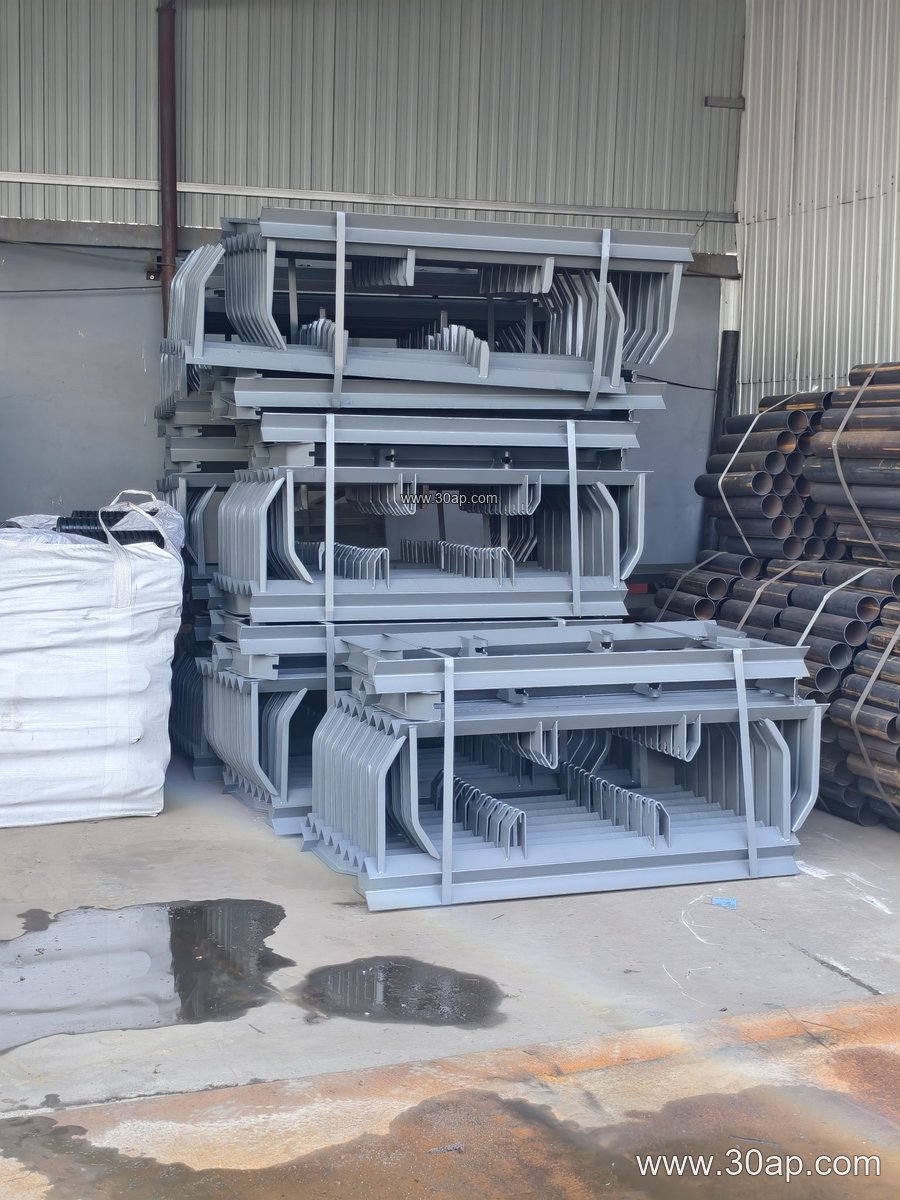
How the Frame Is Built
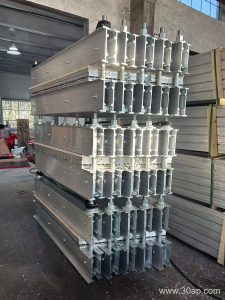
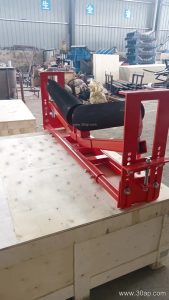
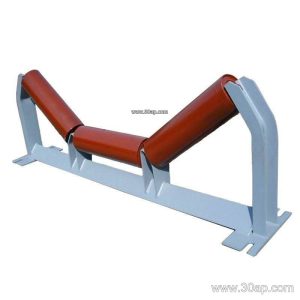
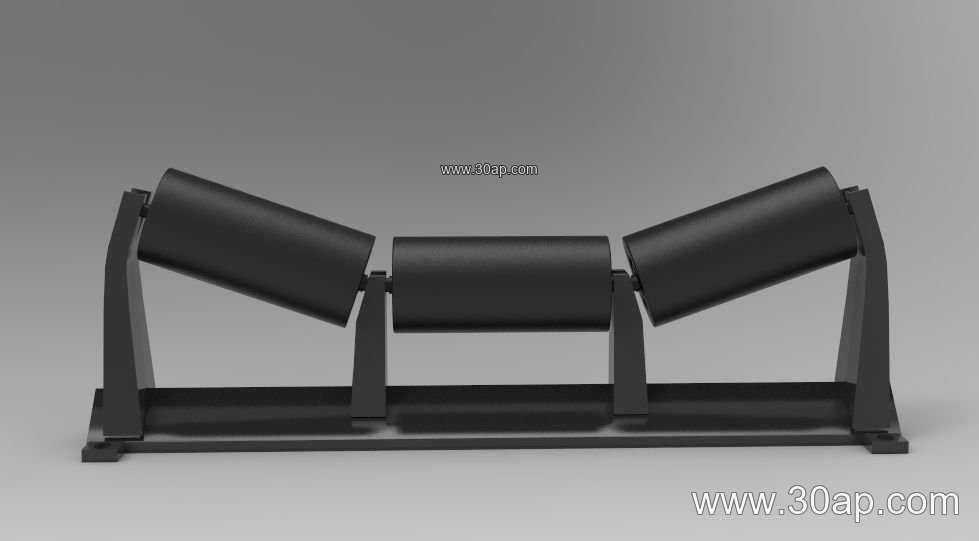
Most frames are fabricated from angle steel, channel steel or folded steel plate. A trough frame usually has two inclined arms and a base, so three idlers sit in a trough shape. A return frame may be flat or V-shaped. The frame is bolted to the conveyor stringer, and the idler shafts drop into slots or hooks on the frame.
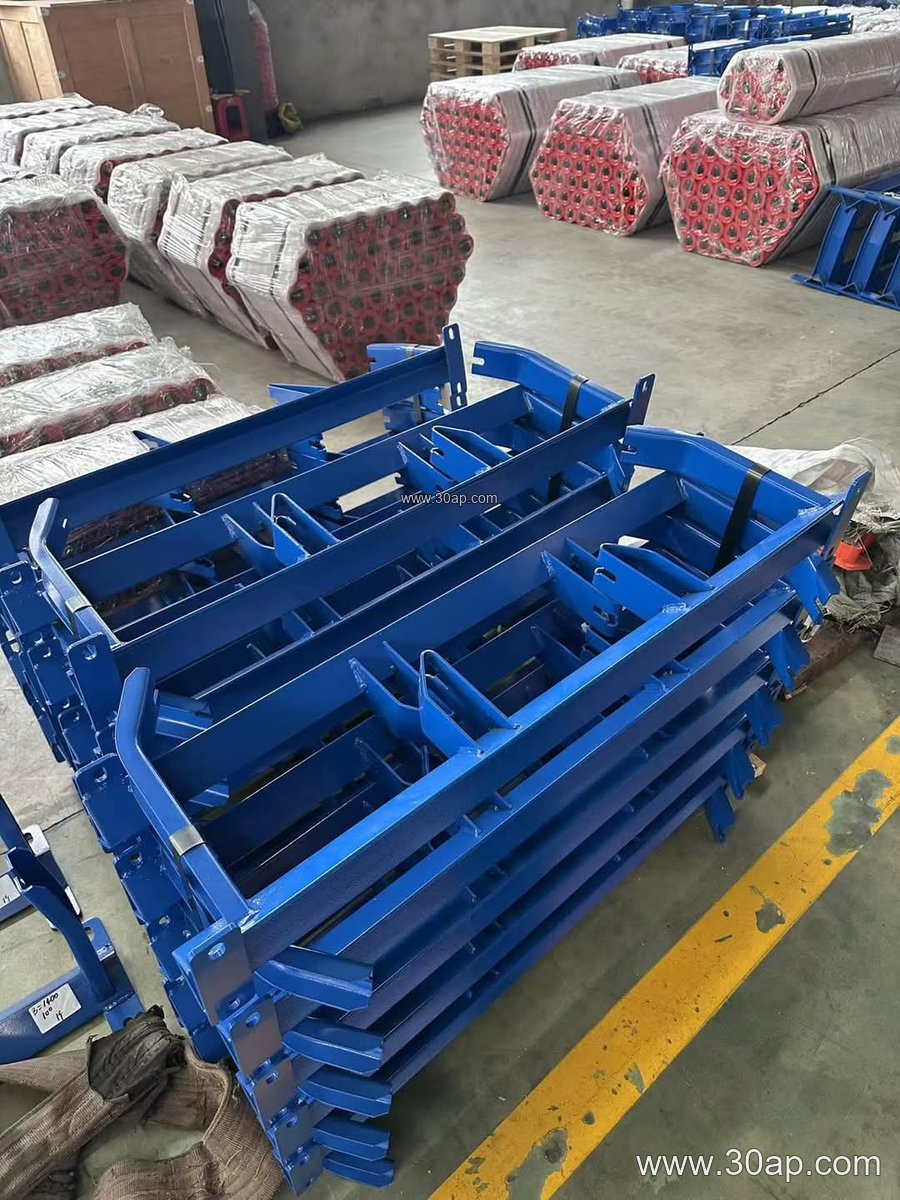
Surface treatment matters in wet or dusty plants. Hot-dip galvanising is common in ports and fertiliser warehouses, while painted frames are usual in dry aggregate lines. A heavy-duty mining conveyor belt needs a frame that will not flex under impact, so the steel grade and weld quality deserve attention.
| Frame type | Typical duty | Common belt width |
|---|---|---|
| Trough frame | Carrying side, bulk material | B500 to B2200 |
| Transition frame | Gradual trough change near pulleys | B650 to B1800 |
| Return frame, flat or V | Belt return strand | B500 to B1600 |
| Impact frame | Loading point, crusher discharge | B800 to B2000 |
| Self-aligning frame | Belt tracking correction | B650 to B1400 |
Choosing the Trough Angle
Trough angles of 20, 30, 35 and 45 degrees are common. A 30 degree frame suits many medium-width belts, while 35 or 45 degrees gives a deeper material bed on high-capacity lines. Adjustable frames let maintenance teams change the angle within that range. Forward-tilted frames, usually around 1.5 to 2 degrees, help keep the belt centred on long overland runs.
There is no fixed rule that ties one belt width to one trough angle or one idler diameter. A B800 line may run 30 degrees with Ø89 idlers, and a B1200 line may use 45 degrees with Ø133 idlers, but the final choice comes from the conveyor design, belt speed and material. Installation hole spacing and crossbeam length vary with belt width and trough angle, so they should be confirmed against the drawing.
Where These Frames Are Used
In an iron ore or limestone mine, trough frames carry a heavy-duty mining conveyor belt loaded with run-of-mine rock. In a power plant coal yard, flame retardant conveyor belt runs over frames that must resist dust and occasional water. Sand and gravel plants use them under crusher discharge, where an impact frame with rubber-covered idlers absorbs shock.
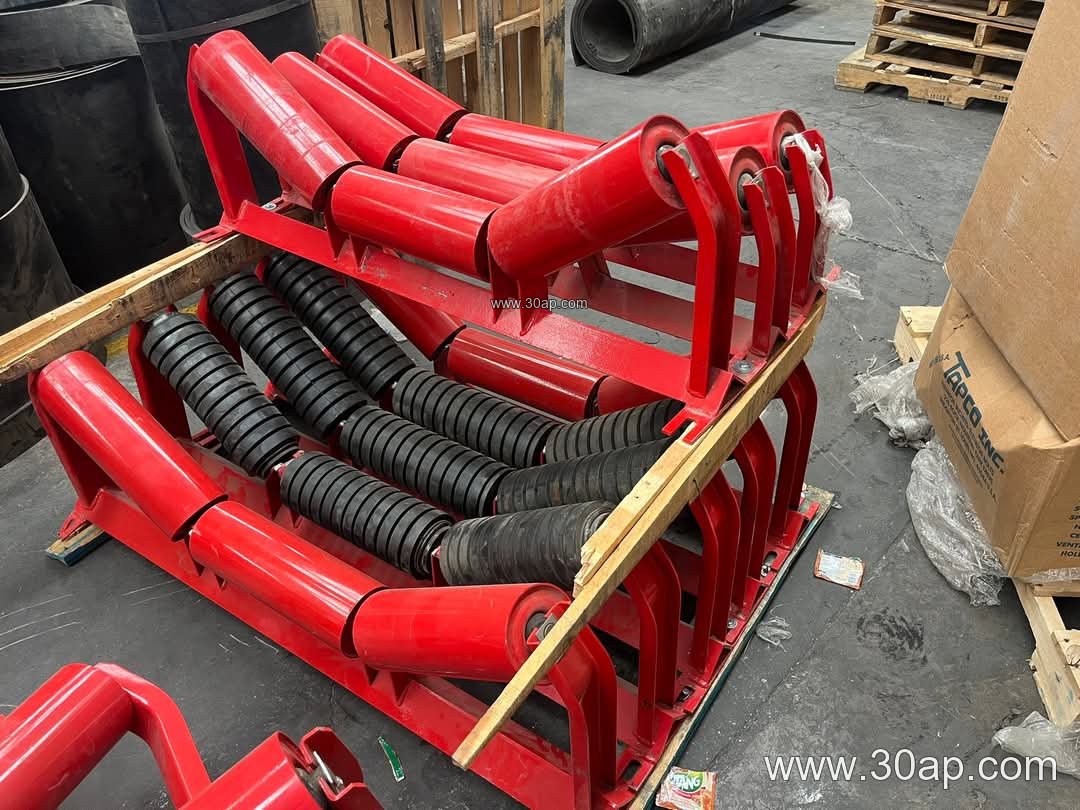
A pipe conveyor belt needs a different frame layout altogether, and a corrugated sidewall belt needs clearance for the cleats. In those cases the frame is designed around the belt, not chosen from a catalogue. The same applies to a chevron conveyor belt or a skirted conveyor belt on a mobile crushing unit.
Buyer Checklist
- Confirm belt width, trough angle and idler diameter as a set, not separately.
- Ask for the installation hole spacing and crossbeam length on the drawing.
- Check steel thickness and welding for impact and transition frames.
- Match surface treatment to the site — galvanised for wet ports, painted for dry plants.
- Keep spare frames for loading points, where damage is most likely.
For a steel cord conveyor belt line or a multi-ply fabric core conveyor belt line, the frame is only one part of the support system. Idler roller quality, pulley alignment and belt tension all work together. A well-built conveyor belt support frame makes that system easier to maintain and keeps the belt running true in mines, cement works, power stations and aggregate yards. You can find more frame references at www.example.com/conveyor-idler-frame and www.example.com/belt-support-frame.