What a Galvanized Conveyor Bracket Does on the Line
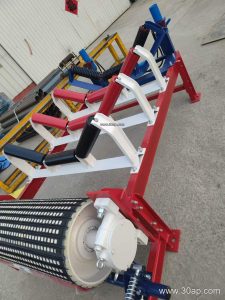
A galvanized conveyor bracket is the steel support that holds idler rollers in position along a conveyor frame. It sets the trough angle, keeps the roller spacing consistent, and carries the load transferred from the belt and the material being moved. In a quarry or a cement plant, these brackets are often the difference between a belt that tracks cleanly and one that wanders, spills, and wears its edges.
The galvanized finish is the practical reason many buyers specify this version. Hot-dip galvanizing builds a zinc layer that resists rust in wet washing areas, dusty yards, and outdoor stockpiles. For a plant handling abrasive bulk material, a galvanized conveyor bracket also simplifies inspection because corrosion damage is easier to spot before it becomes a structural problem.
How the Bracket Is Built
Most units are fabricated from angle steel, channel steel, or folded steel plate, then cut, punched, welded, and galvanized. The hole pattern matters as much as the steel grade. Mounting slots must match the frame rail spacing and the roller shaft ends, otherwise installation becomes a field modification job with a drill and a grinder.
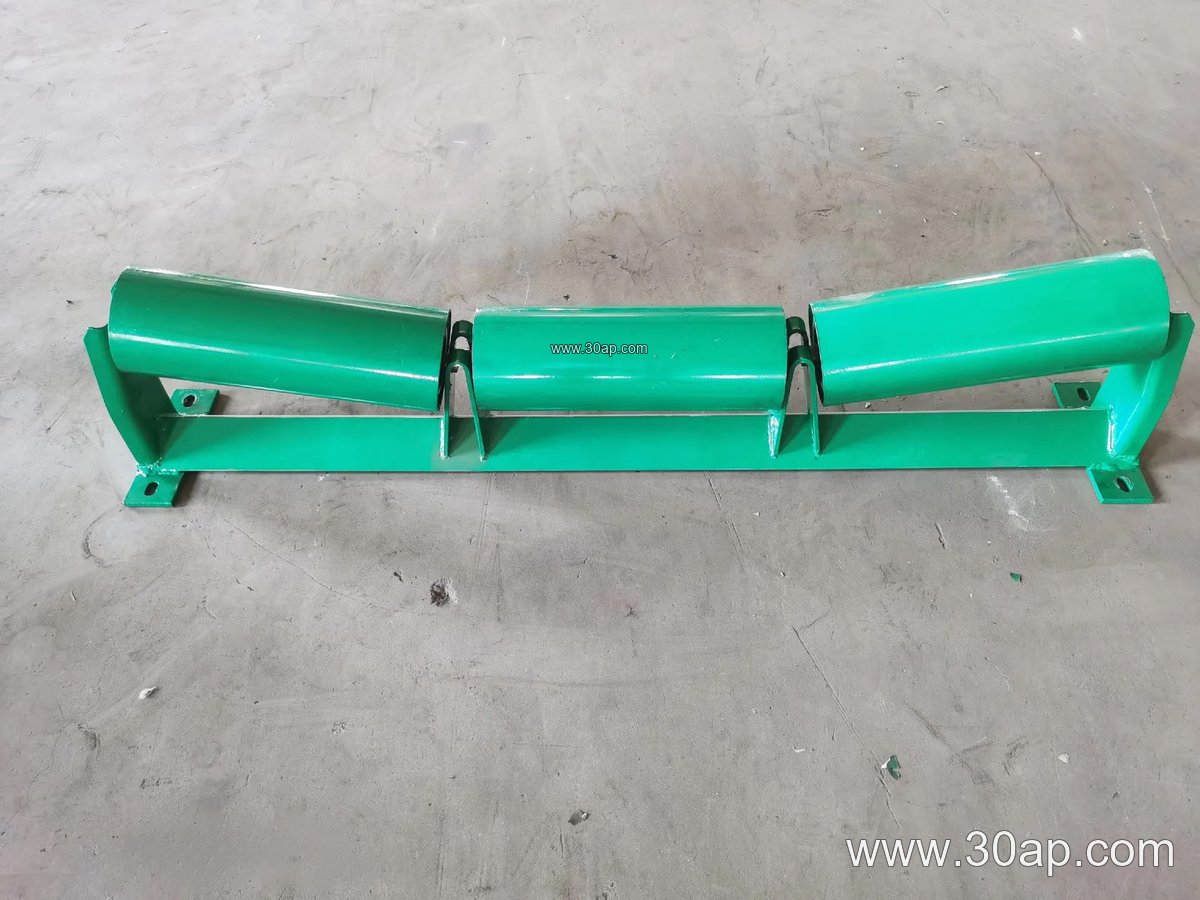
A typical bracket family includes:
- Trough brackets for carrying idlers, commonly set at 20, 30, 35, or 45 degrees
- Transition brackets between the tail pulley and the first full trough set
- Return brackets, including flat and V-return designs
- Impact brackets for loading points under a crusher or transfer chute
- Self-aligning and forward-tilt brackets for belt training
- Adjustable brackets that allow the trough angle to be changed on site
Roller diameter usually follows the bracket design, with common sizes including Ø89, Ø108, Ø133, Ø159, and Ø194. A B800 frame at 35 degrees with Ø108 rollers is a frequent combination, while a B1200 line at 45 degrees may use Ø133 rollers. These are reference examples, not fixed rules; the final match depends on belt width, load, speed, and frame design.
Matching Bracket, Belt, and Roller
The bracket does not work alone. Its geometry has to suit the conveyor belt it carries. A heavily loaded iron ore or copper ore line may run a steel cord conveyor belt, and the bracket spacing and roller diameter then need to handle higher tension and impact. A coal mining conveyor belt with flame retardant properties may sit on the same style of galvanized bracket, but the trough angle and roller spacing should follow the belt’s stiffness and the material’s behavior.
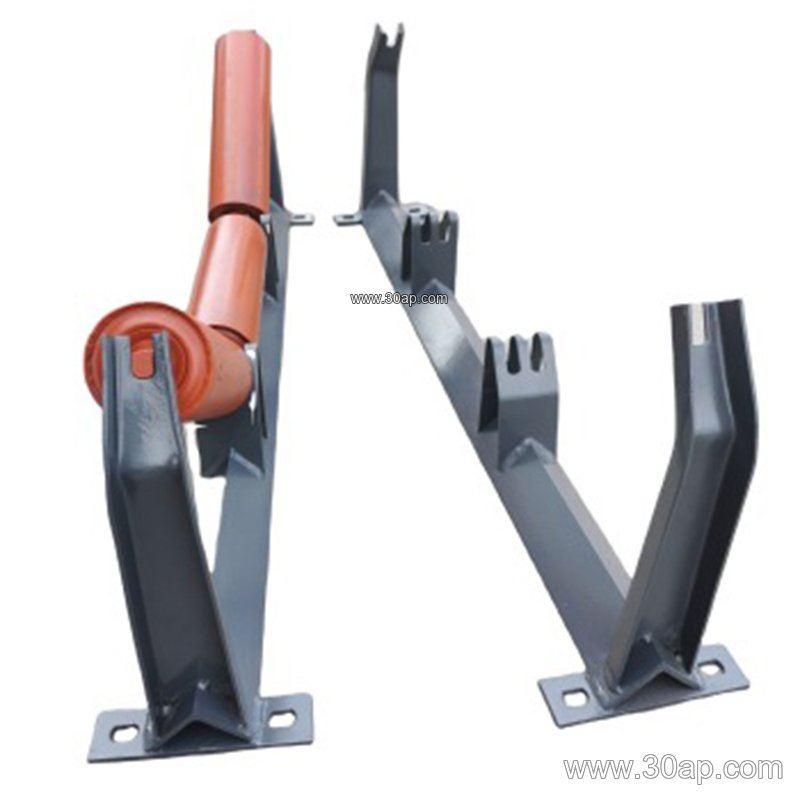
On a typical bulk material conveyor, the bracket choice also interacts with the pulley arrangement. Drive pulleys, tail pulleys, and bend pulleys each have their own frame requirements, and the bracket nearest the tail pulley often needs a transition angle to avoid stressing the belt edge. A rubber conveyor belt or an EP conveyor belt with a fabric core will tolerate slightly different transition geometry than a rigid steel cord belt.
For abrasive duties such as a quarry conveyor belt or a crusher conveyor belt, impact brackets under the loading point reduce roller damage. For dusty coal handling, anti-static and flame retardant belt grades are common, and the bracket should be inspected for zinc loss in damp conditions. In a power plant coal yard or a limestone stockpile, galvanized brackets usually outlast painted alternatives.
Common Sizes and Reference Data
Belt width drives the bracket length and hole spacing. The table below lists common reference combinations; actual dimensions are confirmed by design drawings.
| Belt Width | Typical Trough Angle | Common Roller Diameter | Typical Use |
|---|---|---|---|
| B500 | 20–30 degrees | Ø89 | Small aggregate or sand lines |
| B650 | 30 degrees | Ø89 | Crushing and screening circuits |
| B800 | 35 degrees | Ø108 | Cement plant and quarry conveyors |
| B1000 | 35–45 degrees | Ø108–Ø133 | Coal handling and ore transport |
| B1200 | 35–45 degrees | Ø133 | Heavy bulk material lines |
| B1400 | 35–45 degrees | Ø133–Ø159 | Port and steel plant conveyors |
| B1600 | 35–45 degrees | Ø159 | High capacity mining conveyors |
| B1800–B2200 | 35–45 degrees | Ø159–Ø194 | Large ore and overland systems |
Adjustable brackets can shift between these angles, which helps when a plant changes belt type or material. Forward-tilt designs are often set around 1.5 to 2 degrees to help center the belt. None of these values should be treated as a universal specification.
What Buyers Should Check Before Ordering
Start with the frame drawing. Confirm the rail spacing, the mounting hole diameter, and the roller shaft end type. Ask whether the bracket is fixed or adjustable, because an adjustable unit costs more but saves time during commissioning. Check the galvanizing thickness and whether cut edges and welds are properly coated.
Confirm the intended belt width and roller diameter, and state the material being handled. A galvanized conveyor bracket for a fertilizer plant may need extra corrosion protection, while one for a tunnel spoil line may need a heavier section. On a food grade conveyor belt installation, smooth surfaces and cleanable joints matter more than heavy steel.
Finally, plan spare brackets for the loading zone and the transition area. These are the positions where impact and misalignment cause the most damage, and having a replacement on the shelf keeps a sand making plant or a ship loading conveyor running.