What Pulley Custom Machining Really Involves
Pulley custom machining is the practice of producing a conveyor pulley to a specific drawing rather than picking a stock item off a shelf. The work starts with the duty: belt width, belt tension, shaft load, available space, and the environment around the conveyor. From there, a machine shop turns, bores, welds, balances, and coats a drum so it mates correctly with the frame, the bearings, and the conveyor belt it will carry.
In a quarry, a cement clinker line, or a power plant coal handling circuit, the pulley is rarely the most expensive component, yet a poorly fitted one can stop the whole line. That is why custom machining matters. A drum that is a few millimeters off on face width or shaft alignment can cause belt tracking problems that no amount of adjustment will fix.
How a Custom Pulley Is Built
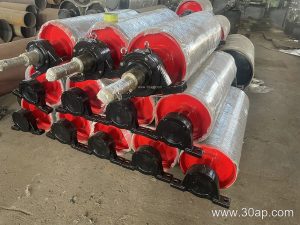
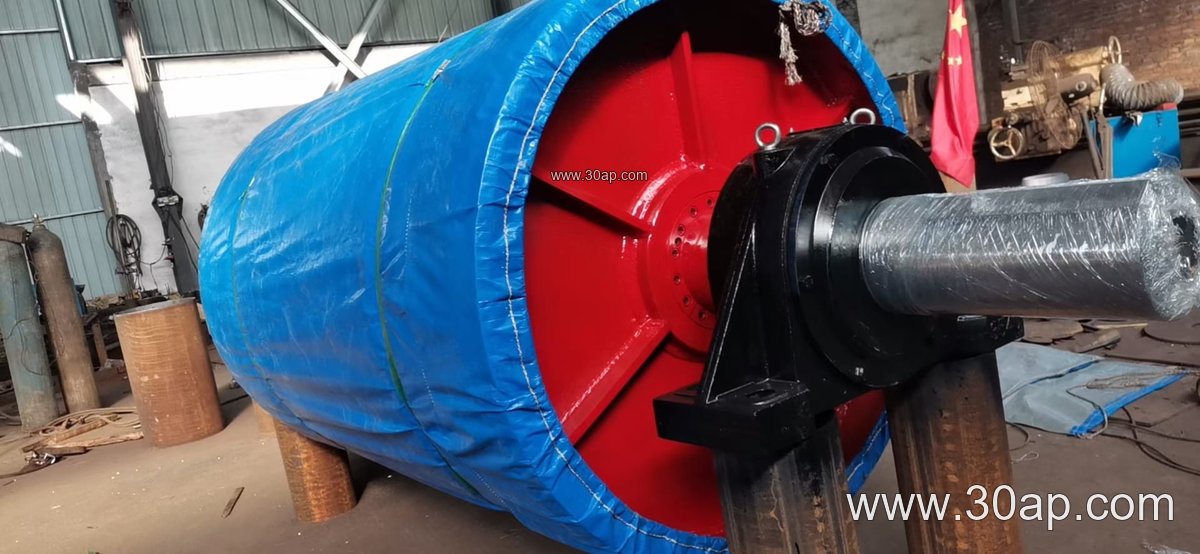
Most industrial pulleys begin as a rolled steel shell, with end discs welded in and a shaft pressed or shrink-fitted through the center. The shell is then machined to the required diameter and face width. Hub design, keyway position, and bearing fit all depend on the loads the pulley will see.
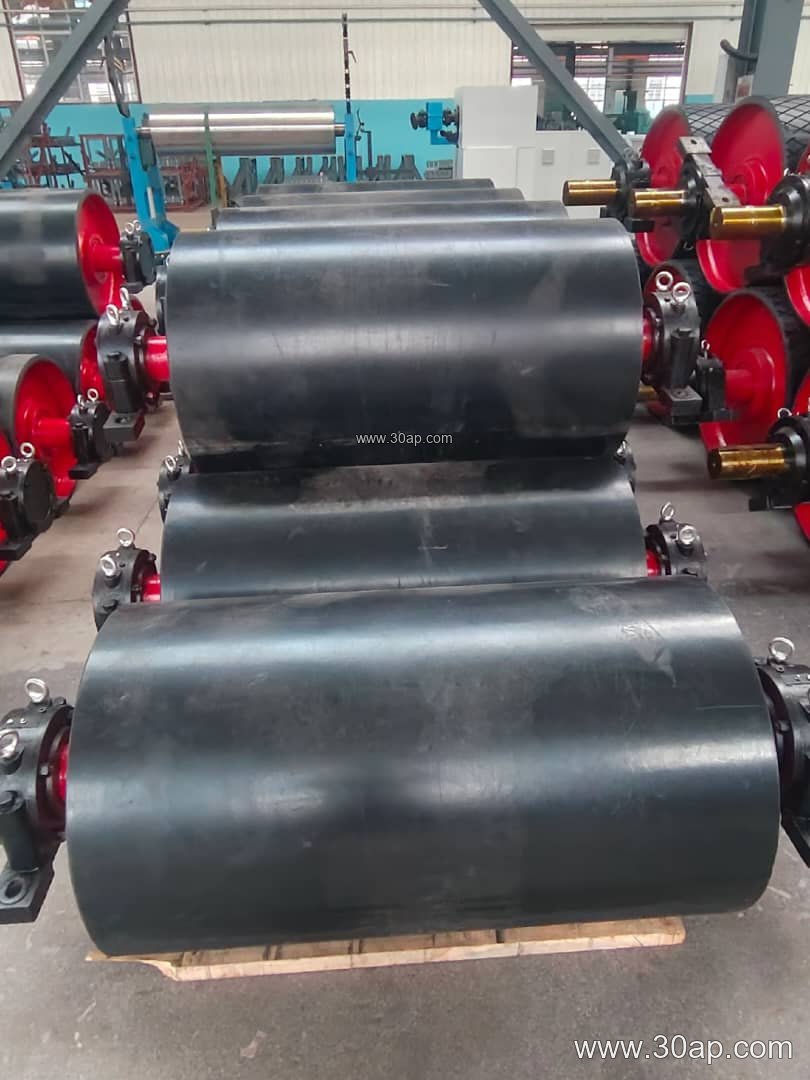
Balancing is a step buyers often overlook. A large drum running at speed with uneven weight distribution will vibrate, and that vibration travels into the bearings and the conveyor bracket. Good custom machining includes dynamic balancing where the speed and size call for it.
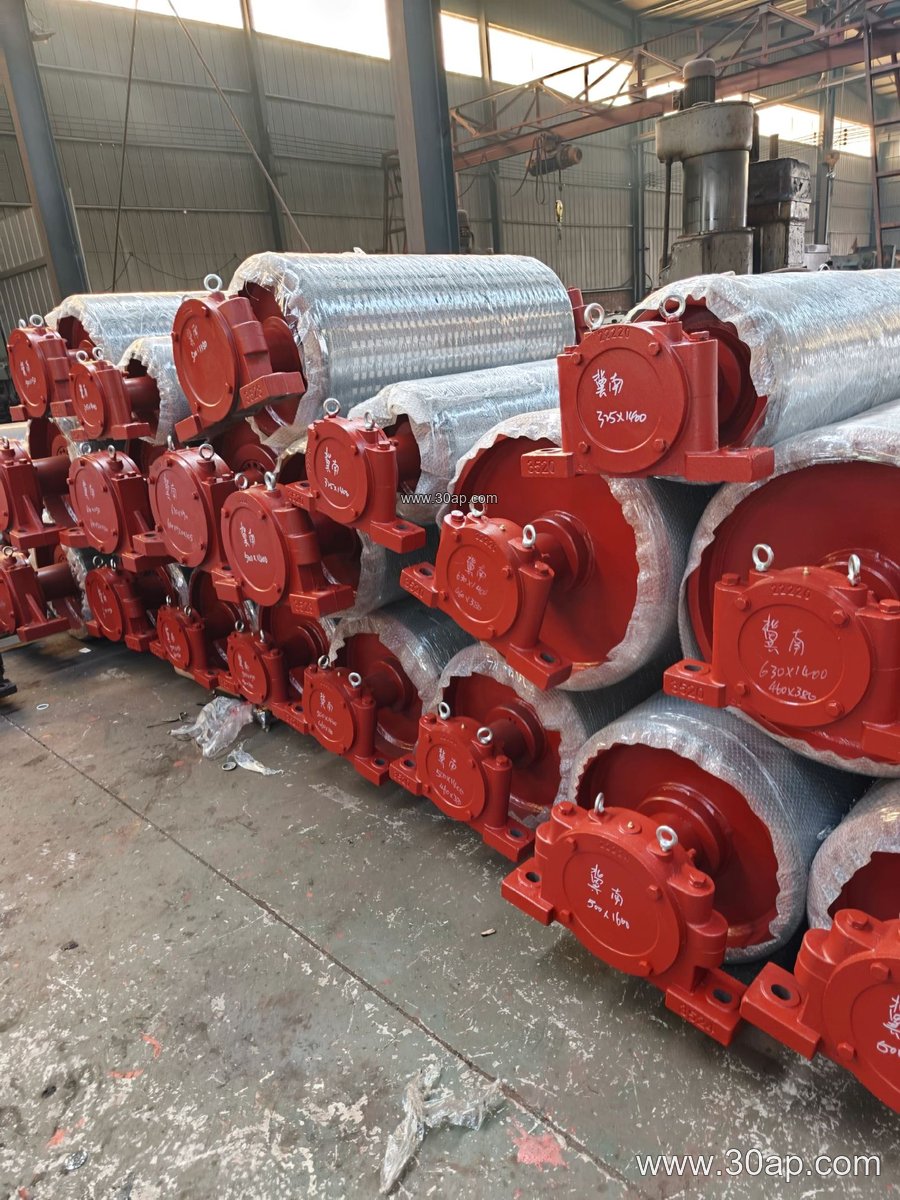
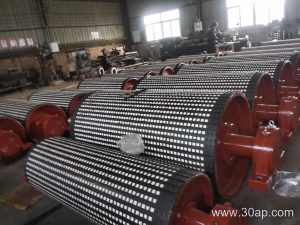
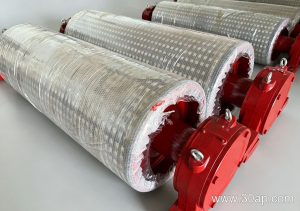
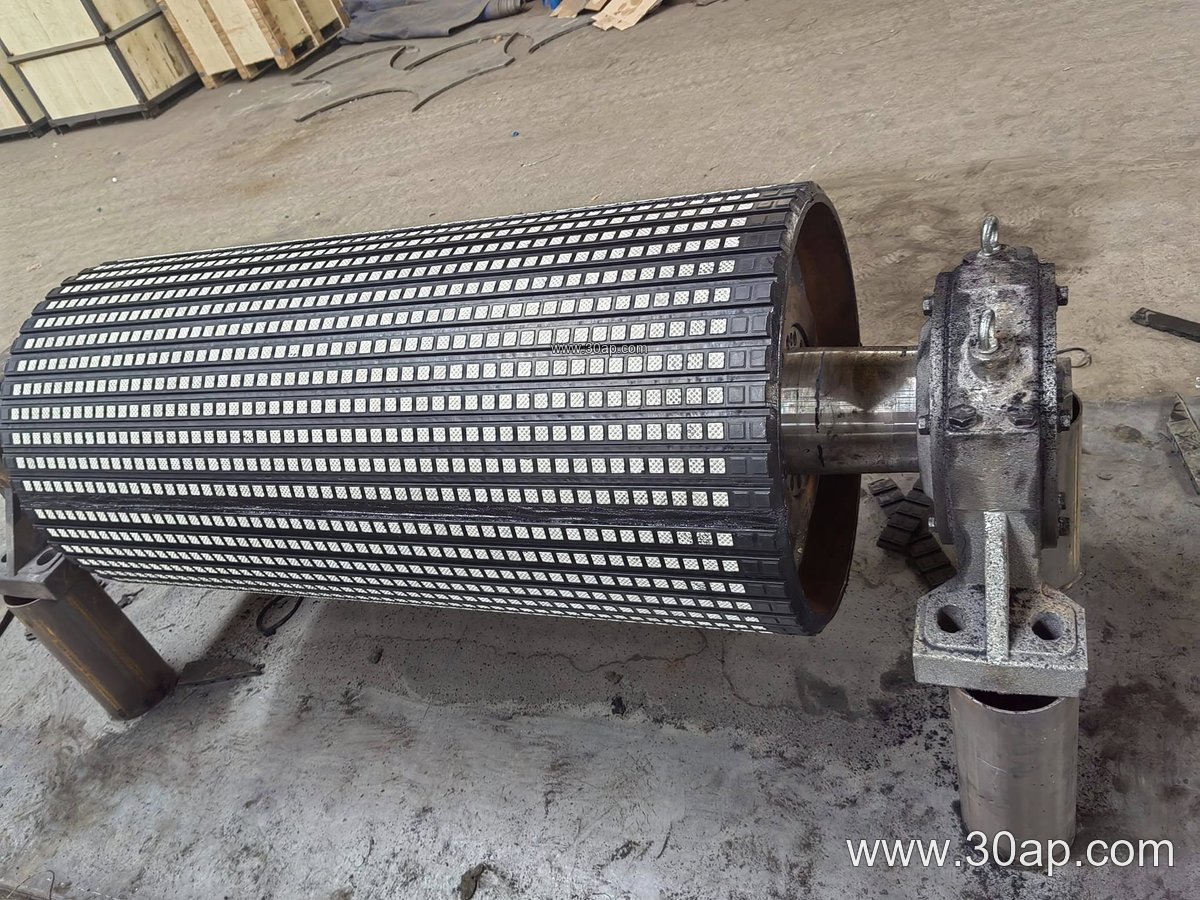
Surface finish is another decision point. Plain machined drums suit many light duties, while lagged surfaces improve grip. The lagging may be cast rubber, cold-bonded rubber, hot-vulcanized rubber, diamond pattern, herringbone, ceramic, or plain sheet, with common thicknesses around 8, 10, 12, 15, and 20 mm. Each choice trades off grip, cleaning behavior, and wear life.
Where the Different Pulley Positions Matter
A drive pulley transmits torque to the belt and usually carries the highest tension, so its shaft, hubs, and lagging receive the most attention. A tail pulley sits at the loading end and often works with a skirted conveyor belt or a corrugated sidewall conveyor belt where material must be contained. A bend pulley changes belt direction without driving, and it is a common candidate for custom machining when space is tight.
These positions are not interchangeable. A bend pulley is not a substitute for a drive pulley, and a tail pulley cannot take over a drive role simply because the diameters look similar. Each has its own load path, bearing arrangement, and surface requirement.
Common Reference Dimensions
The table below shows typical starting points. These are reference values, not fixed rules, and every combination should be confirmed against the actual conveyor design.
| Item | Common Reference Range |
|---|---|
| Belt width | B400, B500, B650, B800, B1000, B1200, B1400, B1600, B1800, B2000 |
| Pulley diameter | Ø200, Ø250, Ø315, Ø400, Ø500, Ø630, Ø800, Ø1000, Ø1250 |
| Face width | Usually wider than the belt, e.g. B800 about 950 mm, B1200 about 1400 mm |
| Shaft diameter | Ø50, Ø60, Ø70, Ø80, Ø90, Ø100, Ø120, Ø140, Ø160 |
| Lagging thickness | 8, 10, 12, 15, 20 mm |
A B1200 × Ø1000 drum and a B800 × Ø500 drum are both realistic combinations, but the diameter should follow belt tension and wrap angle, not belt width alone. Shaft diameter follows torque and bearing load, so it should never be guessed from belt width.
Matching the Pulley to the Belt and the Line
The belt itself shapes the machining brief. A heavy-duty mining conveyor belt running over an iron ore or copper ore circuit will demand a robust shell and abrasion resistant lagging. A heat resistant conveyor belt in a cement plant may need a drum that tolerates elevated temperatures without the lagging breaking down. Where fines and dust are present, a self-cleaning surface pattern can reduce buildup.
In coal mining, flame retardant conveyor belt and anti-static conveyor belt requirements often extend to the components around the belt, so the buyer should confirm what the site expects. In a port handling bulk material, a wide conveyor belt such as a 1800mm or 2000mm unit may call for a drum machined to suit a face width well beyond the belt edge.
The pulley also has to cooperate with the conveyor idler roller set and the conveyor bracket that holds the bearing housing. If the bracket is fixed and the bearing center height is set, the custom drum must match it exactly. This is where a drawing review before machining saves costly rework.
What a Buyer Should Confirm Before Ordering
- Belt width, belt type, and expected tension, including whether an EP conveyor belt, steel cord conveyor belt, or multi-ply fabric core belt is used.
- Pulley position and function: drive, tail, bend, take-up, or snub.
- Required diameter, face width, and shaft diameter with tolerances.
- Lagging type and thickness, plus any groove pattern.
- Bearing type, housing fit, and balancing standard.
- Environmental factors such as dust, heat, oil, or moisture.
Custom machining is a conversation as much as a manufacturing step. A clear drawing and an honest description of the duty will produce a pulley that runs true, tracks well, and keeps the conveyor moving through the next maintenance cycle.