What a Fixed Conveyor Bracket Does on a Conveyor Line
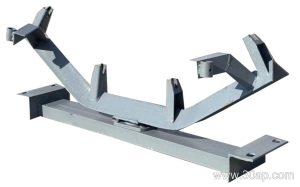
A fixed conveyor bracket is the rigid support that holds idler rollers in a set position along a conveyor frame. Unlike an adjustable bracket, which lets maintenance staff change the trough angle or roller position, this bracket is welded, bolted or formed to one geometry. The result is a repeatable roller profile that keeps the conveyor belt tracking evenly from the load point to the discharge end.
In a quarry or a limestone mine, the bracket is often the least visible part of the line, yet it decides how well the belt sits on its rollers. A bracket that is square, correctly spaced and matched to the frame will keep the belt centred, reduce edge wear and help a heavy-duty mining conveyor belt run without constant adjustment.
How the Bracket Is Built
Most fixed brackets are fabricated from angle steel, channel steel or folded steel plate. The material is cut, punched for mounting holes and, where needed, bent to form the trough shape. Welds are usually continuous at load-bearing joints, and the finished part is cleaned and painted or galvanised for corrosion protection.
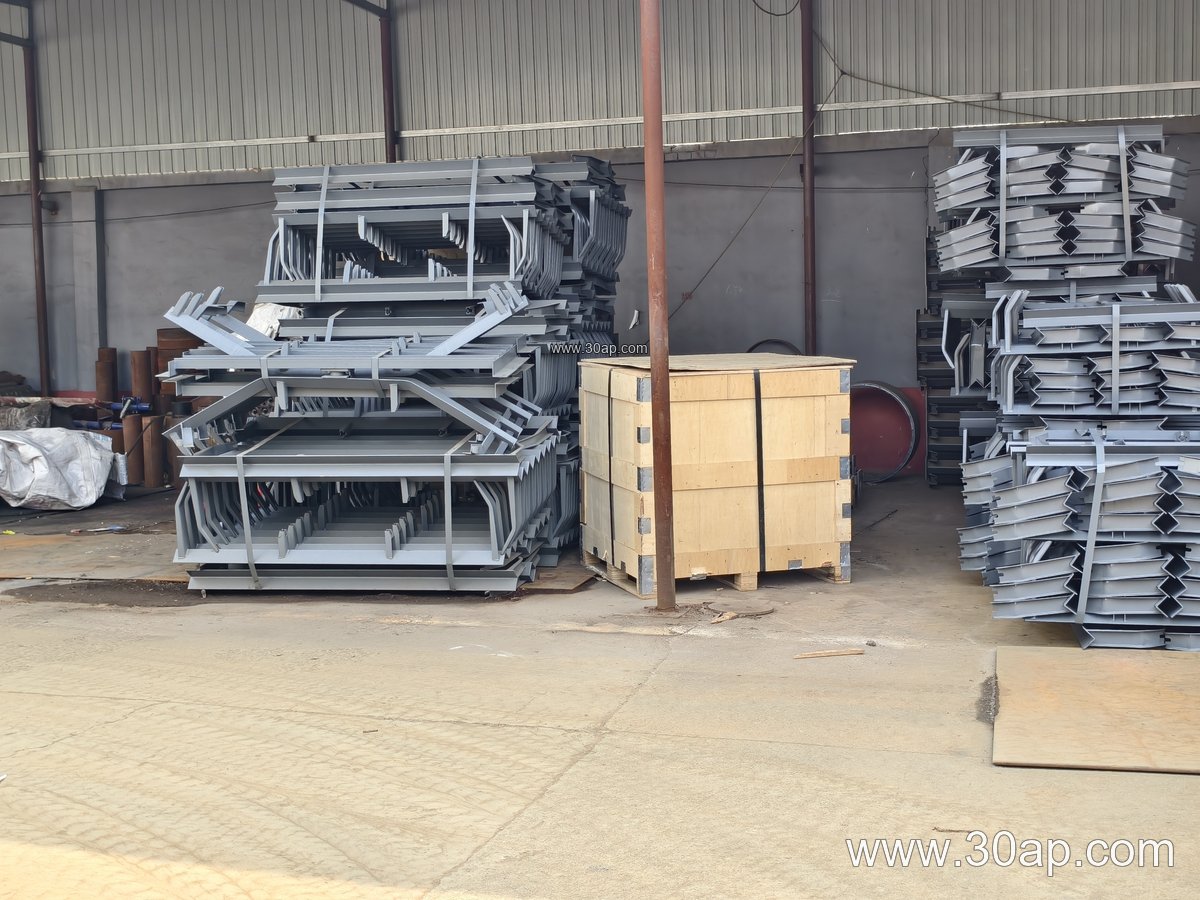
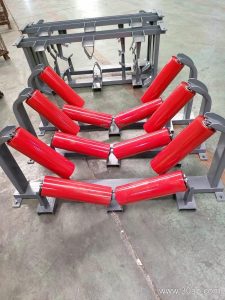
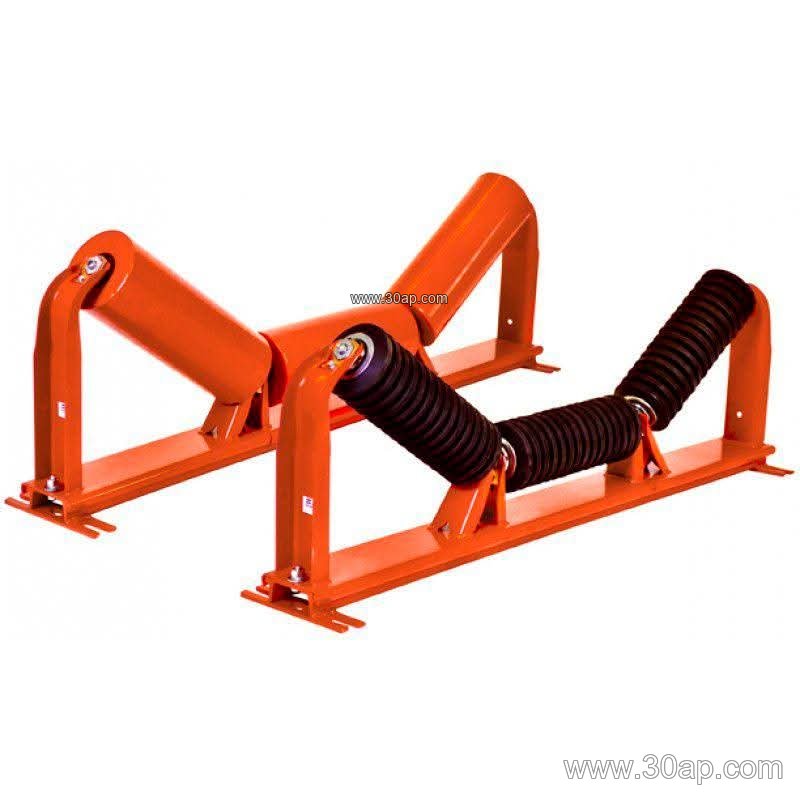
The bracket carries the roller shaft in slots or holes, so the roller sits at the intended height and angle. On a troughing set, the bracket holds the centre roller and the two side rollers at a fixed trough angle. On a return side, a flat or V-shaped bracket supports the return run of the belt.
- Angle steel brackets are common on light and medium frames.
- Channel steel brackets suit wider belts and heavier loads.
- Folded plate brackets give a clean profile and good stiffness.
Common Types and Where They Sit
The fixed conveyor bracket family includes several positions along the line. Troughing brackets carry the loaded belt; transition brackets sit near pulleys where the belt changes shape; return brackets support the empty run; impact brackets sit under loading points; and self-aligning brackets help correct belt drift. Each type has a fixed geometry in this product family, so the position and angle are set at manufacture.
| Bracket Position | Typical Belt Width | Trough Angle | Common Roller Diameter |
|---|---|---|---|
| Troughing, light duty | B500 to B800 | 20 to 30 degrees | Ø89 to Ø108 |
| Troughing, medium duty | B1000 to B1400 | 30 to 35 degrees | Ø108 to Ø133 |
| Troughing, heavy duty | B1600 to B2000 | 35 to 45 degrees | Ø133 to Ø159 |
| Return, flat or V type | B650 to B1800 | Flat or V return | Ø89 to Ø159 |
| Transition and impact | B800 to B1600 | Matches adjacent set | Ø108 to Ø194 |
These are reference ranges, not fixed rules. A B1200 frame may use a 35-degree trough with Ø133 rollers, while a B650 line may run a 30-degree trough with Ø89 rollers. Mounting hole spacing and crossbeam length change with belt width and trough angle, so they should be confirmed against the frame drawing.
Where Fixed Brackets Are Used
You will find them in coal handling plants, cement kiln feed lines, power station coal yards and aggregate crushing circuits. In a stone crushing plant, impact brackets under the crusher discharge protect both the roller and the belt from falling rock. In a port or ship loading system, long fixed troughing runs keep a wide conveyor belt stable at high capacity.
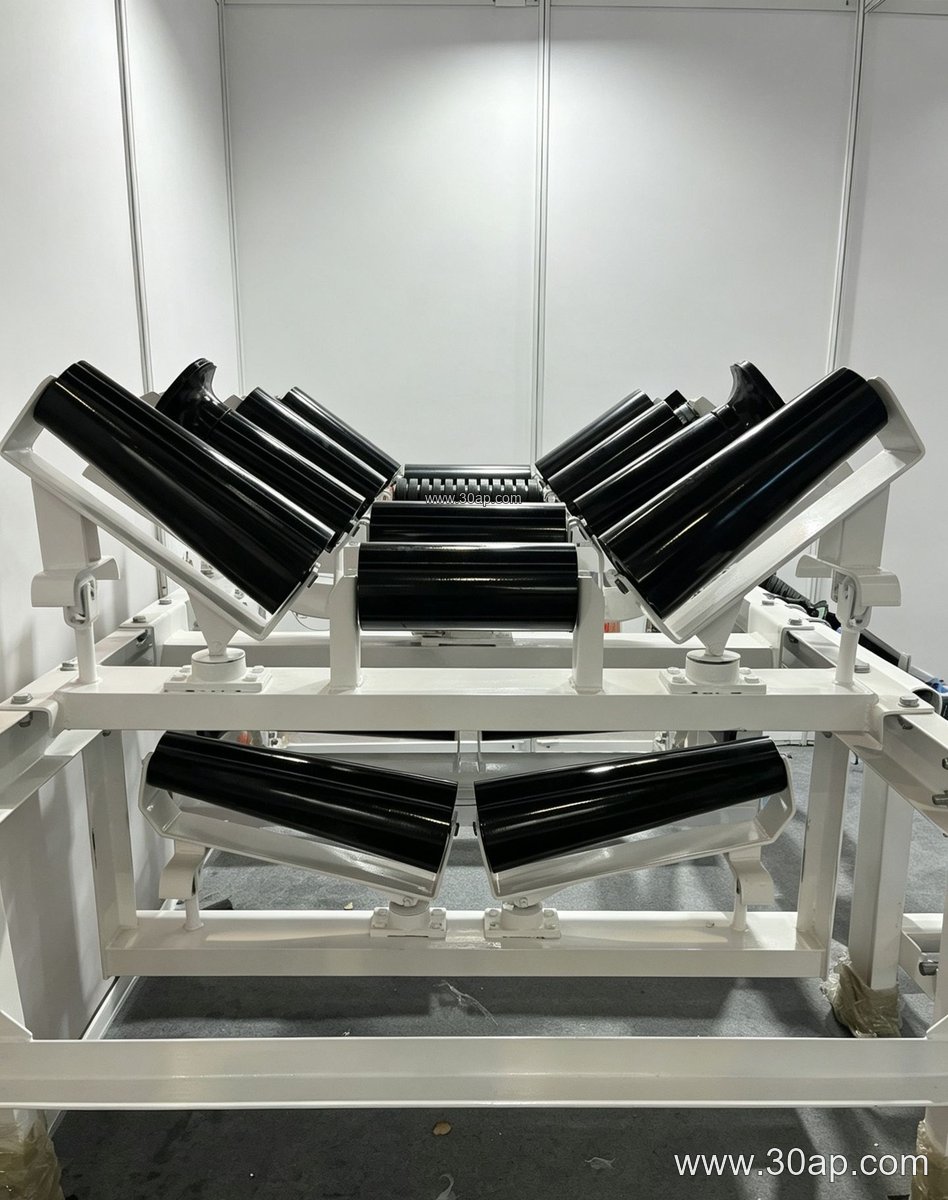
The bracket also matters when the belt itself is demanding. A flame retardant conveyor belt used underground needs consistent roller contact to avoid rubbing; a heat resistant conveyor belt on a clinker line needs brackets that hold their shape at temperature. The bracket does not change the belt compound, but it helps the belt do its job.
Matching the Bracket to Belt and Roller
Selection starts with the conveyor frame, not with the bracket alone. Confirm the belt width, the trough angle used on the existing sets, and the roller diameter. Then check the mounting hole pattern and the height of the roller centreline. A bracket that is 10 mm out of position can cause the belt to drift and load one edge.
Buyers should also consider the environment. Wet washing plants and coastal ports favour galvanised or well-painted steel. Dusty coal yards benefit from brackets that shed material rather than trap it. Where the line carries an abrasive bulk material, a robust bracket under a high abrasion resistant conveyor belt will last longer than a light folded design.
Buyer Checklist
- Confirm belt width and the trough angle of the adjacent idler sets.
- Match the bracket to the roller shaft diameter and bearing housing.
- Ask for the mounting hole spacing and crossbeam length, since these vary by design.
- Check material thickness and finish for the site conditions.
- Keep spare brackets for impact and transition positions, which wear fastest.
A well-matched fixed conveyor bracket is a simple part with a long service life. Pair it with the right conveyor pulley alignment, a straight frame and good roller quality, and the belt will run quietly with less maintenance. For buyers sourcing complete conveyor components, bmconveyor.net covers brackets, rollers and belts for mining, cement and power plant duty.