What a Heavy-Load Conveyor Pulley Does
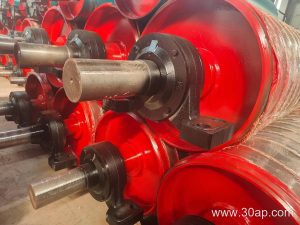
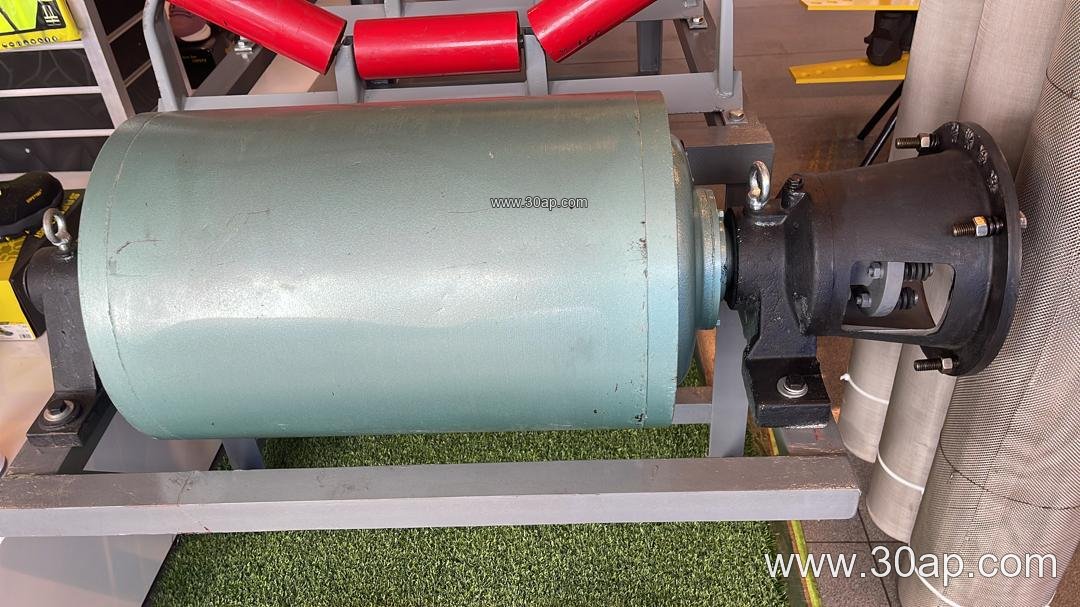
A heavy-load conveyor pulley is the drum that transmits drive force or redirects the belt on a conveyor built for high tonnage and continuous duty. In a limestone quarry or a cement plant clinker line, the pulley carries the same tension as the rest of the system, so its shell, shaft, and lagging are designed for sustained radial and bending loads. It is a conveyor pulley in the fullest sense, but one sized and reinforced for bulk material flows where light-duty drums would wear out quickly.
Buyers often work with several drums on one conveyor. A drive pulley at the head pulls the belt, a tail pulley at the loading end returns it, and bend pulleys guide the belt through take-up zones. These roles are not interchangeable, and each position places different demands on the drum.
Construction Details That Matter
The core is a steel shell welded to end discs and hubs. The shaft is sized by torque and load rather than by belt width alone, so two conveyors with the same belt width can use very different shaft diameters. Common shaft sizes include Ø80, Ø100, Ø120, Ø140, Ø160, and Ø180 mm, while larger drives may go beyond that range.
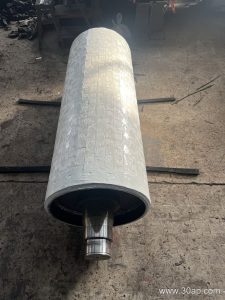
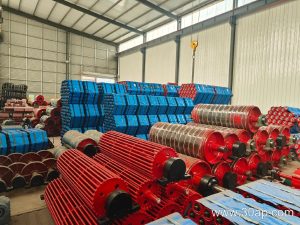
Lagging protects the shell and improves grip. Plain, cast rubber, cold-bonded rubber, hot-vulcanized rubber, diamond, herringbone, and ceramic lagging are all used, with thicknesses commonly 8, 10, 12, 15, or 20 mm. Diamond lagging helps shed water, while ceramic lagging suits abrasive service. The right choice depends on whether the drum is driving, redirecting, or tensioning the belt.
Matching Pulley Dimensions to the Belt
Pulley face width is normally a little wider than the belt. In practice, B800 belt often pairs with a face around 950 mm, B1200 with about 1400 mm, and B1400 with about 1600 mm. Diameter is a separate decision driven by belt tension, wrap angle, and space. Typical examples include B800 × Ø500, B1200 × Ø1000, and B1400 × Ø800. There is no fixed rule that one belt width can only use one drum diameter.
The following reference values show how width and diameter are usually discussed during selection:
- Belt width B650 with pulley face about 750 mm, diameter often Ø315 to Ø500
- Belt width B1000 with pulley face about 1150 mm, diameter often Ø500 to Ø800
- Belt width B1600 with pulley face about 1800 mm, diameter often Ø800 to Ø1250
- Belt width B2000 with pulley face about 2200 mm, diameter often Ø1000 to Ø1600
These are common ranges, not mandatory pairings. Final dimensions are confirmed by the conveyor designer using belt tension data.
Where Heavy-Load Pulleys Are Used
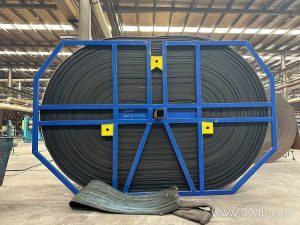
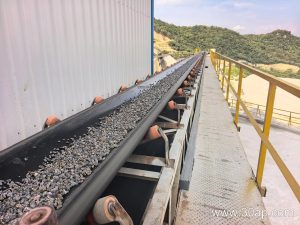
Heavy-load drums appear in iron ore and copper ore handling, coal preparation plants, power station coal yards, and aggregate crushing and screening lines. In a stone crushing plant, the crusher discharge conveyor usually needs a robust head pulley and a matching tail drum, often running with an abrasion resistant conveyor belt such as EP200 or EP300. Underground coal mining conveyors may combine flame retardant belts with fire resistant lagging to reduce risk.
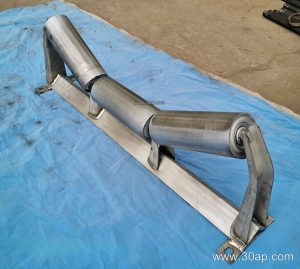
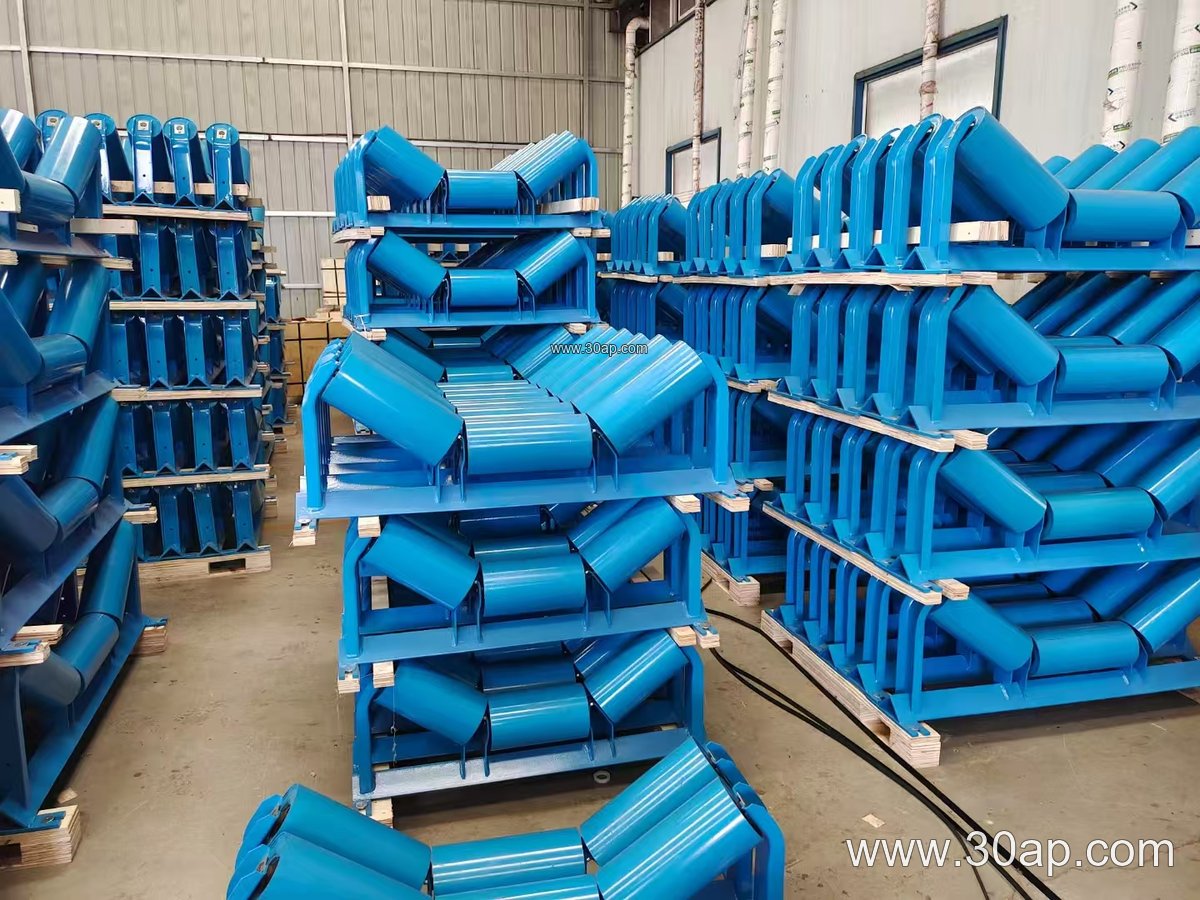
Related components work alongside the drum: the conveyor belt, idler roller, and conveyor bracket all affect how the pulley performs. A worn idler roller can increase belt wander, and a loose bracket can misalign the drum and shorten lagging life.
Buyer Checklist Before Ordering
- Confirm the drum position: head, tail, take-up, or bend.
- Provide belt width, belt type, and maximum operating tension.
- State the required shaft diameter and bearing arrangement.
- Specify lagging pattern and thickness for the material handled.
- Check that face width suits the belt and that the pulley fits the bracket spacing.
For abrasive ore or quarry service, a high abrasion resistant conveyor belt paired with ceramic or diamond lagging usually gives longer service. For hot clinker, a heat resistant conveyor belt and heat-tolerant lagging should be discussed together. A cold resistant belt may be needed in freezing yards, and an anti-static belt in dusty coal areas. Whatever the site, the heavy-load conveyor pulley should be selected as part of the whole conveyor system rather than in isolation.