What Rubber Pulley Lagging Does on a Conveyor Pulley
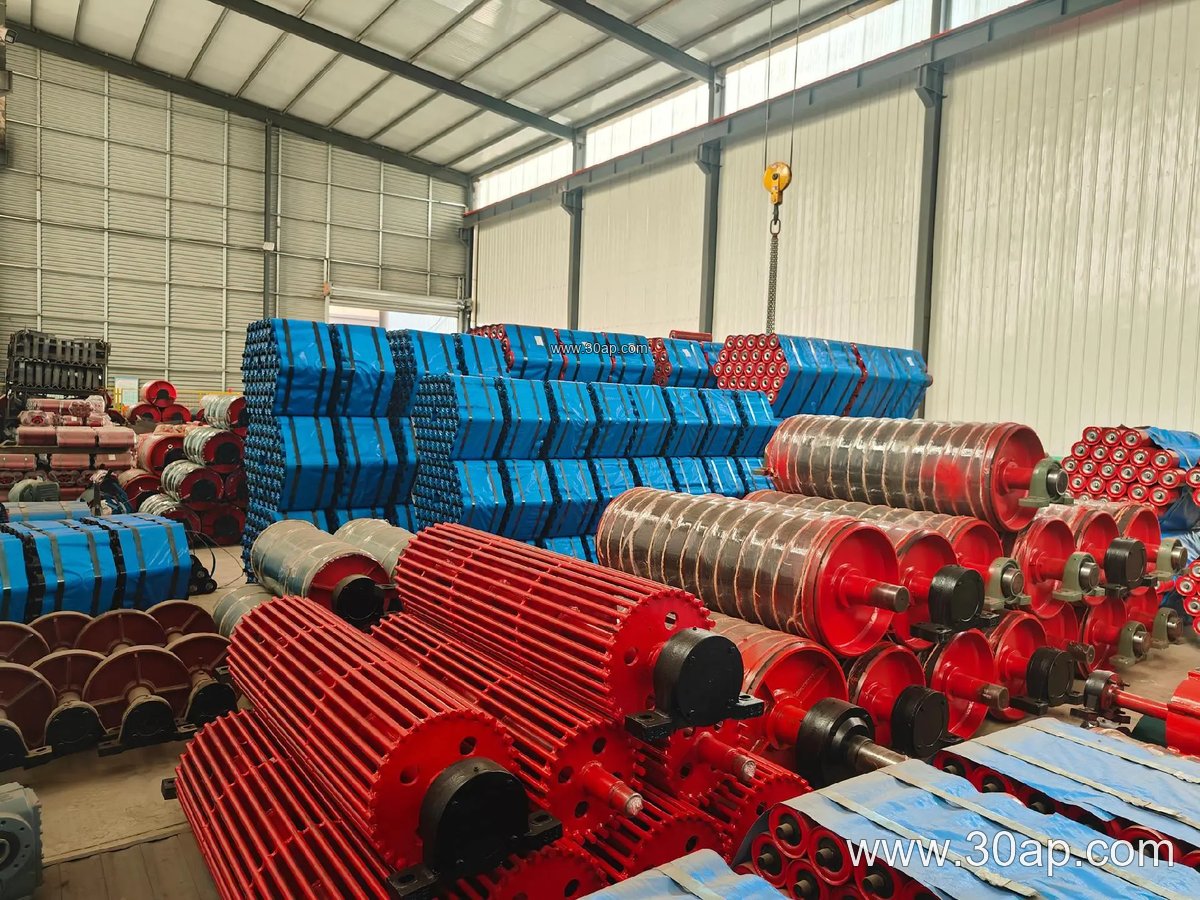
Rubber pulley lagging is the rubber layer bonded to the shell of a conveyor pulley to raise friction between the drum and the conveyor belt. On a drive pulley, that extra grip is what lets the motor’s torque reach the belt without slipping; on a tail or bend pulley, the same rubber surface protects the shell and helps keep the belt tracking steadily. In a quarry or a cement plant, where dust and grit are constant, this rubber covering is often the difference between a conveyor that pulls smoothly and one that stalls under load.
The product is also called rubber drum lagging or pulley rubber covering. It is a covering for pulleys, not a substitute for the pulley itself, and it should not be confused with the wear liners used on chutes or the rubber rings on an idler roller.
How the Lagging Is Built
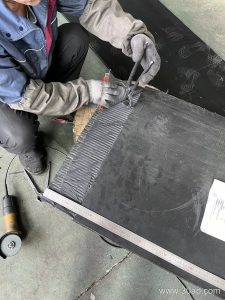
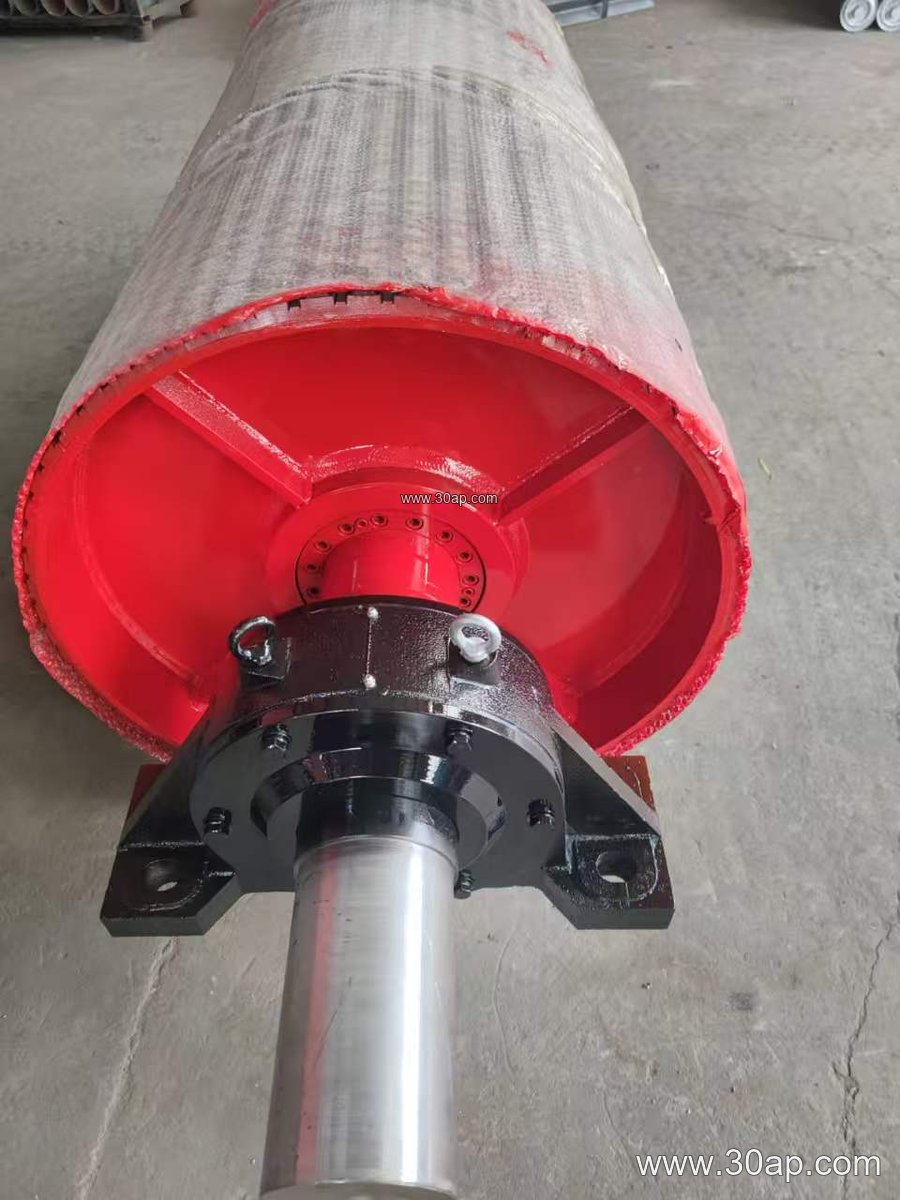
Most rubber pulley lagging starts with a rubber compound sheet, often with a fabric or cord reinforcement inside so it holds its shape under shear. The sheet is applied to the pulley shell in one of two main ways:
- Cold-bonded lagging — a pre-cured rubber strip fixed with a chemical adhesive, practical when a pulley is repaired on site.
- Hot-vulcanized lagging — uncured rubber pressed and cured onto the shell, giving a strong, seamless bond that suits heavy-duty drives.
Surface forms vary. Plain (smooth) lagging is common on bend and take-up pulleys. Diamond groove lagging sheds water and fine dust. Herringbone lagging pushes material toward the belt edges and is often chosen for drive pulleys in wet or muddy conditions. Ceramic-lagged pulleys embed hard tiles in the rubber for very abrasive service. Common lagging thicknesses are 8, 10, 12, 15 and 20 mm, selected by duty rather than by habit.
Where It Is Used
Rubber pulley lagging appears wherever a belt wraps a drum under load. In a sand and gravel line it keeps the head pulley from slipping when the belt is wet. In a cement plant it protects clinker and raw-material pulleys from abrasive fines. Power plant coal handling and underground coal mining conveyors rely on flame retardant grades where fire risk must be controlled. A quarry conveyor handling rock or ore may use thicker lagging on a heavy-duty mining conveyor belt drive, while a port bulk terminal may prefer diamond pattern for wet cargo.
The choice of rubber grade should match the environment. An abrasion resistant conveyor belt and its pulleys face the same grit, so lagging compounds are usually chosen for high wear resistance. In cold climates, a cold resistant grade avoids cracking. Where oil drips from gearboxes or carried material, an oil resistant conveyor belt and oil resistant lagging work together. See more at conveyor pulley options for matched drums and lagging.
Matching Lagging to Pulley Size
Lagging is ordered against the pulley’s face width and diameter, not against the belt alone. The shell face is usually a little wider than the belt; for example, a B800 belt often runs on a pulley with roughly 950 mm face width, and a B1200 belt on about 1400 mm. Diameter is set by torque and belt wrap, so B800 may pair with Ø500 or Ø630 depending on the drive design — there is no single correct match. Typical combinations include B800 × Ø500, B1200 × Ø1000 and B1400 × Ø800, but each is a design choice.
| Belt width | Typical pulley face width | Common diameter range | Lagging thickness |
|---|---|---|---|
| B500 | about 600 mm | Ø250 – Ø400 | 8 – 10 mm |
| B650 | about 750 mm | Ø315 – Ø500 | 8 – 12 mm |
| B800 | about 950 mm | Ø400 – Ø630 | 10 – 12 mm |
| B1000 | about 1150 mm | Ø500 – Ø800 | 10 – 15 mm |
| B1200 | about 1400 mm | Ø630 – Ø1000 | 12 – 15 mm |
| B1400 | about 1600 mm | Ø800 – Ø1250 | 12 – 20 mm |
| B1600 | about 1800 mm | Ø1000 – Ø1400 | 15 – 20 mm |
Shaft diameter is a separate decision based on torque and load — Ø80, Ø100, Ø120 or larger — and should never be guessed from belt width. A conveyor bracket and its bearing housing must also fit the chosen shaft.
Buyer Checklist
- Confirm the pulley role: drive, tail, bend or take-up. The lagging pattern and thickness differ by position.
- State belt width, pulley face width, shell diameter and shaft size, plus the conveyor’s duty.
- Choose the rubber grade for the site: abrasion, oil, heat, flame or cold resistance.
- Decide between cold-bonded field repair and hot-vulcanized shop application.
- Check that the belt tracking and take-up travel allow for the added lagging thickness.
A well-specified rubber pulley lagging protects the drum, extends belt life and keeps the conveyor pulling. Browse related drive components at conveyor roller and rubber conveyor belt pages, and confirm every dimension against the actual pulley drawing before ordering.