What a Vertical Idler Bracket Does
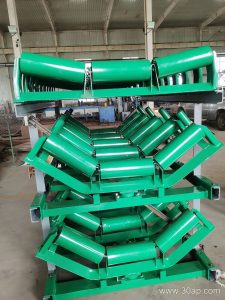
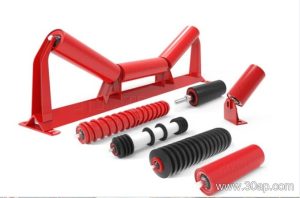
A vertical idler bracket is the mounting component that holds an idler roller in a vertical or near-vertical position relative to the conveyor frame. In practice, the term is often used for the bracket that supports the lower run or the transition zone where the belt changes shape, and it may also appear in guide arrangements that keep the belt edge in line. Unlike the common troughing bracket that sets three rollers at a fixed angle, this bracket is usually a compact welded or folded steel part that positions a single roller where the belt needs support from the side or below.
The part is often called a vertical roller bracket or a vertical guide bracket, and these names describe the same product family. It should not be confused with a drive pulley bracket, a tail pulley bracket, or a bend pulley bracket, because those parts carry a conveyor pulley and not an idler roller.
Construction and Mounting
Most vertical idler brackets are made from angle steel, channel steel, or folded steel plate. A typical unit has a base plate with slotted holes, a vertical web, and a shaft seat or bearing housing at the top. The slot allows some adjustment during installation so the roller can be aligned with the belt path. Welds are usually continuous on load-bearing seams, and the surface may be painted or galvanized depending on the environment.
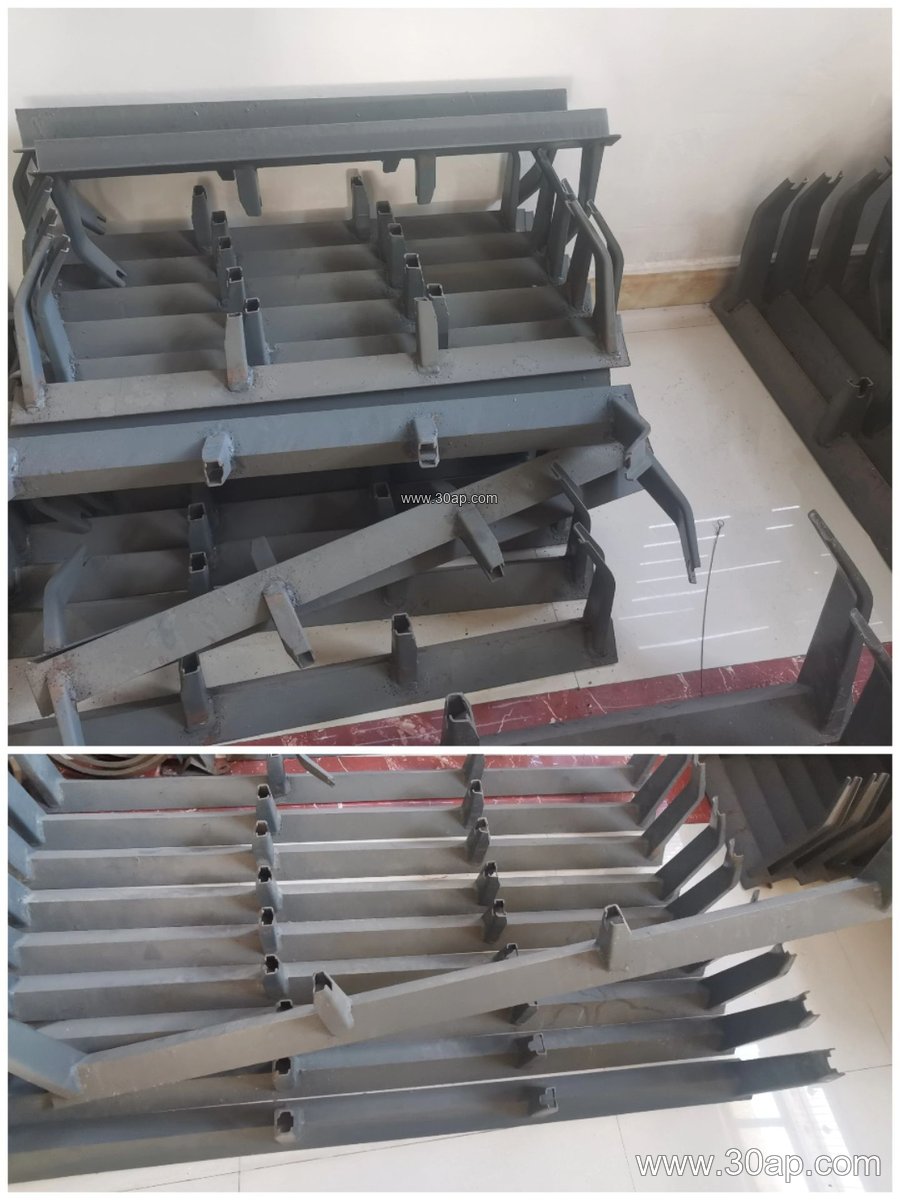
Mounting position matters. On a horizontal conveyor, the bracket often sits on the side frame near a loading point or a curve. On a pipe conveyor or a corrugated sidewall belt line, it may hold a guide roller that keeps the belt profile stable. The bracket is bolted to the frame, and shims can be added to fine-tune the roller height.
Where It Fits in a Conveyor Line
Vertical idler brackets are common in quarry and aggregate lines, cement plants, and power plant coal handling. In a crusher discharge area, the belt can be wide and fast, and a vertical guide roller helps control edge movement. In a coal mining conveyor or an underground mining conveyor, space is tight, so a compact vertical bracket is easier to fit than a large troughing frame.
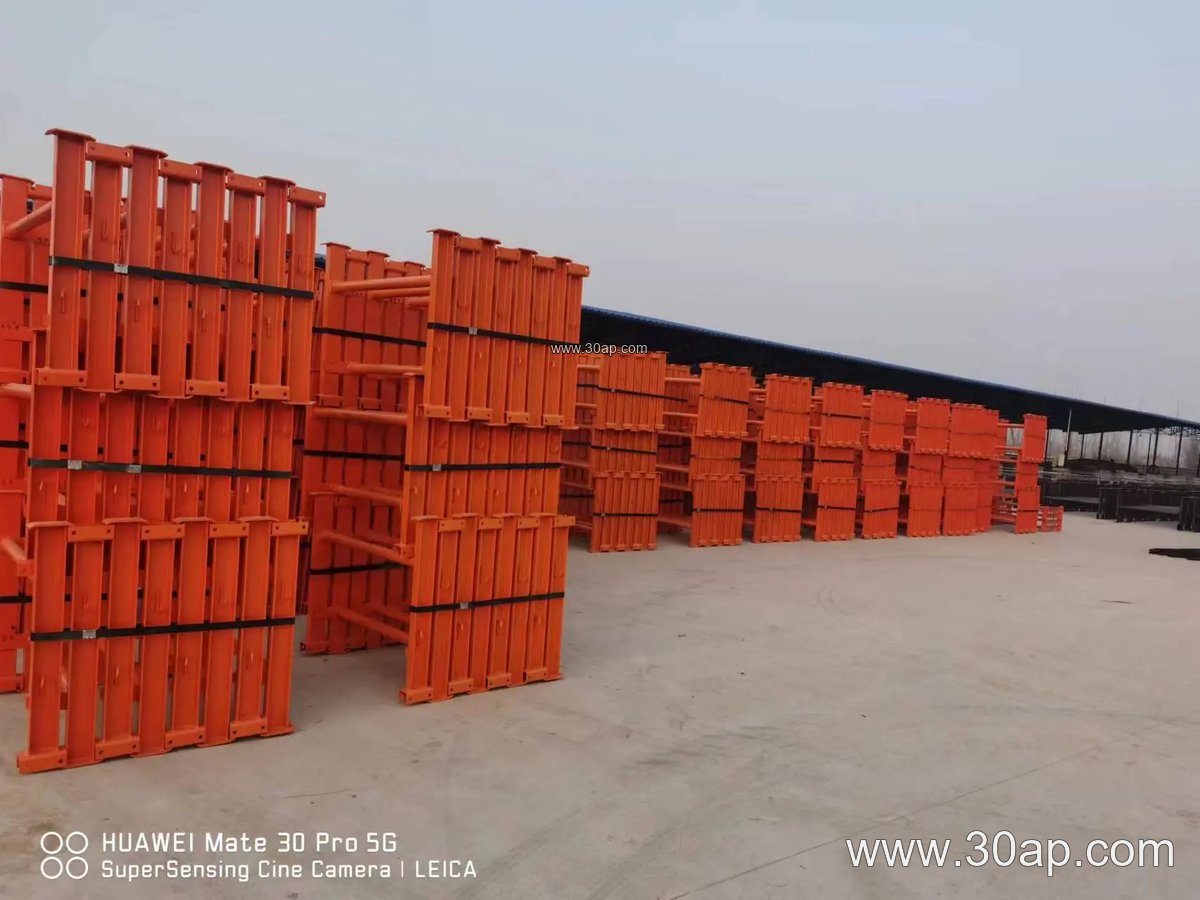
They also appear in ship loading conveyors and port conveyor systems, where belt tracking is critical. On a bulk material conveyor carrying iron ore or copper ore, the bracket should be robust enough to resist vibration and dust. The same part can be used with a fabric core conveyor belt or a steel cord conveyor belt, provided the roller and bracket are rated for the belt speed and load.
Matching the Bracket to Belt Width and Roller Diameter
There is no single bracket size for every conveyor. Belt width, trough angle, and roller diameter are selected together by the conveyor designer. The table below shows typical reference combinations; these are examples, not fixed rules.
| Belt width | Common trough angle | Typical roller diameter | Bracket note |
|---|---|---|---|
| B500 | 20 degrees | Ø89 | Compact frame, short crossbeam |
| B650 | 30 degrees | Ø89 | Adjustable slot for alignment |
| B800 | 35 degrees | Ø108 | Common in aggregate lines |
| B1000 | 35 degrees | Ø108 or Ø133 | Check frame hole spacing |
| B1200 | 45 degrees | Ø133 | Heavier web for impact zones |
| B1400 | 35 degrees | Ø159 | Reinforced base plate |
| B1600 | 45 degrees | Ø159 or Ø194 | Wide frame, shim adjustment |
| B1800 | 35 degrees | Ø194 | Heavy-duty welded design |
Installation hole spacing and crossbeam length change with belt width and trough angle, so the bracket drawing should always be checked against the frame. A B1200 belt at 45 degrees with a Ø133 roller is a common reference point, but a B1200 line at 35 degrees may use a different bracket and roller size. The belt width does not lock the pulley diameter or the shaft size; those values come from the conveyor calculation.
Fixed Versus Adjustable Brackets
A fixed vertical bracket holds the roller at one set position. It is simple and rigid, and it suits lines where the belt path is stable. An adjustable bracket has slotted holes or a movable carriage, so maintenance staff can move the roller a few millimeters to correct belt tracking. Adjustable types are useful on long conveyors and in plants where belt tension changes with load.
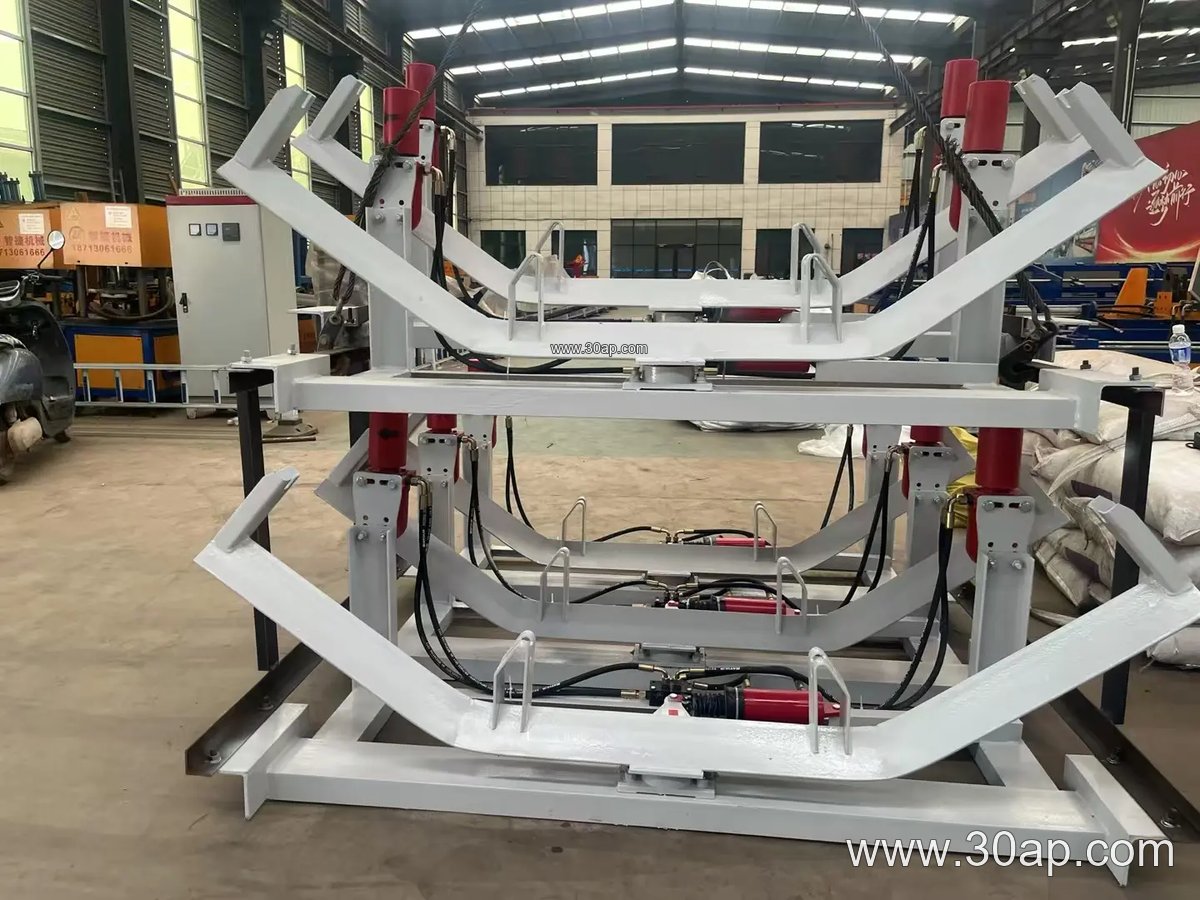
For comparison, a troughing idler bracket sets the carry-side rollers at a fixed trough angle, while a V-return bracket supports the return belt in a V shape. These are different parts and are not interchangeable with a vertical bracket.
Buyer Checklist
- Confirm belt width and the roller diameter the bracket will carry.
- Check the mounting hole pattern against the existing conveyor frame.
- Ask for the material grade and surface treatment, especially for coal mining conveyor or cement plant use.
- Confirm whether the bracket is fixed or adjustable, and how much adjustment is available.
- Match the bracket to the belt type in use, such as an abrasion resistant conveyor belt or a heat resistant conveyor belt, so the roller and bracket do not become the weak point.
A well-chosen vertical idler bracket is a small part with a large effect on belt tracking and uptime. Buyers who check the frame interface and the roller fit before ordering avoid most installation problems.