What a Mining Conveyor Pulley Does on a Quarry Line
On a quarry or aggregate conveyor, the pulley is the part that turns the belt, carries the tension, and keeps the return strand tracking true. A mining conveyor pulley is more than a steel drum: it is a fabricated or cast body with a shaft, hubs, lagging, and bearing housings that must survive grit, moisture, and steady shock loading from rock and ore. In a crushing and screening circuit, one pulley may run under a load of coarse stone all day, while another simply guides the belt back to the tail. Both belong to the same product family, but they are built and specified differently.
How the Pulley Is Built
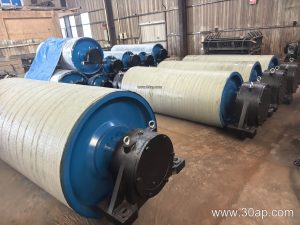
Most heavy-duty units start with a rolled steel shell, welded to end discs and a hub, then machined so the rim runs true. The shaft is fitted by shrink fit or keyed connection and sized by torque and radial load, not by belt width alone. Bearing housings are bolted to the shell or to a separate shaft, and the whole assembly is protected against dust and water with seals and, where needed, a labyrinth arrangement.
Surface form matters as much as the body. A plain face is fine for light guidance, while rubber lagging improves grip at the drive position. Common finishes include cast rubber, cold-bonded rubber, hot-vulcanized rubber, diamond lagging, chevron lagging, and ceramic lagging, usually in 8, 10, 12, 15, or 20 mm thickness. The choice depends on wetness, carryback, and whether slip is a real risk.
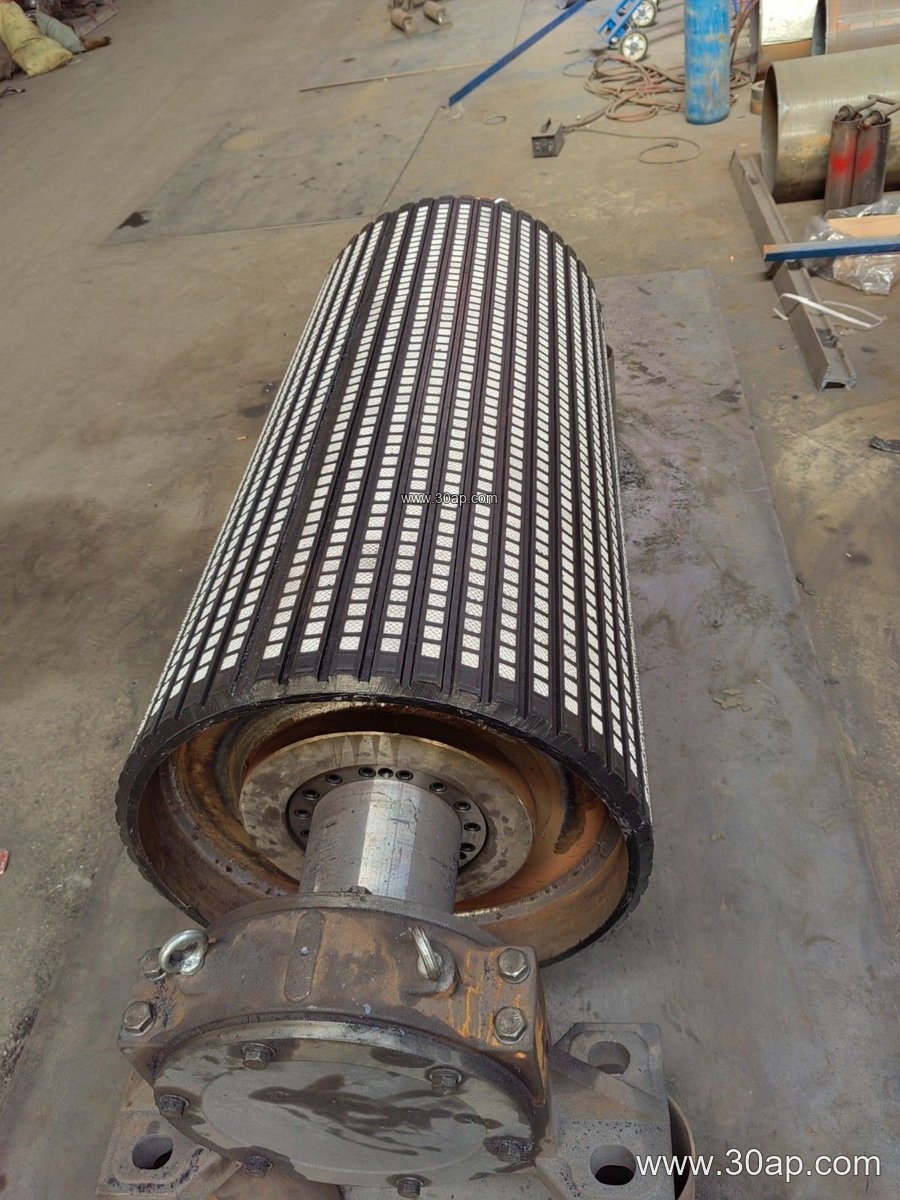
Where It Sits in the Circuit
Position decides duty. A head or drive pulley transmits power and usually carries the heaviest lagging and the largest shaft. A tail pulley at the loading end is exposed to impact and fines. A bend pulley changes belt direction and often runs with less wrap and lower load. Tension pulleys take up slack, while snub pulleys increase wrap angle at the drive. These are not interchangeable names, and a buyer should always state the position rather than ask for a generic drum.
In a coal washing plant or a power station coal yard, the same logic applies, but flame-retardant and anti-static belt requirements often push the pulley specification toward robust sealing and careful lagging selection. Around a cement plant clinker line, heat and abrasion both matter, so lagging grade and shell thickness deserve a second look.
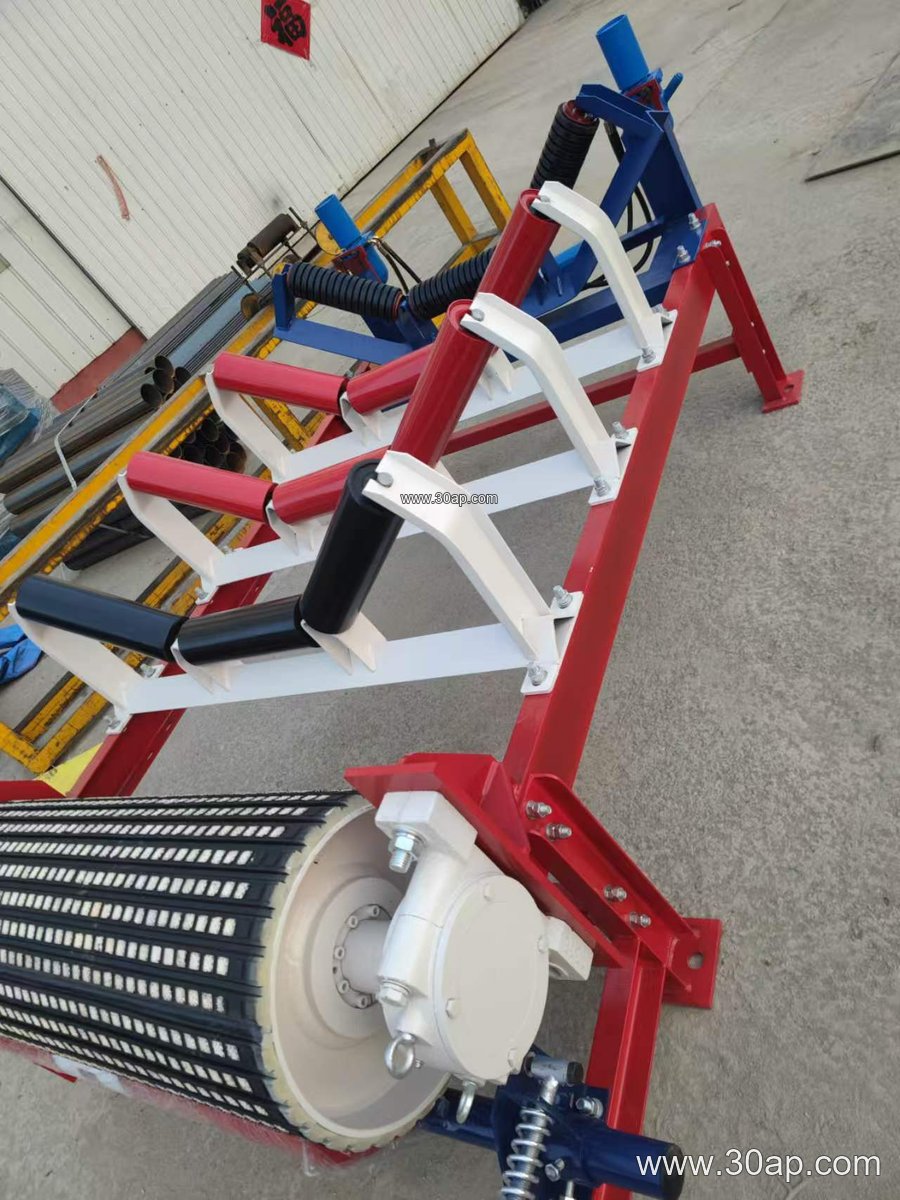
Matching Pulley to Belt and Layout
Belt width sets the face width, but not the diameter. The shell face is normally a little wider than the belt, for example B650 around 750 mm, B1000 around 1150 mm, and B1400 around 1600 mm. Diameter is a separate decision driven by wrap angle, belt tension, and the space available. Typical combinations such as B800 x Ø500 or B1200 x Ø1000 appear in real layouts, but no single diameter is mandatory for a given width.
Shaft diameter follows torque and bearing load. Common shaft sizes run from Ø50 up to Ø200, and the correct value is confirmed by the conveyor designer. A mining conveyor pulley working with an abrasion resistant conveyor belt on a primary crusher discharge may need a larger shaft and heavier lagging than a short transfer unit handling the same width.
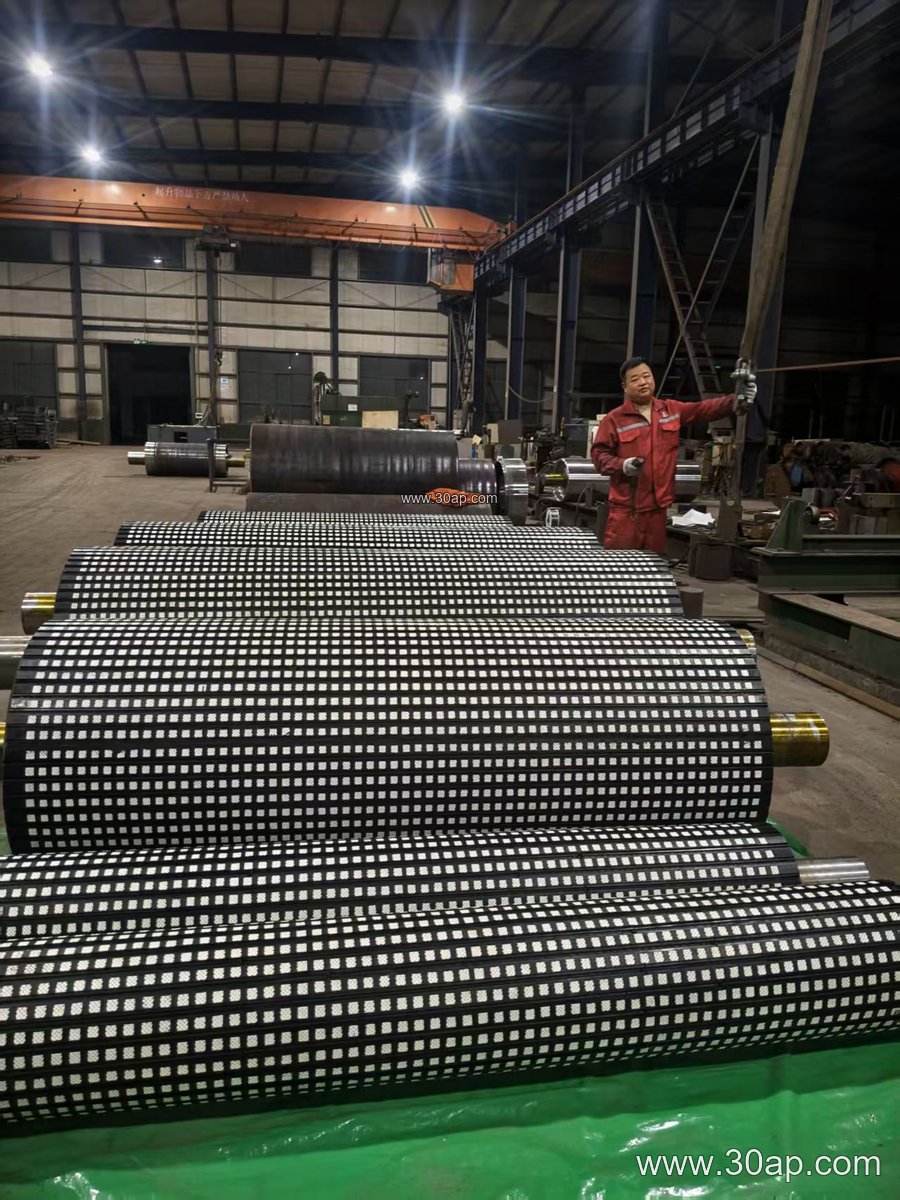
Reference Ranges Buyers Often Ask About
The figures below are common reference values, not a supply promise. Final dimensions are set by the conveyor design.
- Belt width (B): B400, B500, B650, B800, B1000, B1200, B1400, B1600, B1800, B2000, B2200, B2400
- Pulley diameter: Ø200, Ø250, Ø315, Ø320, Ø400, Ø500, Ø630, Ø800, Ø1000, Ø1250, Ø1400, Ø1600, Ø1800
- Shaft diameter: Ø50, Ø60, Ø70, Ø80, Ø90, Ø100, Ø120, Ø140, Ø160, Ø180, Ø200
- Lagging thickness: 8, 10, 12, 15, 20 mm
A simple table helps when comparing options:
| Belt width | Typical face width | Possible diameter range |
|---|---|---|
| B650 | about 750 mm | Ø320 to Ø630 |
| B1000 | about 1150 mm | Ø500 to Ø1000 |
| B1400 | about 1600 mm | Ø630 to Ø1250 |
These pairings are examples only. A short conveyor with a small wrap angle may use a smaller drum than a long, heavily loaded line at the same width.
Buyer Checklist Before Ordering
- State the position: drive, tail, bend, take-up, or snub.
- Give belt width, belt type, and belt tension so the shell and shaft can be checked.
- Describe the material: wet, abrasive, hot, or oily. This guides lagging and sealing.
- Confirm shaft diameter from the drive calculation, not from a rule of thumb.
- Check that the conveyor bracket and bearing housing fit the existing frame.
- Ask how the pulley is balanced and how the lagging is bonded.
A well-matched pulley keeps the belt centered, protects the idler roller set from misalignment, and reduces downtime in a busy sand and gravel plant. Buyers who share the full conveyor data usually get a better fit than those who order by width alone.