What a Cast-Welded Pulley Is
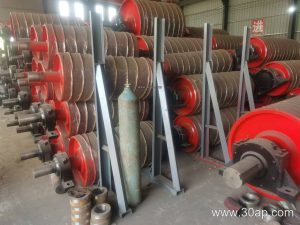
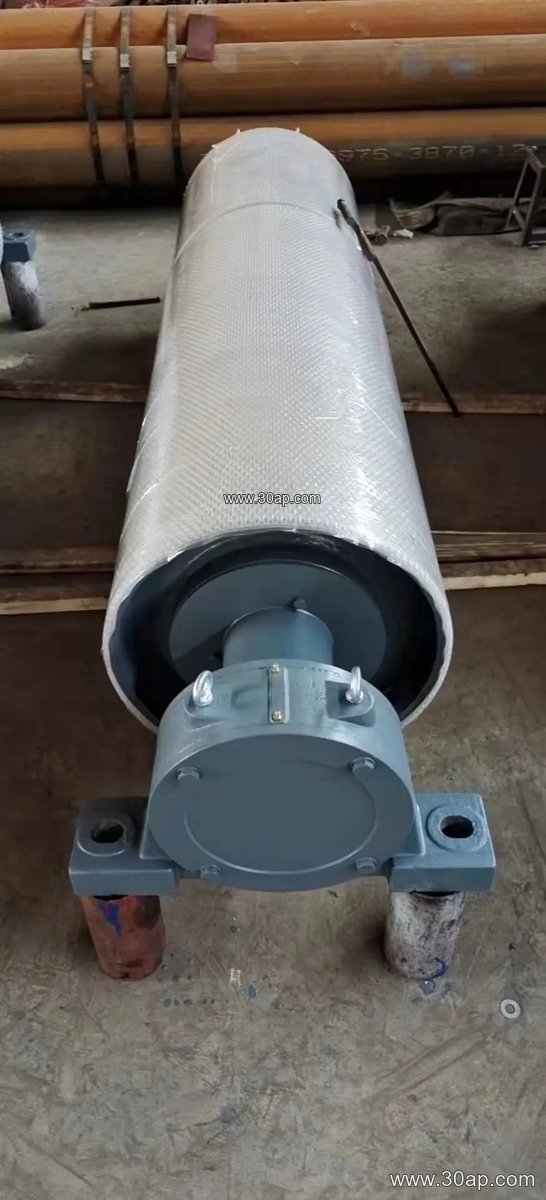
A cast-welded pulley is a conveyor pulley built by combining a cast steel hub or end disc with a welded steel shell and shaft assembly. The casting gives the hub accurate geometry and good load distribution around the shaft, while the welded shell keeps the drum light enough for large diameters and long face widths. This hybrid approach is common on heavy-duty conveyors where a fully cast drum would be too heavy and a fully fabricated one might wear faster at the hub.
In practice, the cast-welded pulley is the same product as a cast-and-welded conveyor drum, and both names describe one item: a drum with cast ends and a welded cylindrical body. It should not be confused with a drive pulley, tail pulley, or bend pulley, which describe the pulley’s position and duty in the conveyor, not how it is manufactured. A cast-welded drum can serve in any of those positions when the design suits the load.
How the Drum Is Put Together
The shell is usually rolled from steel plate and joined by a longitudinal weld. Cast steel end discs are then welded to both ends, and the shaft is fitted through the hub bores. Depending on the design, the shaft may be keyed, shrink-fitted, or locked with a locking assembly. Machining follows welding so that the drum face runs true and the shaft ends align with the bearing centers.
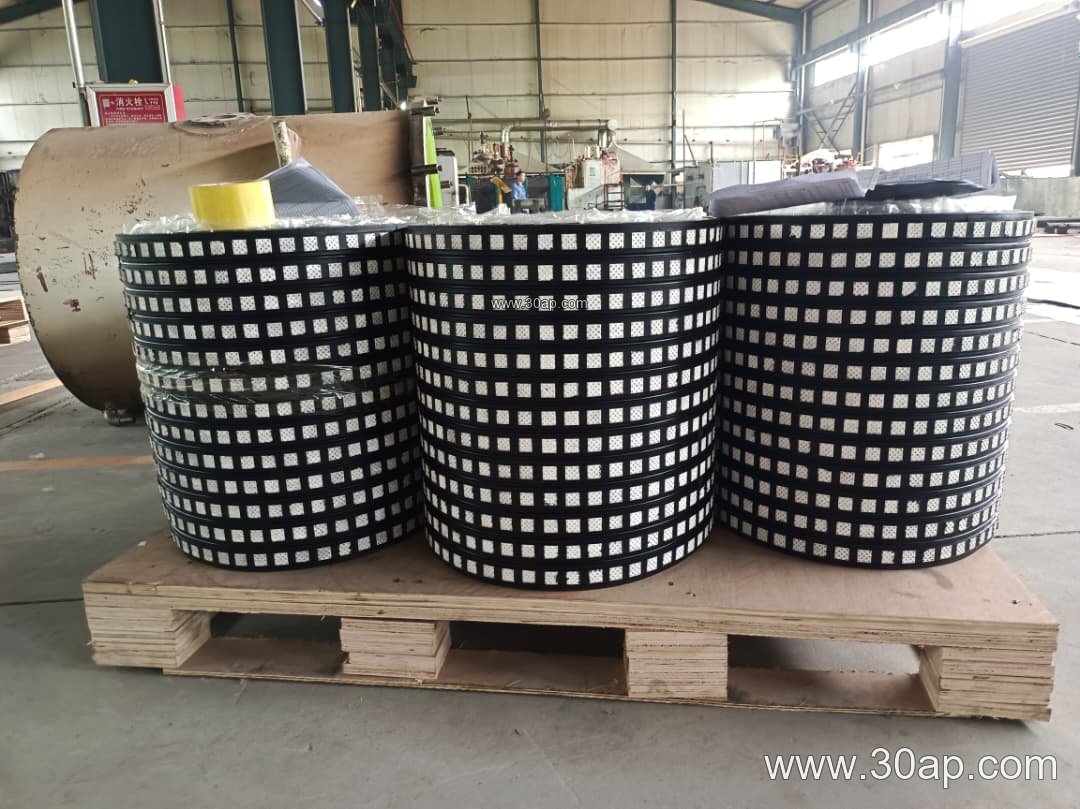
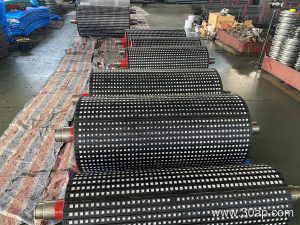
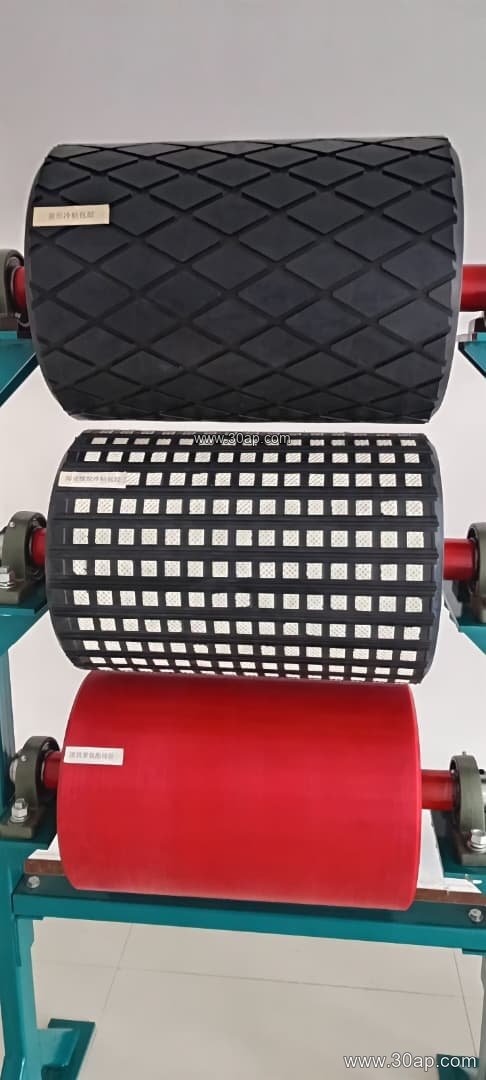
Surface finish matters as much as the body. Plain drums are used where the belt can grip without extra friction, while lagged versions use cast rubber, cold-bonded rubber, hot-vulcanized rubber, diamond grooving, herringbone grooving, or ceramic tiles. Common lagging thicknesses are 8, 10, 12, 15, and 20 mm, selected according to slip risk and material carry-back.
Typical reference dimensions for cast-welded drums include:
- Belt widths: B400, B500, B650, B800, B1000, B1200, B1400, B1600, B1800, B2000
- Diameters: Ø200, Ø250, Ø315, Ø400, Ø500, Ø630, Ø800, Ø1000, Ø1250, Ø1400
- Shaft diameters: Ø50, Ø60, Ø70, Ø80, Ø90, Ø100, Ø120, Ø140, Ø160, Ø180, Ø200
These values are reference ranges, not fixed pairings. A B1200 drum may appear as B1200 × Ø1000 in one conveyor and B1200 × Ø800 in another, because diameter follows belt tension, wrap angle, and space limits. Shaft size is set by torque and bearing load, never by belt width alone.
Where Cast-Welded Drums Fit
One common home for this drum is a limestone quarry or aggregate crushing line, where dust, grit, and frequent starts put stress on the hub-to-shell joint. The cast hub handles repeated torque cycles, and the welded shell can be re-lagged when the surface wears. In a coal washing plant, a flame retardant conveyor belt and a cast-welded pulley work together at the head end, while a smaller bend pulley redirects the return strand.
These pulleys also appear in cement plants on clinker and raw meal conveyors, in power station coal handling, and in port bulk terminals. A heavy-duty mining conveyor belt carrying iron ore or copper ore may call for a thick shell, large shaft, and ceramic lagging, while a food grade conveyor belt line would use a smoother, cleanable surface. The drum type stays the same; the surface and wall thickness change with the duty.
Matching the Pulley to the Belt and the Position
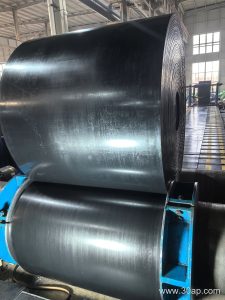
Drive positions usually need more traction, so a lagged cast-welded pulley with diamond or herringbone grooving is a sensible choice. Tail pulleys often run with a plain or lightly lagged face to allow self-cleaning. Bend and take-up positions may use a smaller diameter to save space, but the shaft still has to carry the belt tension at that point. When the belt is an EP conveyor belt or a multi-ply fabric core belt, the pulley diameter should be large enough to limit bending stress in the carcass; steel cord belt lines generally need larger drums than fabric belts of the same width.
Belt tracking is another factor. A slightly crowned face can help center a wide belt, while a flat face suits applications where the belt is guided by other means. The pulley face width is normally a little wider than the belt, for example about 950 mm for a B800 belt or about 1400 mm for a B1200 belt, so the belt edge does not run off the drum.
Buyer Checklist
- Confirm the pulley’s role: drive, tail, bend, take-up, or snub, and state it clearly on the inquiry.
- Provide belt width, belt type, and belt tension so the shell and shaft can be sized together.
- Specify lagging type and thickness if extra grip or wear protection is needed.
- Check bearing centers, shaft extension, keyway, and locking arrangement against the conveyor bracket and bearing housing.
- Ask how the drum is balanced and machined after welding, since runout affects bearing life and belt tracking.
- Plan for maintenance: replaceable lagging and accessible bearing points reduce downtime.
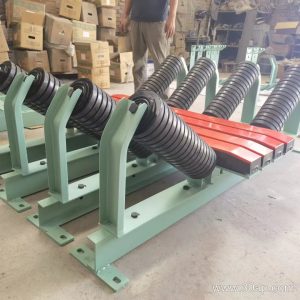
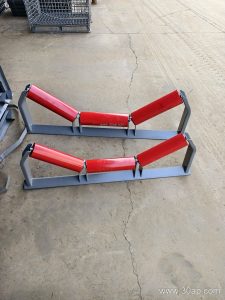
For a conveyor system that also uses an idler roller, conveyor bracket, and conveyor pulley in the same frame, the cast-welded drum should be specified as one coordinated component, not chosen from a single size chart. The right drum is the one that matches the belt, the load, and the position, and the cast-welded construction gives engineers a durable way to meet that brief.