What a Head Bend Pulley Does
A head bend pulley is a direction-changing conveyor pulley that wraps the belt through an extra arc near the discharge end of a conveyor. In many layouts the belt leaves the head drive pulley and must be guided back toward the tail before it can return through the carrying run. The bend pulley provides that turn without driving the belt, and it works together with the head pulley to keep the belt tracking smoothly through the transition zone.
Although the names sound similar, a head bend pulley is neither a drive pulley nor a tail pulley. The drive pulley transmits torque; the tail pulley supports the return end and may serve as a take-up point. A bend pulley only redirects belt travel. On long overland or high-tension conveyors, several bend pulleys may be arranged in sequence, and each one adds wrap and load to the belt and shaft. Properly matched, the bend pulley helps maintain steady belt tension and reduces the chance of belt wander at the head transfer.
Construction and Surface Options
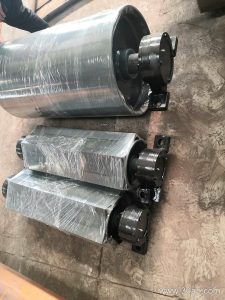
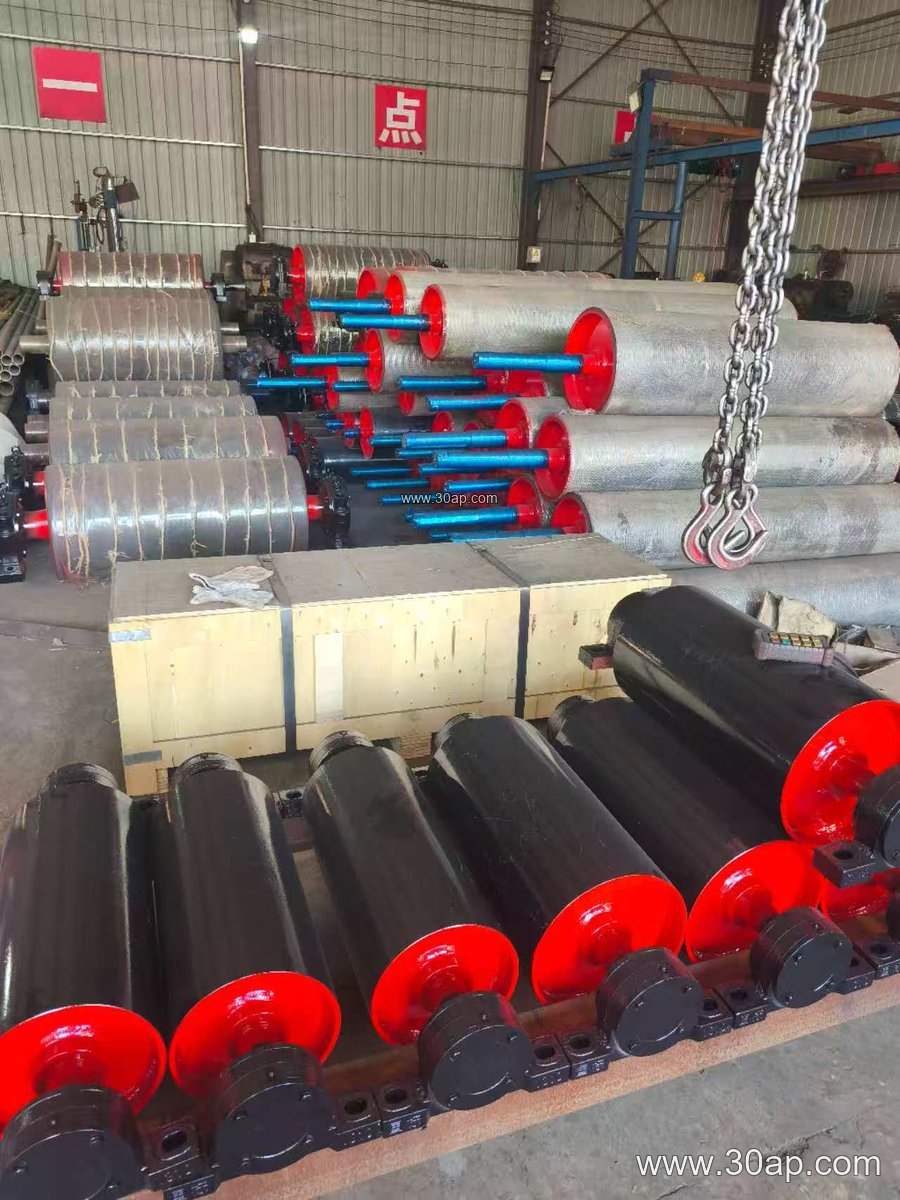
The pulley body is usually a welded steel drum with a machined face, end discs, and a through shaft mounted in bearing housings. Face width is typically a little wider than the belt: for example, a B800 conveyor might use a pulley face around 950 mm, while a B1200 line often calls for roughly 1400 mm. Diameters commonly fall between Ø315 and Ø1250 depending on belt tension and space, and shaft diameters are selected from torque and bearing load rather than belt width alone.
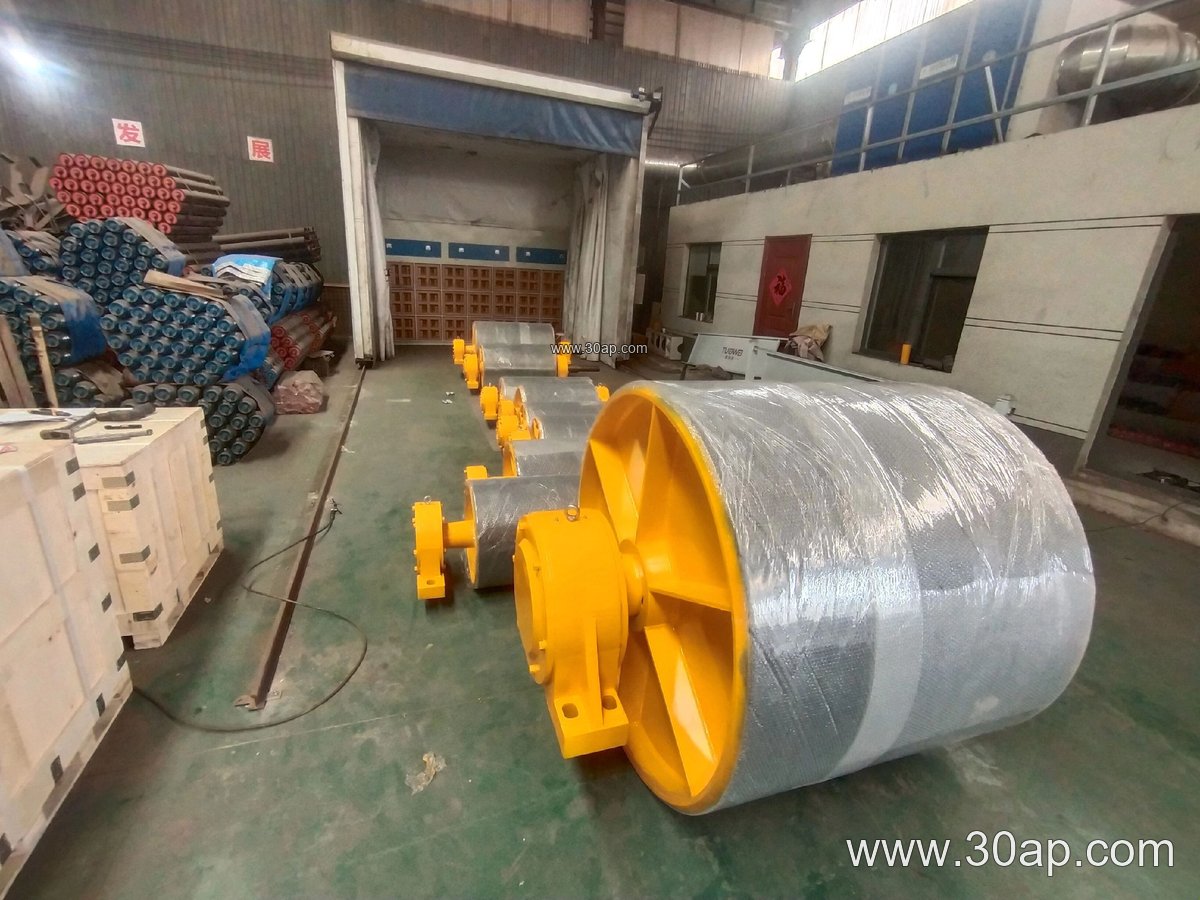
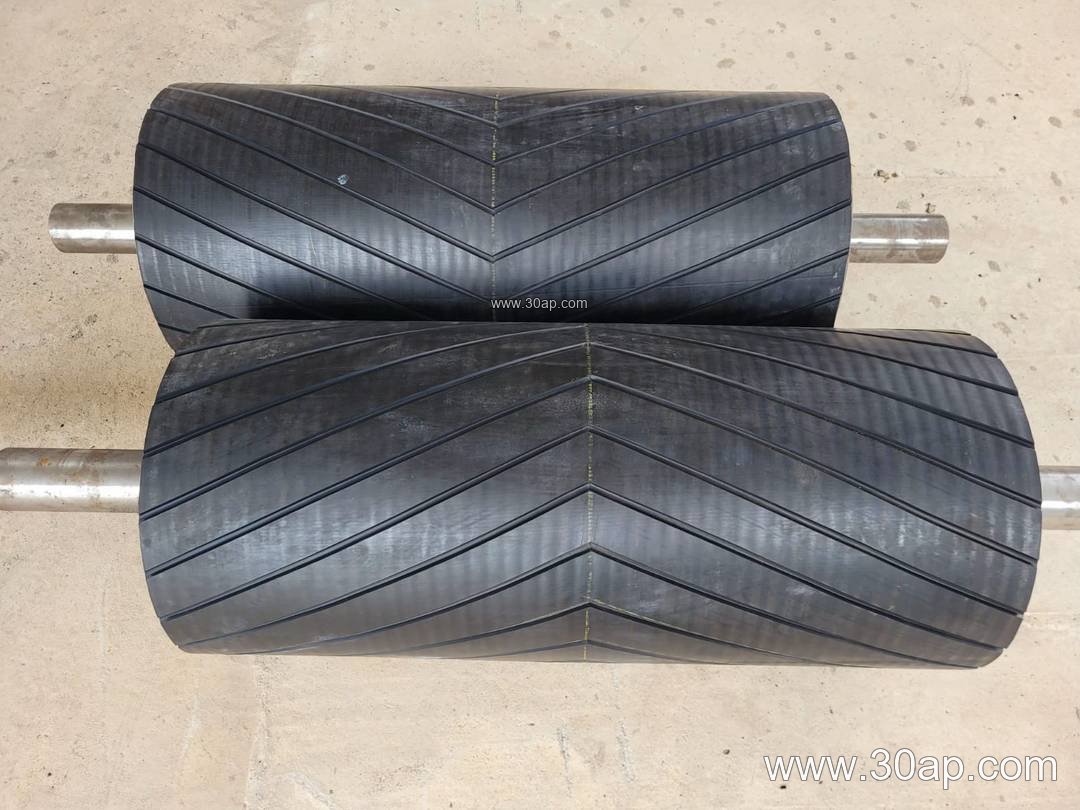
Surface treatment matters on the bend position. A plain face is adequate for light duty and clean material, while rubber lagging improves grip and protects the shell from abrasion. Diamond or herringbone lagging can assist with water shedding and belt tracking. Common lagging thicknesses include 8, 10, 12, 15, and 20 mm. For dusty quarry or cement circuits, a ceramic lagging may be considered when slip and wear are the main concerns.
- Drum: welded steel shell, machined face, reinforced end plates
- Shaft: forged or turned steel, sized by torque and radial load
- Bearings: self-aligning roller bearing housings, grease or oil lubricated
- Lagging: plain, rubber, diamond, herringbone, or ceramic
- Accessories: conveyor bracket, scraper mount, and guarding as required
Where It Fits in the Conveyor Layout
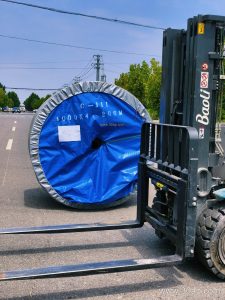
Head bend pulleys are common in coal preparation plants, limestone quarries, iron ore concentrating lines, and power station coal handling. They also appear in aggregate plants and port bulk terminals where the belt must turn sharply after discharge. In these systems the bend pulley often works alongside a conveyor pulley set that includes the head drive, take-up, and snub positions. The belt itself may be an EP conveyor belt, an NN conveyor belt, or a steel cord conveyor belt, and the pulley face and lagging should suit the belt cover grade and the material being carried.
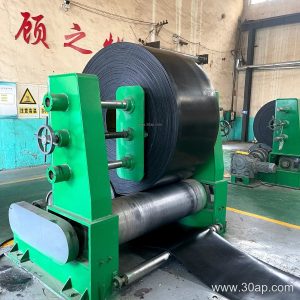
On a typical head transfer, the belt passes over the head pulley, then around the head bend pulley, and back into the return run. The bend pulley may be mounted on a conveyor bracket fixed to the main frame, or on an adjustable slide for fine tracking. In some plants an idler roller nearby supports the belt between the bend pulley and the next return idler station, so the transition is not left unsupported.
Selection Points for Buyers
When specifying a head bend pulley, confirm the belt width, the required wrap angle, the belt tension at that point, and the available space for the drum diameter. Note that belt width and pulley diameter are not a fixed pair: a B1000 belt may run on a Ø630 or Ø800 drum depending on tension and layout, and a B1400 belt might use Ø800 or larger. Shaft size should come from the calculated torque and bearing load, not from a simple width table.
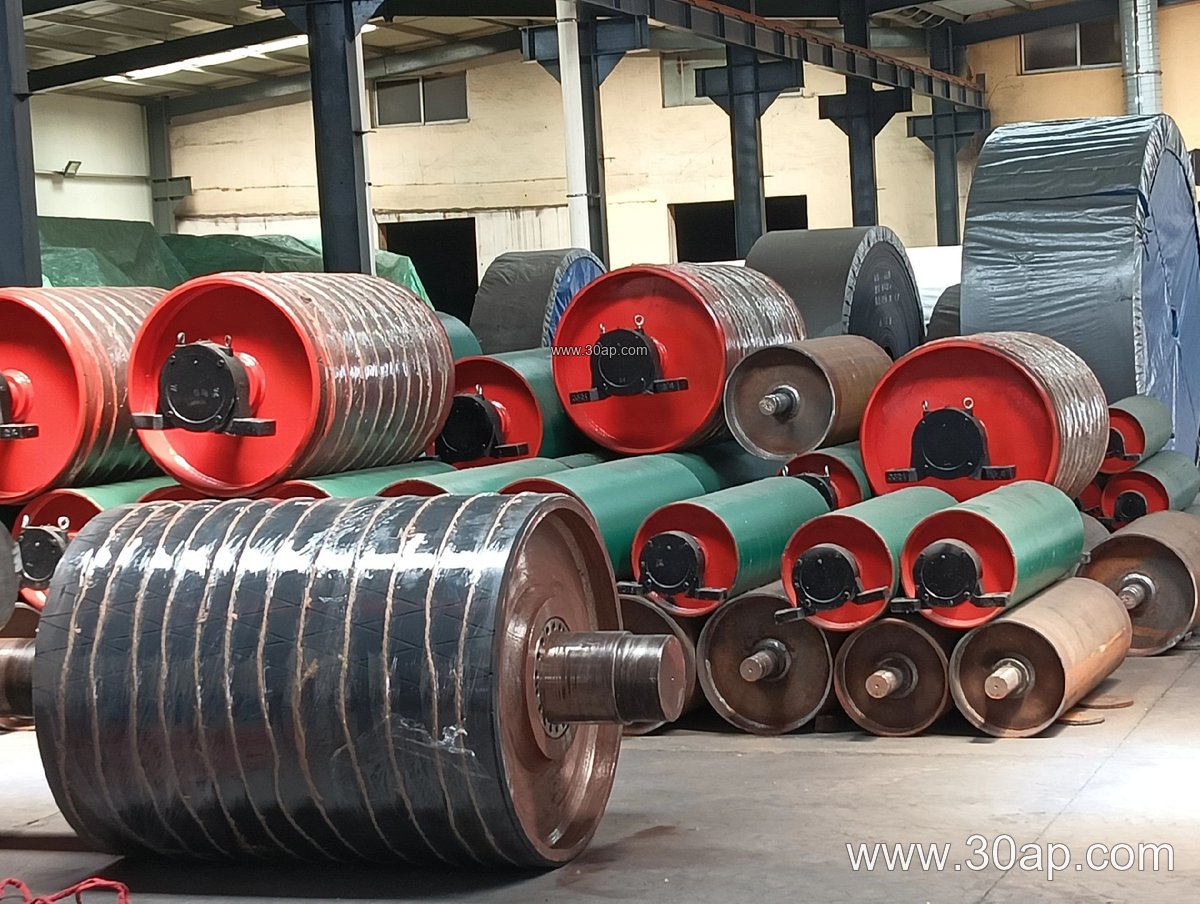
Check the lagging type against the working environment. A heat resistant conveyor belt in a cement kiln area may call for a heat-tolerant lagging, while an abrasion resistant conveyor belt in a crusher circuit benefits from a thicker rubber cover. In underground coal mining, flame retardant conveyor belt and anti-static properties are usually specified, and the bend pulley should be compatible with the same safety requirements. For dusty or wet conditions, consider self-cleaning lagging and sealed bearing housings.
Finally, ask for dimensional drawings, bearing type, shaft material, and balancing data. A head bend pulley that is correctly sized and well protected will usually outlast one selected only by nominal diameter.