What a Rotating Self-Aligning Idler Does
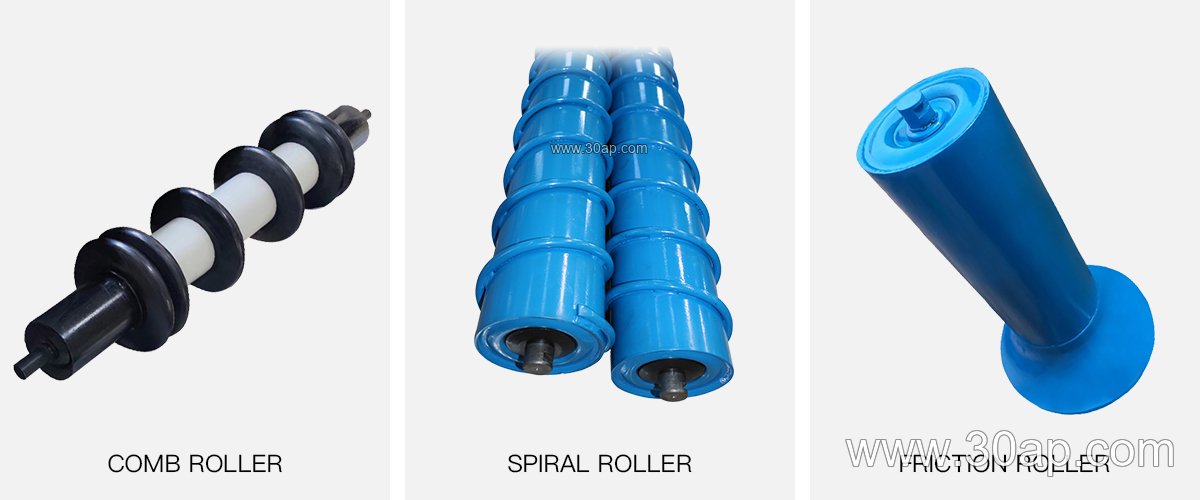
A rotating self-aligning idler is a training roller that pivots on its base to steer a wandering conveyor belt back toward the center line. When the belt drifts to one side, it contacts the roller at an angle, and the resulting friction turns the idler assembly slightly in the horizontal plane. That small rotation nudges the belt back on track without an operator touching the conveyor. The same product is often sold under the equivalent name self-training idler or self-aligning roller, and in a troughing set it may appear as a friction self-aligning idler or a conical self-aligning idler depending on how the turning action is generated.
Tracking problems cost money in any bulk handling line. A belt that rubs the frame in a quarry, a coal washery, a cement plant, or a power station coal yard will fray edges, spill material, and eventually fail. A self-aligning roller installed at the right point gives the belt a gentle corrective force every time it begins to stray.
How the Assembly Is Built
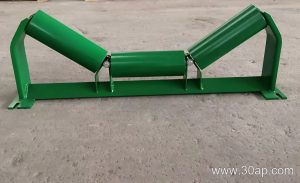
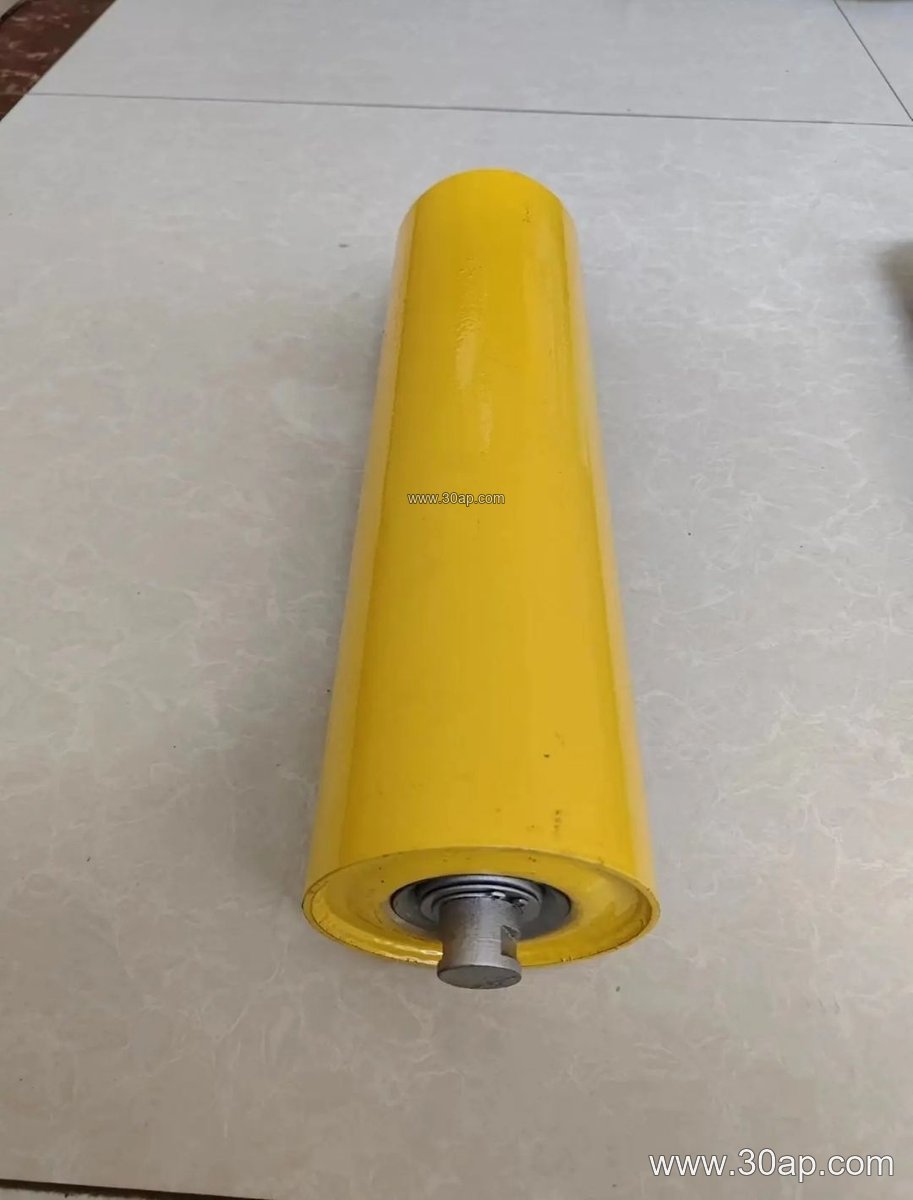
The typical unit has three parts working together: a set of carrying rollers, a pivoting frame, and a fixed base that bolts to the conveyor bracket. The roller frame sits on a vertical shaft or a bearing seat so it can swing a few degrees left or right. Some designs use friction between the belt and the roller surface to trigger the swing; others use conical roller ends that create different surface speeds at each side. Roll diameters follow the same range as ordinary idlers, commonly Ø89, Ø102, Ø108, Ø127, Ø133, Ø159, and Ø178, with larger sizes such as Ø194 and Ø219 used on heavy conveyors.
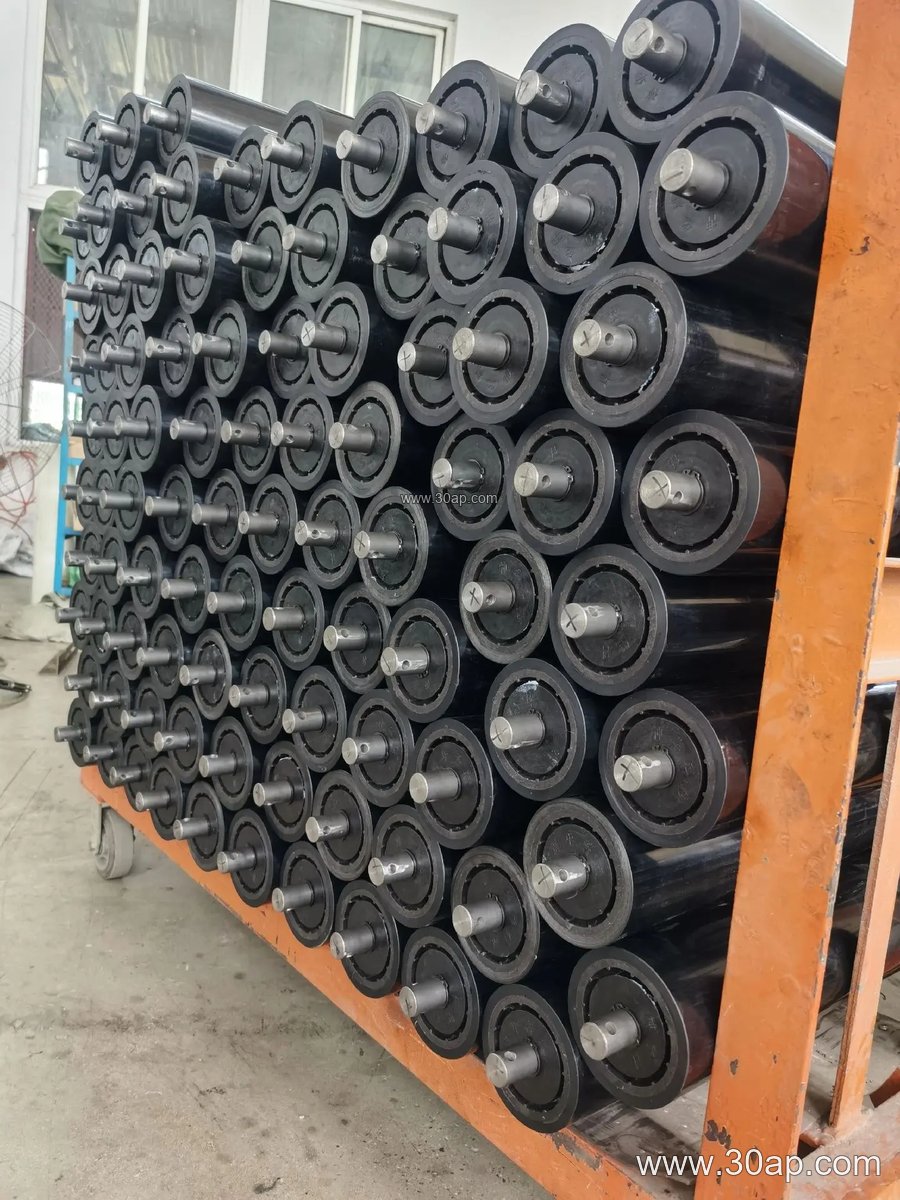
The roller shell can be steel tube, nylon, or ceramic-coated, and rubber rings are sometimes added for grip or cushioning. Bearings are usually sealed deep-groove types such as 6204, 6205, 6305, 6306, 6308, or 6310, chosen to match the load and shaft, not the belt width alone. Roll length changes with belt width, trough angle, and the number of rollers in the set.
| Belt width | Common three-roll length (example) |
|---|---|
| B500 | about 200 mm |
| B650 | about 250 mm |
| B800 | about 315 mm |
| B1000 | about 380 mm |
| B1200 | about 465 mm |
| B1400 | about 530 mm |
| B1600 | about 600 mm |
These figures are typical examples only; side rollers and center rollers may differ, and the final length is fixed by design.
Where It Fits on the Conveyor
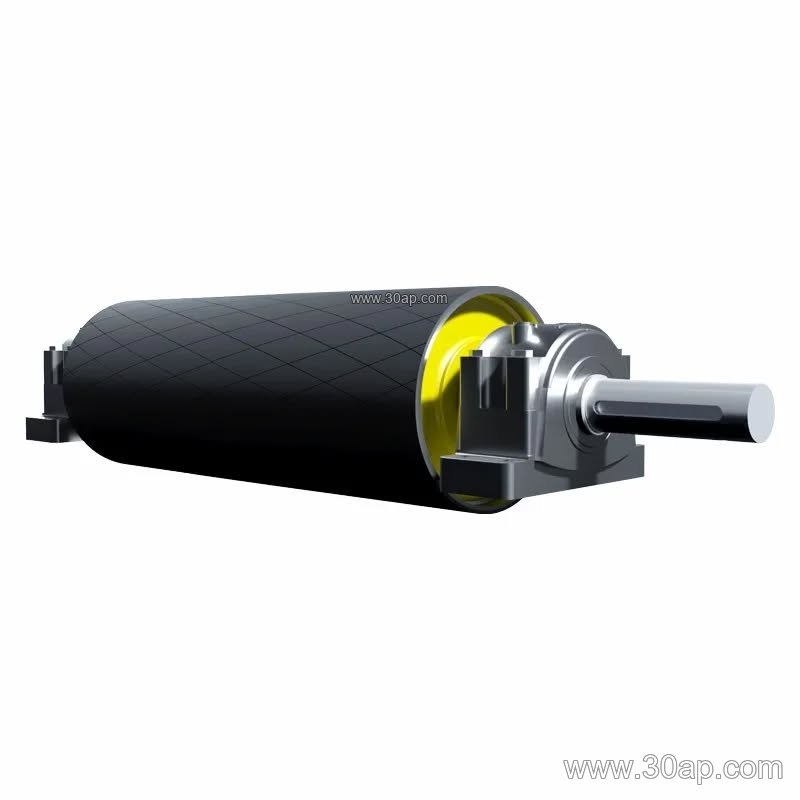
Training idlers are normally placed on the carrying side a short distance after the feed point, before curves, and at intervals along long runs where misalignment is likely. In a limestone mine or a sand and gravel line, one or two units after the crusher discharge help absorb the off-center loading that a hopper or chute can cause. On the return strand, a V-type self-aligning return roller serves a similar purpose. A rotating self-aligning idler is not a substitute for a drive pulley, tail pulley, or bend pulley; those are separate components that transmit power and change belt direction. It also differs from a plain troughing idler or a buffer idler, which carry load but do not steer the belt.
Selection Points for Buyers
- Match the roller diameter and bearing to the actual belt tension and load, not only to belt width.
- Confirm the trough angle, usually 20, 30, 35, or 45 degrees, and the number of rollers per set.
- Check the mounting hole pattern against the existing conveyor bracket before ordering.
- Decide between friction, conical, and plain self-aligning designs based on how much correction the belt needs.
- For dusty or wet duties in a coal preparation plant or a fertilizer line, specify sealed bearings and a shell material suited to the environment.
Installation and Care
Mount the unit square to the belt center line and keep the pivot free of packed material. A training roller that cannot swing will not correct anything. Check the roller for free rotation and inspect the seal area during routine maintenance. Replacing one worn roller in the set is possible on many designs, though rebalancing the frame afterwards matters. Used correctly, a rotating self-aligning idler reduces edge damage, spillage, and downtime on almost any conveyor belt system.