What an Anti-Slip Ceramic Lagged Pulley Is
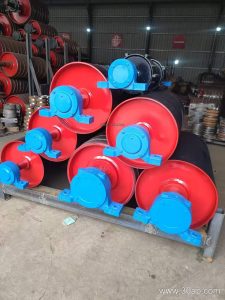
An Anti-Slip Ceramic Lagged Pulley is a conveyor pulley whose shell is covered with ceramic tiles set in a rubber or polymer matrix. The ceramic studs bite into the conveyor belt, raising the friction coefficient between pulley and belt. This reduces belt slip under high torque, wet conditions, or oily contamination. The product is also known as a ceramic lagged conveyor pulley or ceramic rubber lagged pulley. It is a surface-enhanced drive pulley, not a substitute for a tail pulley or bend pulley.
How the Ceramic Lagging Is Built
The pulley body is usually a welded steel drum with machined end discs and a shaft. Lagging is applied in one of two ways. In the cold-bond method, ceramic tiles are glued to a rubber sheet that is then bonded to the shell. In the hot-vulcanized method, the rubber backing and tiles are cured onto the drum under heat and pressure for a stronger bond. Tiles are commonly square or rectangular with raised dimples or ribs. Typical lagging thickness is 8 mm, 10 mm, 12 mm, 15 mm, or 20 mm. The tile pattern leaves small drainage channels so water and fines are pushed away from the contact patch instead of being trapped under the belt.
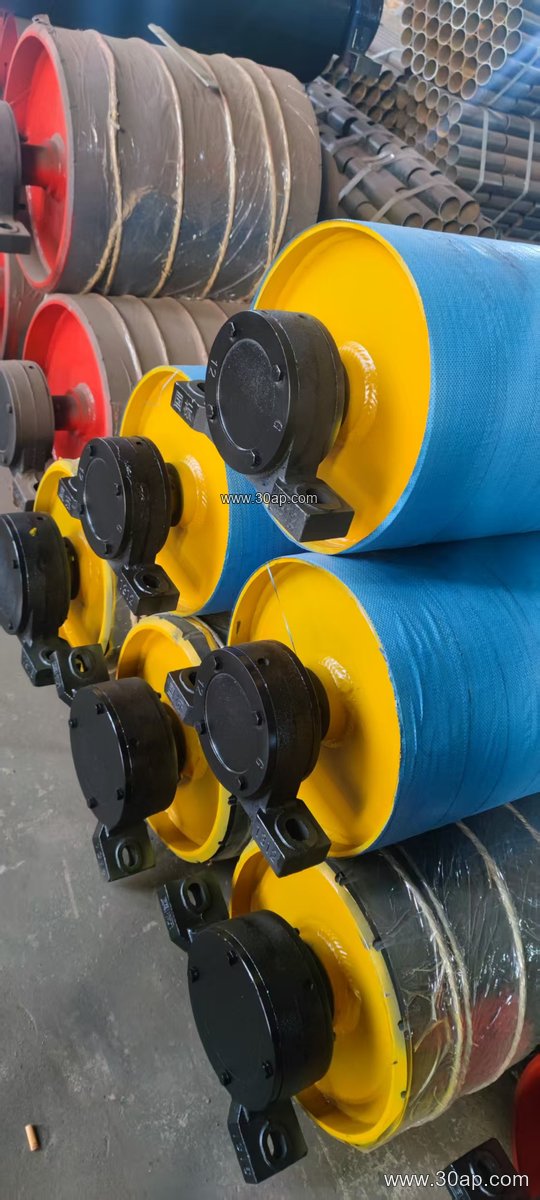
Where It Fits on the Conveyor
The Anti-Slip Ceramic Lagged Pulley is most often used as the drive pulley at the head of a conveyor, where it transmits the highest torque. In some installations it also serves as a tension pulley or a snub pulley where grip is critical. It is not a tail pulley or a bend pulley by function, though those positions may use plain or rubber lagging. In a quarry conveyor line, a ceramic lagged drive pulley keeps the belt moving when crushed rock dust and rain make the surface slick. In a coal mining conveyor or underground coal mining conveyor, the same pulley helps maintain traction on a flame retardant conveyor belt that may carry moisture. Aggregate plants, cement plants, and power plant coal handling systems also use this pulley where belt slip would cause wear and downtime.
Matching the Pulley to the Belt and Duty
Selection starts with belt width and required torque, not with a single universal size. Common pulley diameters include Ø500, Ø630, Ø800, Ø1000, and Ø1250; larger drives may use Ø1400 or Ø1600. Face width is usually wider than the belt, for example B800 with about 950 mm face, B1000 with about 1150 mm, and B1200 with about 1400 mm. A B1200 × Ø1000 combination is common, but the same belt width can also run on other diameters depending on wrap angle and belt tension. Shaft diameter is determined by torque and load, with common values from Ø80 to Ø200; it should not be picked from belt width alone. The table below gives reference combinations, not fixed rules.
| Belt width | Typical pulley face | Example diameter | Lagging thickness |
|---|---|---|---|
| B650 | about 750 mm | Ø500 | 10–12 mm |
| B800 | about 950 mm | Ø630 | 12–15 mm |
| B1000 | about 1150 mm | Ø800 | 12–15 mm |
| B1200 | about 1400 mm | Ø1000 | 15 mm |
| B1400 | about 1600 mm | Ø1250 | 15–20 mm |
Belt construction matters too. A heavy-duty mining conveyor belt or steel cord conveyor belt needs a pulley that can handle high tension without shell deflection. An EP conveyor belt or multi-ply fabric core conveyor belt may call for a different wrap angle. In a crusher conveyor or rock conveyor, impact and abrasion are high, so the ceramic tiles should be checked for cracks during maintenance.
Buyer Checklist
- Confirm the pulley position: drive, tail, bend, or tension. The Anti-Slip Ceramic Lagged Pulley is normally a drive or tension pulley.
- State belt width, belt type, and expected maximum torque so the supplier can size the shaft and shell.
- Choose lagging thickness and tile pattern based on wetness, oil, and fines. Ceramic lagging is not a cure for misalignment or insufficient take-up.
- Check that the conveyor bracket and bearing housing match the shaft diameter and pulley diameter.
- Ask for the lagging bond method and tile hardness data if the conveyor runs in a washing plant or port bulk terminal.
For an integrated conveyor system, the pulley works with the conveyor belt, idler roller, and conveyor bracket. A ceramic lagged drive pulley is often paired with an abrasion resistant conveyor belt in a sand and gravel line, or with a heat resistant conveyor belt in a cement plant. Buyers comparing suppliers can also review the conveyor pulley drawing, the shaft material, and the balancing grade before ordering.