What a Trough Idler Bracket Set Does on a Conveyor
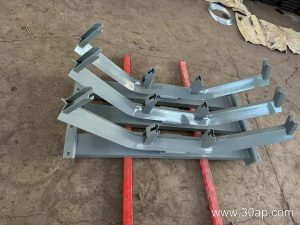
A trough idler bracket set is the steel support assembly that holds the three rolls of a troughing idler in the shape of a shallow trough. It sits on the conveyor frame between the stringers and carries the loaded run of the conveyor belt, keeping bulk material centred as it travels. In a quarry, a cement plant or a power plant coal yard, these bracket sets are repeated every few metres along the line, so small differences in alignment add up over a long conveyor.
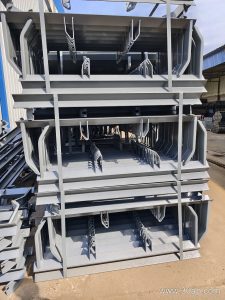
The set usually consists of a centre bracket and two side brackets, or a one-piece frame with angled seats, depending on the design. The angle of the side rolls is the trough angle, and it is the single most important dimension to confirm when ordering.
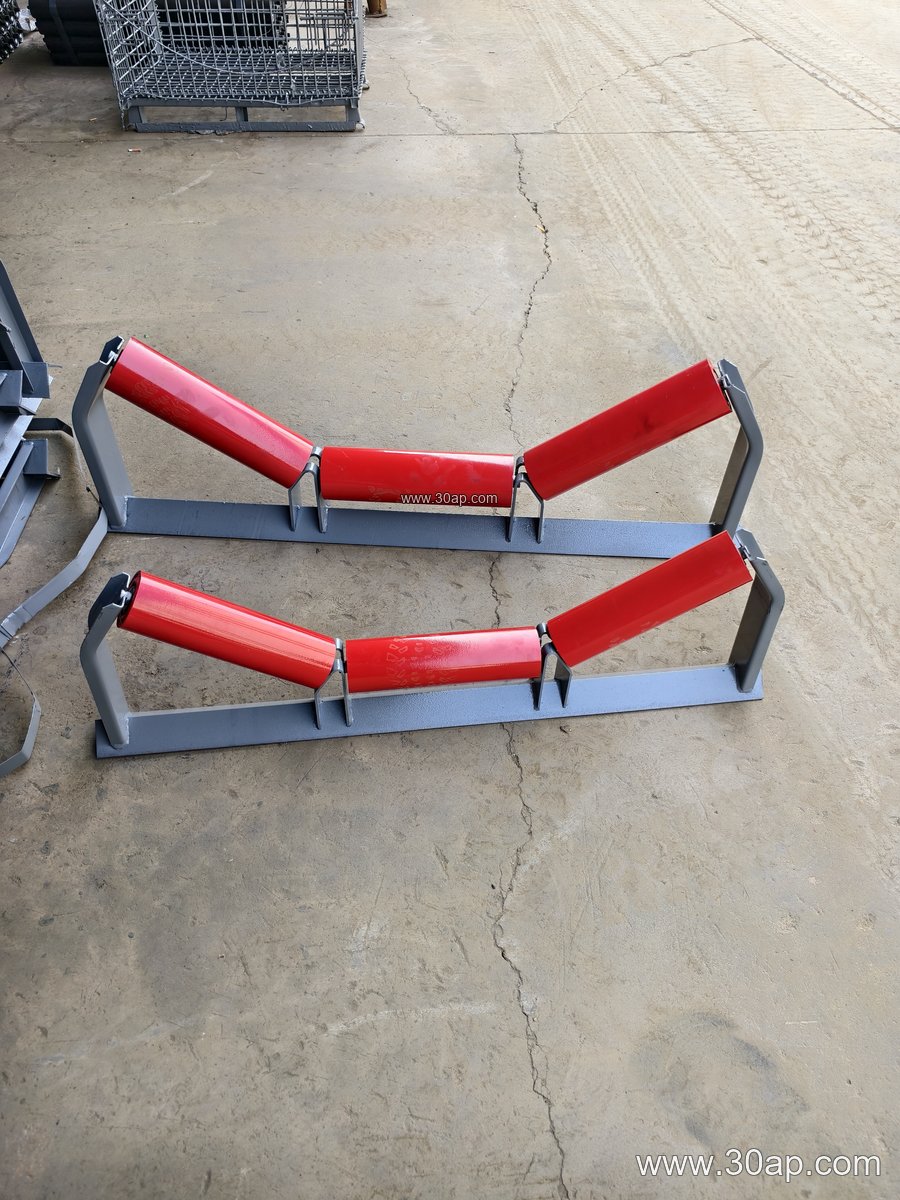
How the Bracket Set Is Built
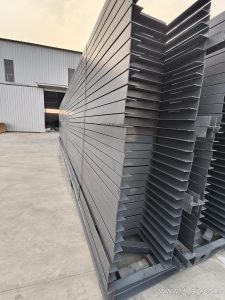
Most bracket sets are fabricated from angle steel, channel steel or folded steel plate. The roll seats are punched or drilled to match the idler shaft ends, and the base is drilled for mounting to the frame. A well-made bracket set keeps the three roll axes in one plane and holds the specified trough angle without twisting under load.
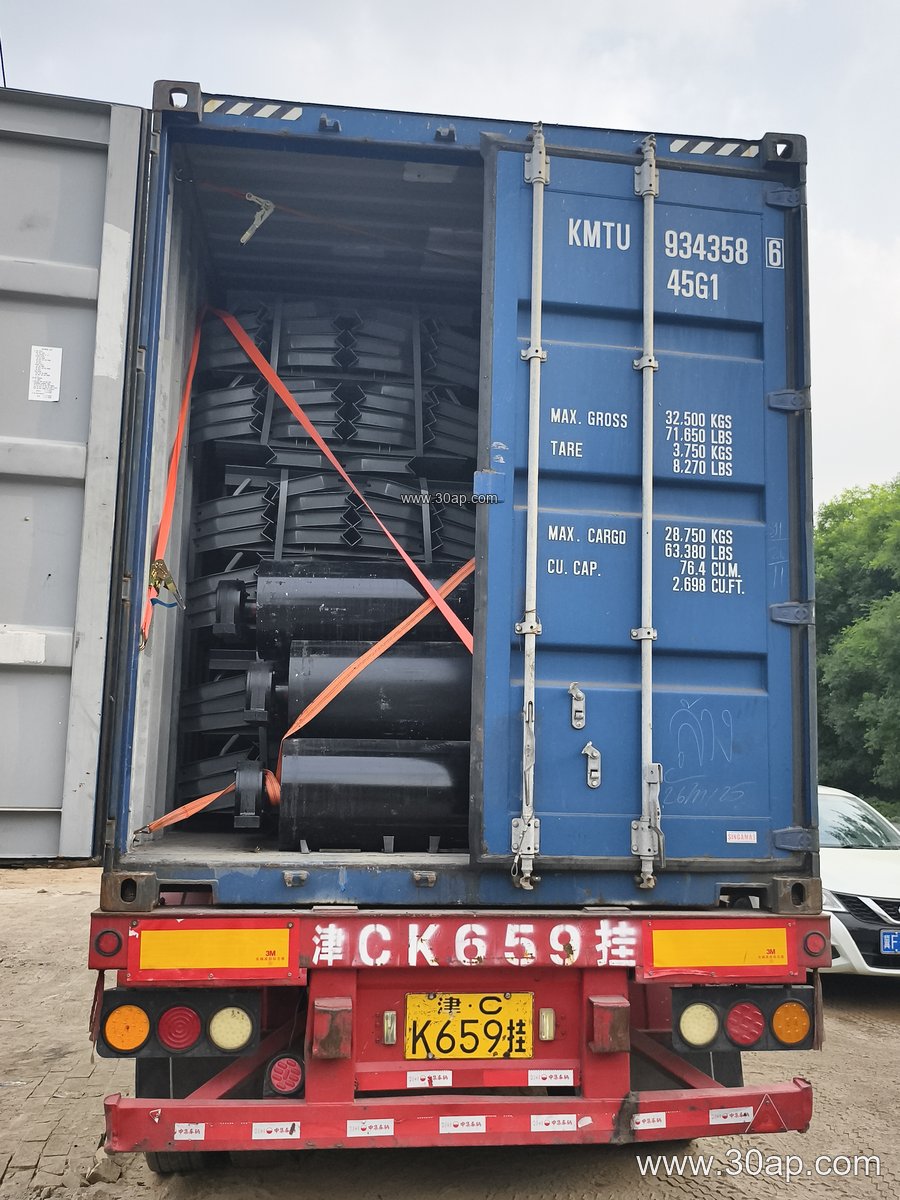
- Centre bracket and two side brackets, bolted or welded as a set
- Angle steel or channel steel frame with folded plate seats
- Mounting holes positioned for the frame width and trough angle
- Optional forward tilt of about 1.5 to 2 degrees on training brackets
Common Configurations and Reference Sizes
Bracket sets are normally matched to the belt width, the idler roller diameter and the required trough angle. The values below are common reference points, not fixed combinations; hole spacing and crossbeam length change with belt width and trough angle, and should be confirmed against the drawing.
| Belt width | Trough angle | Typical roll diameter | Typical use |
|---|---|---|---|
| B500 | 20 or 30 degrees | Ø89 | Small aggregate and sand lines |
| B650 | 30 degrees | Ø89 or Ø108 | Crushing and screening plants |
| B800 | 35 degrees | Ø108 | Cement and lime handling |
| B1000 | 35 or 45 degrees | Ø108 or Ø133 | Coal preparation and power plant coal feed |
| B1200 | 35 or 45 degrees | Ø133 | Iron ore and heavy bulk material |
| B1400 to B1600 | 35 or 45 degrees | Ø133 or Ø159 | Port terminals and long overland lines |
| B1800 to B2200 | 35 or 45 degrees | Ø159 or Ø194 | High-capacity bulk transfer |
A wider belt does not automatically mean a deeper trough angle, and one belt width can work with more than one roll diameter. Selection should follow the material, the load and the frame design.
Bracket Types and Where They Fit
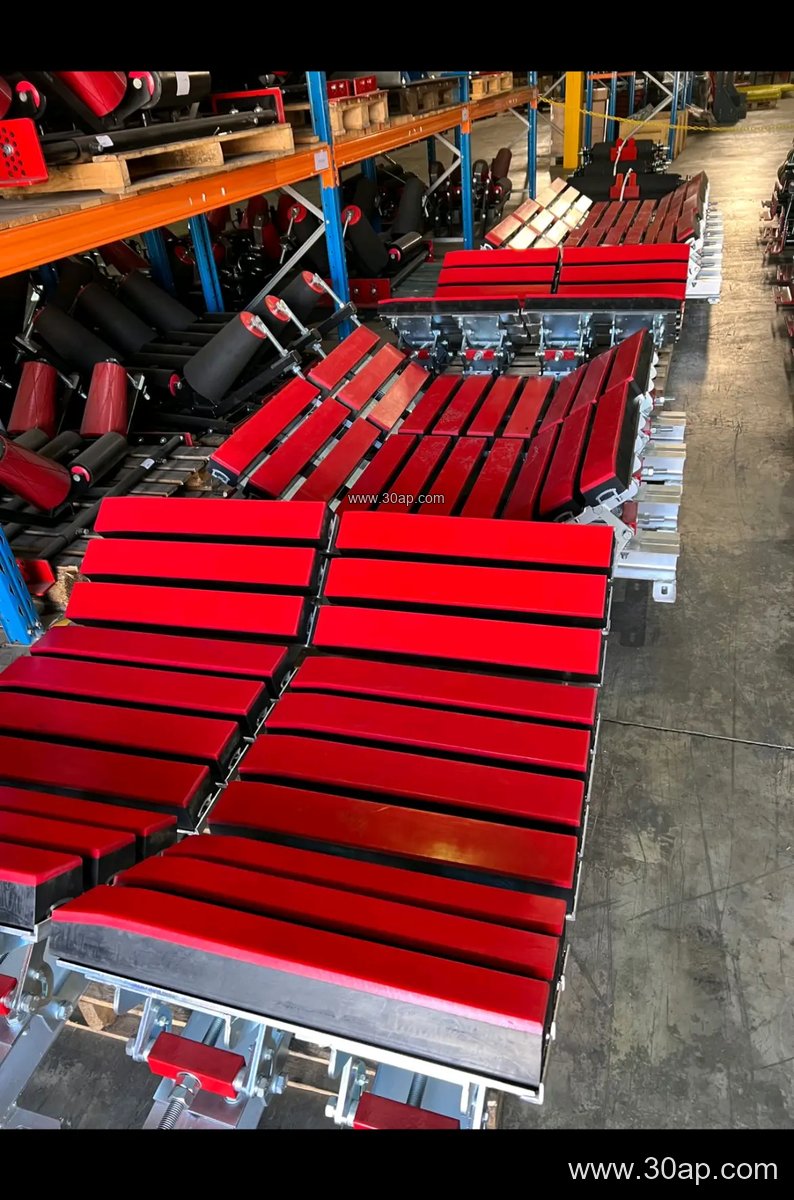
On the carrying run, the upper trough bracket set is the standard choice. At the loading point, a buffer or impact bracket set with resilient roll seats absorbs the drop of lump material. Where belt tracking is a problem, a self-aligning bracket set with slightly forward-tilted rolls helps correct wander. On the return run, a V-return bracket set or a flat lower bracket set supports the empty belt. Transition brackets are used near the pulleys, where the belt changes from flat to troughed.
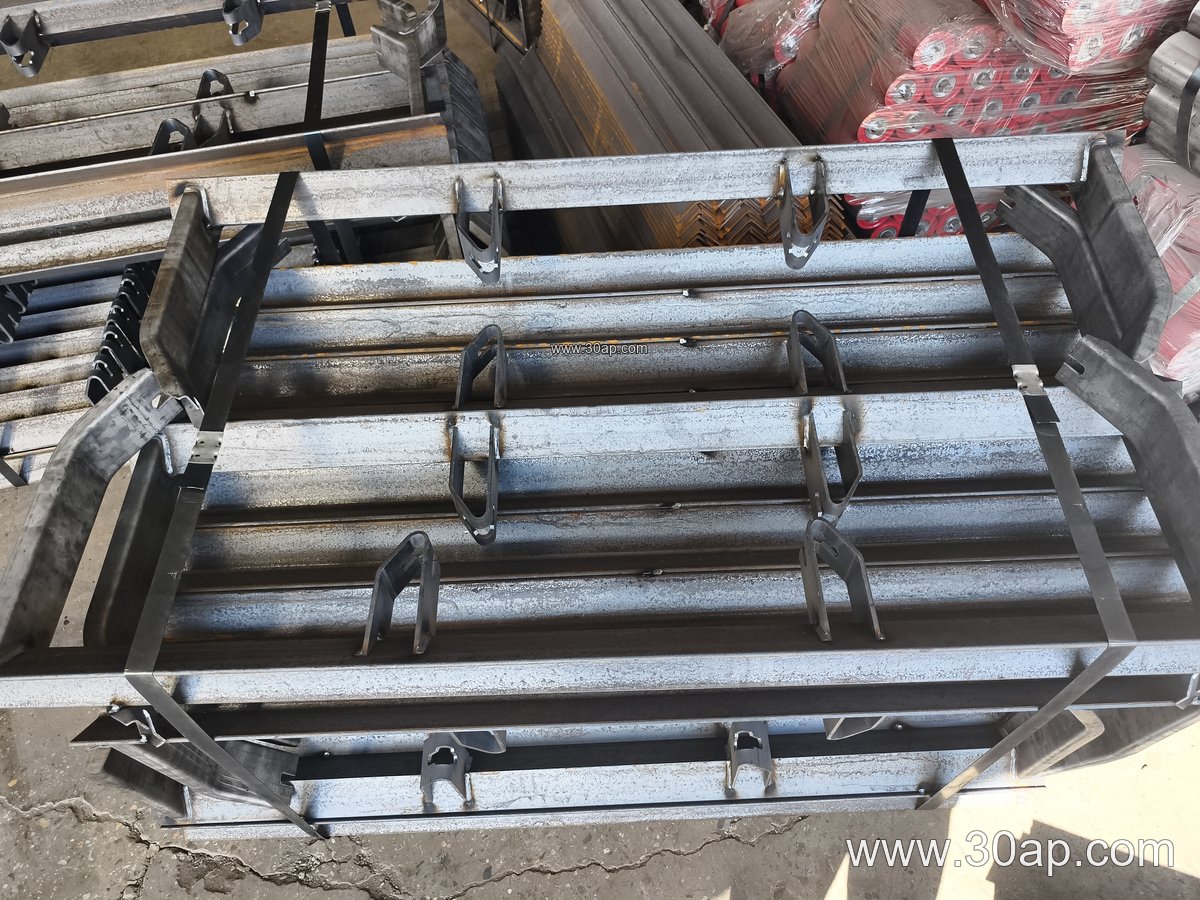
In underground coal mining and tunnel mucking, suspended or hanging bracket sets are sometimes preferred because they follow the frame without a full crossbeam. On a belt feeder or a short transfer conveyor, an adjustable bracket set allows the trough angle to be changed on site between 20 and 45 degrees.
Matching the Bracket to Belt and Idler
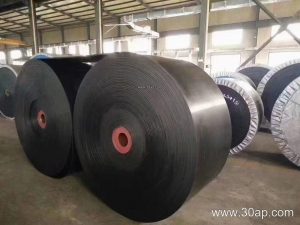
The bracket set works as part of a system. A heavy-duty mining conveyor belt carrying ore needs a bracket set that holds its shape under load, while a lighter abrasion resistant conveyor belt on a sand line can use a simpler frame. Where a steel cord conveyor belt runs at high tension, bracket alignment must be accurate to avoid edge damage. In coal mining, flame retardant conveyor belt and PVC or PVG belt grades are common, and the brackets should be checked for clearance around the roll ends.
Buyers should confirm the belt width, the idler roller shaft size, the trough angle and the frame hole pattern before ordering. Ask for a drawing that shows the mounting hole spacing rather than relying on a nominal size alone.
Installation and Maintenance Notes
Set the bracket square to the frame centreline, tighten the mounting bolts evenly, and check that all three rolls touch the belt. Replace bent brackets rather than straightening them, because a twisted set will wear the belt edge and shorten idler life. During routine inspections, look for loose bolts, corrosion at the seat, and material build-up under the centre bracket. More selection details are available at ccsconveyorbelt.com/trough-idler-bracket-set, and spare bracket sets should be ordered with the same drawing revision as the original.