What a Trough Idler Bracket Set Does
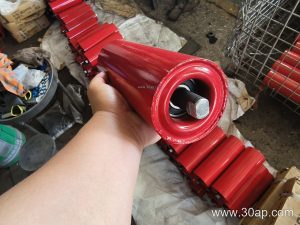
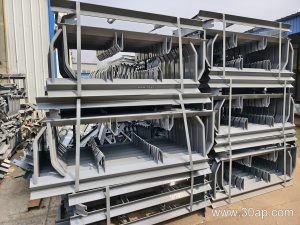
A trough idler bracket set is the structural assembly that holds the carrying idlers in a trough shape on the load side of a conveyor. It positions three idlers—usually one center roll and two side rolls—so the belt forms a stable trough for bulk materials. This bracket set is often called a troughing idler frame or carrying idler bracket set, and it is a key part of the conveyor bracket system that keeps the belt aligned and supported.
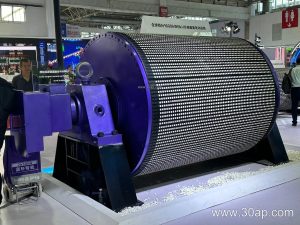
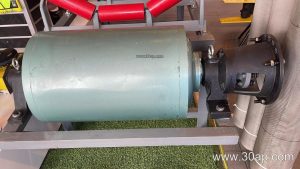
In industries such as mining, coal preparation, cement plants, power plant coal handling, and quarry operations, the trough idler bracket set works together with the conveyor belt, idler roller, and conveyor pulley to maintain smooth material flow. The bracket set does not drive the belt; it supports it. Drive, tail, and bend pulleys have different roles, so they are not interchangeable with the bracket set.
Construction and Common Materials
Most trough idler bracket sets are fabricated from angle steel, channel steel, or folded steel plate. The frame includes mounting slots or holes for the idler shafts and cross beams sized to the belt width and trough angle. Typical materials are carbon steel with painted or galvanized finish for general service. In dusty or wet conditions, the design may include drainage gaps or reinforced welds.
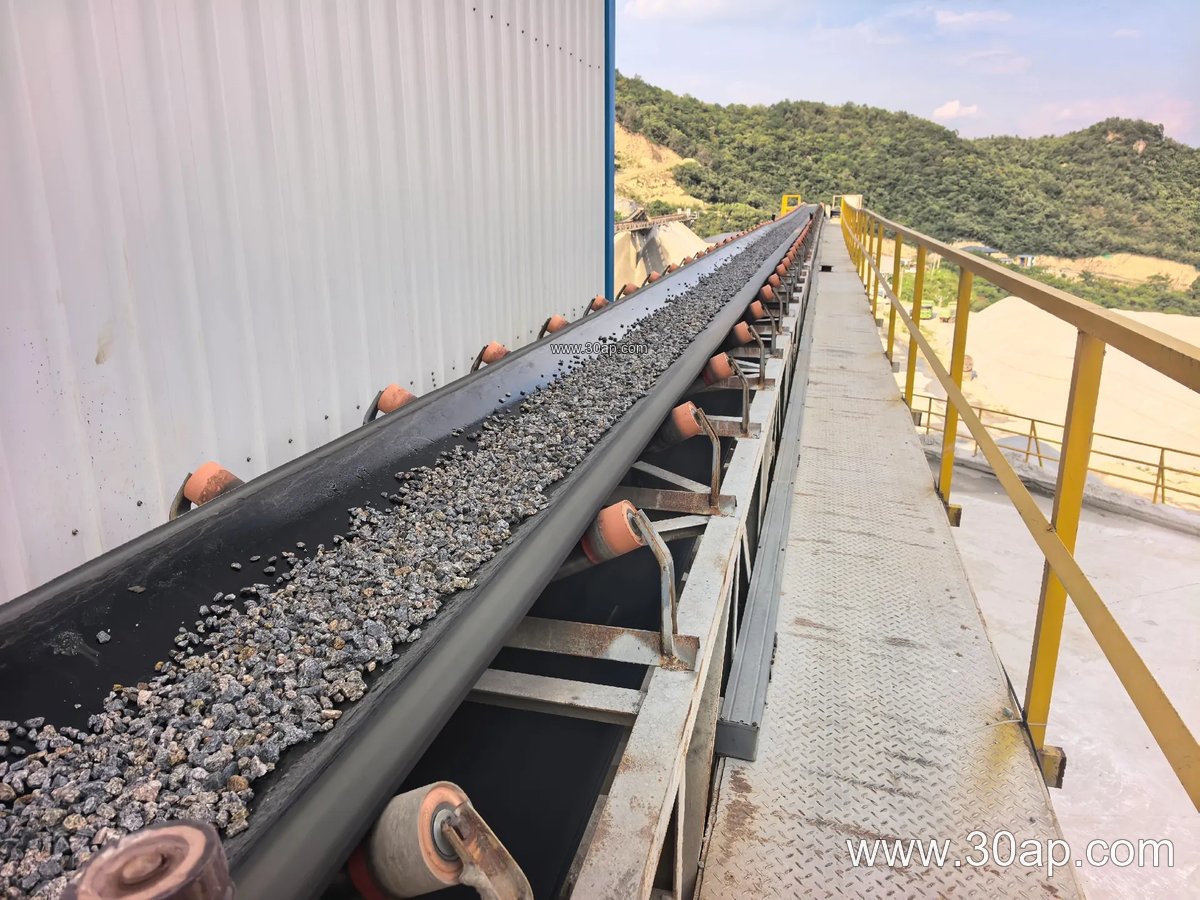
Common trough angles include 20, 30, 35, and 45 degrees. Adjustable bracket sets allow the trough angle to be changed within a range, which helps optimize belt capacity and material containment. Forward-leaning brackets, often set at about 1.5 to 2 degrees, can help with belt training. The bracket set must match the idler roller diameter and belt width—for example, a B800 belt with 35-degree trough and Ø108 idlers, or a B1200 belt with 45-degree trough and Ø133 idlers. Installation hole spacing and cross beam length vary with belt width and trough angle, so they are determined by design rather than fixed values.
Where It Is Used
You will find trough idler bracket sets in quarry conveyor lines, iron ore handling, coal mining conveyors, cement plant raw material transport, and power plant coal conveying. They are also used in sand and gravel plants, crushing and screening circuits, and port bulk terminals. The bracket set supports the conveyor belt on the carrying side, while return brackets or V-return brackets support the belt on the return side. Impact brackets and self-aligning brackets are other subtypes used for specific load or tracking conditions; they serve different purposes and are not replacements for the standard trough set.
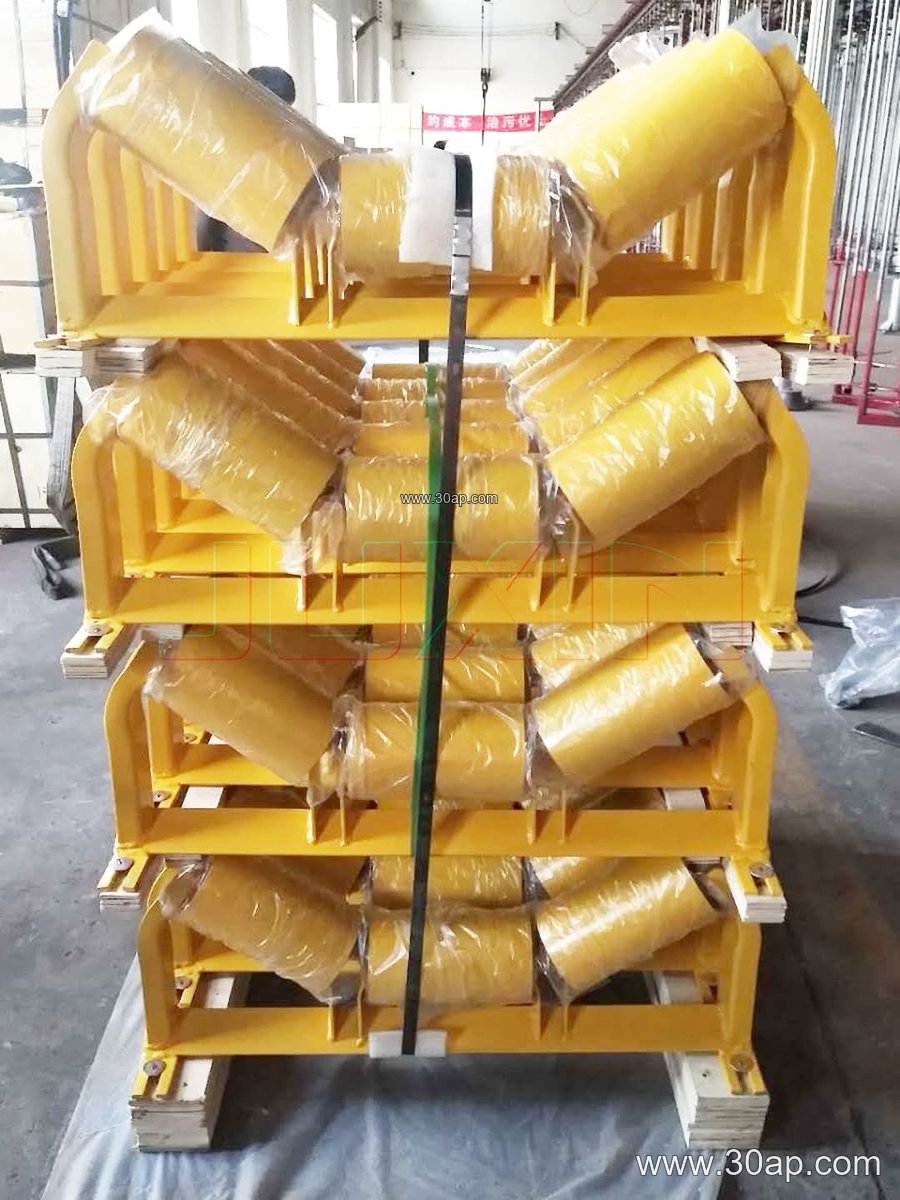
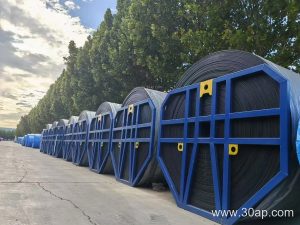
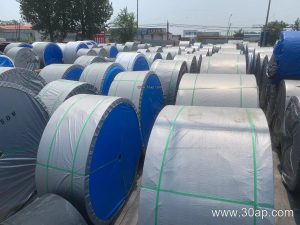
For abrasive materials such as iron ore or cement clinker, an abrasion resistant conveyor belt may be paired with heavy-duty brackets. In coal mining, flame retardant conveyor belt and anti-static conveyor belt are common, and the bracket set should be selected for the same duty level. The bracket set itself is separate from the belt specification, but it must be compatible with the idler roller and belt width.
Selection and Maintenance Tips
When choosing a trough idler bracket set, confirm the belt width, trough angle, idler diameter, and mounting dimensions. Common belt widths include B500, B650, B800, B1000, B1200, B1400, B1600, B1800, B2000, B2200. Idler diameters often range from Ø89 to Ø194. The bracket set should be ordered as a complete assembly with the correct number of idler positions. For example, a three-roll trough set is standard, while a two-roll or five-roll arrangement may be used in special designs.
Check that the bracket set matches the conveyor bracket layout and that the cross beam length fits the conveyor frame. During maintenance, inspect for bent frames, worn mounting holes, and loose bolts. Replace damaged brackets promptly to avoid belt misalignment and idler damage. Keep the bracket set clean and free of material buildup, especially in coal and cement service. A well-matched trough idler bracket set helps extend the life of the conveyor belt and idler roller, and it supports reliable operation alongside the conveyor pulley and other conveyor components.