What a Ceramic Lagged Drive Pulley Does
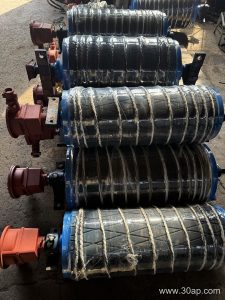
A ceramic lagged drive pulley is the head pulley that transmits motor torque to the conveyor belt in a bulk handling conveyor. Its ceramic lagging is a wear-resistant surface made of small ceramic tiles bonded to a rubber backing, and the tile pattern raises friction between drum and belt so the drive can pull a loaded belt without slipping. In quarry conveying, cement plant clinker lines, coal handling, and power plant fuel systems, this pulley is often the single component that decides whether a conveyor starts smoothly under load or slips and stalls.
It is a drive pulley, not a tail or bend pulley. The tail pulley turns the belt at the return end, and a bend pulley only changes belt direction; neither carries drive torque. Comparing them helps explain the point: the tail pulley may use plain rubber lagging, while the drive pulley needs the highest grip available, especially on wet or dusty belts.
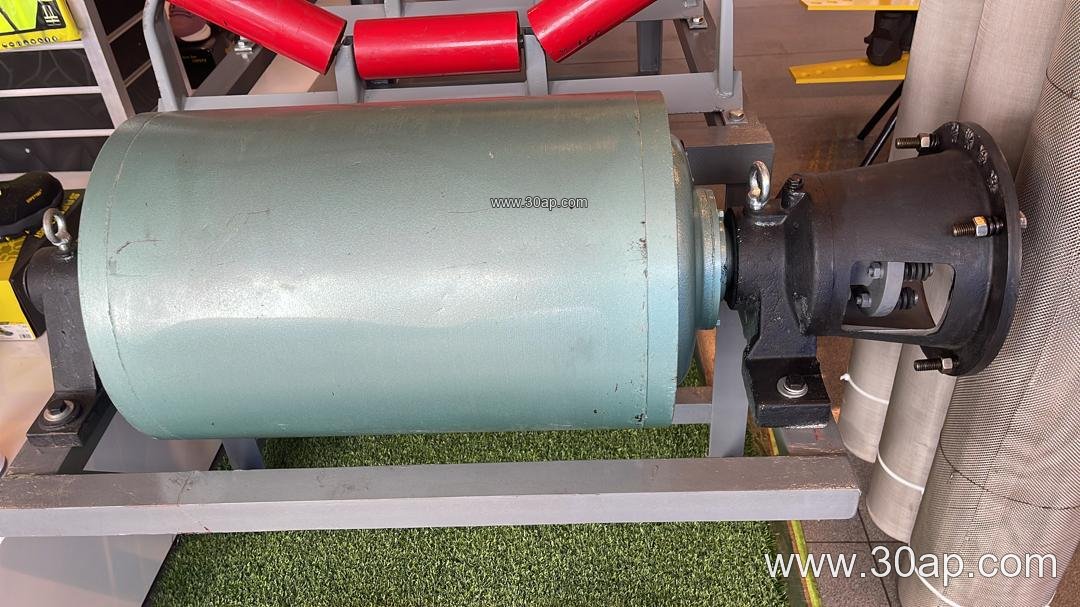
How the Ceramic Surface Is Built
The shell is usually a welded steel drum machined true on the outside, with the shaft fitted through the hub or end discs. Lagging is applied in one of two ways. In the hot-vulcanized method, a rubber sheet with pre-set ceramic tiles is pressed and cured onto the shell so the bond becomes part of the pulley. In the cold-bonded method, tiles or tile strips are glued with a high-strength adhesive and the edges are sealed.
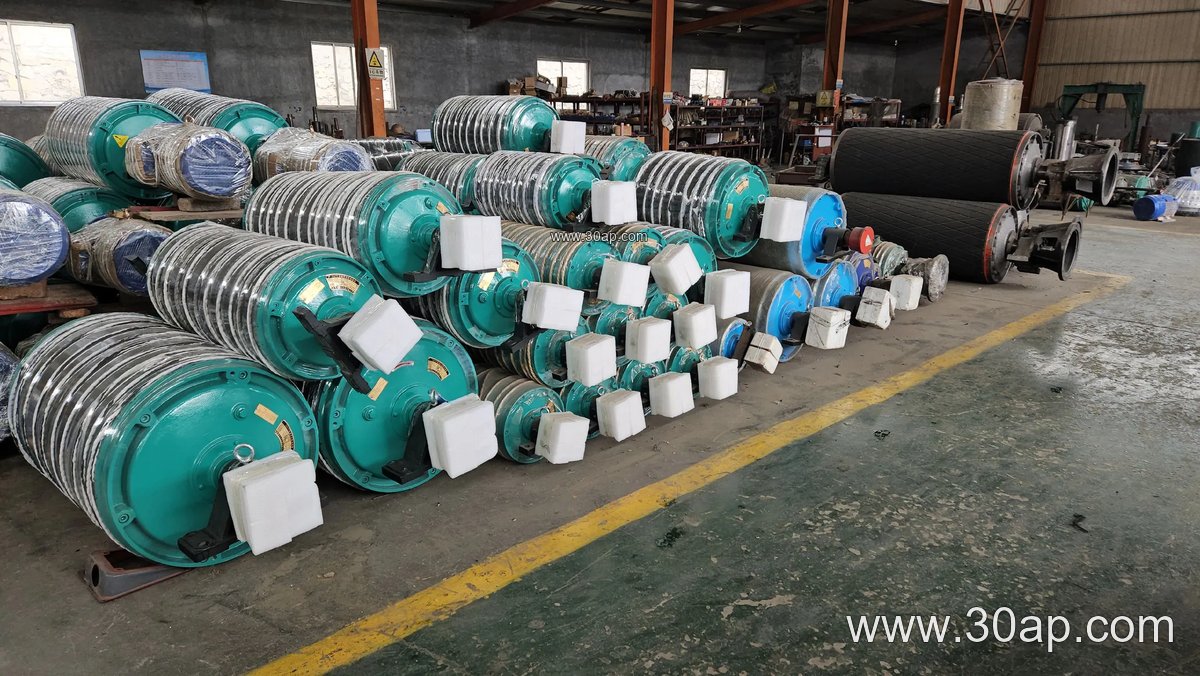
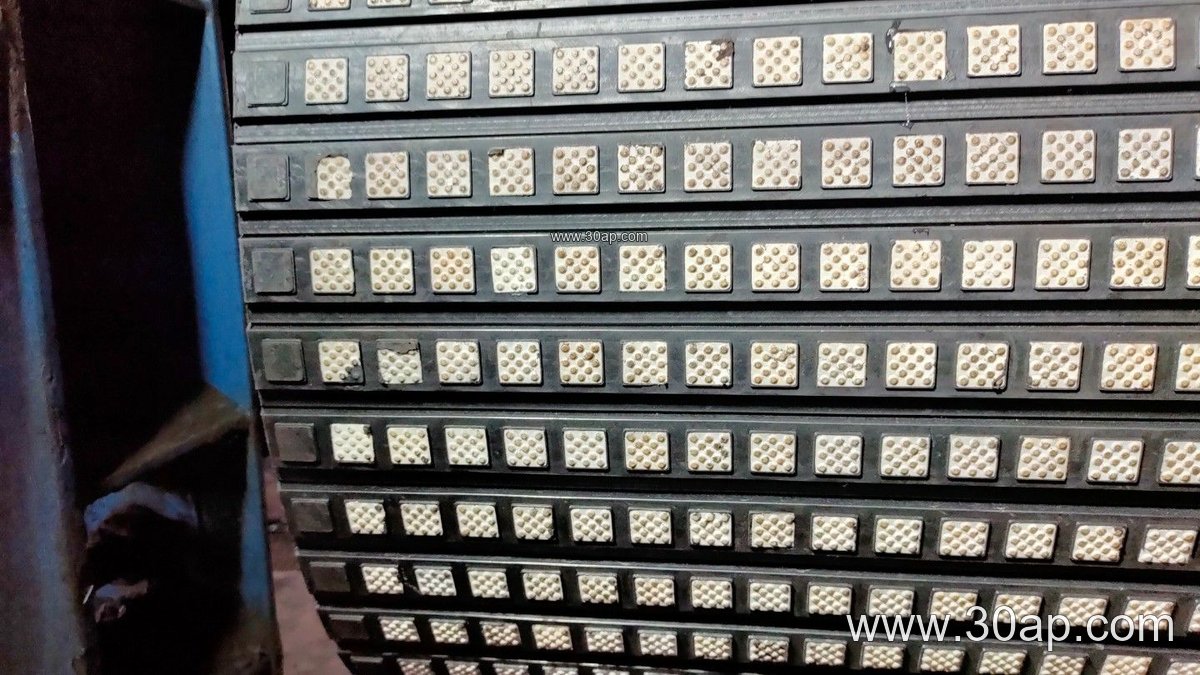
Ceramic tiles are typically 10 to 20 mm thick including the rubber base, and the tile pattern often leaves small gaps or grooves that let water and fines escape. That drainage is why ceramic lagging keeps grip on wet coal or slurry-contaminated belts where plain rubber would polish and slip. Bonding quality matters more than tile hardness: a poorly bonded tile can pop off and damage the belt cover.
Where It Fits in the Conveyor
The ceramic lagged drive pulley sits at the discharge end of a conveyor, driven through a gearbox, fluid coupling, or directly by a shaft-mounted motor. It is common in primary crushing circuits at a limestone or iron ore mine, in aggregate plants feeding screens, in tunnel spoil removal, and in port bulk terminals. On long overland conveyors it may be one of several drive pulleys, and the lagging must suit the belt type running over it.
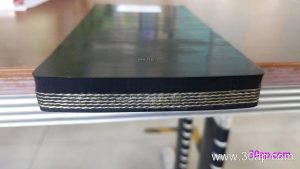
Belt selection and pulley lagging work together. A heavy-duty mining conveyor belt with a thick abrasion resistant cover tolerates ceramic contact well, while a thin-cover EP conveyor belt needs a smooth tile edge profile to avoid cover gouging. For steep inclines, a chevron conveyor belt or corrugated sidewall belt may run on the same drive pulley, but the belt’s own profile limits how much contact the drum can achieve.
Common Sizes and Surface Options
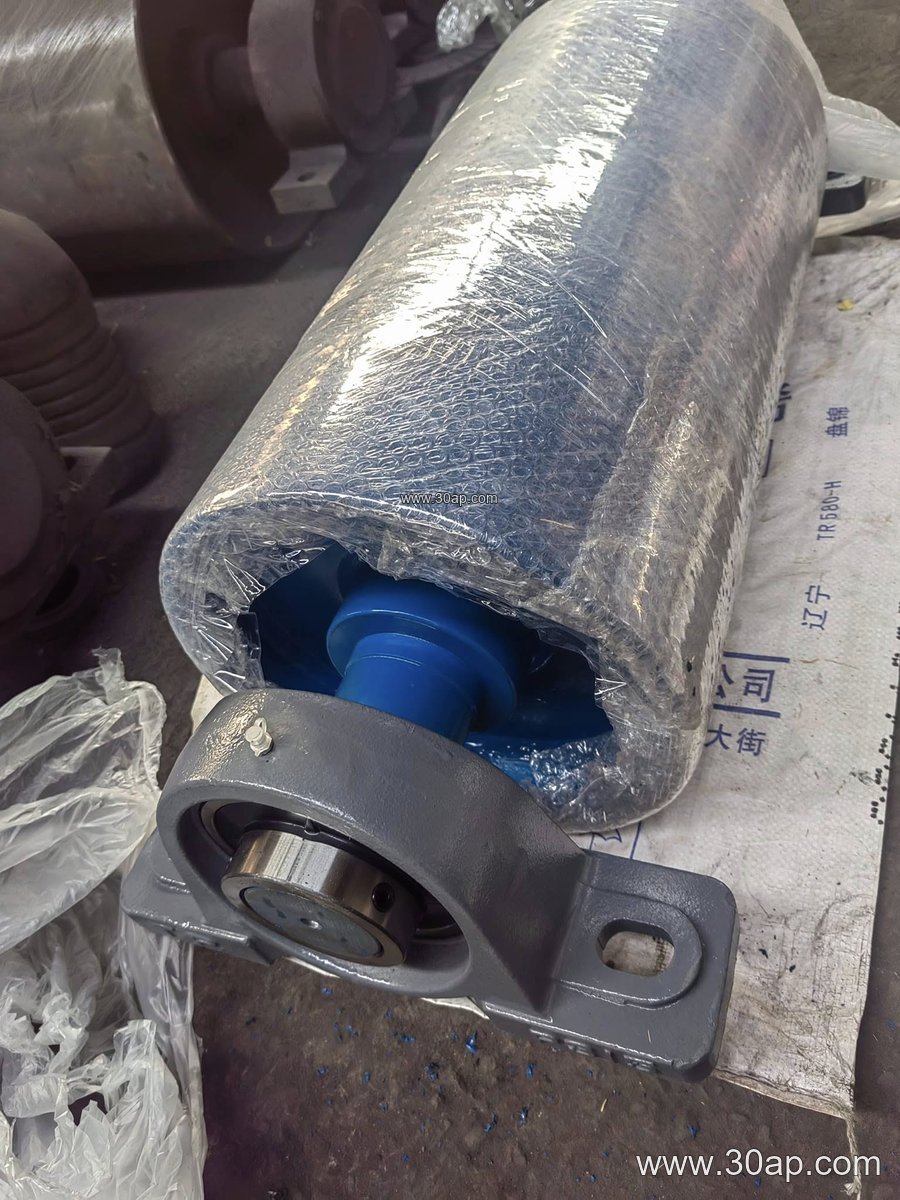
Dimensions follow the conveyor design. Belt width, required torque, and belt tension determine pulley diameter and face width; shaft diameter follows torque and bearing load, not belt width alone. The figures below are typical reference values, not fixed pairings.
| Parameter | Common reference values |
|---|---|
| Belt width B | B400, B500, B650, B800, B1000, B1200, B1400, B1600, B1800, B2000 |
| Pulley diameter | Ø200, Ø250, Ø315, Ø400, Ø500, Ø630, Ø800, Ø1000, Ø1250, Ø1400 |
| Face width | Usually wider than the belt, e.g. B800 about 950 mm, B1200 about 1400 mm, B1600 about 1800 mm |
| Lagging thickness | 8, 10, 12, 15, 20 mm |
| Shaft diameter | Ø50 to Ø200, sized by torque and load |
Example combinations seen in design work include B800 × Ø500, B1200 × Ø1000, and B1400 × Ø800, but the same belt width can run on different diameters depending on tension and wrap angle. Surface choices include plain, hot-vulcanized rubber, cold-bonded rubber, diamond grooved, herringbone, and ceramic lagging.
Buyer Checklist
- Match lagging to duty: wet, oily, or dusty service favors ceramic; clean dry service may not need it.
- Check the belt cover: a steel cord conveyor belt or high abrasion resistant conveyor belt handles ceramic contact better than a thin cover.
- Confirm bonding method: hot-vulcanized ceramic lagging generally lasts longer under high torque than cold-glued tiles.
- Verify dimensions together: diameter, face width, shaft size, keyway, and bearing centers must agree with the conveyor bracket and bearing housing.
- Inspect tile edges and grooves: sharp edges can cut the belt; proper grooves improve water shedding.
- Plan maintenance: worn or missing tiles reduce traction quickly, so keep spare tiles and check lagging at each shutdown.
A ceramic lagged drive pulley is a wear part and a traction part at once. Choosing it by application rather than by size alone keeps the belt, the conveyor pulley, and the idler roller set working as one system.