What an Industrial Conveyor Pulley Does on the Line
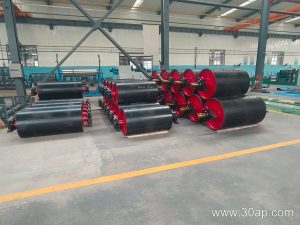
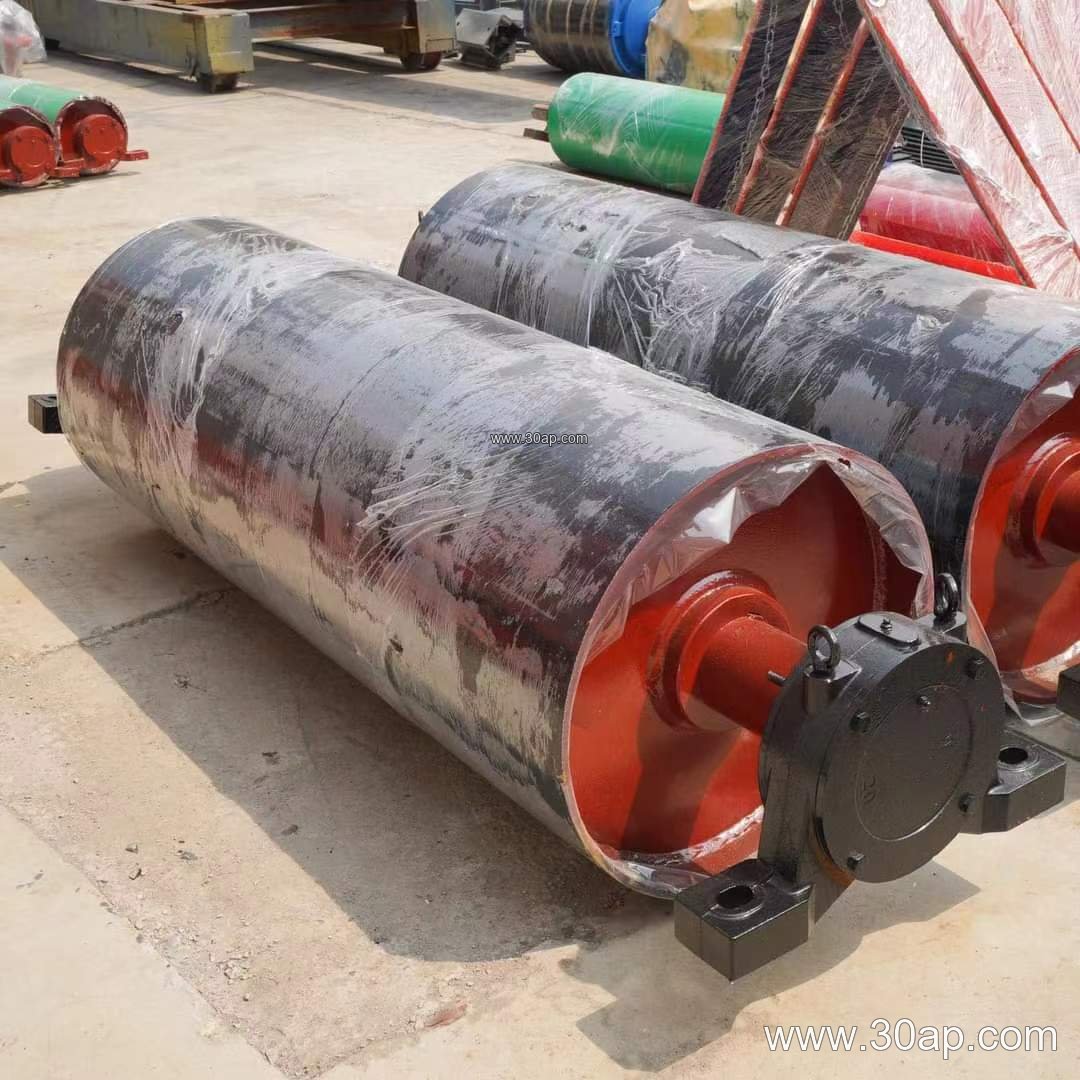
An industrial conveyor pulley is the cylindrical drum that turns a conveyor belt, transfers drive torque, and sets the belt path at the head, tail, and bend points of a conveyor. In a quarry or a cement plant, the same drum family covers several jobs, and each position puts different demands on the shell, the shaft, and the lagging. A drive pulley pulls the belt; a tail pulley returns it; a bend pulley changes direction without driving. These are separate roles, and they are not swapped for one another in a working design.
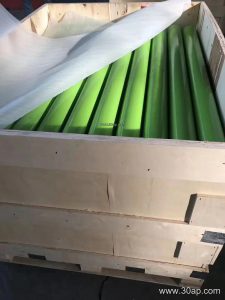
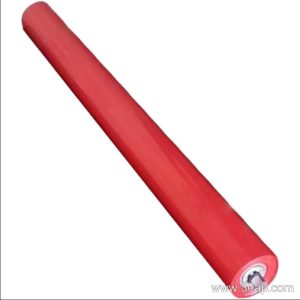
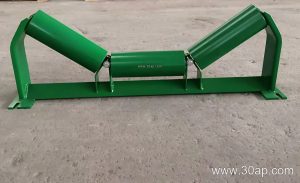
The drum works together with the conveyor belt, the idler roller sets along the carrying and return runs, and the conveyor bracket that fixes each unit to the frame. When the belt is a heavy-duty mining conveyor belt or a steel cord conveyor belt, the pulley has to match that belt’s tension and stiffness, not the other way round.
How the Drum Is Built
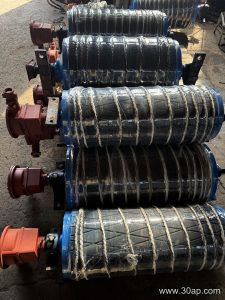
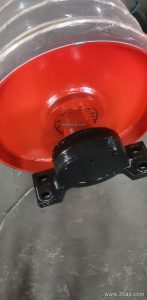
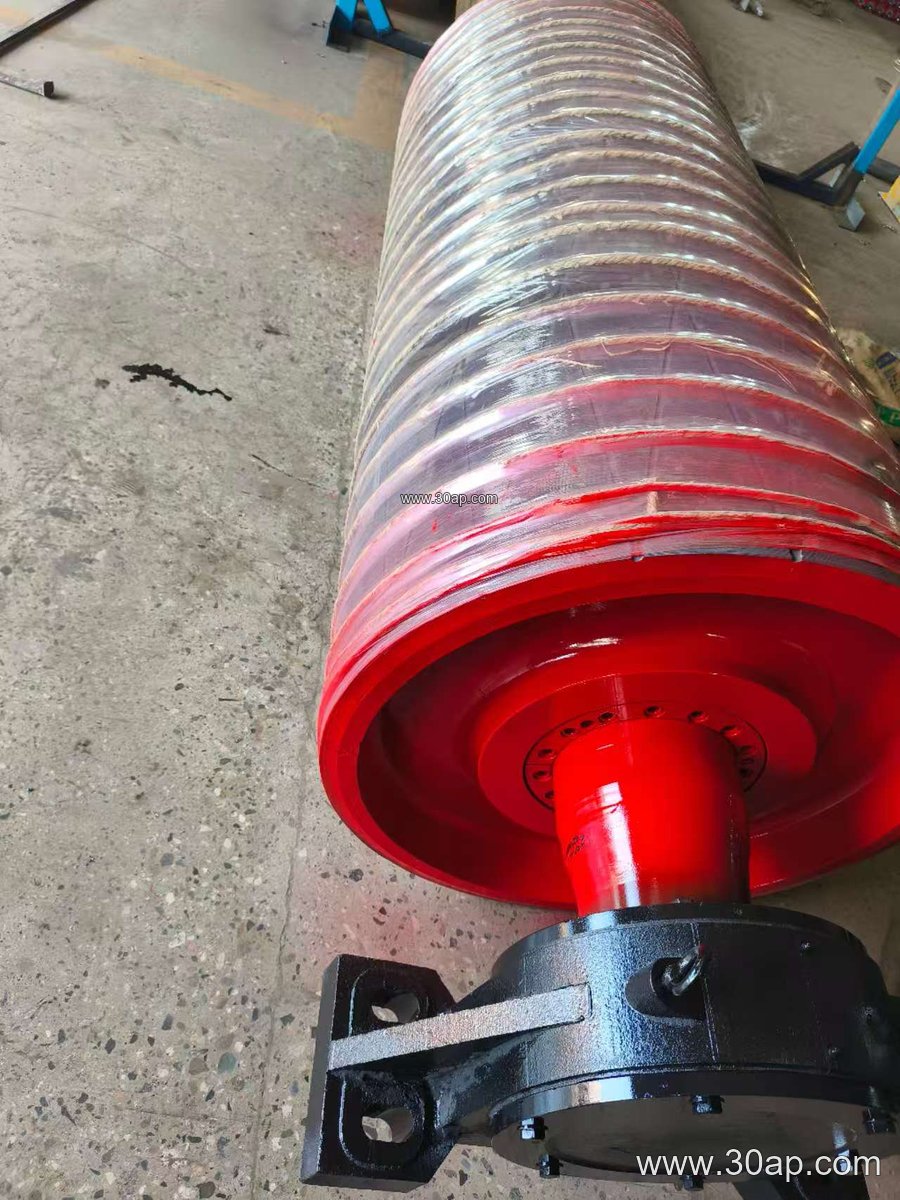
Most units use a welded steel shell on a through shaft, with end discs and a hub connection. The shell can be plain, or it can carry lagging to raise friction. Common surface forms include plain finish, hot-vulcanized rubber, cold-bonded rubber, diamond grooving, herringbone grooving, and ceramic lagging. Lagging thickness is often 8, 10, 12, 15, or 20 mm, chosen for grip and wear rather than for appearance.
Bearings sit in housings at each end, and the assembly is fixed to the conveyor bracket. On long overland lines, the shaft diameter is set by torque and bending load, so a given belt width does not dictate one shaft size. Shafts are commonly Ø50 to Ø200 mm, but the final value comes from the drive calculation.
Where It Fits in Bulk Handling
In a limestone quarry, the head drum at the crusher discharge runs in dust and sharp rock, so abrasion-resistant lagging helps. In a cement plant, clinker lines combine heat and grit, and a heat resistant conveyor belt may run alongside a drum that needs a checked lagging bond. Coal handling at a power plant adds flame retardant conveyor belt requirements, and the pulley surfaces should be specified for the same environment.
Other typical positions include the take-up pulley that maintains belt tension, the snub pulley that increases wrap angle on the drive, and the wing pulley used where sticky material would pack a plain shell. The electric pulley, with the motor inside the shell, suits compact transfer points where a separate drive station will not fit.
Matching Drum Size to Belt Width
Shell width is normally a little wider than the belt so the belt is supported across its full width. Reference combinations are common, not mandatory. A B800 belt often pairs with a shell around 950 mm, and B1200 with roughly 1400 mm, but diameter is a separate decision driven by belt tension, wrap angle, and belt stiffness.
| Belt width (B) | Typical shell width | Example diameter range |
|---|---|---|
| B500 | about 600 mm | Ø250 to Ø400 |
| B650 | about 750 mm | Ø315 to Ø500 |
| B800 | about 950 mm | Ø400 to Ø630 |
| B1000 | about 1150 mm | Ø500 to Ø800 |
| B1200 | about 1400 mm | Ø630 to Ø1000 |
| B1400 | about 1600 mm | Ø800 to Ø1250 |
| B1600 | about 1800 mm | Ø1000 to Ø1400 |
Written as a compact reference, a B1200 x Ø1000 drive drum or a B800 x Ø500 tail drum is a plausible pairing, yet neither is a rule. Larger diameters reduce belt bending stress and help with high-tension steel cord belts, while smaller drums save space at transfer points.
What Buyers Should Confirm Before Ordering
- Position and duty: drive, tail, bend, take-up, or snub, with the calculated belt tension.
- Belt data: width, type, and tension rating, including whether an EP conveyor belt or a steel cord belt is used.
- Lagging: plain, rubber, diamond, herringbone, or ceramic, with thickness in the 8 to 20 mm range.
- Shaft and bearing: diameter from the torque calculation, plus bearing type and housing fit.
- Environment: dust, heat, oil, or flame risk, which may call for a heat resistant conveyor belt or an oil resistant conveyor belt elsewhere on the same line.
For aggregate and sand making plant conveyor belt systems, a spare drum with matched lagging shortens downtime. Buyers should ask for a dimensional drawing, the lagging specification, and the balancing grade rather than relying on a catalog number alone.
Installation and Care
Alignment matters more than most wear items. A drum set square to the belt centerline keeps the belt from tracking to one side, and the conveyor bracket should be checked for square and shimmed before the belt is tensioned. Lagging wear, loose end discs, and bearing temperature are the usual inspection points. A worn herringbone or diamond pattern loses grip gradually, so scheduling relagging before slip appears is cheaper than replacing a belt that has been polished by a spinning drum.
Whether the line moves ore, clinker, or coal, the drum and the belt are a pair. Specify both together, and the conveyor pulley will do its job without becoming the weak point in the system.