What the Trough Idler Bracket Does
The trough idler bracket is the structural component that holds the carrying-side idler rollers in a troughed profile beneath the conveyor belt. It sets the trough angle, fixes the spacing between rollers, and transfers the load of the belt and material into the conveyor frame. In a quarry, a coal preparation plant, or a cement kiln feed line, this bracket is one of the most heavily loaded parts of the idler station, yet it is often treated as an afterthought during procurement.
A well-matched troughing idler bracket keeps the belt centered, supports the material load evenly, and allows rollers to rotate freely. A poorly chosen one leads to belt edge wear, material spillage, and premature roller failure. For operators running heavy-duty mining conveyor belts or long overland lines, the bracket is a wear item that deserves the same attention as the belt itself.
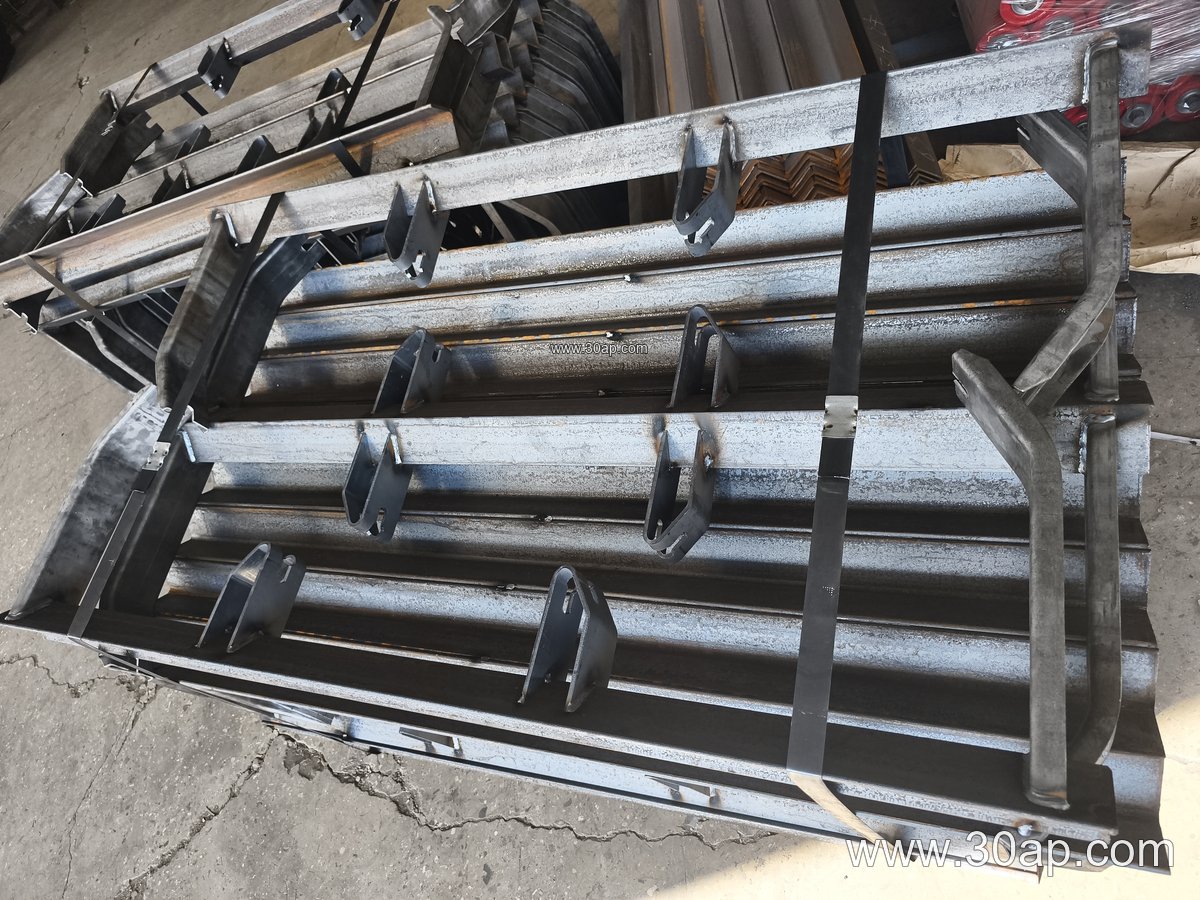
Construction and Materials
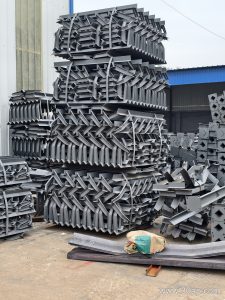
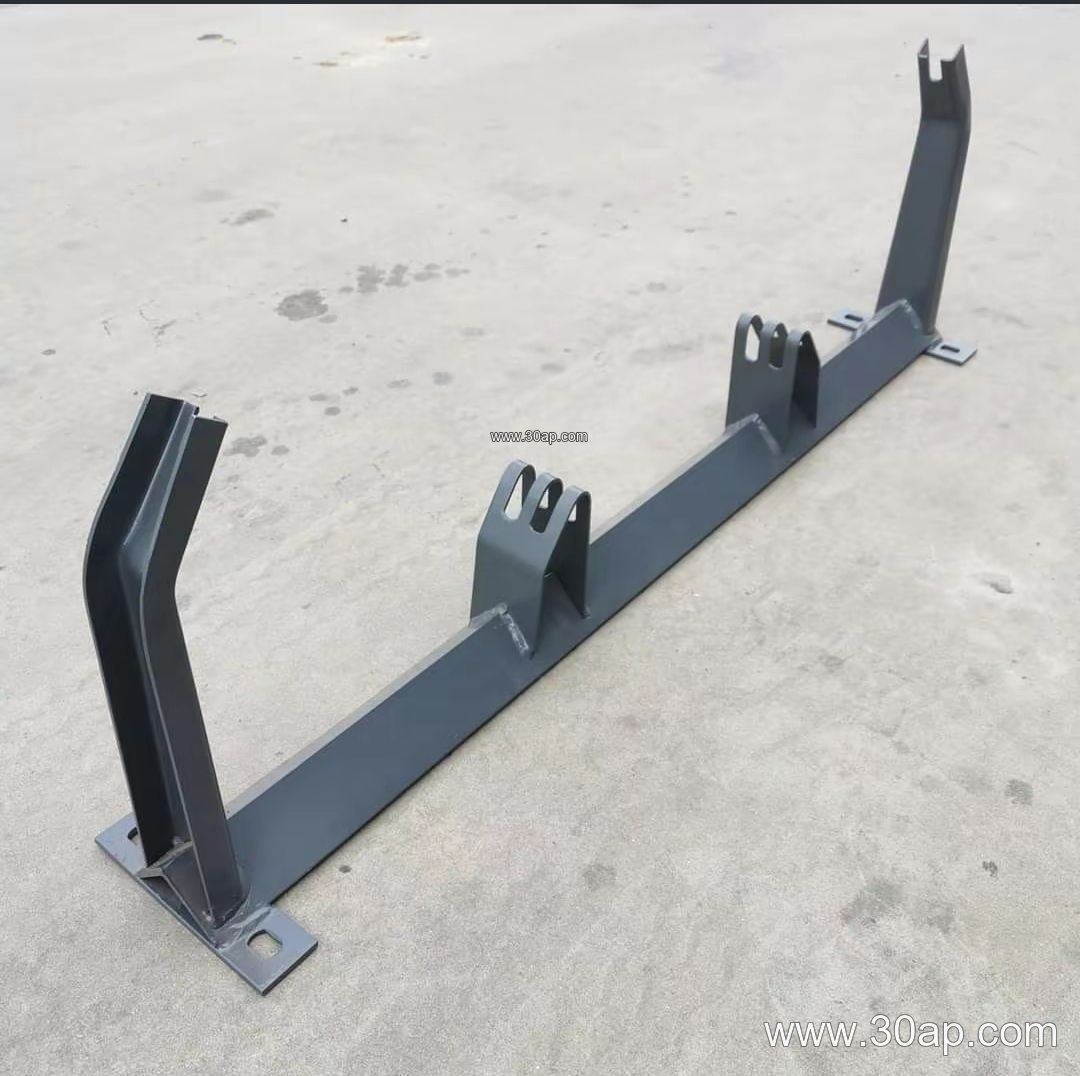
Most trough idler brackets are fabricated from angle steel, channel steel, or bent steel plate. The frame is welded or bolted into a rigid assembly with mounting slots for the idler shafts. The two wing brackets are angled to create the trough, while the center section supports the middle roller. Surface treatment usually includes painting or galvanizing to resist corrosion in wet or dusty environments.
Key construction details a buyer should check include weld quality, hole alignment, and the rigidity of the wing joints. A bracket that flexes under load will change the trough angle and cause the belt to ride unevenly. For high-abrasion duties such as iron ore or aggregate handling, thicker section steel and reinforced gussets are common choices.
Common Types and Where They Fit
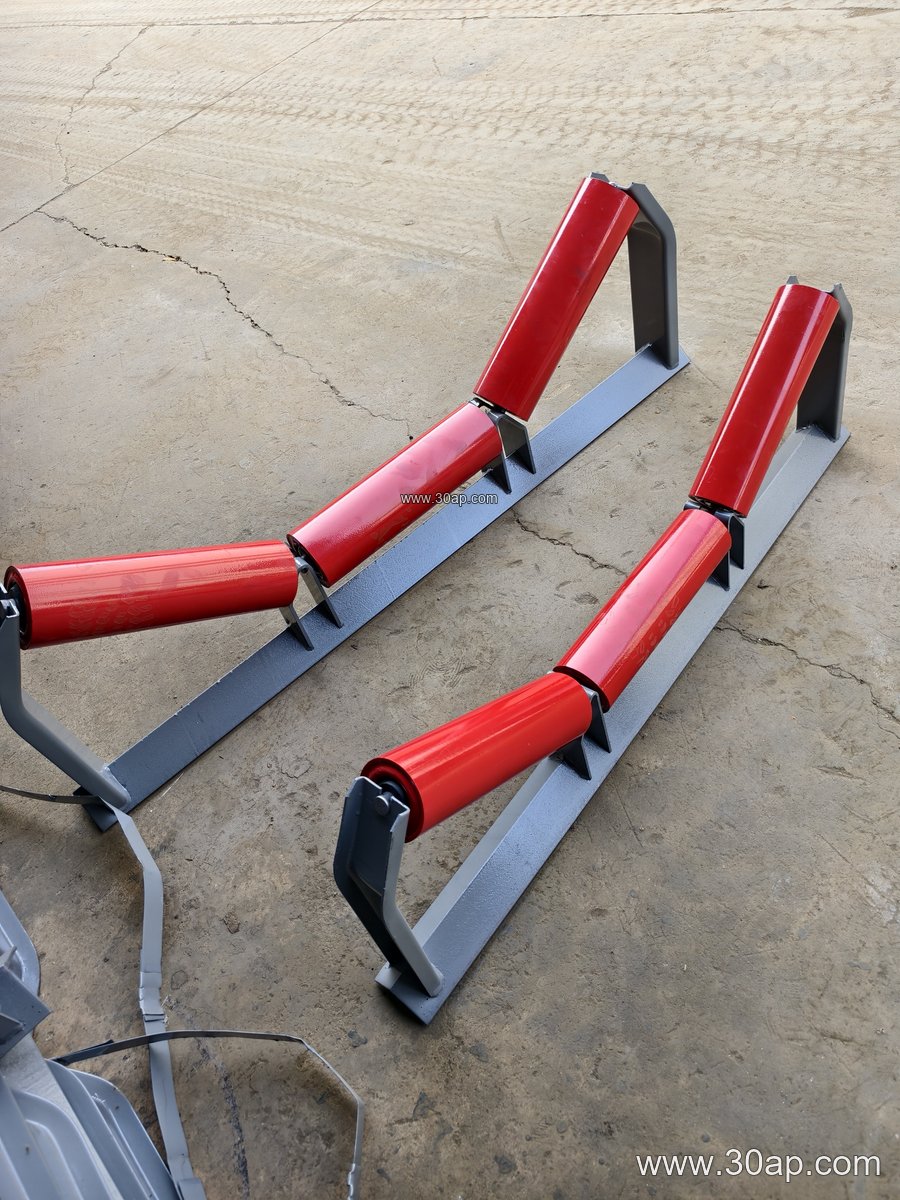
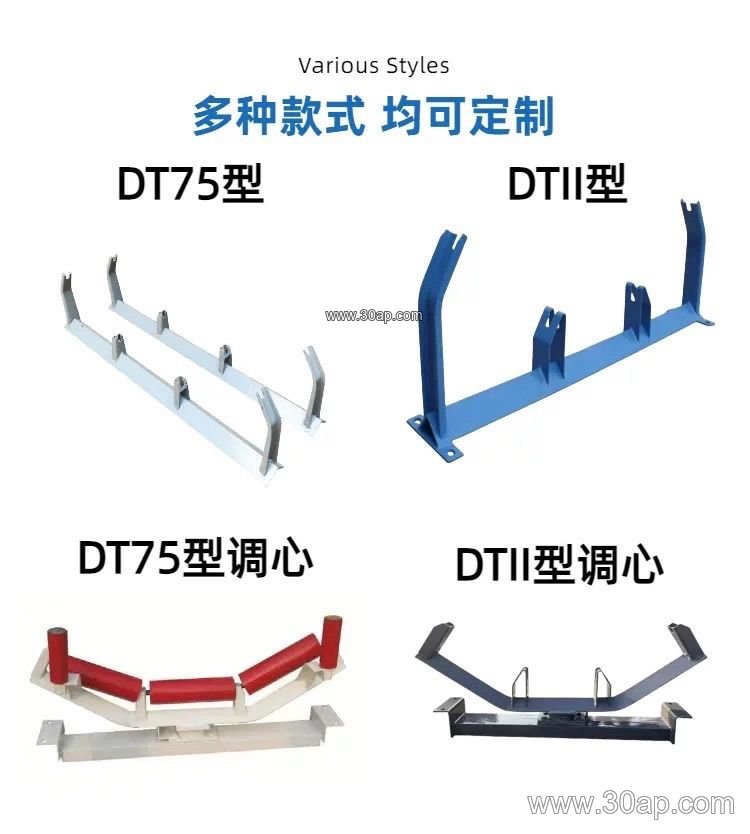
The trough idler bracket family includes several variants, each suited to a different position on the conveyor:
- Standard troughing bracket – the everyday carrying-side support, usually set at 20, 30, 35, or 45 degrees.
- Transition bracket – used near the tail pulley where the belt changes from flat to troughed, reducing edge stress.
- Impact bracket – reinforced to carry impact rollers under crusher discharge or transfer points.
- Self-aligning bracket – allows the idler set to pivot slightly and correct belt tracking.
- Forward-tilted bracket – commonly around 1.5 to 2 degrees of tilt to assist centering.
- Adjustable bracket – permits the trough angle to be changed on site within a designed range.
Return-side brackets, such as flat or V-return types, serve a different function and are not interchangeable with carrying-side trough brackets. Likewise, a bend pulley or drive pulley plays no role in supporting the trough profile, so bracket selection should never be confused with pulley specification.
Matching Belt Width, Trough Angle, and Roller Diameter
Bracket dimensions follow the belt width and the chosen trough angle. Common belt widths include B500, B650, B800, B1000, B1200, B1400, B1600, B1800, B2000, B2200, and wider. Roller diameters typically range from Ø89 to Ø194. The table below shows representative combinations; actual mounting hole spacing and beam length are determined by design, not by a fixed rule.
| Belt Width | Typical Trough Angle | Common Roller Diameter | Typical Duty |
|---|---|---|---|
| B650 | 30 degrees | Ø89 | Light to medium, sand and gravel |
| B800 | 35 degrees | Ø108 | General bulk material, cement plant |
| B1000 | 35 degrees | Ø108 / Ø133 | Coal handling, power plant |
| B1200 | 45 degrees | Ø133 | Heavy-duty ore and quarry |
| B1400 | 35 to 45 degrees | Ø159 | High capacity, iron ore |
| B1800 | 35 to 45 degrees | Ø159 / Ø194 | Large tonnage, port and mine |
No single belt width is locked to one trough angle or one roller diameter. The correct match depends on belt tension, material density, lump size, and the load the idler set must carry. A wider belt may use a steeper trough angle to increase capacity, but the bracket must be designed for that angle.
Installation and Maintenance Notes
Alignment is critical. Brackets should be set square to the conveyor centerline and at a consistent height along the stringer. Uneven bracket height causes the belt to run to one side and accelerates edge wear. On adjustable brackets, lock the setting after commissioning so vibration does not change the trough angle.
Inspect brackets during routine idler checks. Look for bent wings, elongated holes, loose bolts, and corrosion at the welds. Replacing a deformed bracket early protects the conveyor belt and the idler roller set from further damage. In dusty operations such as a lime kiln or crushing circuit, keep the mounting surfaces clean so brackets seat properly.
Buyer Checklist
- Confirm belt width and required trough angle before ordering.
- Specify roller diameter and shaft end type so the bracket holes match.
- State the material and duty, for example abrasion-resistant or impact service.
- Ask whether the bracket is fixed or adjustable.
- Check surface treatment for the site environment.
- Verify hole spacing and beam length against the existing conveyor frame.
Whether the line carries a fabric core conveyor belt in a recycling plant or a steel cord conveyor belt in a copper mine, the trough idler bracket remains a small but decisive part of reliable belt support. Getting the bracket right is one of the cheapest ways to protect the belt, the rollers, and the production schedule.