What a Single Drive Pulley Is
A single drive pulley is the one pulley in a conveyor that receives torque from the gearbox or motor and turns it into belt motion. In many conveyor layouts, one head pulley does all the driving while the rest of the pulleys only support, guide, or tension the belt. That makes the single drive pulley the component that sets the pace for the whole line, whether it runs in a quarry, a cement plant, a power station coal yard, or a sand and aggregate operation.
People often call this part a head pulley or a drive drum. Both names describe the same function, but a single drive pulley specifically means there is only one powered pulley in the system. Tail pulleys and bend pulleys are not interchangeable with it, because they do not transmit drive torque.
How the Pulley Is Built
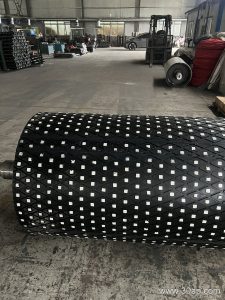
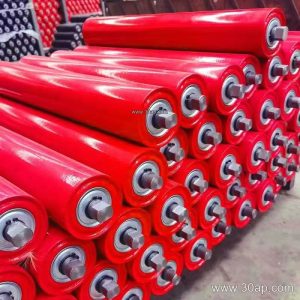
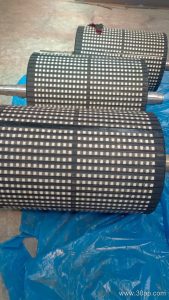
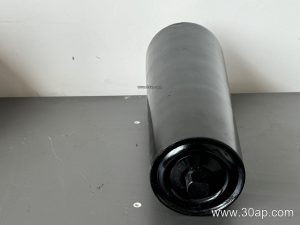
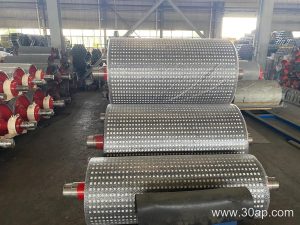
The core is usually a steel drum shell welded to end discs, with a shaft running through the centre and bearing housings on both sides. The shell surface may be plain, or it may carry lagging to improve grip. Common surface forms include plain face, hot vulcanised rubber, cold bonded rubber, diamond lagging, chevron lagging, and ceramic lagging. Lagging thickness commonly ranges from 8 mm to 20 mm, depending on the duty.
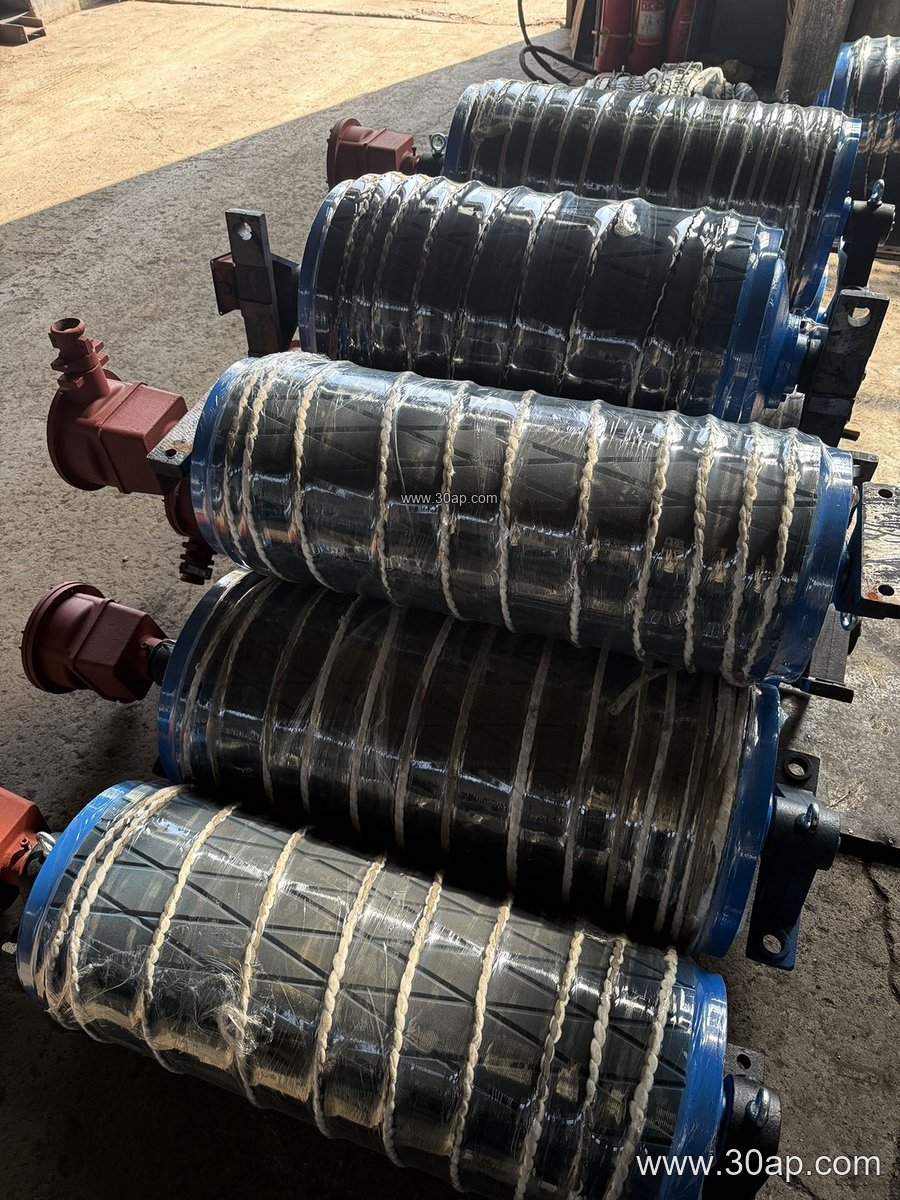
The shaft diameter is not chosen from belt width alone. It is determined by the torque and the load the pulley must carry, so a B800 conveyor and a B1200 conveyor may use very different shaft sizes even when both look similar. Typical shaft diameters fall between Ø50 and Ø200, but the final value belongs to the design calculation.
| Item | Common Reference Range |
|---|---|
| Belt width | B400 to B2400 |
| Pulley diameter | Ø200 to Ø1800 |
| Face width | Usually wider than the belt, e.g. B800 about 950 mm, B1200 about 1400 mm |
| Shaft diameter | Ø50 to Ø200, set by torque and load |
| Lagging thickness | 8, 10, 12, 15, 20 mm |
Where It Fits on the Conveyor
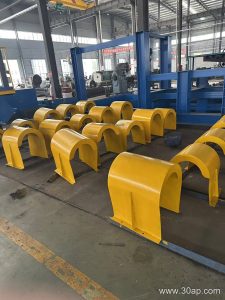
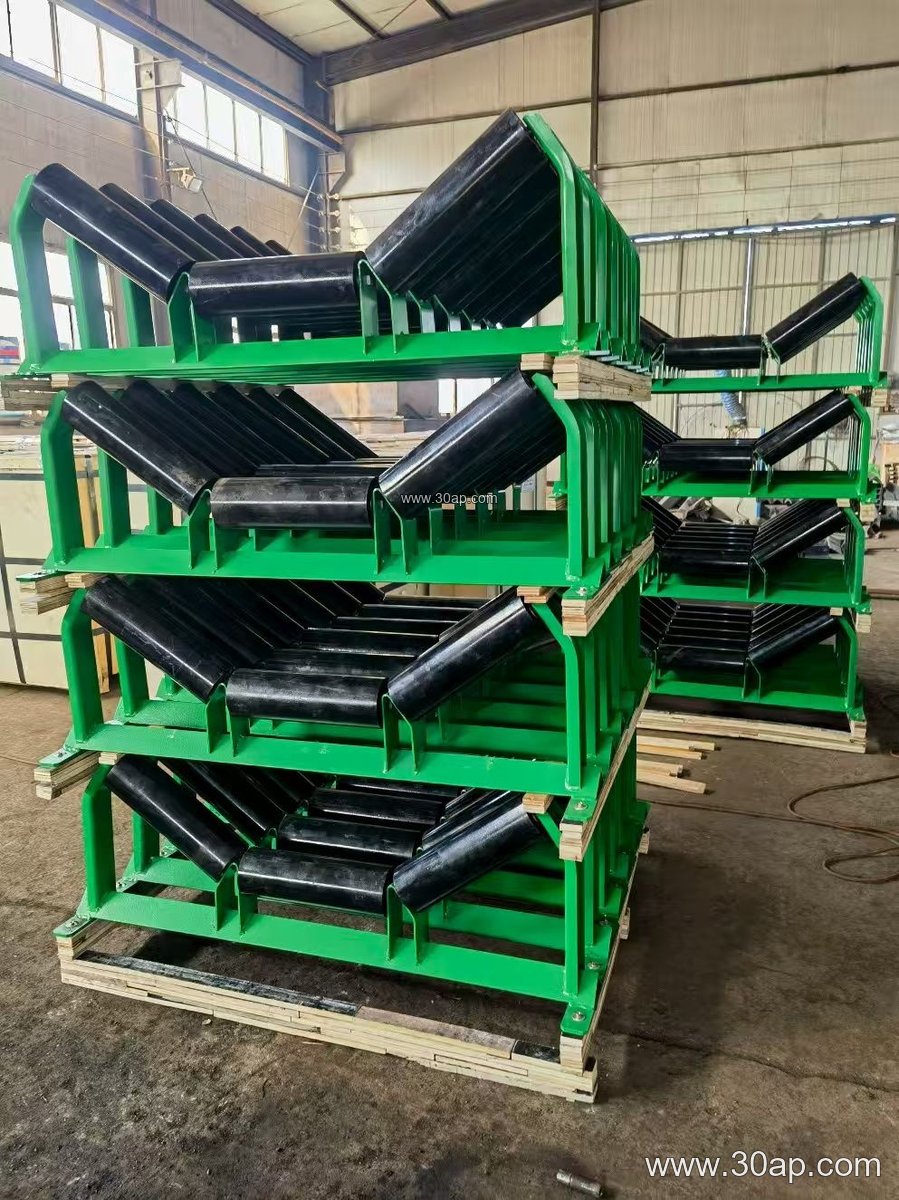
The single drive pulley is normally installed at the head of the conveyor, where the belt unloads. In some layouts it sits at an intermediate point, and a separate bend pulley or snub pulley helps increase the wrap angle around the drive drum. A conveyor bracket holds the bearing housings in place, and the whole assembly must align with the idler roller frames so the belt runs true.
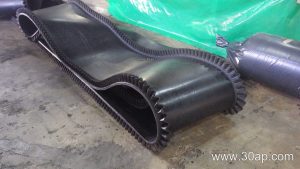
The belt itself matters as much as the pulley. A heavy-duty mining conveyor belt or a high abrasion resistant conveyor belt may need more traction than a smooth, lightly loaded belt. In coal mining, a flame retardant conveyor belt or fire resistant conveyor belt is often paired with a lagged drive pulley to keep slip low without compromising safety requirements. In a cement plant or a power plant handling clinker or coal, an EP conveyor belt or a steel cord conveyor belt may run over the same pulley day after day, so the lagging choice should match the material and the environment.
Matching the Pulley to the Belt and the Job
A common mistake is to size the drive pulley only by belt width. Belt width tells you the face width, not the diameter or the shaft. A B650 conveyor with a short centre distance may work well with a Ø500 drum, while a long overland line with a B1400 belt may need a Ø800 or larger pulley to keep belt stress and slip under control. Combinations such as B800 × Ø500, B1200 × Ø1000, or B1400 × Ø800 appear in real projects, but they are examples, not rules.
The surface form should follow the application. Diamond lagging is widely used for general bulk material conveyor belts because it sheds water and fines. Ceramic lagging suits high-torque drives where slip must be minimised. Plain face pulleys are common where the belt has its own grip pattern or where cleanliness matters, such as a food grade conveyor belt line.
Buyer Checklist
- Confirm the actual belt width and the required face width, not just the nominal figure.
- Provide the drive torque and belt tension so the shaft and bearing size can be calculated.
- State the environment: coal dust, cement powder, salt air, or washdown all affect lagging choice.
- Specify the lagging type and thickness, for example 10 mm diamond rubber or 15 mm ceramic.
- Check that the conveyor bracket and bearing housings match the mounting space on site.
For more pulley and belt guidance, see conveyor pulley and rubber conveyor belt references. A well chosen single drive pulley keeps the belt tracking straight and the whole line running at its design capacity.