What a Corrosion-Resistant Idler Is
A corrosion-resistant idler is a conveyor idler roller built to withstand moisture, salt, chemicals, and other corrosive agents that attack standard steel rollers. In many bulk handling operations, the idler roller is the most numerous component on the conveyor, and premature corrosion leads to seized bearings, belt damage, and unplanned downtime. This idler is designed for those wet, humid, or chemically exposed sections where ordinary painted rollers fail quickly. The term covers several subtypes, including troughing, return, impact, and training idlers, each available with corrosion-resistant features.
Construction and Materials
The corrosion resistance comes from a combination of materials and protective treatments. Common approaches include:
- Hot-dip galvanized steel shells and frames for general wet environments.
- Stainless steel shells, shafts, and bearing housings for chemical plants and food processing.
- Polymer or nylon rollers for light-duty and highly corrosive areas.
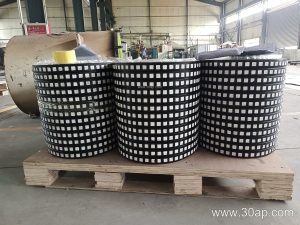
- Rubber or ceramic lagging on the roller surface to protect the shell and improve grip.
- Sealed bearings with corrosion-resistant grease and multi-labyrinth seals to keep out water and dust.
Bearings such as 6204, 6205, 6305, 6306, 6308, and 6310 are commonly used, with the final choice depending on load and speed. The seal design is often more important than the shell material, because once moisture reaches the bearing, corrosion starts from the inside.
Where It Is Used
Corrosion-resistant idlers are found in:
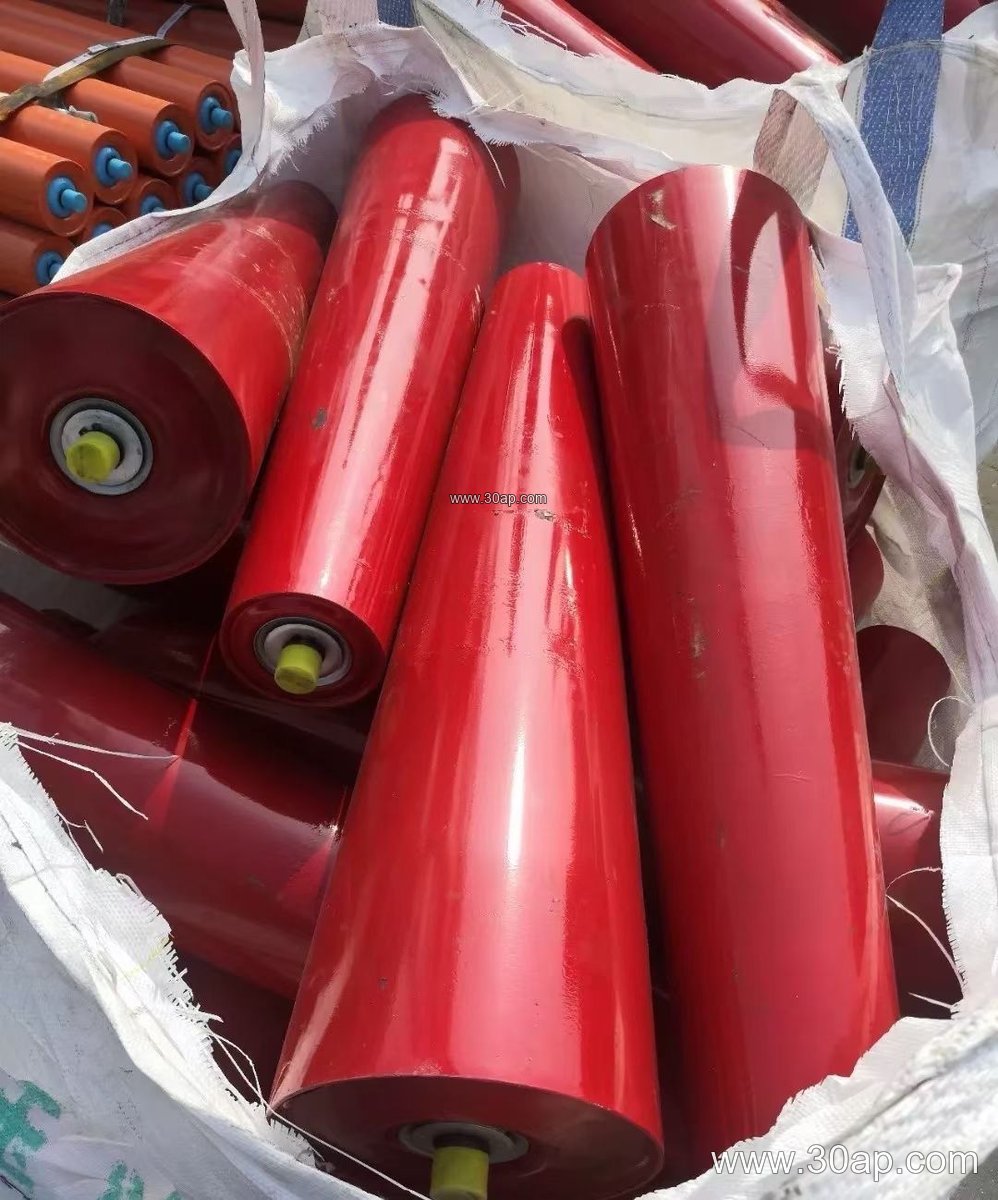
- Wash plants and aggregate processing lines where water spray is constant.
- Fertilizer and chemical handling conveyors exposed to aggressive dust and vapors.
- Port and ship loading facilities with salt-laden air.
- Food processing and grain handling where washdown is routine.
- Underground coal mining sections with high humidity and acidic water.
- Power plant coal handling and cement plant raw material conveyors in wet climates.
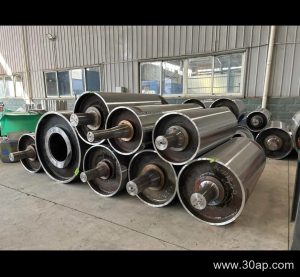
In these settings, the idler works alongside the conveyor belt, conveyor pulley, and conveyor bracket to keep the belt tracking and supported. A single corroded idler can cause belt misalignment, edge damage, and increased power draw.
Subtypes and Their Roles
Corrosion protection can be applied to several idler types, but each has a distinct function:
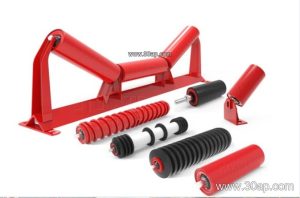
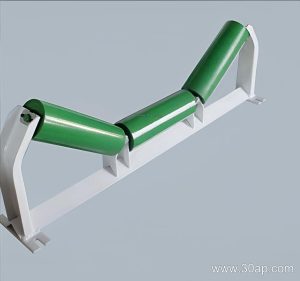
- Troughing idlers support the loaded side of the belt and form the trough shape; common roll diameters include Ø89, Ø102, Ø108, Ø127, and Ø133.
- Return idlers support the empty side; flat and V-return designs are common.
- Impact idlers with rubber rings absorb shock at transfer points.
- Training idlers correct belt misalignment and are often used in long conveyors.
Note that a troughing idler is not a replacement for a return idler, and a training idler is not a substitute for a troughing idler. Each position on the conveyor requires the correct subtype.
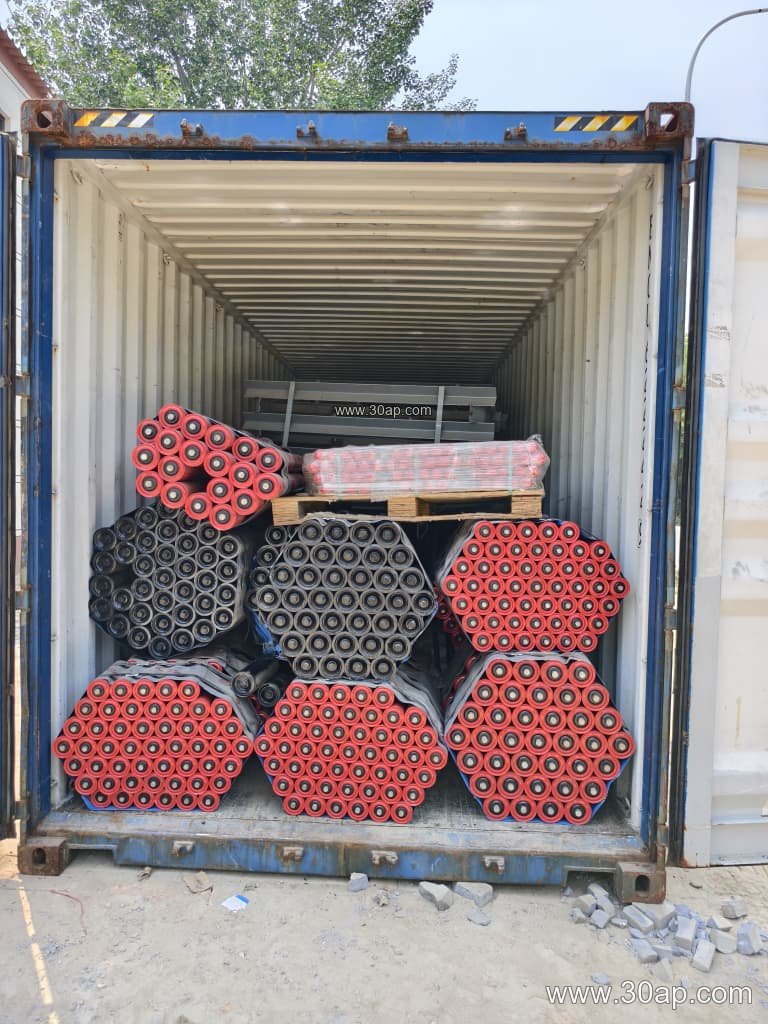
Common Sizes and Configurations
Corrosion-resistant idlers are available in roll diameters from Ø63 to Ø219 and belt widths from B400 to B2400. The table below shows typical examples; actual dimensions are determined by belt width, trough angle, and idler arrangement.
| Belt Width | Typical Roll Diameter | Typical Roll Length (three-roll troughing) | Trough Angle |
|---|---|---|---|
| B500 | Ø89–Ø102 | 200 mm | 20°–35° |
| B650 | Ø89–Ø108 | 250 mm | 20°–35° |
| B800 | Ø102–Ø127 | 315 mm | 30°–35° |
| B1000 | Ø108–Ø133 | 380 mm | 30°–45° |
| B1200 | Ø127–Ø159 | 465 mm | 30°–45° |
| B1400 | Ø133–Ø178 | 530 mm | 35°–45° |
| B1600 | Ø159–Ø194 | 600 mm | 35°–45° |
| B1800 | Ø178–Ø219 | 670 mm | 35°–45° |
These values are for reference only; side rolls and center rolls may differ, and the bearing size should be selected based on load, not on roll diameter alone.
Buyer Checklist
When specifying a corrosion-resistant idler, consider:
- Exact position on the conveyor: troughing, return, impact, or training.
- Environmental exposure: fresh water, salt water, acid, or alkaline dust.
- Belt width and trough angle to determine the correct roll length.
- Sealing method and bearing type for the expected service life.
- Roll surface material: steel, nylon, ceramic, or rubber rings.
- Compatibility with the existing conveyor bracket and pulley arrangement.
For conveyors carrying abrasive or wet material, pairing corrosion-resistant idlers with an abrasion resistant conveyor belt or a heat resistant conveyor belt can extend the whole system’s service life. In mining and quarry operations, a mining conveyor belt and heavy-duty idlers are often specified together. Remember that idlers, pulleys, and belts are separate components; a drive pulley cannot be replaced by a tail pulley or a bend pulley, and each idler subtype has its own role.