What a Guide Pulley Does on a Belt Conveyor
A guide pulley is a small-diameter roller assembly mounted where the belt needs a controlled change of direction, extra wrap, or steady support rather than the main power transmission. In many plants it is simply called a guide roller or steering pulley, and it works alongside the head and tail pulleys, the carrying and return idlers, and the frame components that hold everything in line. Its job is to keep the belt tracking cleanly, protect the belt edges, and reduce the chance of mistracking at transfer points.
Because it carries only a fraction of the full belt tension, a guide pulley is usually lighter than a drive pulley. Still, it must be built to suit the belt width, the material being carried, and the surrounding environment, whether that is a dusty quarry, a cement plant clinker line, or a coal handling system at a power station.
Construction and Surface Options
A typical guide pulley consists of a steel shell, a shaft, bearing housings, and a locking arrangement. The shell is often machined from pipe or rolled plate, then balanced so it runs smoothly at line speed. Bearings are commonly self-aligning spherical roller types in a sealed housing, which helps in wet or dusty conditions. Surface finish is chosen for grip and wear: plain steel, hot-vulcanized rubber lagging, cold-bonded rubber, diamond groove, herringbone, or ceramic lagging. Lagging thicknesses of 8, 10, 12, 15, and 20 mm are common, though the final figure is set by design.
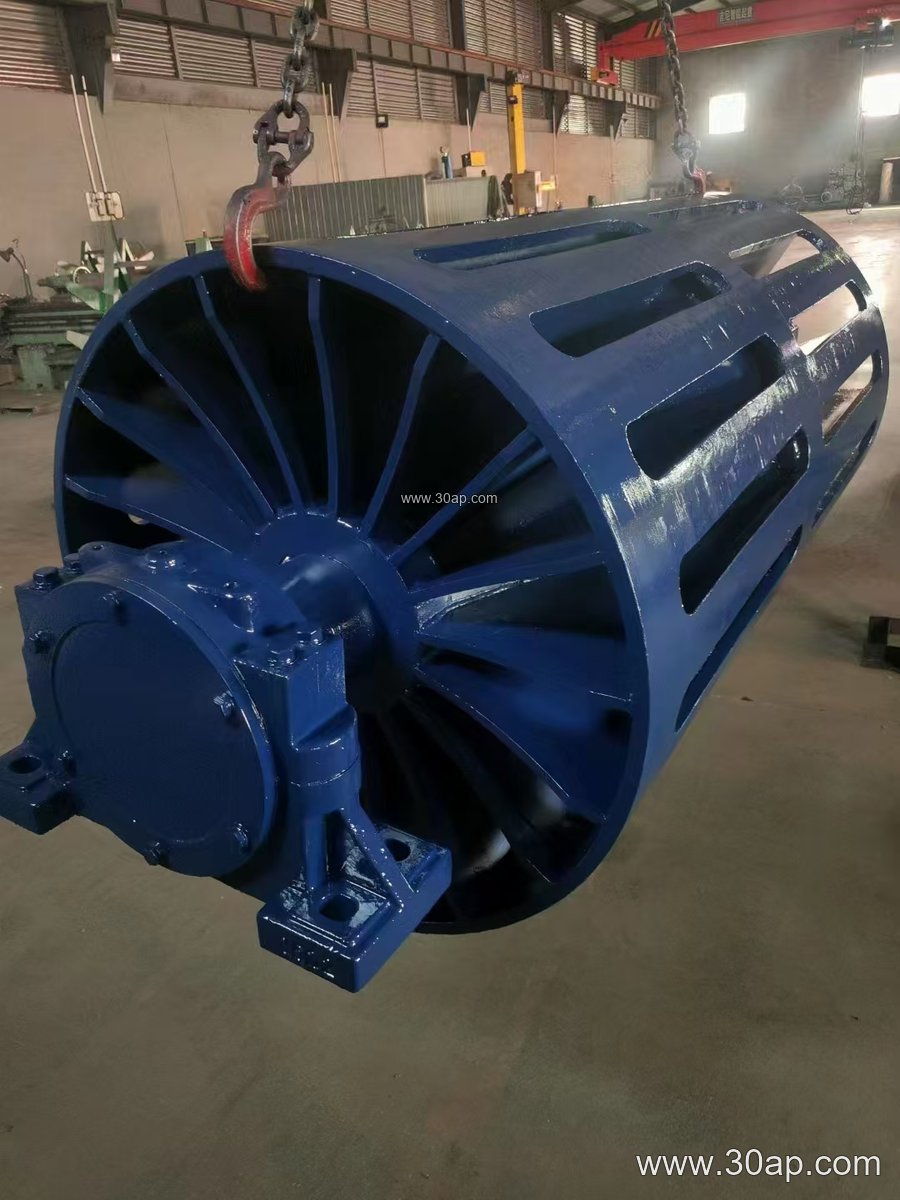
The pulley face width is normally wider than the belt to keep the belt centered. Common combinations include B800 with a face around 950 mm and B1200 with a face around 1400 mm. Diameters vary widely, for example Ø320, Ø400, Ø500, Ø630, or Ø800, and the shaft diameter is determined by torque and load rather than by belt width alone.
Common reference combinations
| Belt width | Typical face width | Example diameter range | Typical shaft range |
|---|---|---|---|
| B500 | about 600 mm | Ø250 to Ø400 | Ø60 to Ø80 |
| B650 | about 750 mm | Ø315 to Ø500 | Ø70 to Ø100 |
| B800 | about 950 mm | Ø400 to Ø630 | Ø80 to Ø120 |
| B1000 | about 1150 mm | Ø500 to Ø800 | Ø90 to Ø140 |
| B1200 | about 1400 mm | Ø630 to Ø1000 | Ø100 to Ø160 |
| B1400 | about 1600 mm | Ø800 to Ø1250 | Ø120 to Ø180 |
These figures are reference data only. A guide pulley for a given belt width can be built in several diameters, and the correct shaft size depends on the actual load case.
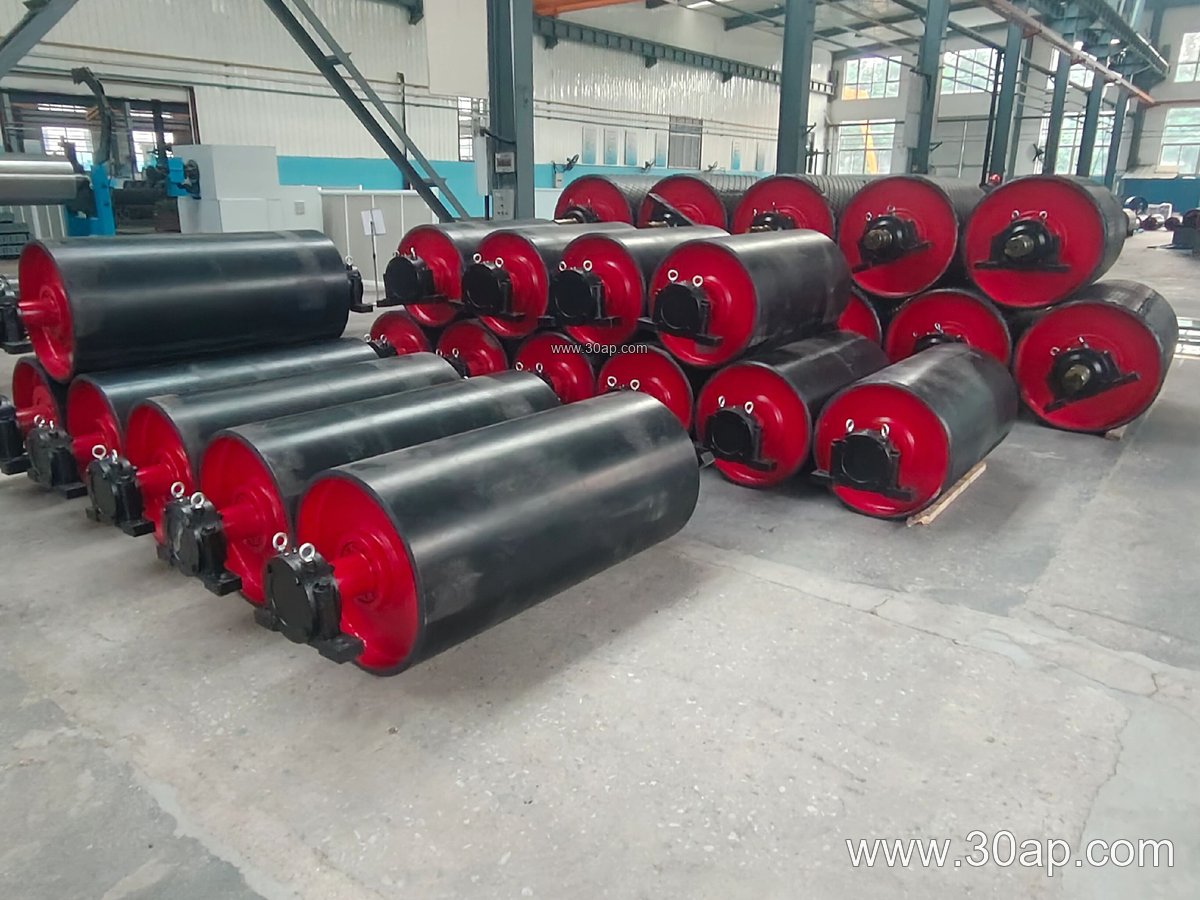
Where Guide Pulleys Are Used
In a limestone quarry, guide pulleys are often placed after the crusher discharge to keep the belt centered before it enters the main incline. In a coal washing plant, they help route the belt around tight structures without rubbing the frame. They also appear at ship loading booms, in aggregate yards, and at tunnel spoil handling lines. A guide pulley is not a drive pulley, tail pulley, or bend pulley; each of those has its own role. A bend pulley, for instance, changes belt direction at a larger wrap angle, while a guide pulley mainly corrects tracking and supports the belt locally.
Matching the pulley with the right conveyor belt matters. A heavy-duty abrasion resistant conveyor belt on a rock line may need a larger diameter and thicker lagging than a smooth EP conveyor belt running in a cement plant. In dusty or wet areas, sealed bearings and a corrosion-resistant finish add service life.
Selection and Maintenance Notes
- Confirm the belt width, belt type (such as EP200 or steel cord), and the load the pulley will see before choosing diameter and shaft size.
- Pick lagging to suit the job: plain for light tracking, rubber or ceramic for grip and wear resistance.
- Check alignment at installation; a guide pulley that is out of square will cause tracking problems rather than solve them.
- Inspect bearings and lagging at scheduled stops, especially in coal mining and cement plant environments.
- Keep the pulley face and the belt clean so material build-up does not push the belt off center.
For buyers, the useful habit is to treat the guide pulley as part of the whole conveyor package: belt, idler roller, frame bracket, and pulley should be specified together. A guide pulley sized only by belt width, without checking load and alignment, often underperforms. For more conveyor component references, see www.example.com/conveyor-pulley and the belt selection notes at www.example.com/conveyor-belt.