What a Wear-Resistant Lagged Pulley Does
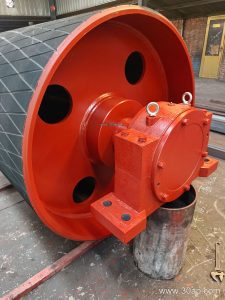
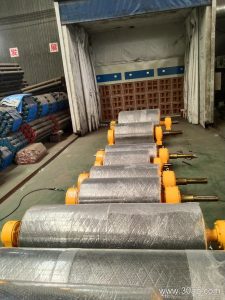
A wear-resistant lagged pulley is a conveyor pulley whose shell carries a rubber or ceramic covering so that the belt grips the rotating surface instead of slipping on bare steel. In a stone crushing line or a cement plant clinker circuit, the drive position is where this matters most, because the lagging has to transmit torque while absorbing grit, fines and the occasional sharp fragment. The covering also protects the shell from abrasion, which is why the same product is sometimes called a rubber-lagged conveyor pulley or a lagged drum pulley.
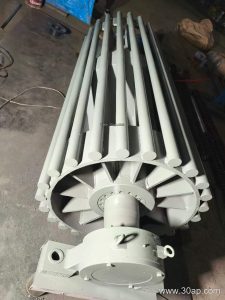
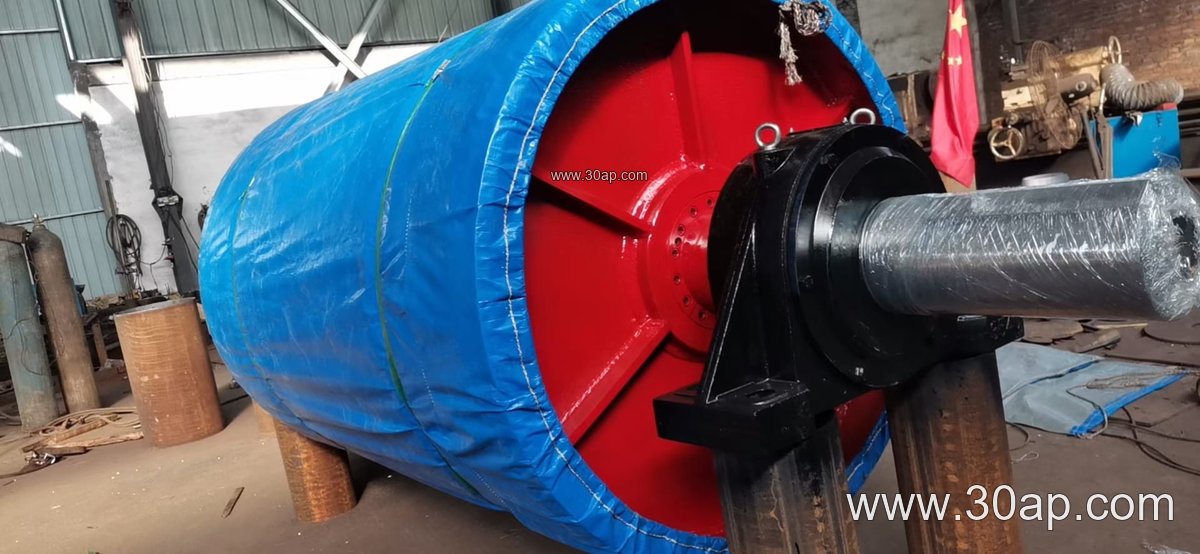
The pulley itself is a fabricated steel drum with end discs, a shaft and bearing housings. Lagging is applied to the outer face and finished to the required surface form. A well-built unit keeps the belt centred, limits slip and extends the working life of both the pulley and the belt.
How the Lagging Is Built
There are several ways to fix the covering, and each suits a different duty. Hot-sulphur vulcanised rubber gives a strong bond for heavy bulk handling; cold-bonded rubber is quicker to apply and easier to replace in the field; ceramic tiles set in rubber are chosen where abrasion is severe. Plain, diamond and herringbone patterns are common surface forms, and the thicker grades are usually selected for drive pulleys on high-tension conveyors.
Common lagging thicknesses are 8, 10, 12, 15 and 20 mm. The table below shows how thickness and surface form are typically matched to duty. Values are reference points, not fixed supply promises.
Reference lagging options
| Surface form | Common thickness | Typical duty |
|---|---|---|
| Plain rubber | 8–12 mm | General conveying, light abrasion |
| Diamond rubber | 10–15 mm | Wet or dusty belt, reduced slip |
| Herringbone rubber | 10–15 mm | Belt tracking on reversing duties |
| Ceramic in rubber | 15–20 mm | High abrasion, sharp material |
The bond between rubber and shell is as important as the rubber itself. A weak bond lets water and fines creep under the covering, and the lagging then peels from the edges inward.
Where It Fits on the Conveyor
Position changes the job. On a drive or head pulley, the lagging must grip firmly to transmit power. On a tail or tension pulley, it helps keep the belt aligned as it returns. A bend pulley may carry a thinner covering because it only redirects the belt. These are different positions, and a drive pulley is not simply a tail pulley with rubber added.
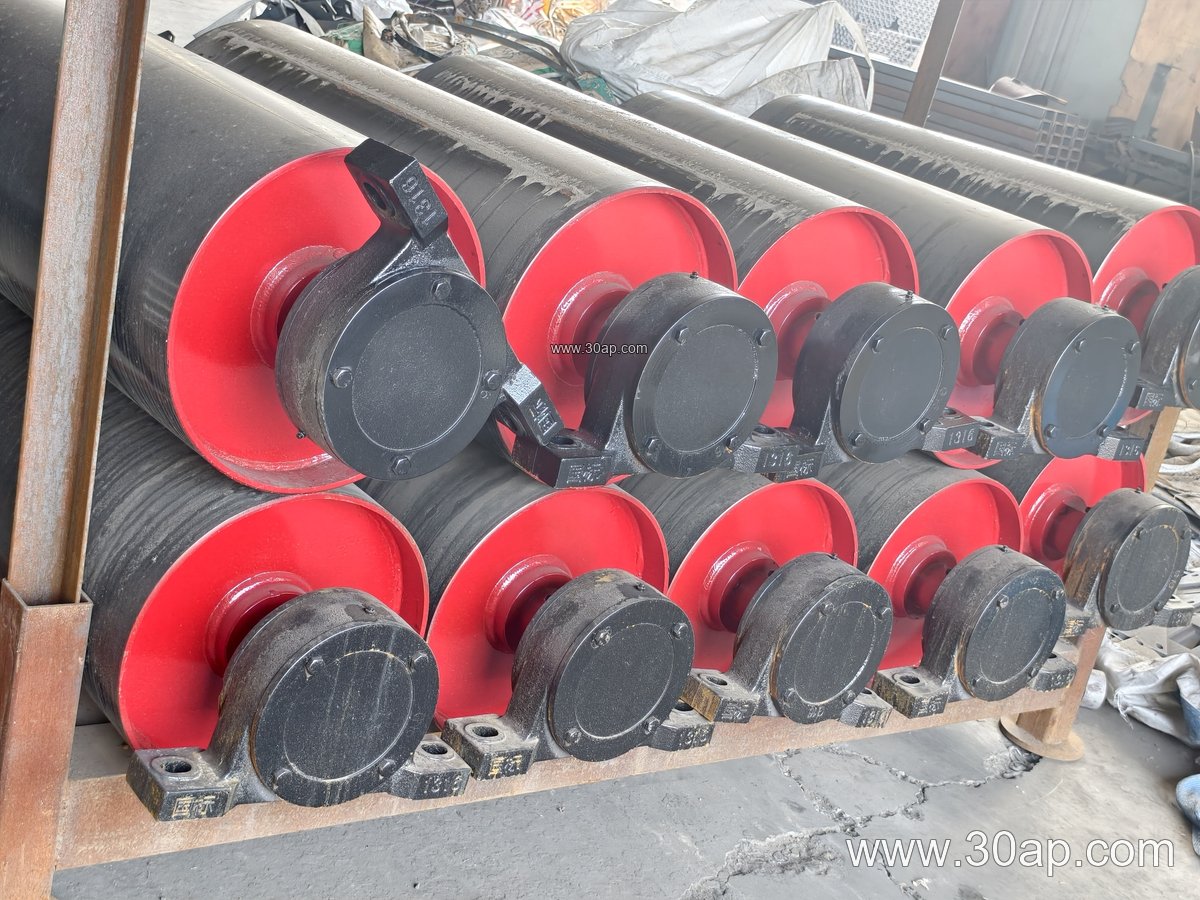
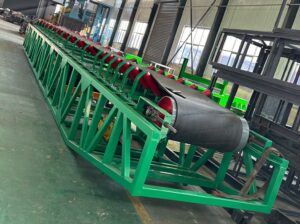
In a coal preparation plant or a power station coal yard, a lagged drive pulley often runs alongside a flame retardant conveyor belt and a set of carrying idlers. In a quarry or aggregate line, the same pulley may work with an abrasion resistant conveyor belt and a heavy-duty frame. The pulley has to match the belt width and the belt tension, not the other way round. A B1200 belt, for example, may run on a Ø1000 drive pulley, while a narrower B800 line might use a Ø500 drum. Neither pairing is universal.
For reference, shell face width usually exceeds belt width so the belt has room to track. Belt widths and approximate shell widths include:
| Belt width | Approximate shell face |
|---|---|
| B650 | 750 mm |
| B800 | 950 mm |
| B1000 | 1150 mm |
| B1200 | 1400 mm |
| B1400 | 1600 mm |
| B1600 | 1800 mm |
Diameter choices commonly range from Ø200 up to Ø1800 depending on tension and wrap angle. Shaft diameter is set by torque and bearing load, so it should be calculated for each drive rather than copied from belt width.
Buyer Checklist
- Confirm the pulley position: drive, tail, bend, tension or snub.
- State belt width, belt type and operating tension so the shell and shaft can be sized.
- Choose lagging thickness and pattern for the material being carried.
- Check that the covering is bonded and finished to the required surface.
- Ask how the lagging can be replaced or re-covered during maintenance.
A wear-resistant lagged pulley is a small part of a long conveyor, but it decides how much torque reaches the belt and how long the belt lasts. Matching the covering to the duty, and the pulley to the belt, is the practical way to avoid slip, tracking faults and premature wear.