What a Rubber-Lined Pulley Does on a Conveyor
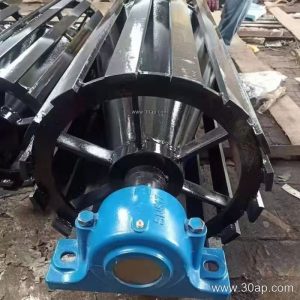
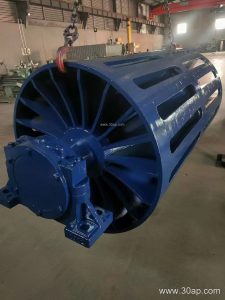
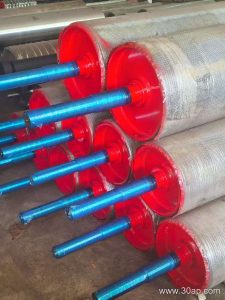
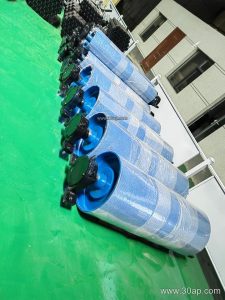
A rubber-lined pulley is a conveyor pulley whose shell is covered with a rubber layer to raise friction between the drum face and the conveyor belt. This covering, often called lagging, helps the drive pulley transmit torque without slip, and it also protects the shell from abrasive dust and fine material. In a limestone quarry or a coal washing plant, the difference between a bare shell and a properly lagged drum can be seen in belt tracking and in how often the belt is retensioned.
The same product is also described as a rubber lagged pulley or a lagged conveyor pulley. These are equivalent names for the same item. Drive, tail and bend positions remain separate roles, and a rubber-lined drive pulley is not a substitute for a tail pulley or a bend pulley simply because all three carry rubber.
Construction and Surface Options
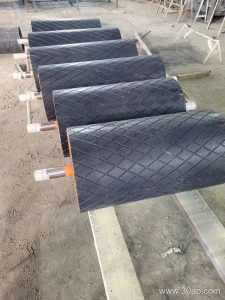
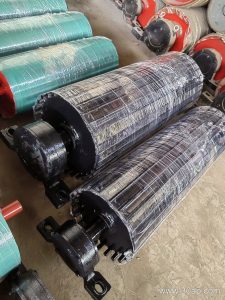
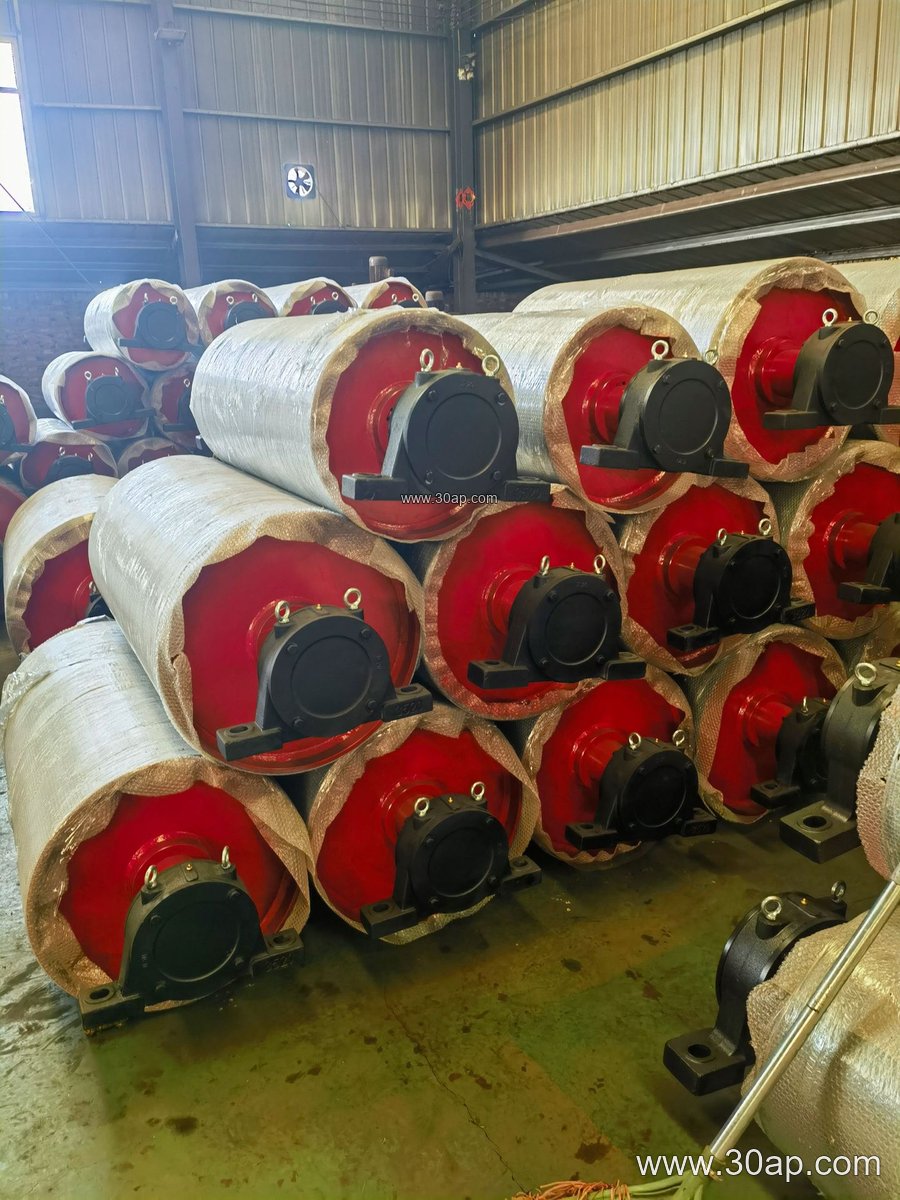
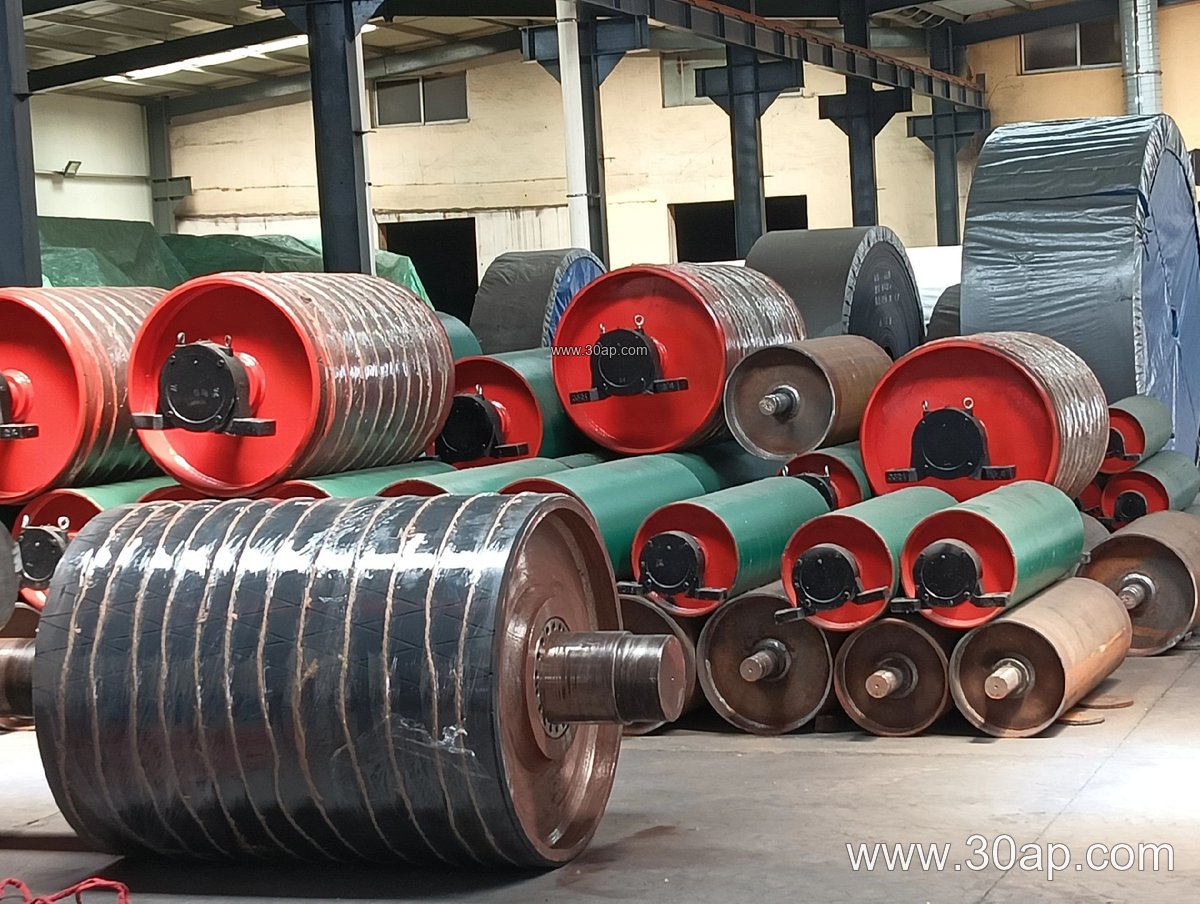
The base is a steel shell with end discs, a shaft and bearing housings. Rubber is bonded to the shell by hot vulcanization or applied as cold-bonded sheet. Surface patterns are chosen for the duty: plain lagging for general grip, diamond grooving to shed water and fines, chevron grooving for wet or muddy conditions, and ceramic lagging where abrasion is severe. Common lagging thicknesses are 8, 10, 12, 15 and 20 mm.
Shaft diameter is set by torque and load rather than by belt width alone. Typical shaft sizes include Ø80, Ø100, Ø120, Ø140 and Ø160, but the final value comes from the conveyor design.
Where It Fits in the Conveyor
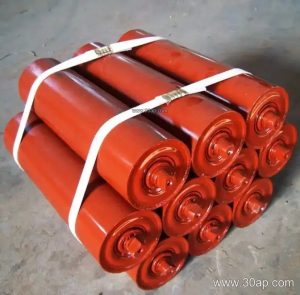
Rubber lagging is most often specified on the drive pulley, where traction matters most, and on the tail pulley in gritty service. A bend pulley may be lagged only when belt wrap or cleanliness requires it. In a cement plant clinker line or a power plant coal handling system, a lagged drive drum works together with the conveyor belt, idler roller sets and conveyor bracket assemblies to keep the belt centred and moving. The pulley does not carry the belt on its own; troughing and return idlers support the load along the run.
Typical Size Combinations
The numbers below are common reference combinations, not fixed rules. A given belt width can be matched with more than one drum diameter, and the shell face is normally a little wider than the belt.
| Belt width | Typical pulley face | Example drum diameter |
|---|---|---|
| B650 | about 750 mm | Ø400 to Ø500 |
| B800 | about 950 mm | Ø500 to Ø630 |
| B1000 | about 1150 mm | Ø630 to Ø800 |
| B1200 | about 1400 mm | Ø800 to Ø1000 |
| B1400 | about 1600 mm | Ø1000 to Ø1250 |
| B1800 | about 2000 mm | Ø1250 to Ø1600 |
Face widths may also be quoted as B800 × Ø500 or B1200 × Ø1000 when the application is clear. Larger diameters are chosen to reduce belt bending stress and to increase wrap angle in confined head or tail stations.
Matching the Pulley to the Belt and the Job
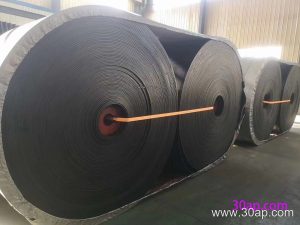
The belt itself influences lagging choice. A heavy-duty mining conveyor belt carrying coarse rock needs a thicker, harder cover, while an abrasion resistant conveyor belt on a short transfer may run well with a plain 10 mm rubber face. In coal mines, a flame retardant conveyor belt and a flame retardant lagging compound are often requested together for underground mining conveyor duties. Where oil or grease is present, an oil resistant conveyor belt should be paired with a lagging that tolerates the same exposure.
For long overland lines, a steel cord conveyor belt or a high strength EP conveyor belt places higher tension on the drive drum, so shaft size, bearing selection and lagging bond quality deserve close attention. Steep inclines carrying wet aggregate may call for a chevron conveyor belt, and the drive pulley must then be checked for groove clearance and belt tracking.
Buyer Checklist
- Confirm the pulley role: drive, tail, bend, take-up or snub.
- State belt width, belt type and maximum belt tension.
- Choose lagging pattern and thickness for the material and moisture level.
- Provide shaft diameter, bearing type and mounting dimensions.
- Check that the pulley face suits the belt and that the conveyor bracket and idler roller heights are consistent.
- Ask how the rubber is bonded and how the surface is finished.
For buyers sourcing through a supplier site such as conveyor-accessories.example.com, keep the specification sheet and the drawing together so the drum, the belt and the supporting structure are ordered as one system.