What the drive pulley does on a belt conveyor
The belt conveyor drive pulley is the powered roller that turns the conveyor belt and moves the load. It is usually installed at the head end of the conveyor, where the belt discharges material, but in some layouts it sits at an intermediate point. In a quarry or a cement plant, this pulley is often the largest and most heavily built component on the conveyor frame, because it must transfer torque from the gearbox to the belt without slipping. A related component, the conveyor pulley family, includes tail and bend pulleys, but those serve different roles. The tail pulley returns the belt, and the bend pulley changes its direction. They are not interchangeable with the drive pulley.
Construction details that matter in dusty plants
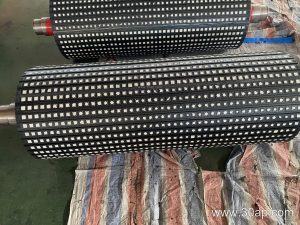
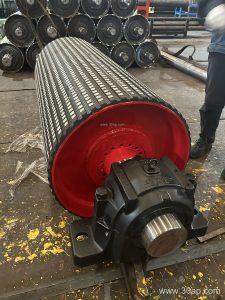
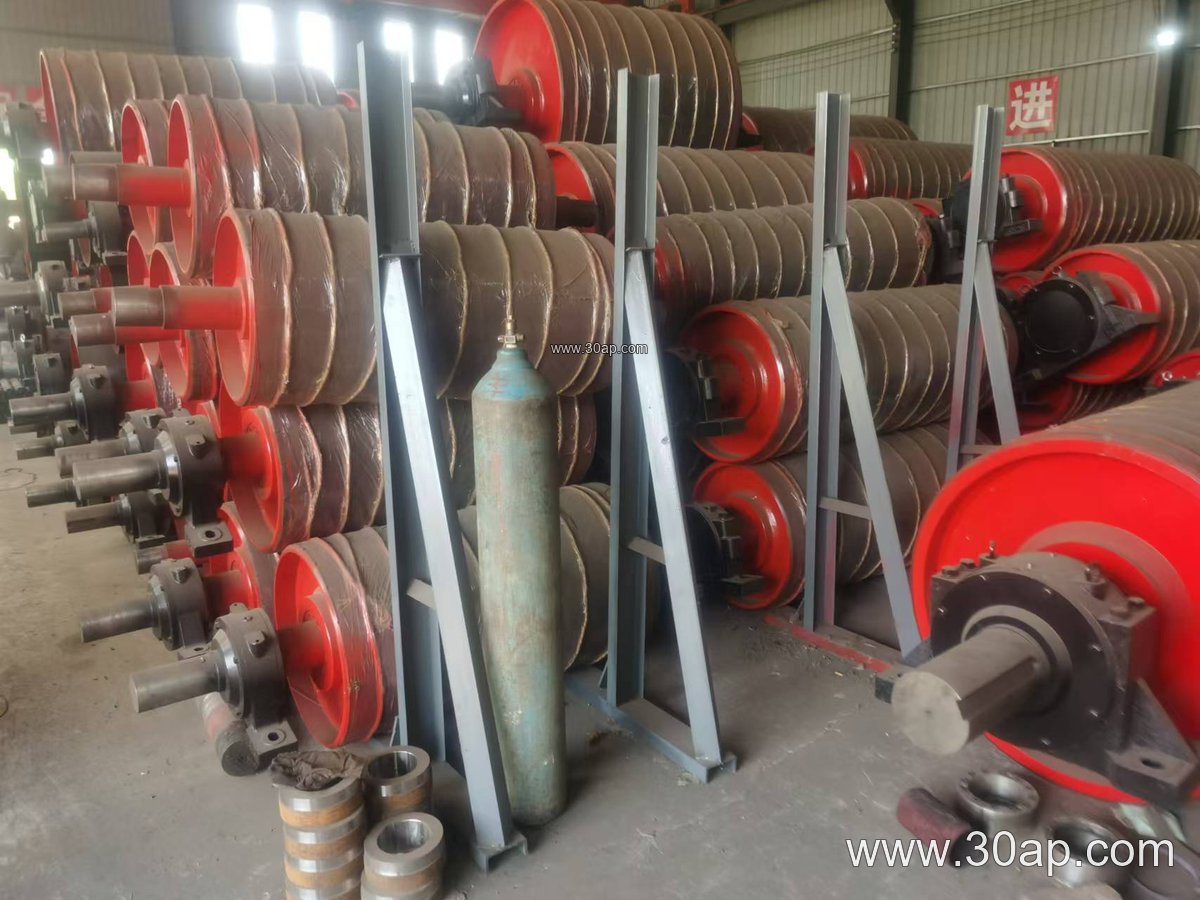
A typical drive pulley is built around a steel drum with end discs and a shaft. The shell may be plain or covered with rubber, ceramic, or other lagging to improve grip. Common surface forms include smooth, hot-vulcanized rubber, cold-bonded rubber, diamond pattern, herringbone, and ceramic lagging. Lagging thickness often ranges from 8 mm to 20 mm, depending on the duty. In a cement plant or a sand and gravel line, abrasive dust can work under the lagging, so bonding quality matters as much as the pattern. Shaft diameters are selected by torque and load, not by belt width alone. Typical shaft sizes include Ø80, Ø100, Ø120, and Ø140 mm, but the final choice belongs to the conveyor designer.
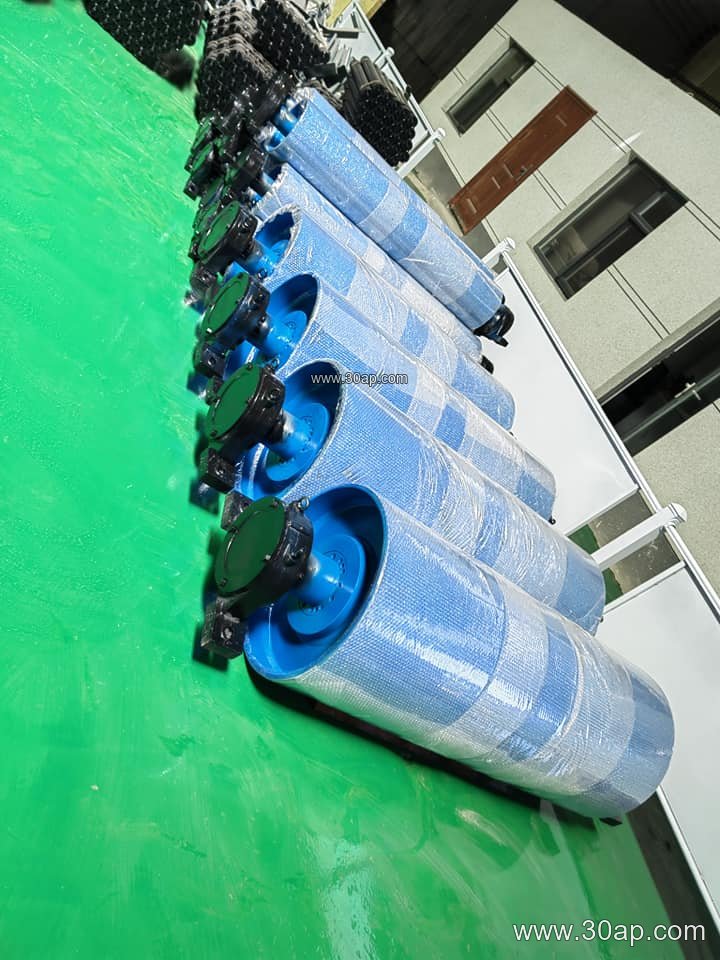
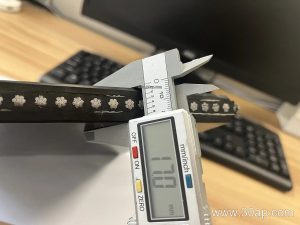
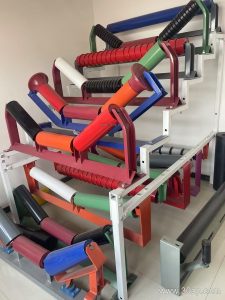
The pulley body must also handle the belt tension and the weight of the material. For heavy-duty mining conveyors, the shell is often thicker and the shaft is larger. A belt conveyor drive pulley used with a steel cord conveyor belt may need a different lagging pattern than one used with an EP conveyor belt. The pulley does not work alone: the conveyor belt, idler roller, and conveyor bracket all influence how well the drive pulley performs.
Where it fits in the plant layout
In a quarry or a limestone mine, the drive pulley is often at the discharge point of a primary crushing line. It may be paired with a heavy-duty conveyor belt that carries run-of-mine rock. In a cement plant, it can be found on clinker or raw material conveyors, where heat and abrasion are present. In a coal mining operation, flame retardant conveyor belts are common, and the drive pulley may be specified with a rubber lagging that reduces the risk of belt slip. The same pulley design is not automatically suitable for all these locations. A pulley with diamond lagging may work well in a wet sand and gravel line but may not be the best choice for a high-tension steel cord conveyor belt. For comparison, a bend pulley is often smaller and lighter because it only changes direction and does not transmit the main drive torque.
Common sizes and how to read them
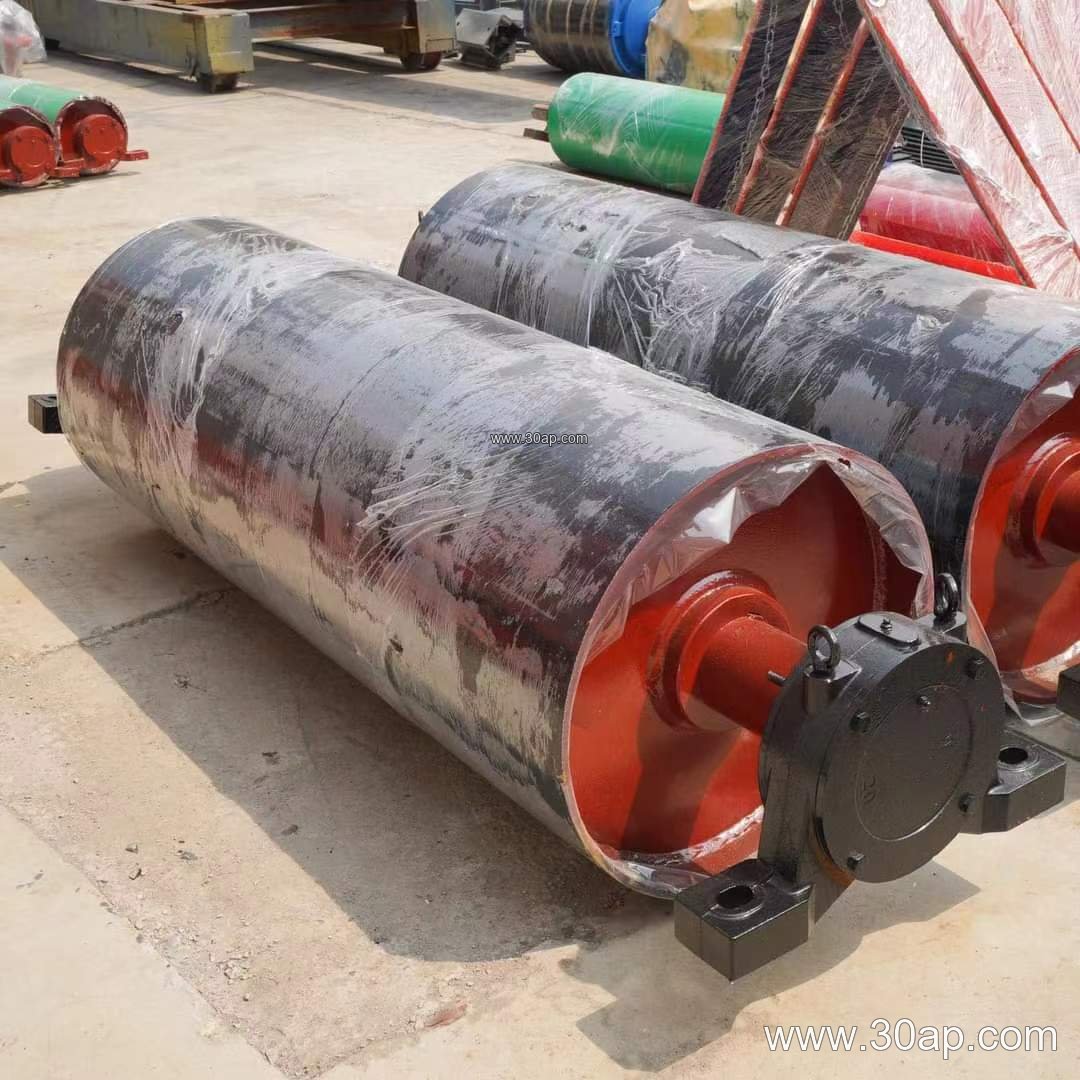
Drive pulleys are often described by belt width and pulley diameter, for example B800 × Ø500 or B1200 × Ø1000. The pulley face width is usually slightly wider than the belt. A B400 belt may use a pulley face around 500 mm, while a B1200 belt may use about 1400 mm. These are reference examples, not fixed rules. A larger diameter can reduce belt bending stress, but it also takes more space and adds weight. The table below shows some typical combinations used in bulk material handling. The values are common references, not universal specifications.
| Belt width (B) | Typical pulley face width | Common drive pulley diameter | Example shaft diameter (by design) |
|---|---|---|---|
| B400 | ≈500 mm | Ø200–Ø315 mm | Ø50–Ø70 mm |
| B500 | ≈600 mm | Ø250–Ø400 mm | Ø60–Ø80 mm |
| B650 | ≈750 mm | Ø315–Ø500 mm | Ø70–Ø90 mm |
| B800 | ≈950 mm | Ø400–Ø630 mm | Ø80–Ø100 mm |
| B1000 | ≈1150 mm | Ø500–Ø800 mm | Ø90–Ø120 mm |
| B1200 | ≈1400 mm | Ø630–Ø1000 mm | Ø100–Ø140 mm |
| B1400 | ≈1600 mm | Ø800–Ø1250 mm | Ø120–Ø160 mm |
Do not assume that a B1200 belt can only use one diameter. The conveyor speed, material weight, and starting torque all affect the final selection. A drive pulley for a heavy-duty mining conveyor belt may be larger than one for a light aggregate conveyor belt at the same width.
Buyer checklist before ordering
- Confirm the belt width and the actual pulley face width, not just the nominal belt size.
- State the lagging type and thickness if slip is a concern. Common options include 8, 10, 12, 15, and 20 mm.
- Provide the shaft diameter and keyway details from the conveyor design, or ask the pulley maker to calculate from torque.
- Mention the environment: coal mining, cement plant, quarry, or port. This affects the choice of lagging and surface finish.
- Check that the pulley matches the conveyor bracket and bearing housing dimensions.
A well-matched drive pulley helps the conveyor belt run straight and reduces wear on the idler roller and frame. For more information on related components, see our conveyor pulley and conveyor belt pages.