What a Conveyor Drive Pulley Does
A conveyor drive pulley is the powered drum that turns the belt and moves the load. It is the head-end component in most systems, coupled to a gearbox and motor, and it transmits torque through friction between the pulley surface and the belt. Unlike a tail pulley, which only redirects the returning belt, or a bend pulley, which changes belt direction without driving, the drive pulley carries the full traction duty. In a quarry, a coal washing plant, or a power station coal yard, this single component decides how much material the line can move and how reliably it starts under load.
How the Drum Is Built
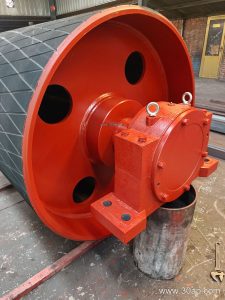
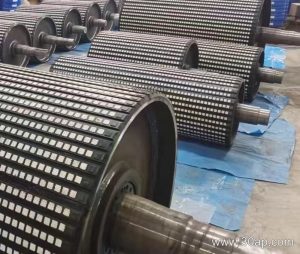
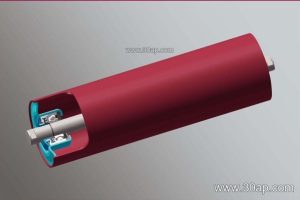
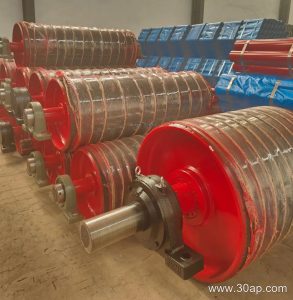
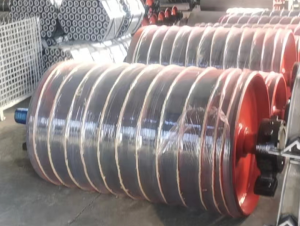
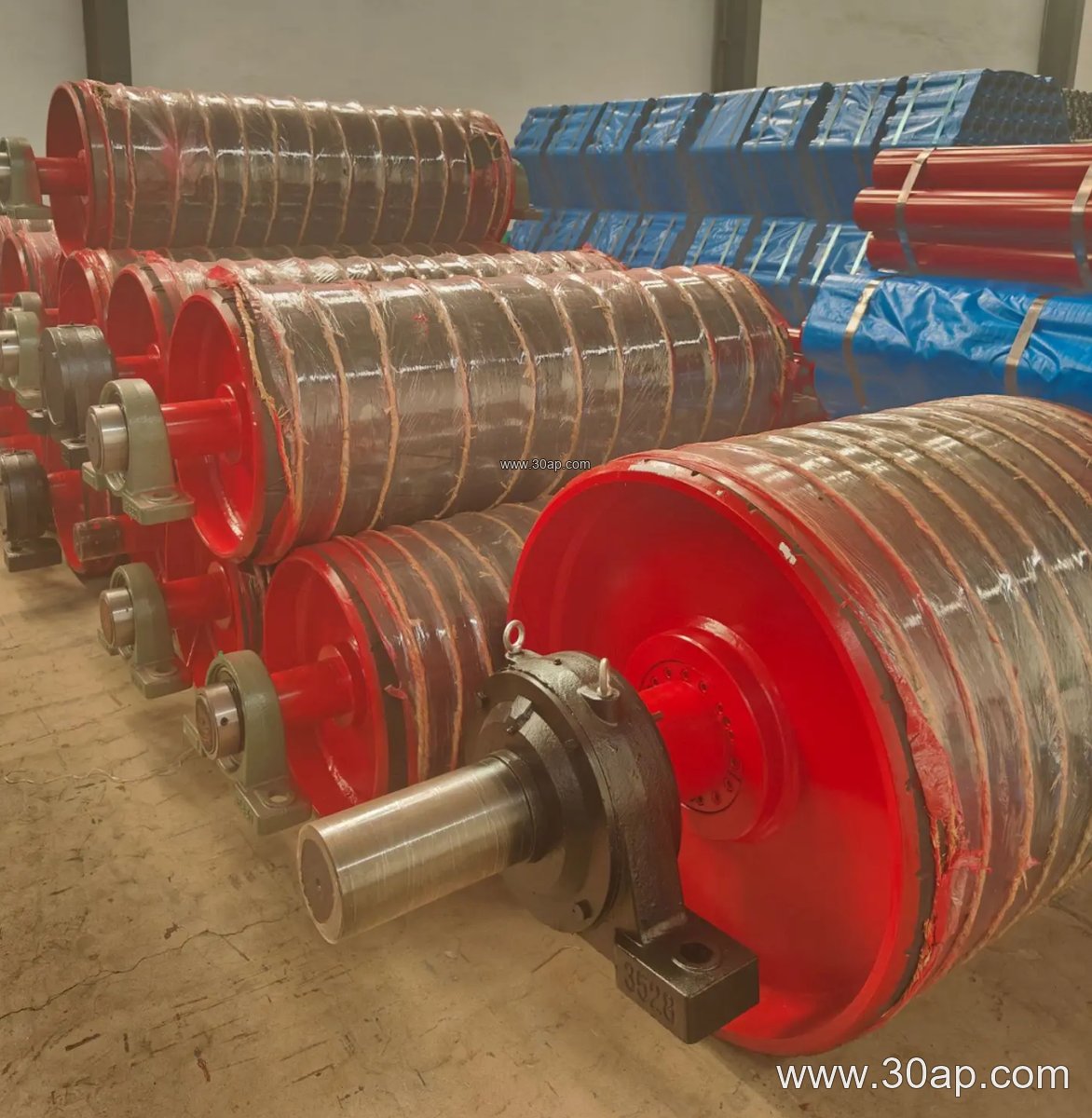
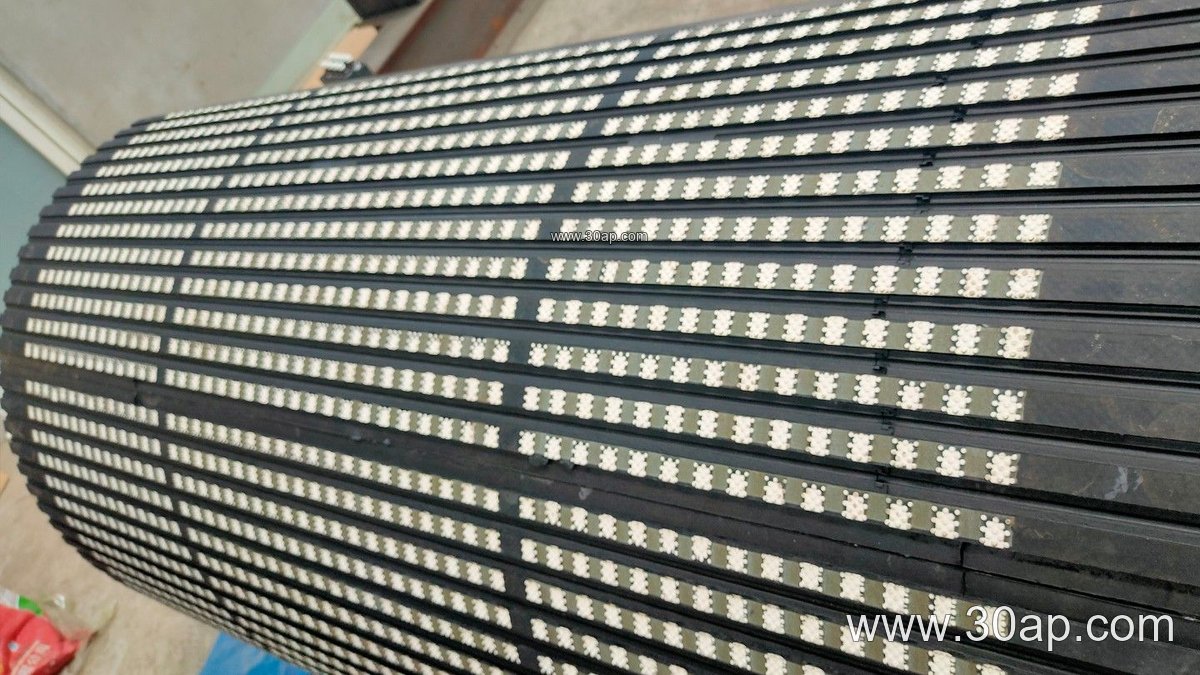
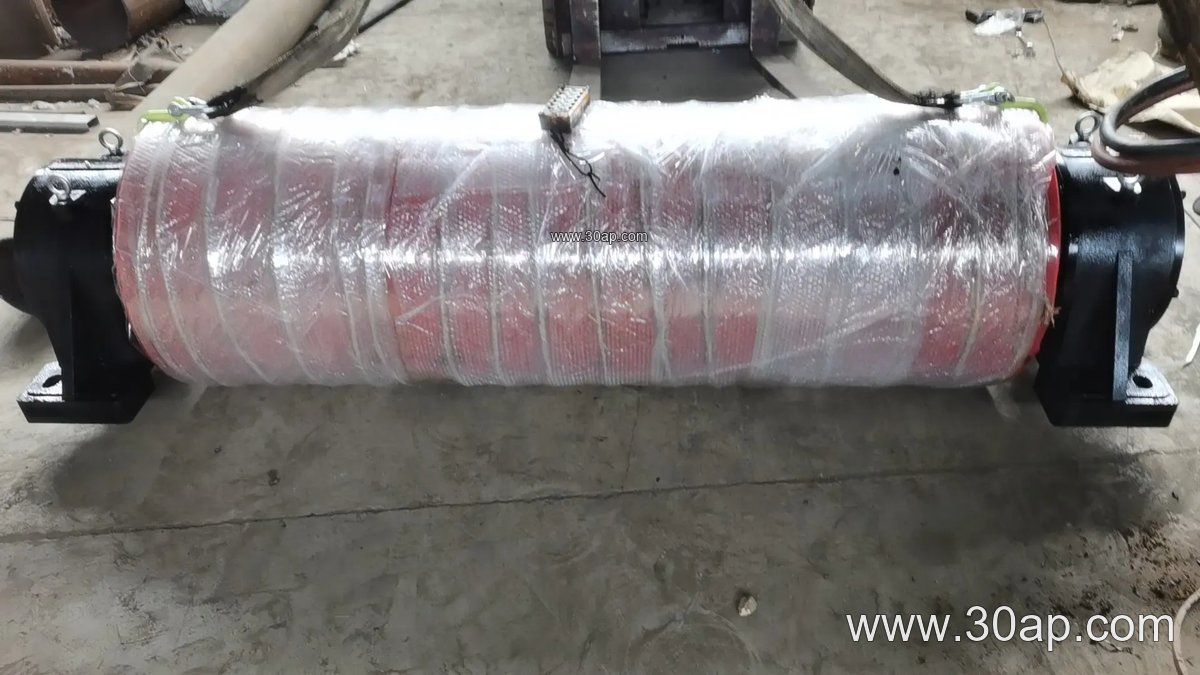
The assembly usually consists of a steel shell, two end discs, a shaft, and bearing housings mounted on a frame or conveyor bracket. The shell is machined to a slight crown in some designs to help the belt track centrally. Shaft diameter is determined by torque and radial load, not by belt width alone, so a B800 conveyor may use a Ø80 shaft in one layout and a larger shaft in another. Common shaft sizes include Ø50, Ø60, Ø70, Ø80, Ø90, Ø100, Ø120, Ø140, Ø160, Ø180 and Ø200. Lagging is applied to raise friction: plain, cold-bonded rubber, hot-vulcanized rubber, diamond pattern, herringbone, or ceramic tiles, with thickness options such as 8, 10, 12, 15 and 20 mm.
Matching Diameter to Belt Width
Diameter selection balances belt wrap, bending stress in the carcass, and available space. Reference combinations such as B800 × Ø500, B1200 × Ø1000 and B1400 × Ø800 are seen in practice, but no single belt width locks onto one diameter. Wider belts generally need larger drums to keep belt stresses acceptable, especially with stiff carcasses. Shell face width normally exceeds belt width; for example, B650 may use about 750 mm face, B1000 about 1150 mm, and B1600 about 1800 mm. These are typical references, not fixed supply rules.
| Belt Width | Typical Pulley Face | Example Diameter Range |
|---|---|---|
| B400 | about 500 mm | Ø200 to Ø400 |
| B650 | about 750 mm | Ø315 to Ø630 |
| B800 | about 950 mm | Ø400 to Ø800 |
| B1000 | about 1150 mm | Ø500 to Ø1000 |
| B1200 | about 1400 mm | Ø630 to Ø1250 |
| B1400 | about 1600 mm | Ø800 to Ø1400 |
| B1600 | about 1800 mm | Ø1000 to Ø1600 |
Where It Fits in the Line
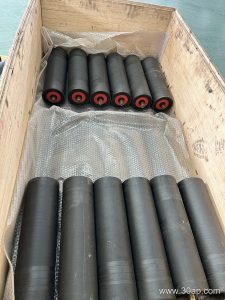
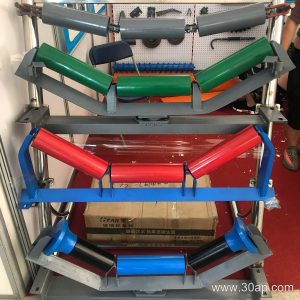
In an iron ore beneficiation plant or a limestone crushing circuit, the drive pulley sits at the discharge point, often as the head pulley. In a tunnel muck removal system, it may be a compact unit with a shaft-mounted gearbox. In cement plant clinker transport, heat and dust demand careful lagging choice. The drum works with the conveyor belt, idler roller sets, and conveyor pulley frames, so alignment and tension must be checked as a system. A well-sized drive drum keeps the belt from slipping even when a heavy-duty mining conveyor belt is fully loaded.
Buyer Checklist
- Confirm belt width, belt type, and whether the carcass is fabric or steel cord; an EP conveyor belt or steel cord conveyor belt behaves differently around small drums.
- State the operating tension and starting torque so the shaft and bearings can be sized correctly.
- Choose lagging by condition: ceramic or diamond rubber for wet, abrasive ore; plain or rubber for clean service.
- Check that the pulley face clears the belt edge and that the frame matches the conveyor bracket dimensions.
- Ask for balancing and runout data, and plan periodic lagging inspection during shutdowns.
Whether the line handles coal, aggregate, or grain, the drive drum deserves the same attention as the belt itself. Get the diameter, lagging, and shaft duty right, and the whole conveyor runs smoother.