What a Fixed Conveyor Bracket Does
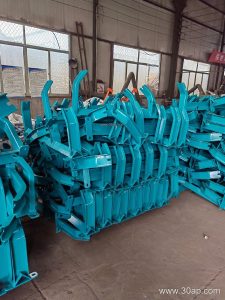
A fixed conveyor bracket is the stationary support frame that holds idler rollers at a set position along a conveyor. Unlike an adjustable bracket, it has no sliding or pivoting slot for changing trough angle on site; the geometry is built in at the fabrication stage. That makes it a straightforward, low-maintenance component for sections of a conveyor where the belt path is already settled and does not need readjustment. In a quarry conveyor line or a power plant coal handling system, these brackets are often the default choice for the main carrying run, while adjustable frames are kept for transition zones and problem spots.
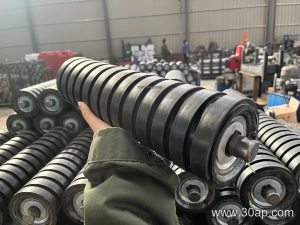
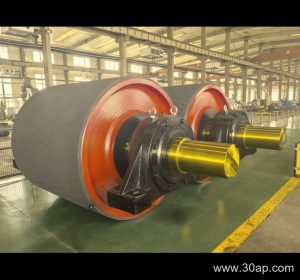
The bracket works together with the conveyor belt, the idler roller set and the conveyor pulley. The pulley drives and tensions the belt; the bracket simply keeps the rollers in the right place so the belt keeps its shape and alignment.
Construction and Common Forms
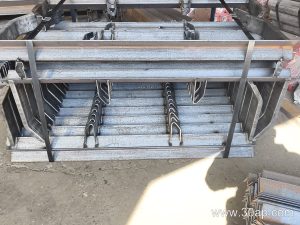
Most fixed frames are made from angle steel, channel steel or folded steel plate. The cross beam length and mounting hole spacing are determined by belt width, trough angle and roller diameter, so they are not fixed numbers. Common configurations include:
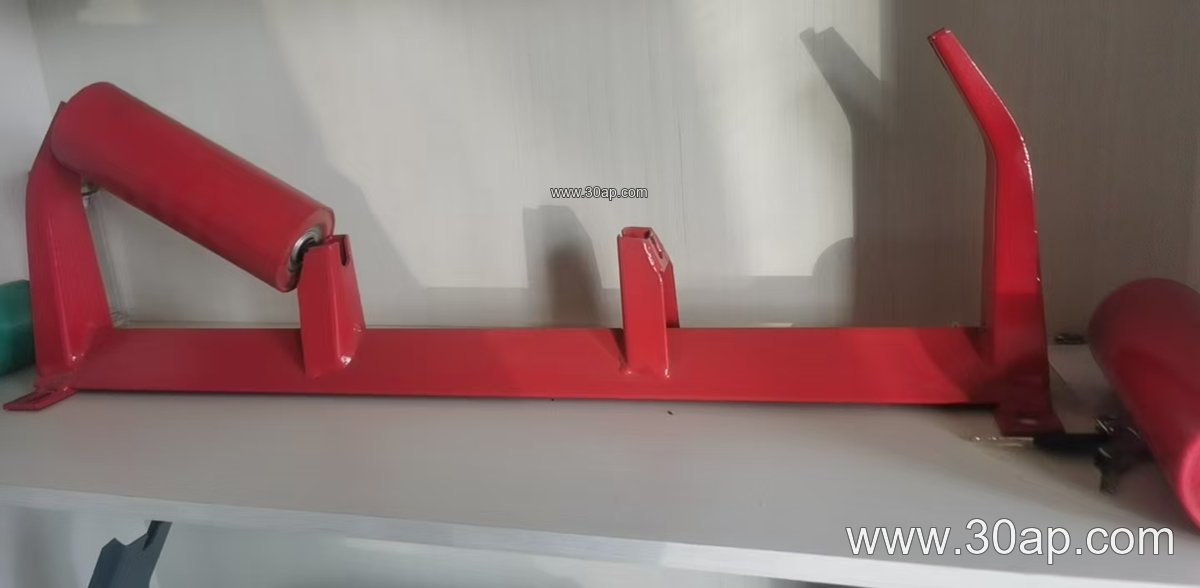
- Trough carrying bracket for the upper run
- Transition bracket near pulleys and loading points
- Return bracket and V-return bracket for the lower run
- Impact bracket under a loading chute
- Self-aligning and forward-leaning brackets for belt tracking
A fixed bracket may be welded or bolted. Bolted frames are easier to replace in the field; welded frames are stiffer but need more careful handling during installation.
Sizes and Reference Data
The table below gives typical reference values. Treat them as design guidance, not as a promise that any one combination is universal.
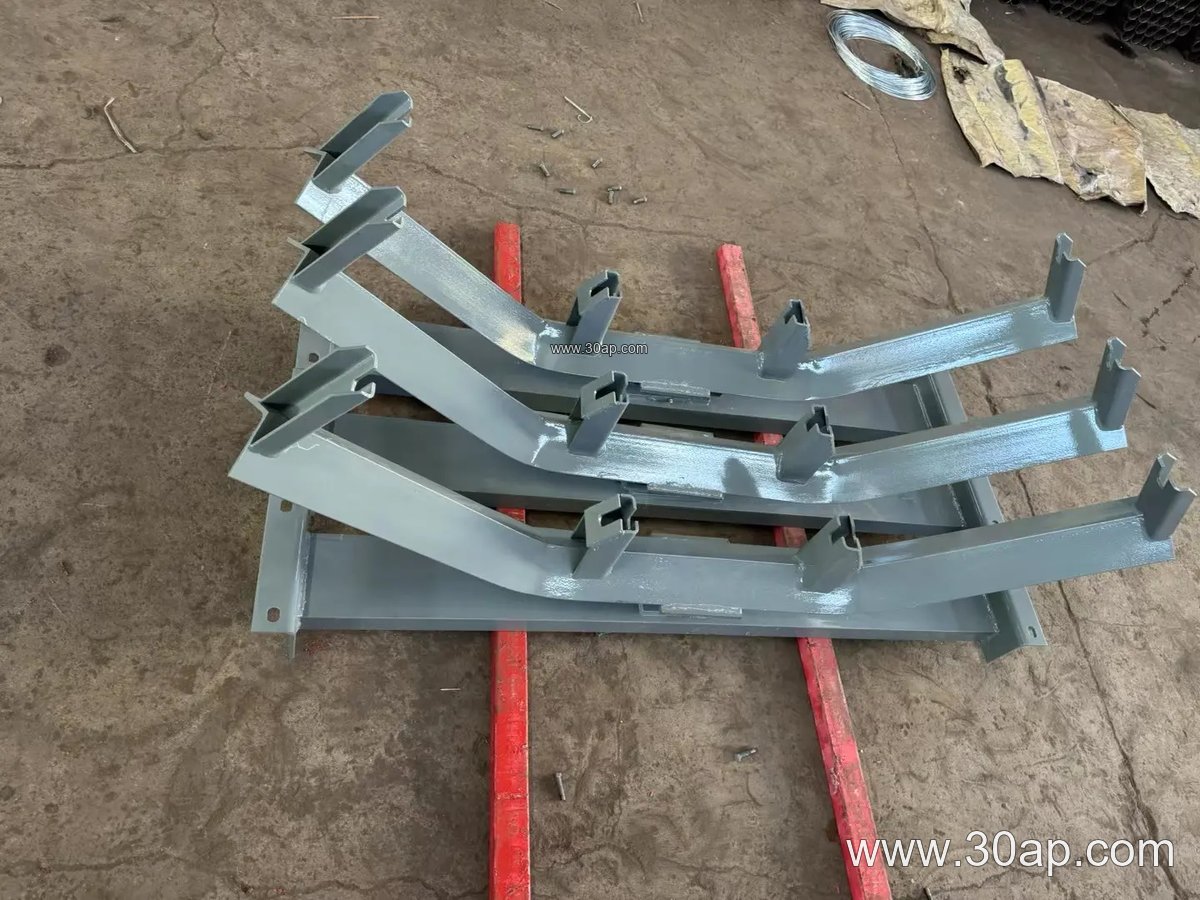
| Parameter | Common Reference Values |
|---|---|
| Belt width | B500, B650, B800, B1000, B1200, B1400, B1600, B1800, B2000 |
| Trough angle | 20°, 30°, 35°, 45° |
| Roller diameter | Ø89, Ø108, Ø133, Ø159, Ø194 |
| Material | Angle steel, channel steel, folded plate |
For example, a B800 frame at 35° with Ø108 rollers is a common mid-duty arrangement, and a B1200 frame at 45° with Ø133 rollers suits a wider, deeper trough. A B650 frame at 30° with Ø89 rollers is often seen on lighter lines. None of these pairings is mandatory; the final selection depends on belt load, material lump size and the pulley arrangement.
Where Fixed Brackets Are Used
These frames appear across bulk handling: a limestone mine, an iron ore concentrator, a cement plant clinker line, a steel plant sinter plant, a port ship loader, or a sand and aggregate plant. In a coal washing plant, fixed trough brackets carry the main run while self-aligning frames handle curves. The bracket choice should match the conveyor belt type in use — a heavy-duty mining conveyor belt or steel cord conveyor belt on a long overland line needs a stiffer frame than a lighter fabric core belt on a short transfer.
Buyer Checklist
- Confirm belt width, trough angle and roller diameter before ordering; do not assume one width fits one angle.
- Check mounting hole spacing and beam length against the actual conveyor structure.
- Match frame strength to the belt and load, especially on crusher discharge and impact zones.
- Decide between bolted and welded construction based on maintenance access.
- Confirm surface treatment for the site environment, such as dust, moisture or heat.
For related components, buyers often review the conveyor pulley, conveyor bracket and idler roller together so the whole support section is consistent. A fixed frame is a simple part, but getting its dimensions and material right keeps the belt running straight and reduces roller wear.