What a Self-Aligning Idler Bracket Does
A self-aligning idler bracket, also called a self-training idler bracket, is the mounting frame that holds a set of idler rollers and lets them pivot slightly so the conveyor belt stays on track. Instead of fixing the rollers rigidly to the conveyor stringer, this bracket sits on a central pivot. When the belt drifts to one side, it presses against the rollers, and the bracket swings a little in the direction that steers the belt back toward the middle of the pulley line.
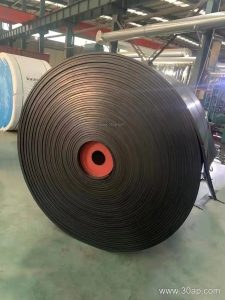
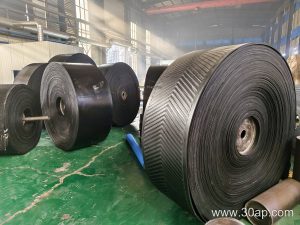
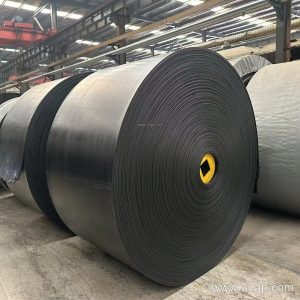
This correction happens continuously and without any motor or sensor. That is why the part is popular in long overland lines, transfer points, and any place where a fabric core conveyor belt or a heavy steel cord conveyor belt tends to wander.
How the Bracket Is Built
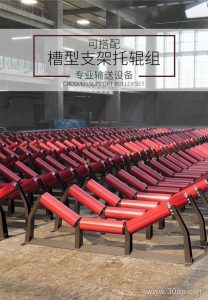
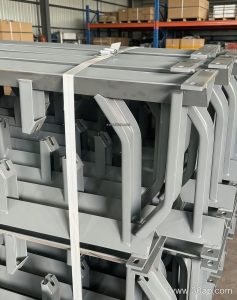
Most units are fabricated from angle steel, channel steel, or folded steel plate. A typical assembly has a fixed base plate, a vertical pivot pin or bearing housing, and a tilting frame that carries two or three idler rollers. The rollers usually sit at a trough angle, and the pivot is placed so the bracket reacts to side load rather than to the weight of the belt alone.
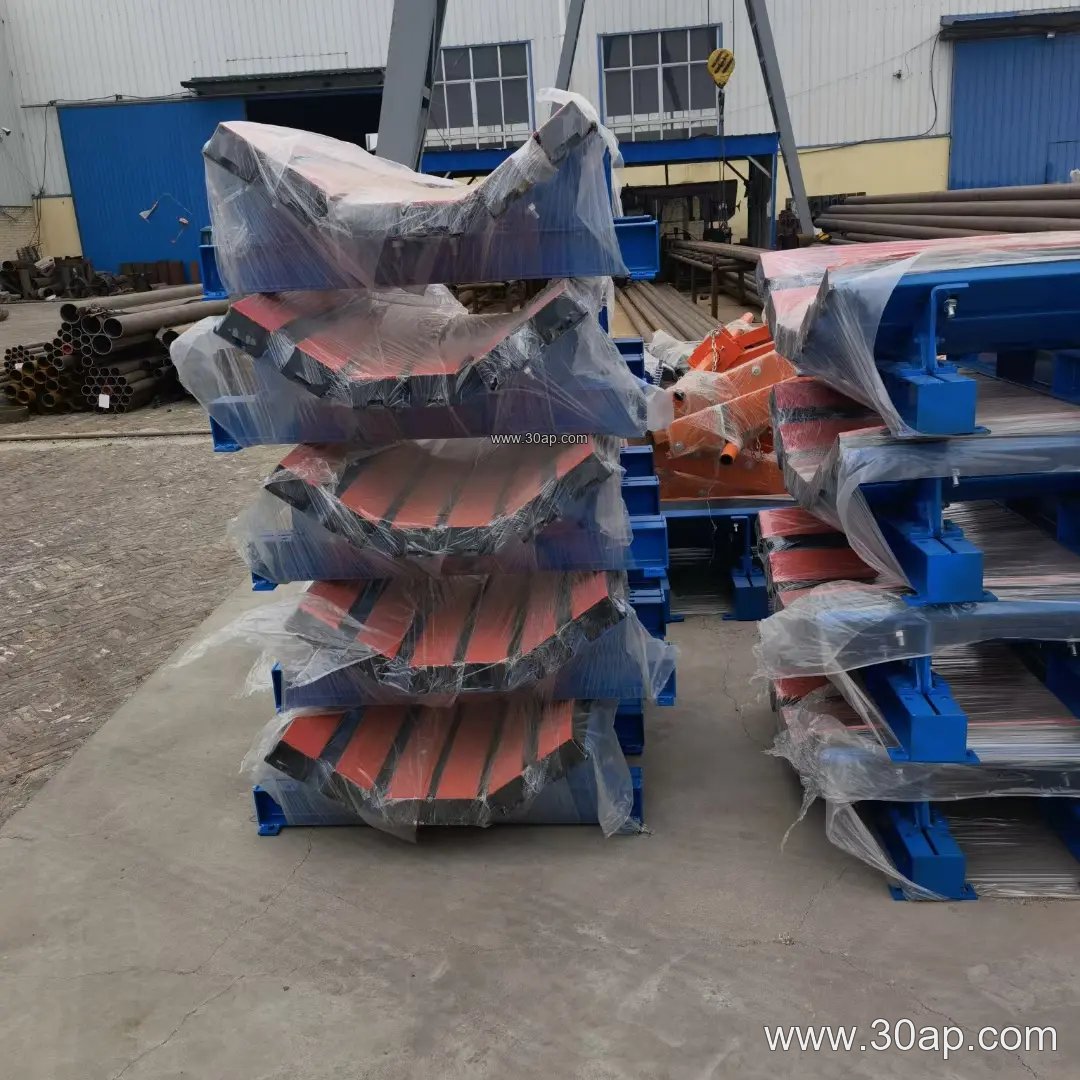
- Base and pivot: bolted to the conveyor frame, with a bush or bearing that allows a few degrees of swing.
- Roller frame: drilled to match the idler roller shaft ends and the chosen trough angle.
- Linkage or stop: limits travel so the bracket cannot over-correct on a fast-moving belt.
Materials and plate thickness vary by duty. In a quarry or a cement plant, dust and grit are constant, so the pivot area needs protection and regular greasing or a sealed bush design.
Where It Fits on the Conveyor
Self-aligning brackets are normally installed on the carrying side, often just after a loading point or before the head pulley, where misalignment is most likely. They are also used on the return strand in some layouts, but the return side more often uses a V-return bracket or a flat return bracket, which are different parts and not interchangeable with the self-aligning type.
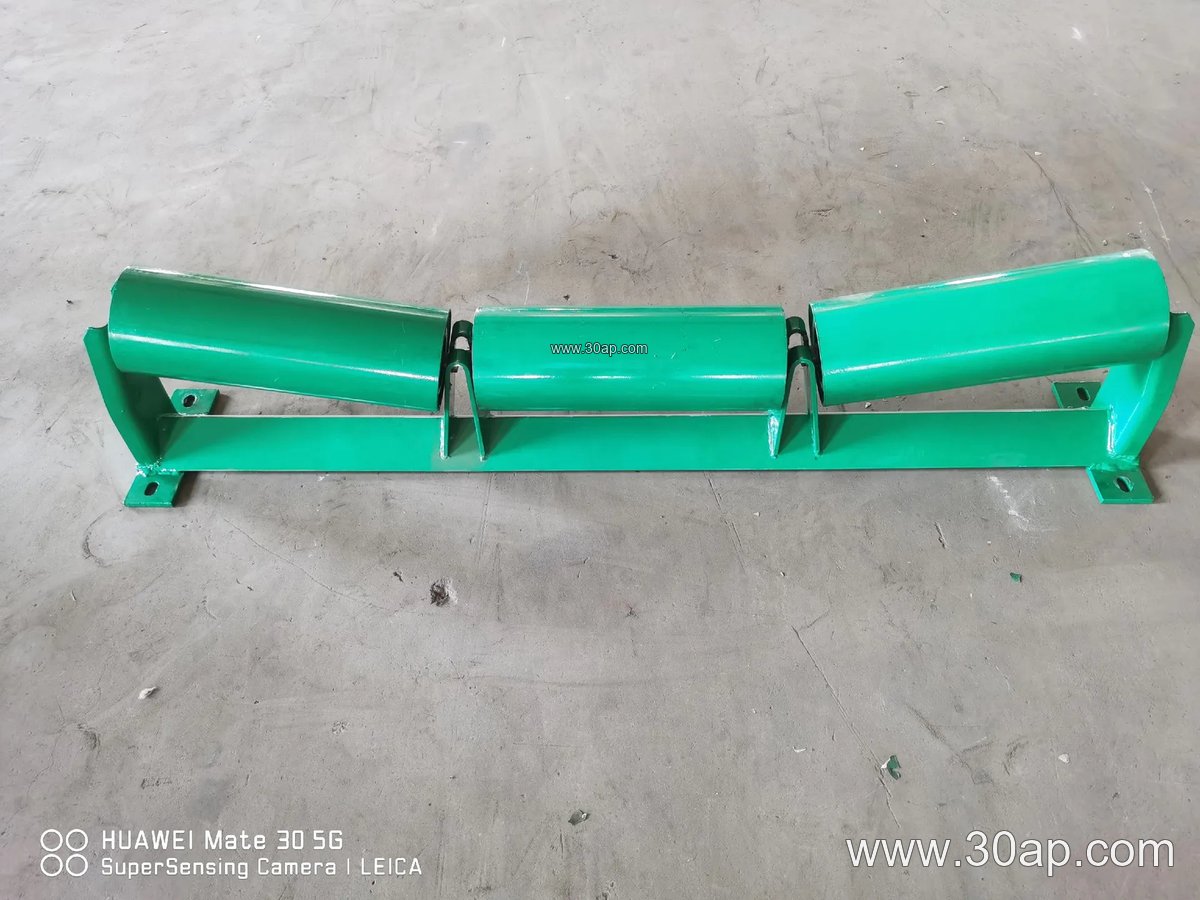
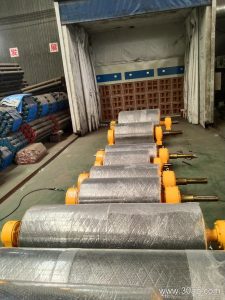
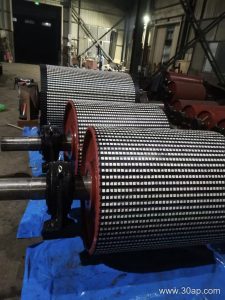
Common industries include limestone mines, iron ore plants, coal washing stations, power plant coal handling, sand and gravel lines, and port ship-loading systems. In each case the bracket works together with the conveyor belt, the conveyor pulley, and the rest of the idler roller set to keep material moving in a straight line.
Matching the Bracket to Belt Width and Roller Size
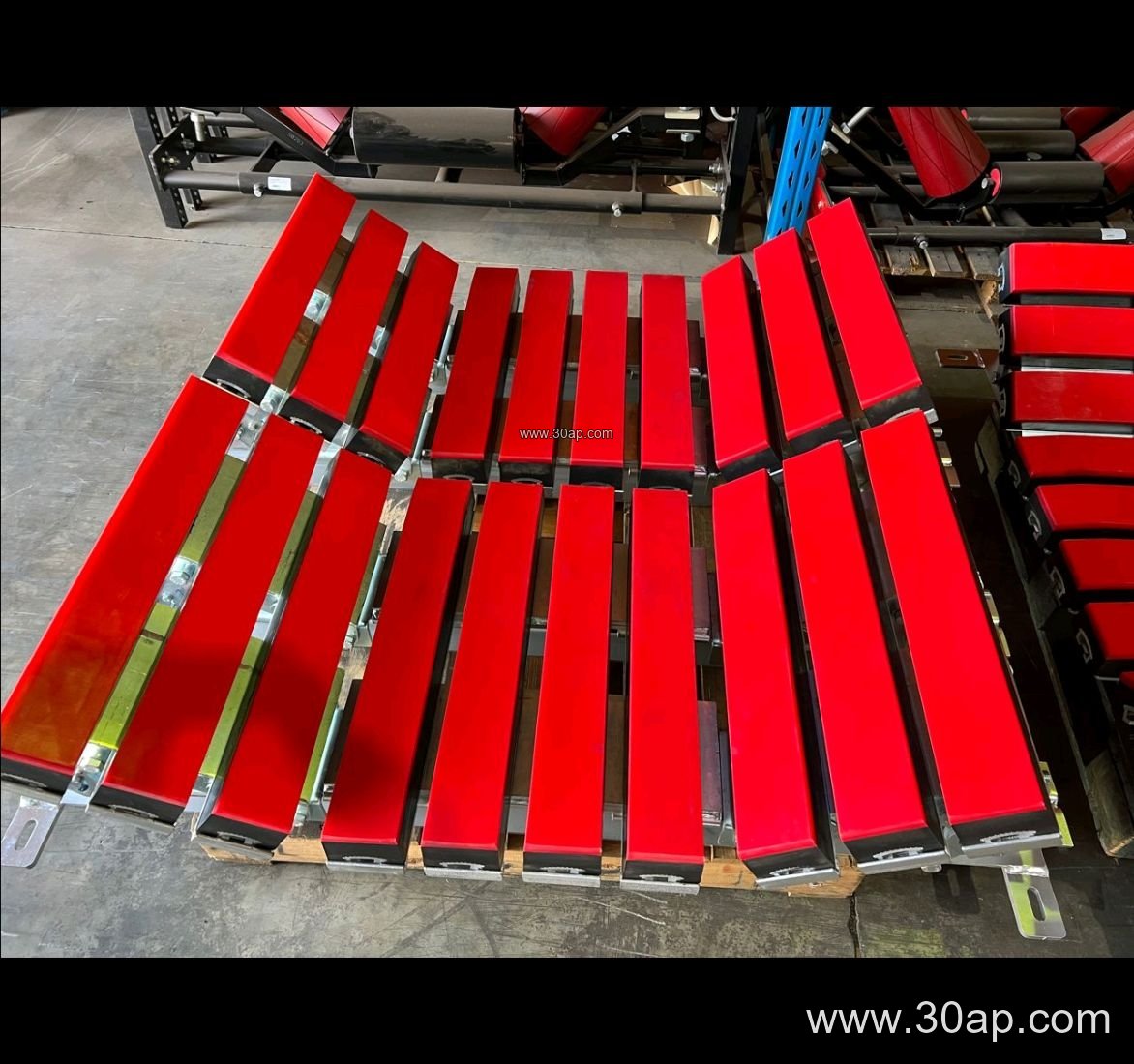
Buyers should treat the values below as reference ranges, not as fixed rules. The correct combination depends on the belt width, the trough angle, the load, and the conveyor design. A wider belt does not automatically mean one specific trough angle or one specific roller diameter.
| Belt width | Typical trough angle | Common roller diameter |
|---|---|---|
| B500 – B650 | 20° – 30° | Ø89 |
| B800 – B1000 | 30° – 35° | Ø108 – Ø133 |
| B1200 – B1400 | 35° – 45° | Ø133 – Ø159 |
| B1600 – B2000 | 35° – 45° | Ø159 – Ø194 |
A bracket for a B800 line at 35° with Ø108 rollers is a common sight in aggregate plants. A B1200 line at 45° with Ø133 rollers is more typical of a heavy-duty mining conveyor. The mounting hole spacing and crossbeam length change with belt width and trough angle, so they are set by design rather than by a single standard number.
Selection and Maintenance Notes
When specifying a self-aligning idler bracket, confirm the belt width, the required trough angle, the roller shaft size, and the mounting pattern on the existing conveyor bracket. Check whether the pivot needs a sealed bearing for dusty conditions. On a line carrying an abrasive conveyor belt in a crusher circuit, a robust pivot and a strong stop are worth the extra cost.
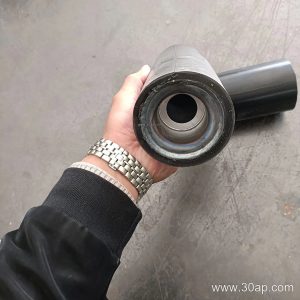
During service, inspect the pivot for play, clean out packed material, and confirm that the bracket returns freely after a side push. A stiff pivot will not correct belt drift, and a loose one may cause the belt to oscillate. Pairing the bracket with well-balanced idler rollers and a properly aligned conveyor pulley reduces the load on the pivot and extends service life.
For more on compatible belting and roller components, visit belt-conveyor-parts.com and review our conveyor belt and idler roller ranges before ordering brackets for a new line.