What Makes a Conveyor Belt High Abrasion Resistant
A high abrasion resistant conveyor belt is a rubber belt engineered so that the cover rubber — the part that actually touches the material — wears down slowly when it carries sharp, hard, fast-moving bulk. In a quarry, a sand and gravel plant, a cement works, a coal preparation facility or a power plant, the belt surface is constantly scuffed by crushed rock, clinker, coke and ore fines. Standard covers can polish through in months. A belt built for high abrasion duty uses a tougher rubber compound on the carrying side, and often a matching or slightly lighter grade on the pulley side, so the belt keeps its thickness and its grip for far longer.
The abrasive wear is not the only load. Impact at the loading point, edge damage from misalignment, and the pressure of the conveyor pulley and idler roller all interact with the cover. That is why abrasion resistance is best judged together with cut and tear resistance, not as a single number.
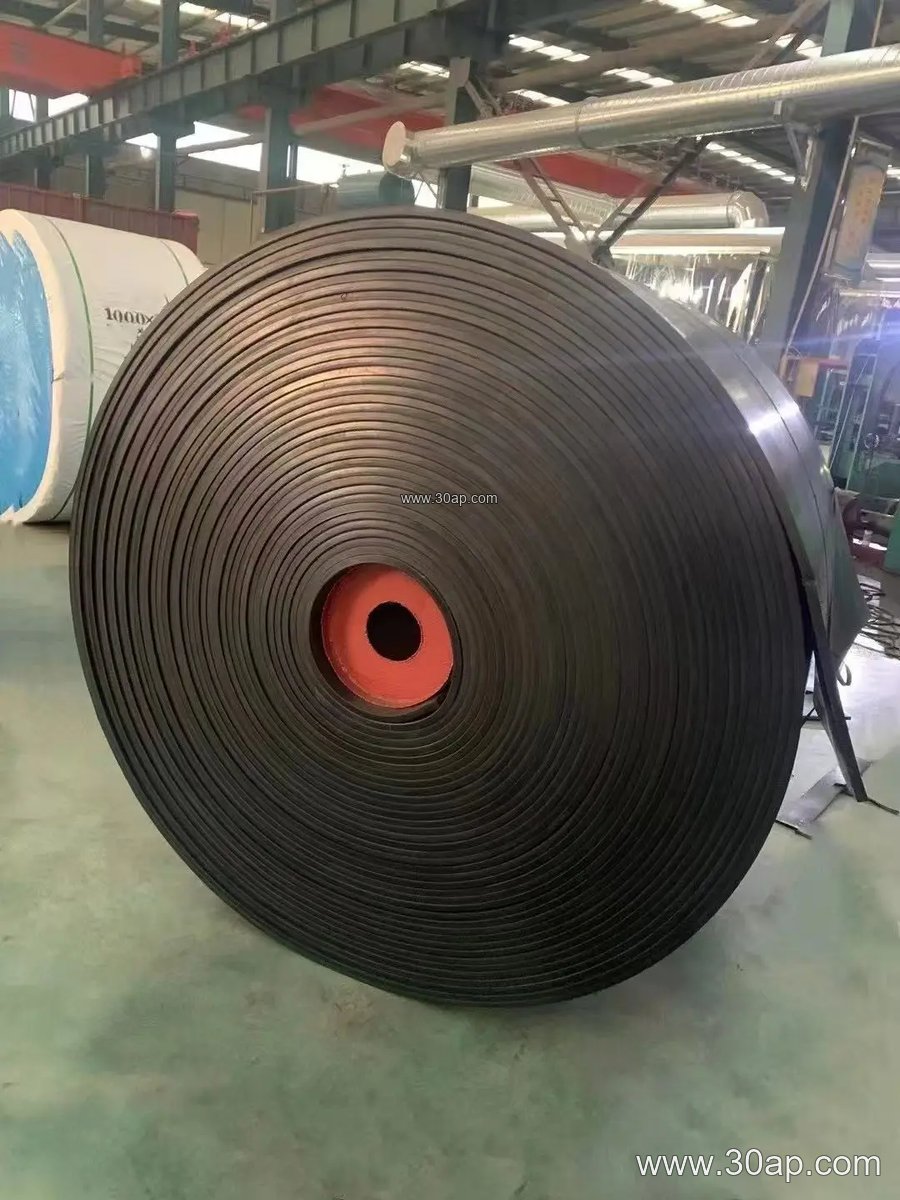
How the Belt Is Built
The construction is a familiar sandwich, but the layers are chosen for wear duty. The carcass provides tensile strength; the covers provide protection. A typical build for this product family includes:
- Top cover: a high abrasion resistant rubber compound, commonly thicker than a general-purpose cover, often 4+2 mm, 5+2 mm, 6+2 mm or 8+3 mm in heavy duty builds.
- Carcass: multi-ply fabric core, usually EP or NN, from 2 to 6 plies depending on the duty. EP Conveyor Belt carcasses are common where low stretch and moisture resistance matter; NN Conveyor Belt carcasses are also widely used.
- Bottom cover: a thinner abrasion resistant layer that runs over the return idler roller and tail pulley.
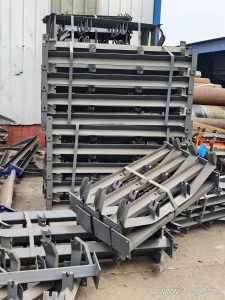
- Edges: protected edges to resist fraying where the belt meets the conveyor bracket and structure.
Strength grades for fabric carcasses are usually quoted as EP200, EP315, EP400, EP500, EP630, EP800, EP1000, EP1250, EP1600 or EP2000, with NN grades following a similar ladder. For very long runs or high tonnage, a Steel Cord Conveyor Belt may be the better structural choice, but the cover compound still decides how the top surface survives abrasion.
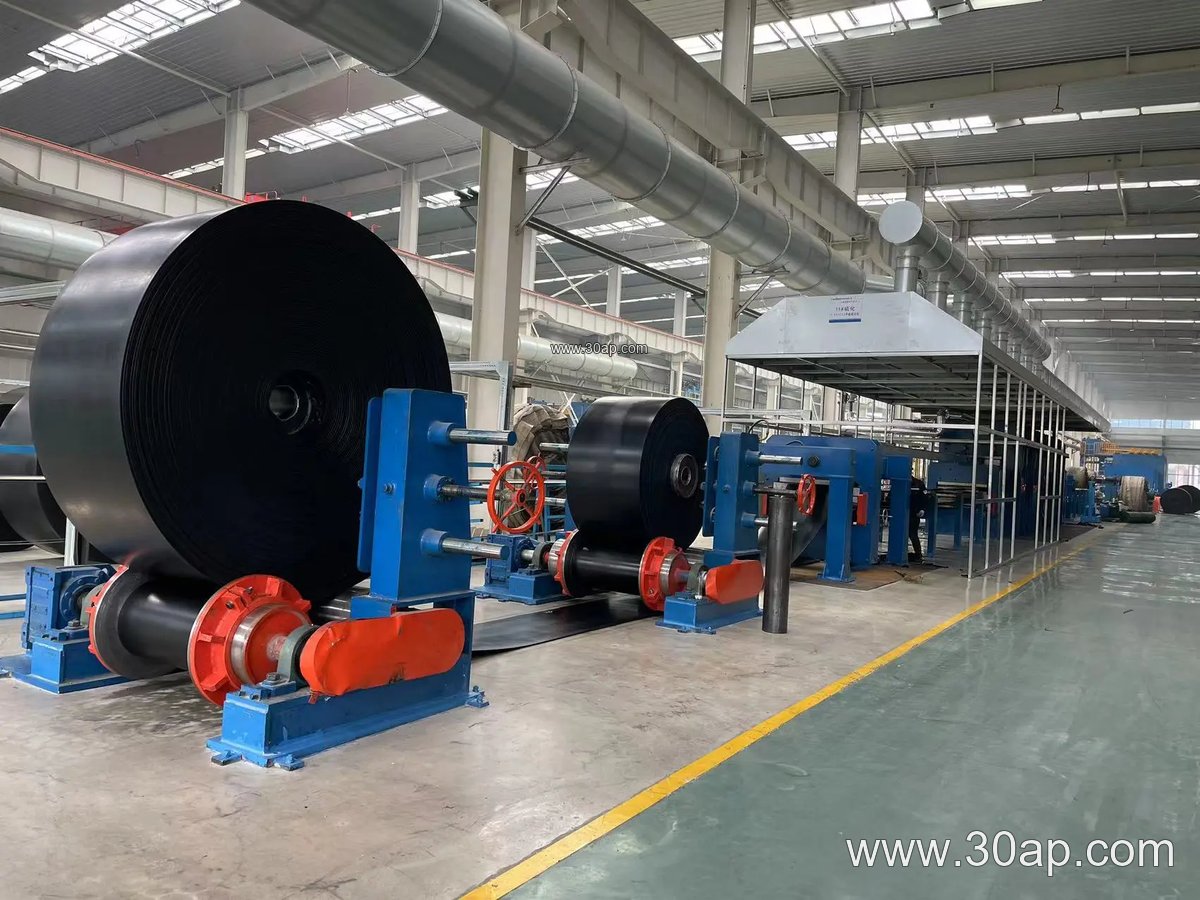
Common Sizes and a Reference Table
Belt width and cover thickness are selected together with the conveyor design, not in isolation. The values below are reference ranges, not a fixed catalogue. Actual supply follows the application and the manufacturer’s data.
| Parameter | Common reference values |
|---|---|
| Belt width | B500, B650, B800, B1000, B1200, B1400, B1600, B1800, B2000 |
| Cover thickness (top + bottom) | 3+1.5 mm, 4+2 mm, 5+2 mm, 6+2 mm, 8+3 mm |
| Carcass plies | 2 to 6 plies, by design |
| Fabric strength grades | EP200 to EP2000; NN100 to NN400 class |
| Steel cord grades (where used) | ST1000 to ST3150 class |
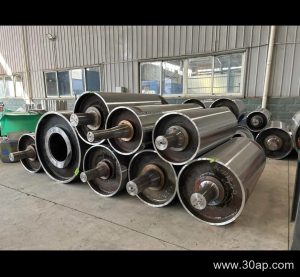
Width and pulley diameter are matched through belt tension and pulley geometry, so a 1000mm belt may suit different conveyor pulley sizes on different conveyors. The belt width alone never fixes a shaft diameter.
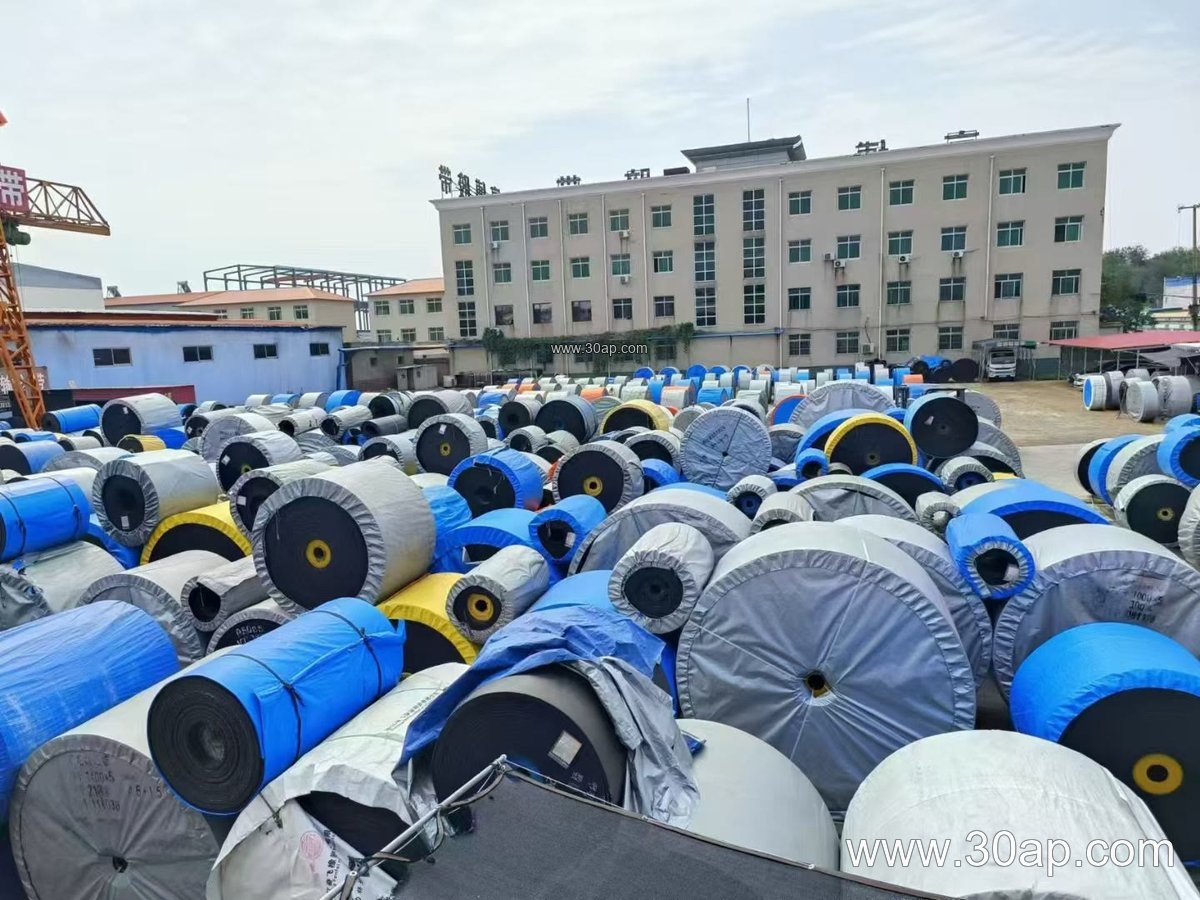
Where It Fits in the Plant
These belts are at home wherever the material is hard and angular. In a quarry or stone crushing line, a crusher conveyor belt and the discharge belts carry crushed granite and limestone. In sand and gravel operations, an aggregate conveyor belt handles washed stone and grit. In mining, a Mining Conveyor Belt in an underground coal mine or an iron ore operation faces both abrasion and, in coal, flame resistance requirements. Cement plants use them for clinker and raw meal; power plants for coal and ash; ports and ship loading systems for ore and pellet.
Where the route is steep, a Chevron Conveyor Belt or a Corrugated Sidewall Conveyor Belt solves the incline problem, while a Skirted Conveyor Belt controls spillage at the load point. Those are different belt types and should not be treated as substitutes for a flat high abrasion resistant belt; they answer a different question. Likewise, a Heat Resistant Conveyor Belt, Oil Resistant Conveyor Belt, Flame Retardant Conveyor Belt or Cold Resistant Conveyor Belt adds a specific protection layer, and in many plants the abrasion requirement is combined with one of them.
Buyer Checklist Before Ordering
- Describe the material: lump size, sharpness, moisture, temperature and tonnage per hour.
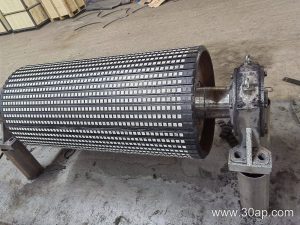
- State the conveyor layout: centres, incline, load point impact, and whether a conveyor pulley at the drive end is fitted with a lagging that suits the belt.
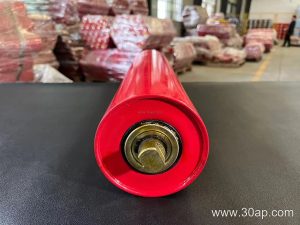
- Check the return side: an idler roller with a worn or seized bearing will damage even the toughest cover.
- Confirm cover thickness and grade against the wear history of the existing belt, not just the price per metre.
- For underground coal work, ask for the flame retardant grade explicitly; PVG Conveyor Belt and PVC Conveyor Belt constructions are common in that setting.
- Keep spare belt, fasteners and a spare conveyor pulley on site so a damaged section does not stop the line.
A high abrasion resistant conveyor belt pays back through longer service life and fewer stoppages. Buy on the wear duty and the carcass strength together, and match the belt to the conveyor, the pulleys and the rollers rather than to a single headline figure.