What a Mining Idler Does on the Line
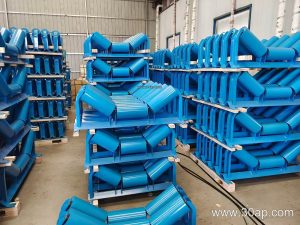
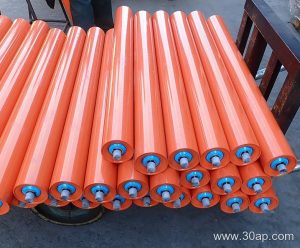
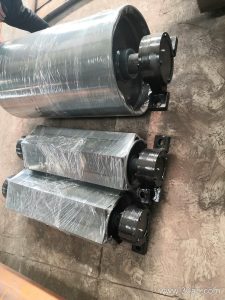
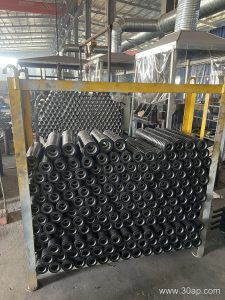
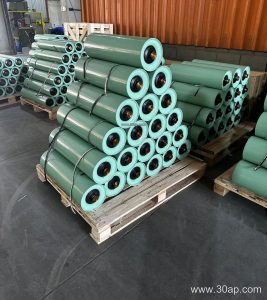
A mining idler is the rotating support that carries the conveyor belt and its load between the head and tail of a conveyor. On a quarry conveyor belt or an underground coal mining conveyor belt, dozens or hundreds of these rollers keep the belt tracking, reduce friction, and protect the belt from sagging between frames. In a typical installation the carrying side uses troughing idlers, while the return side uses flat or V-return rollers. The idler roller itself is a simple assembly, but its quality decides how often a crew has to stop the line.
Construction and Materials
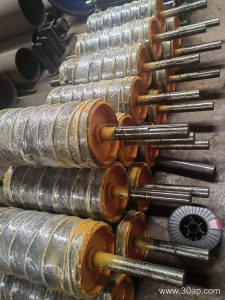
Most mining idler rollers are built around a steel tube shell, with bearing housings pressed into each end. The shaft runs through sealed bearings; common bearing sizes include 6205, 6305, 6306, and 6308, though the correct bearing is matched to the roller diameter and load, not to belt width alone. Sealing is the key detail. Dust, fines, and wash-down water destroy bearings faster than load does, so labyrinth seals and grease retention matter more than a glossy paint finish.
Shell surfaces vary with the job. A plain steel tube suits clean, dry material. Rubber rings are used on impact idlers where lump size is large at a transfer point. Nylon and ceramic surfaces can help where sticky material builds up on the shell. For abrasive ore, a heavy-duty roller with a thicker wall and reinforced end disc is a sensible choice.
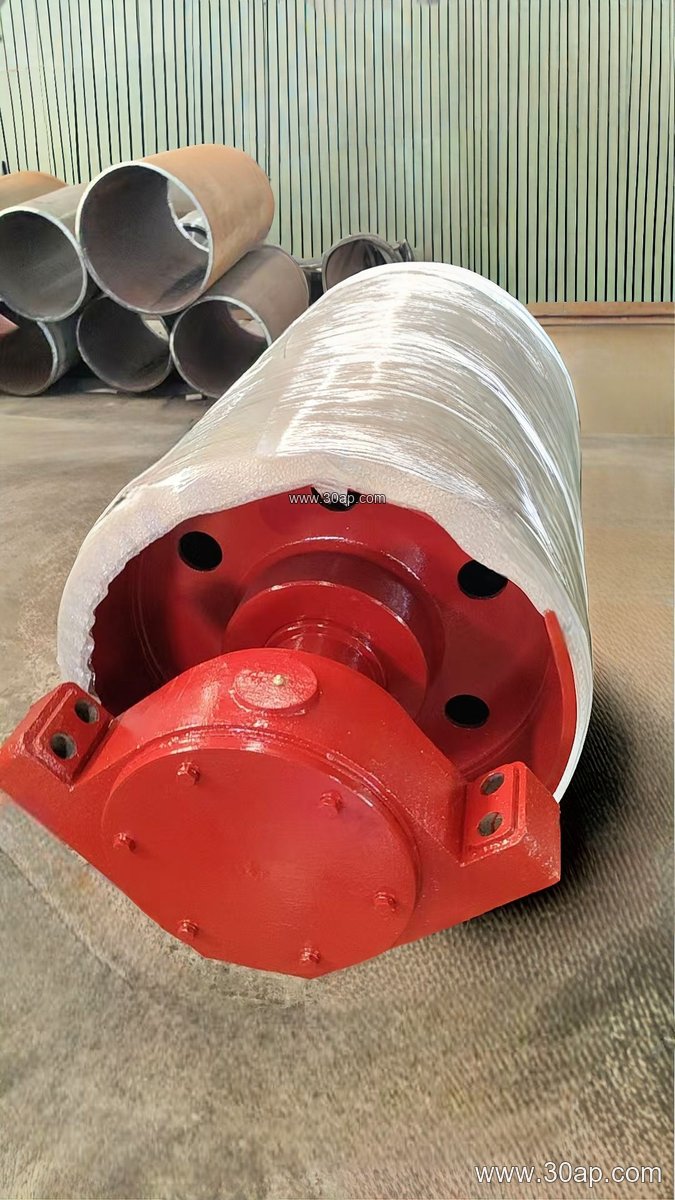
Common Reference Dimensions
The table below shows typical reference values; final dimensions are set by the conveyor design, belt width, trough angle, and frame arrangement.
- Roller diameter: Ø63, Ø76, Ø89, Ø102, Ø108, Ø127, Ø133, Ø159, Ø178, Ø194, Ø219 mm
- Belt width: B400, B500, B650, B800, B1000, B1200, B1400, B1600, B1800, B2000 mm
- Trough angle: 20°, 30°, 35°, 45°
- Idler set: single roller, two-roller, three-roller troughing
For a three-roller troughing set, typical roller lengths are roughly 200 mm at B500, 250 mm at B650, 315 mm at B800, 380 mm at B1000, 465 mm at B1200, 530 mm at B1400, and 600 mm at B1600. Side rollers and centre rollers can differ, so these figures are examples rather than a fixed rule.
Where Mining Idlers Are Used
In a limestone quarry, troughing idlers on the main haulage conveyor handle coarse rock, while impact rollers sit under the crusher discharge. In a coal preparation plant, flame retardant conveyor belt and anti-static belt constructions are common, and the idler frames must be easy to clean because fine coal dust packs into corners. Power plant coal handling, iron ore terminals, and aggregate lines all rely on the same basic roller, but the sealing and shell thickness change with the environment.
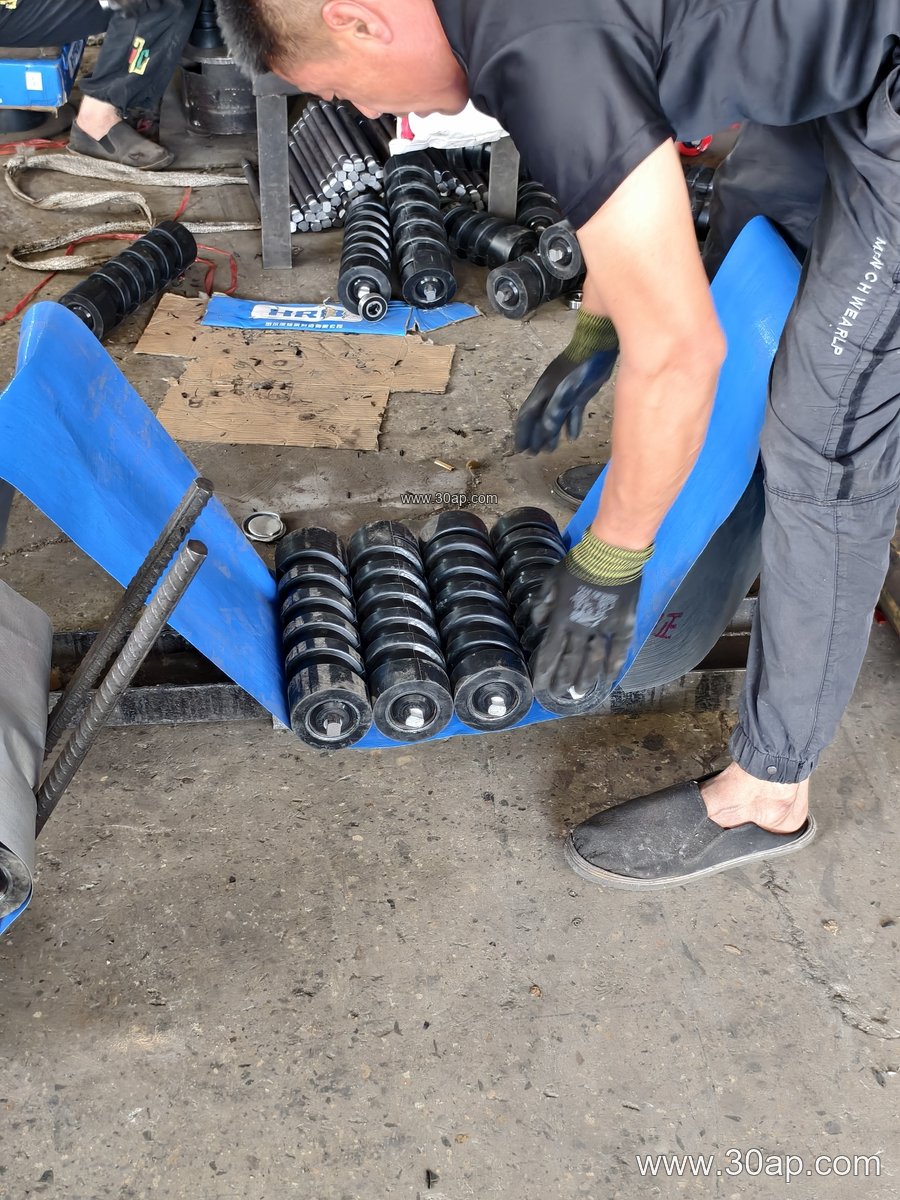
Matching the Idler to the Belt and Load
The idler must suit the belt it carries. A steel cord conveyor belt is stiff and heavy, so roller spacing and load rating need more attention than on a light fabric core belt. A chevron conveyor belt or a corrugated sidewall conveyor belt needs clearance and careful roller positioning so the cleats do not strike the rollers. On a pipe conveyor belt, the idlers form the belt into a tube, which is a different geometry entirely. For hot material such as sinter or clinker, heat resistant rollers and heat resistant conveyor belt work together; for oily scrap or recycled material, an oil resistant belt reduces swelling. None of these belt types changes what the idler is, but each one changes the specification.
Buyer Checklist
Before ordering, confirm the belt width, the trough angle, the roller diameter, and the frame fixing dimensions. Ask about the seal design, bearing brand or grade, and wall thickness of the shell. Check whether the duty is carrying or return, and whether impact or training is needed at specific points. On a long overland conveyor, misalignment costs more than the rollers themselves, so self-aligning idlers at critical spots are often worth the extra cost. Keep a small stock of the most-used roller size so a single failed bearing does not stop the whole plant.
Maintenance Notes
Listen for squealing bearings and watch for a belt that drifts to one side. Seized rollers flatten the belt cover and raise power draw. Replace rollers in sets where possible, and check that the conveyor bracket and frame are square before blaming the roller. A simple walk-down schedule catches most problems early.